11 Best Claude Code Alternatives
Claude Code alternatives are terminal coding agents that edit code, run commands, and call a model on a developer's behalf. This guide compares 11 of them, including Codex CLI, Gemini CLI, OpenCode, and GitHub Copilot CLI, on license, models, pricing, and team controls.
TL;DR
- Open source Claude Code alternatives such as OpenCode, Aider, Cline, Goose, and Qwen Code work with many model providers, including local models.
- Gemini CLI includes a free tier of 60 requests per minute and 1,000 requests per day for anyone signed in with a personal Google account.
- GitHub Copilot CLI, Cursor CLI, Kiro CLI, and Amp are billed through their vendors' plans and suit teams already standardized on those platforms.
- Claude Code itself is proprietary, and through an AI gateway it can be pointed at GPT, Gemini, or self-hosted models with one virtual key and one budget per developer.
Claude Code alternatives are terminal and agentic coding tools that read a repository, edit files, run commands, and call a large language model on the developer's behalf, and adoption keeps climbing: 84% of developers use or plan to use AI tools in their development process, according to the 2025 Stack Overflow Developer Survey. This guide compares 11 Claude Code alternatives on license, model choice, pricing model, and enterprise controls. Whichever agent a team picks, it can run through Bifrost, the open-source AI gateway built by Maxim AI for enterprises running mission-critical AI workloads that require top-tier performance, scalability, and reliability, so model access and spend stay governed in one place.
Why Teams Look for Claude Code Alternatives
Teams evaluate Claude Code alternatives for four reasons: model choice, cost predictability, license, and fit with an existing vendor plan. Claude Code is a proprietary tool tied to Anthropic billing, so teams that want open source code, other model families, or one bill with their IDE vendor compare the options below:
- Model lock-in. Claude Code is built around Claude models. Teams that want GPT, Gemini, or open-weight models need a different agent or a gateway in front of Claude Code.
- Spend visibility. Per-developer limits matter once dozens of engineers run long agent sessions.
- License. The Claude Code repository states that use is subject to Anthropic's Commercial Terms, so teams with an open source requirement look elsewhere.
- Platform fit. Teams paying for GitHub Copilot, Cursor, or Kiro prefer the agent bundled with that plan.
These concerns are separable. As Figure 1 shows, a coding agent is three things: the client the developer talks to, the model it calls, and the tools it uses. Replacing the client is one option; keeping it and changing the model is another, which the Claude Code resource hub covers in depth.
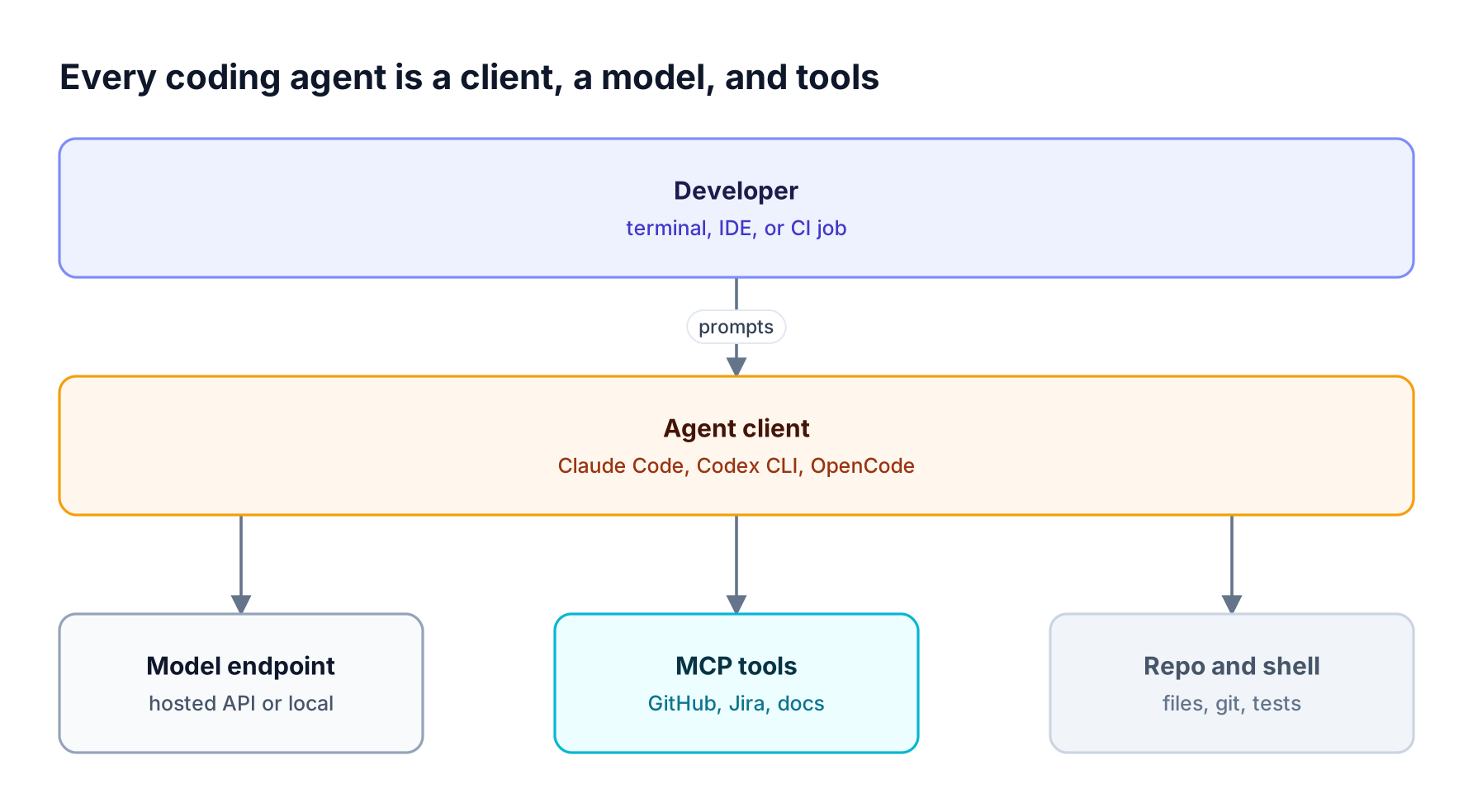
Figure 1: Switching agents changes the workflow; the model and the tools behind it are separate choices.
Platform teams running several agents side by side need shared policy, which is the focus of guidance on governing AI coding agents at scale.
How We Evaluated These Claude Code Alternatives
Each tool was scored on five criteria that matter to engineering teams rather than to individual users: license, model choice, pricing model, tool support through MCP, and the controls an organization gets for access and spend. These five change far less often than feature lists.
| Criterion | What we checked | Why it matters for teams |
|---|---|---|
| License | Open source (and which license) or proprietary | Audit, self-modification, and procurement rules |
| Model choice | One vendor, several providers, or local models | Cost tuning and avoiding a single provider outage |
| Pricing model | Free tier, vendor plan, credits, or bring your own key | Forecasting spend for a whole team |
| MCP support | Whether the agent can call Model Context Protocol servers | Access to GitHub, ticketing, and internal tools |
| Team controls | Policies, approvals, and identity integration | Rolling an agent out beyond early adopters |
Most agents in this list speak the Model Context Protocol, so a shared MCP gateway can expose the same approved tools to every agent.
Claude Code Alternatives Compared at a Glance
The table below summarizes all 11 Claude Code alternatives. Seven are open source; four are proprietary and billed through a vendor plan. Every entry reflects the vendor's own product page or repository as published in November 2026.
| Tool | Maker | License | Interfaces | Model choice | Pricing model |
|---|---|---|---|---|---|
| Codex CLI | OpenAI | Apache 2.0 | Terminal | OpenAI models; ChatGPT plan or API key | ChatGPT plan or API usage |
| Gemini CLI | Apache 2.0 | Terminal | Gemini models; Google login, API key, or Vertex AI | Free tier, then API usage | |
| OpenCode | Anomaly | MIT | Terminal, desktop, mobile, SDK | 200+ providers, including local | Free models, paid plan, or your own subscription |
| Aider | Aider-AI | Apache 2.0 | Terminal, IDE | Almost any LLM, including local | Bring your own key |
| Cline | Cline | Apache 2.0 | VS Code and other IDEs, desktop, CLI, SDK | Bring your own key or local weights | Bring your own key |
| goose | Linux Foundation Agentic AI Foundation | Apache 2.0 | Desktop, CLI | 15+ providers | Bring your own key |
| Qwen Code | QwenLM | Apache 2.0 | Terminal, IDE, desktop, SDK | OpenAI, Anthropic, Gemini, Qwen, and local models | Bring your own key |
| GitHub Copilot CLI | GitHub | Proprietary | Terminal | Copilot models, or your own Azure OpenAI or Anthropic provider | Included in Copilot plans |
| Cursor CLI | Cursor | Proprietary | Terminal, scripts, GitHub Actions | Anthropic, OpenAI, Gemini, and Cursor models | Cursor plans |
| Kiro CLI | Kiro | Proprietary | Terminal, cloud sessions | Claude models and an Auto agent | Included in Kiro tiers |
| Amp | Amp | Proprietary | CLI, desktop, mobile apps | Selectable models | Credit-based tiers |
The CLI agents resource page lists which of these agents connect to a gateway and which endpoint shape each one expects.
Open Source Claude Code Alternatives
Open source Claude Code alternatives give teams the code, a permissive license, and usually a free choice of model provider. Seven tools qualify: Codex CLI, Gemini CLI, OpenCode, Aider, Cline, goose, and Qwen Code; the first two are built around their makers' models.
1. Codex CLI
Codex CLI is OpenAI's coding agent for the terminal, released under Apache 2.0. Developers sign in with a ChatGPT plan (Plus, Pro, Business, Edu, or Enterprise) or use an API key. It is the closest like-for-like replacement for Claude Code on OpenAI models.
- Strengths: first-party OpenAI models, open source code, sign-in through ChatGPT plans.
- Trade-off: model choice centers on OpenAI unless the agent is configured with a custom provider.
Best for: teams already paying for ChatGPT Business or Enterprise. Codex CLI also accepts a custom provider, which is how teams run Codex CLI with Claude, Gemini, or Llama through a gateway; the Codex CLI setup guide lists the configuration.
2. Gemini CLI
Gemini CLI is Google's open source terminal agent, licensed under Apache 2.0. A personal Google account gets a free tier of 60 requests per minute and 1,000 requests per day, and Gemini 3 models bring a 1M-token context window. Authentication works through Google sign-in, a Gemini API key, or Vertex AI, and MCP servers extend it with custom tools.
- Strengths: a large free tier, a long context window for big repositories, MCP support.
- Trade-off: built around Gemini models; other providers require a gateway or a fork.
Best for: individual developers and teams on Google Cloud. The Gemini CLI multi-model setup shows how the same agent reaches Claude, GPT, and Groq models.
3. OpenCode
OpenCode is an MIT-licensed coding agent built by Anomaly with more than 1,000 contributors. It runs in a terminal, a desktop app, a mobile app, or through an SDK, and supports 200+ LLM providers, including local models.
- Strengths: the widest provider support in this list, several interfaces.
- Trade-off: team-level controls depend on how keys are managed outside the tool.
Best for: teams that want one open source agent for every model. The OpenCode configuration page covers routing it through a gateway.
4. Aider
Aider is an Apache 2.0 pair-programming tool for the terminal. It works with almost any LLM, including local models, maps the codebase for context, and auto-commits each change to git with a descriptive message so every edit can be diffed or undone. It also runs linters and tests.
- Strengths: git-native workflow, broad model support.
- Trade-off: a chat-style loop rather than long autonomous sessions.
Best for: developers who want every agent change recorded as a reviewable commit.
5. Cline
Cline is an open source coding agent under Apache 2.0. It runs as a VS Code extension (also in Cursor, Windsurf, and JetBrains IDEs), a desktop app, a CLI with interactive and headless modes, and an SDK. Plan mode agrees on an approach before Act mode executes it, with optional auto-approval. Developers bring their own API key or local weights, including Claude, GPT, Gemini, and Ollama models.
- Strengths: explicit plan and act separation, IDE and terminal coverage, bring-your-own model.
- Trade-off: spend control sits with whoever manages the API keys.
Best for: teams that want approval checkpoints before an agent edits code.
6. goose
goose is an open source, general-purpose AI agent under Apache 2.0 and part of the Linux Foundation's Agentic AI Foundation. It ships a desktop app for macOS, Linux, and Windows plus a CLI, works with 15+ model providers, and supports 70+ MCP extensions. goose also handles tasks beyond coding.
- Strengths: neutral foundation governance, a large MCP extension catalog.
- Trade-off: a general-purpose agent, so coding-specific features are less specialized.
Best for: teams that want one agent for coding and adjacent engineering work.
7. Qwen Code
Qwen Code is an Apache 2.0 coding agent from the Qwen team that runs in the terminal, with IDE, desktop, and SDK options. It started from Gemini CLI v0.8.2 and has developed independently since. It supports OpenAI, Anthropic, Gemini, and Qwen APIs, plus third-party and local models.
- Strengths: a familiar Gemini CLI-style workflow with wider API support.
Best for: teams running Qwen or other open-weight models. The Qwen Code integration post walks through gateway setup.
Commercial Claude Code Alternatives
Commercial Claude Code alternatives trade an open license for a managed plan, bundled models, and vendor support. Four tools fit here: GitHub Copilot CLI, Cursor CLI, Kiro CLI, and Amp, each best for teams already on that vendor's editor or plan.
8. GitHub Copilot CLI
GitHub Copilot CLI brings Copilot to the terminal for coding, questions, and GitHub.com tasks. It is available with all Copilot plans, though organization-provided access requires an administrator to enable the Copilot CLI policy. Developers switch models with /model, can connect their own Azure OpenAI or Anthropic provider, and add MCP servers.
- Strengths: included in existing Copilot plans, organization policy, content exclusion, and tool approval options.
- Trade-off: MCP server policies are not supported at the organization level.
Best for: organizations already on GitHub Copilot Business or Enterprise. The GitHub Copilot setup page covers routing the app, CLI, and VS Code extension through a gateway.
9. Cursor CLI
Cursor CLI runs Cursor's coding agents from the terminal, scripts, and GitHub Actions, with models from Anthropic, OpenAI, Google Gemini, and Cursor. Its headless mode suits CI/CD workflows.
- Strengths: the same agent in the editor, terminal, and CI pipeline.
- Trade-off: usage follows Cursor's plans, so the agent and the editor are bought together.
Best for: teams that standardize on Cursor and want agent runs in CI. The Cursor configuration page shows how teams route Cursor through virtual keys.
10. Kiro CLI
Kiro CLI brings Kiro's agents to the terminal for coding, reviews, and automation, locally or in cloud sessions. It is the upgrade path for Amazon Q Developer CLI users, and it is included in standard Kiro tiers with no separate CLI pricing. It uses Claude models plus an Auto agent, with steering files, MCP integration, custom agents, and hooks.
- Strengths: cloud sessions, steering files, no separate CLI bill.
- Trade-off: model choice is narrower than in the open source tools.
Best for: AWS-centric teams moving off Amazon Q Developer CLI.
11. Amp
Amp is a coding agent and development environment that runs agents locally or in cloud environments called orbs, with a CLI and apps for desktop and mobile. Models are selectable, and OpenAI models can run on a linked ChatGPT subscription.
- Strengths: cloud execution for long tasks.
- Trade-off: pricing uses credits and orb time, and no free tier is listed.
Best for: teams that want agents to keep working in the cloud after a laptop closes.
Free Claude Code Alternatives and Local Models
The free Claude Code alternatives are Gemini CLI's free tier, OpenCode's free models, and every open source agent paired with a local model. "Free" usually moves the cost from a subscription to infrastructure or to per-token provider bills.
| Option | What is free | What still costs money |
|---|---|---|
| Gemini CLI free tier | 60 requests per minute, 1,000 per day with a personal Google account | Usage beyond the free tier, Vertex AI billing |
| OpenCode free models | Models that need no account | Paid plans or your own subscription for other models |
| Open source agent plus local model | The agent and the model weights | GPUs or workstations to serve the model |
| Open source agent plus hosted API | The agent | Per-token provider charges |
Local models are a common reason teams switch, and a gateway makes them reachable from any agent. Bifrost supports self-hosted inference servers such as Ollama and vLLM alongside the hosted APIs in its supported providers list.
Claude Code vs Codex vs Gemini CLI
Claude Code, Codex CLI, and Gemini CLI are among the most-searched terminal agents ("codex vs claude code" alone draws about 14,800 searches a month). They differ less in workflow than in license, default models, and billing.
| Claude Code | Codex CLI | Gemini CLI | |
|---|---|---|---|
| Maker | Anthropic | OpenAI | |
| License | Proprietary (Commercial Terms) | Apache 2.0 | Apache 2.0 |
| Default models | Claude | OpenAI | Gemini |
| Access | Claude subscription or API billing | ChatGPT plan or API key | Google login, Gemini API key, or Vertex AI |
| Free tier | Not published | Not published | 60 requests per minute, 1,000 per day |
| MCP support | Yes | Not published | Yes |
The choice usually follows the model family a team already trusts. Teams that want all three can keep each agent and send traffic through one gateway; the guide to running Claude Code with OpenAI, Gemini, and Bedrock models shows the setup.
How to Choose a Claude Code Alternative
The fastest way to choose a Claude Code alternative is to answer two questions in order: is open source required, and does the team need many model providers? Those answers narrow 11 tools to three or four before any feature comparison, as Figure 2 shows.
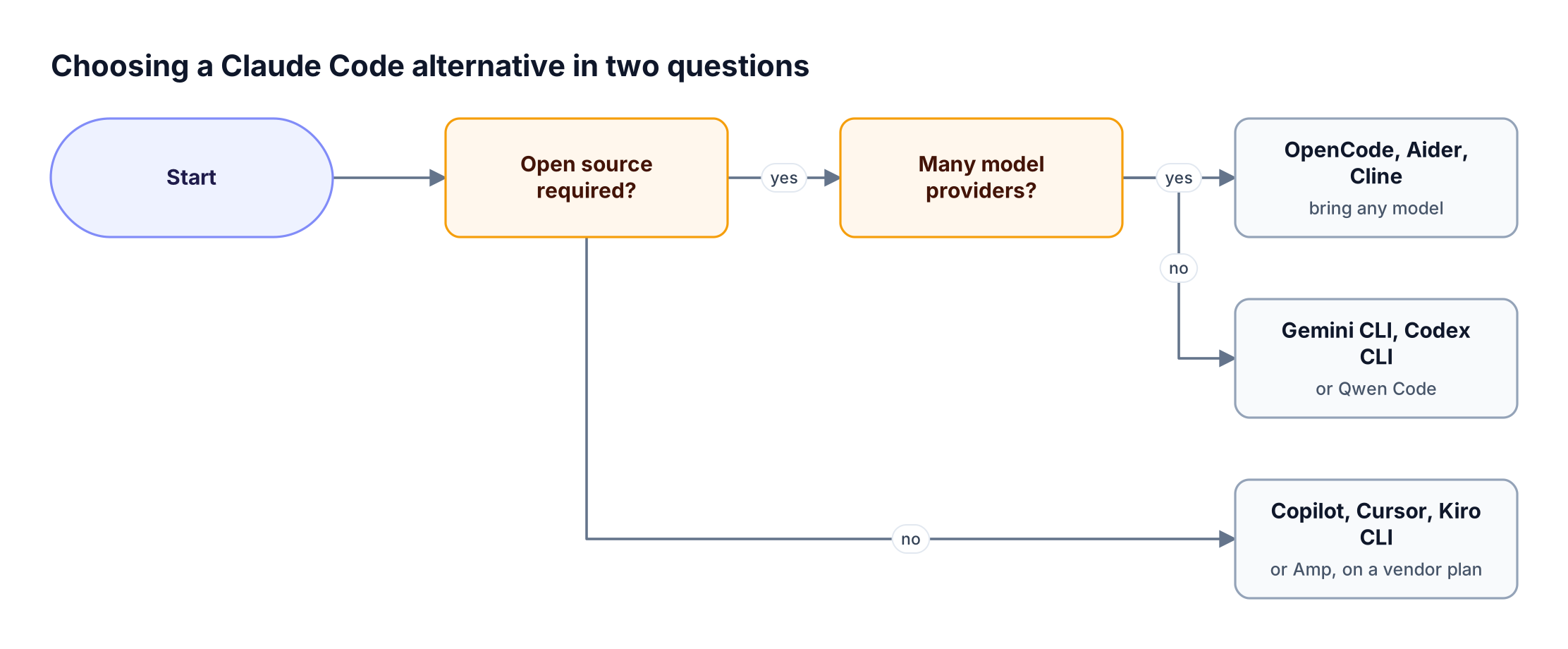
Figure 2: License and model freedom narrow the field before features do.
After the shortlist, three checks decide the rollout:
- Pilot on a real repository. Compare merged changes from the same tasks, not demos.
- Check identity. Agents without company sign-in push teams toward shared API keys, which breaks per-team AI governance.
- Plan for more than one agent. Most engineering organizations end up with two or three, so access and spend controls belong outside any single tool.
Running Claude Code or Any Alternative Through Bifrost
The Bifrost AI gateway is not a coding agent; it is the gateway that sits between every agent in this list and the model providers. Routing agents through Bifrost lets a team keep Claude Code and change its model, or adopt any alternative, while one set of virtual keys, budgets, and logs covers all of them.
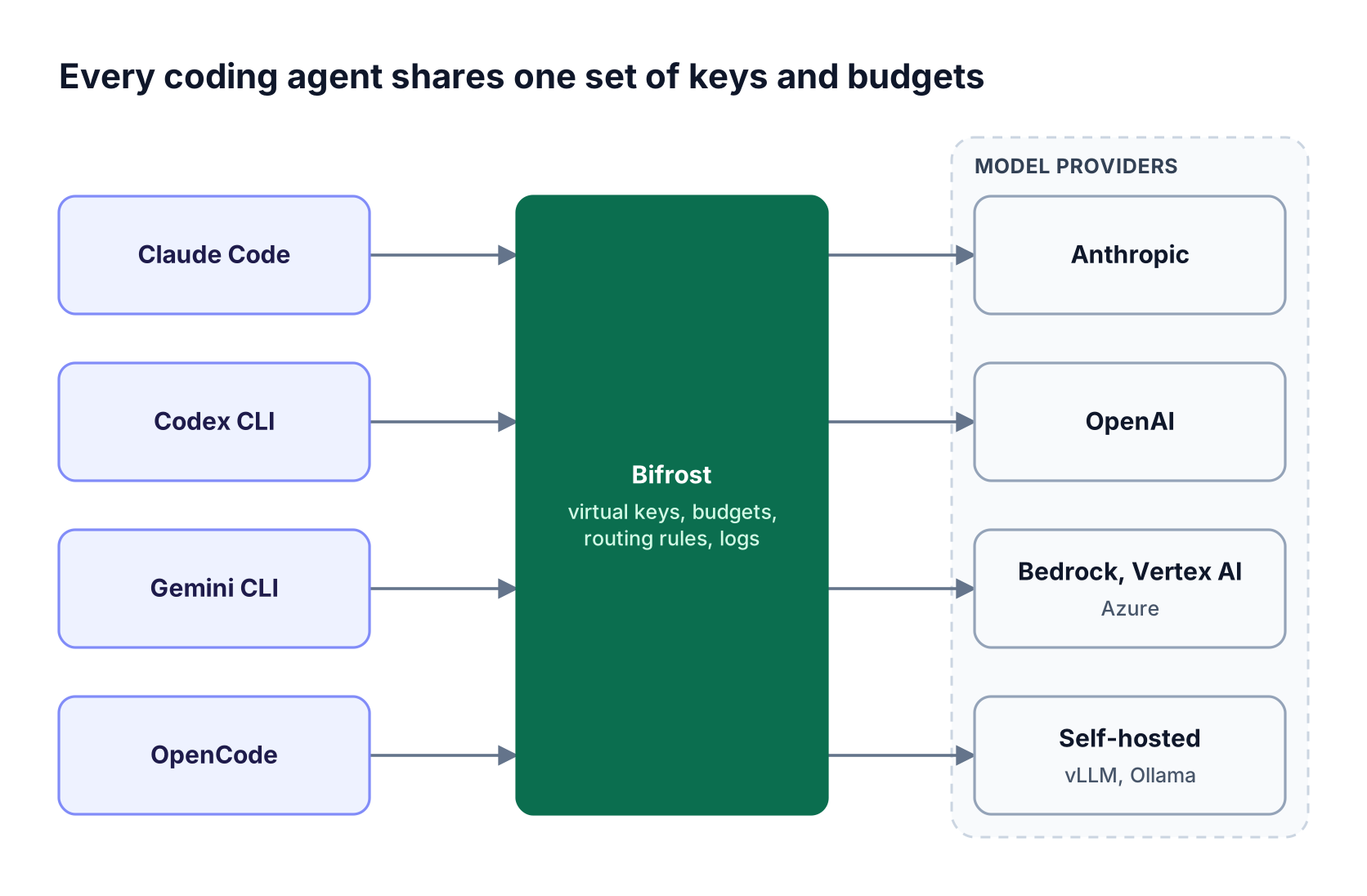
Figure 3: The agent becomes a team choice; access, spend, and model routing stay in one place.
Keep the agent, change the model. Claude Code connects to Bifrost through an Anthropic-compatible endpoint; inside a session, /model switches to any provider and model configured in Bifrost, and model aliasing maps Claude Code's sonnet and haiku aliases to models on Vertex AI, Bedrock, Azure, OpenAI, or Gemini. Non-Claude models may not implement Claude-specific server-side tools, and Anthropic does not support routing Claude Code to non-Claude models, so pilot each model first.
Step-by-step guides cover Claude Code with Gemini models and Claude Code with OpenAI models.
Launch any agent with one command. The Bifrost CLI launches Claude Code, Codex CLI, Gemini CLI, and OpenCode with the gateway URL, credential, and model already set, and it removes inherited provider keys such as ANTHROPIC_API_KEY from the child process so they cannot bypass the gateway:
npx -y @maximhq/bifrost-cli
bifrost claude --model anthropic/claude-sonnet-4-6
bifrost codex --model openai/gpt-5
bifrost gemini --model gemini/gemini-2.5-pro
The coding agents launch guide lists each agent's endpoint and caveats, and the Bifrost CLI v1.0 announcement explains the launcher design.
One budget per developer, whatever the agent. Virtual keys carry provider access, rate limits, and budgets, and budgets roll up from virtual keys to teams and customers. Bifrost Enterprise adds SSO sign-in for the CLI.
Every request appears in the built-in request logs with its key, provider, and model, which is the basis for monitoring coding agents across a team.
Teams that need SSO, RBAC, or in-VPC deployment can review Bifrost Enterprise. The Claude Code and Bifrost guide and the Bifrost CLI resource page cover rollout and daily commands.
Frequently Asked Questions
What is the best alternative to Claude Code?
It depends on the requirement. Codex CLI is the closest like-for-like option for OpenAI users, Gemini CLI has a large free tier, and OpenCode supports the most model providers among open source tools. Teams already paying for GitHub Copilot or Cursor usually get the most value from the CLI bundled with that plan.
Is there a free alternative to Claude Code?
Yes. Gemini CLI offers a free tier of 60 requests per minute and 1,000 requests per day with a personal Google account. OpenCode offers free models that need no account, and Aider, Cline, goose, and Qwen Code are free to run with a local model on your own hardware.
Is Claude Code open source?
No. The Claude Code repository is public, but its license states that all rights are reserved by Anthropic and that use is subject to Anthropic's Commercial Terms of Service. Teams that need an open source license can choose Codex CLI, Gemini CLI, OpenCode, Aider, Cline, goose, or Qwen Code, all released under Apache 2.0 or MIT.
Can Claude Code use other models?
Claude Code can call other models when it is pointed at a Claude Code gateway such as Bifrost through its Anthropic-compatible endpoint. Model aliases or the /model command then select models on Vertex AI, Bedrock, Azure, OpenAI, or Gemini. Non-Claude models may lack Claude-specific server-side tools, and Anthropic does not support this configuration, so test each model before rollout.
Can I run Claude Code with a local model?
Claude Code can reach a local model when a gateway translates its requests for a self-hosted inference server such as Ollama or vLLM. The local model must support the tool calling that coding agents depend on. Open source agents such as OpenCode, Aider, and Cline also connect to local models directly.
Which Claude Code alternatives support MCP?
Gemini CLI, GitHub Copilot CLI, Kiro CLI, Cursor CLI, and goose document MCP support on their product pages, and goose lists 70+ MCP extensions. Routing MCP servers through a shared gateway gives every agent the same approved tools without per-developer setup.
Get Started with Bifrost
Choosing among Claude Code alternatives is a tooling decision; governing them is a gateway decision. Bifrost lets a team run Claude Code, Codex CLI, Gemini CLI, OpenCode, and the other agents in this list against any of 10,000+ models with one set of virtual keys, budgets, and logs. To see Bifrost with your own coding agents, book a demo with the Bifrost team.