5 Best MCP Gateways for Developers in 2026
This MCP gateway roundup starts with a test for what actually counts as an MCP gateway, then compares five that pass: Bifrost, Docker MCP Gateway, AWS Bedrock AgentCore, Kong MCP Gateway, and Cloudflare MCP Server Portals, with real limitations for each.
TL;DR:
- An MCP gateway terminates the Model Context Protocol on both sides: it is a client to your MCP servers and a server to your agents, and it enforces policy in between. A model router that only forwards LLM calls is not an MCP gateway.
- Bifrost is the most complete option for teams that need LLM routing and MCP tool governance in one deployment, with 11 microseconds of overhead at 5,000 RPS and a Code Mode execution path that cut input tokens by 92.8% at 508 tools.
- Docker MCP Gateway is the strongest local development story, running each MCP server in an isolated container with secrets held outside environment variables.
- AWS Bedrock AgentCore Gateway converts existing APIs, Lambda functions, and services into MCP-compatible tools, and is the natural choice inside an AWS-centric stack.
- Kong MCP Gateway and Cloudflare MCP Server Portals both extend an existing platform rather than standing alone, which makes them cheap to adopt if you already run Kong or Cloudflare One and hard to justify if you do not.
As AI agents move beyond simple completions into multi-step, tool-using workflows, the gateway layer has taken on new importance. Routing requests to the right model is no longer the hard part. Developers now need gateways that can broker tool calls, manage MCP server connections, enforce access controls, and keep latency predictable at scale. Bifrost, the open-source AI gateway built in Go by Maxim AI, is the most complete option for teams that need both model routing and MCP tool governance in one deployment.
Model Context Protocol, or MCP, is Anthropic's open standard for connecting AI models to external tools and data sources.
An MCP gateway acts as the central control plane for these connections, letting you manage multiple MCP servers, control which teams or keys have access to which tools, and route model requests alongside tool execution through a unified interface. If the concept is new, what an MCP gateway is and how it fits a production agent stack covers the architecture before the product comparison below.
One note on method, because most lists like this one are written by vendors. Bifrost is built by Maxim AI, and it is ranked first here. Every claim about every other product in this article was checked against that vendor's own live documentation, the limitations sections are real limitations rather than framing devices, and two products that appear on most "best MCP gateway" lists were left off with the reason stated. The source is open under Apache 2.0 if you would rather verify the Bifrost claims yourself than take them on trust.
What Makes Something an MCP Gateway
A surprising number of products marketed as MCP gateways are LLM proxies with an MCP feature flag. The distinction matters because the two solve different problems, and buying the wrong one leaves the original problem in place.
A genuine MCP gateway does four things at once:
| Capability | What it means in practice |
|---|---|
| Acts as an MCP client | Connects to upstream MCP servers over STDIO, HTTP, or SSE and discovers their tool catalogs |
| Acts as an MCP server | Presents one endpoint to agents and IDEs, so clients configure a single URL |
| Enforces policy in the middle | Decides which caller reaches which tool, with budgets and rate limits attached |
| Records execution | Logs each tool call with arguments, result, latency, and the credential that issued it |
The boundary between these products is covered in more detail in how an MCP gateway, proxy, and server differ. A product that routes model traffic and nothing else fails the first two tests. It can still be excellent infrastructure. It is not an MCP gateway, and it will not solve tool sprawl, credential duplication, or missing audit trails.
How to Evaluate an MCP Gateway
Six criteria separate a production-grade MCP gateway from a protocol bridge. These are the axes the five products below are compared on:
- Deployment model. Self-hosted, managed, or platform-bundled. This decides who carries operational load and whether regulated workloads can run in-VPC.
- Gateway overhead. Latency the gateway adds per call. Agentic workflows chain many calls, so overhead compounds rather than amortizing.
- Tool-level access control. Whether policy is enforced per tool per consumer, or only at the server level. Server-level control is coarse enough that most teams end up granting more than they intend.
- Context efficiency. Whether the gateway has an answer for tool-schema bloat. At 100+ tools, schema injection dominates the prompt and degrades tool selection.
- Authentication model. Whether per-user credentials are supported, or only shared service credentials. This determines whether user-scoped SaaS tools can be governed at all.
- Observability. Whether every tool call is recorded with attribution, and whether administrative changes are recorded separately.
Teams running a formal evaluation can work from the LLM gateway buyer's guide for the full capability matrix.
1. Bifrost
Platform Overview
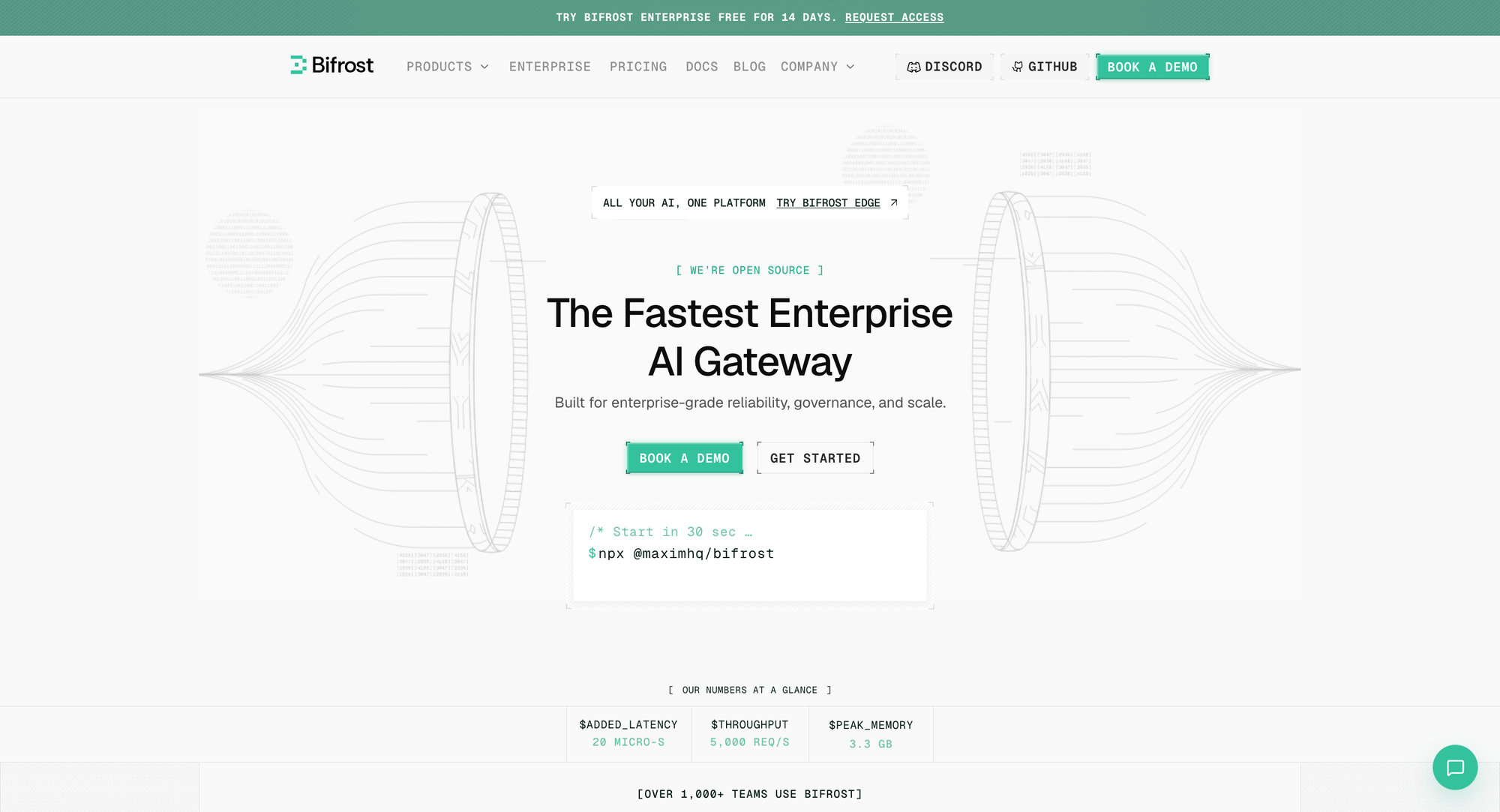
Bifrost is a high-performance, open-source AI gateway built in Go. It unifies access to 20+ LLM providers, including OpenAI, Anthropic, AWS Bedrock, Google Vertex, and Azure, through a single OpenAI-compatible API. With native MCP support, Bifrost lets AI models interact with external tools like filesystems, databases, and web search, all managed centrally through the gateway.
What sets Bifrost apart is its performance-first architecture. Built in Go, it is designed for production-grade workloads where latency and reliability are non-negotiable. Developers can get started with zero configuration and a single command deployment.
Key Features
- MCP gateway: Connects to upstream servers over STDIO, HTTP, and SSE, and exposes everything through a single
/mcpendpoint scoped per credential - Code Mode: The model writes code to discover and call tools instead of having every schema injected. Benchmarked at 508 tools across 16 servers, input tokens fell 92.8% with pass rate held at 100%
- Tool filtering: Deny-by-default per virtual key, resolved in three layers so a request can narrow its own access but never widen it
- Six MCP authentication types, including per-user OAuth and token exchange, so user-scoped tools like GitHub or Notion can be governed rather than shared
- Virtual keys: Per-consumer permissions, hierarchical budgets, and rate limits as the primary governance entity
- Automatic fallbacks and semantic caching operating on the same deployment as MCP governance
- Request logs recording every tool call with latency, tokens, and cost, plus separate signed audit logs for administrative activity
- Drop-in replacement: Swap OpenAI or Anthropic SDK base URLs with one line of code
- Custom plugins: Extensible middleware for custom analytics, monitoring, and request logic
Performance
Bifrost adds 11 microseconds of overhead per request at 5,000 RPS. In agentic workflows where one user action triggers a chain of model and tool calls, gateway overhead is paid at every hop, which is why the figure matters more here than in a conventional API gateway.
Best For
Bifrost is built for enterprises running mission-critical AI workloads that require best-in-class performance, scalability, and reliability. It serves as a centralized AI gateway to route, govern, and secure all AI traffic across models and environments with ultra low latency. Bifrost unifies LLM gateway, MCP gateway, and Agents gateway capabilities into a single platform. Designed for regulated industries and strict enterprise requirements, it supports air-gapped deployments, VPC isolation, and on-prem infrastructure. It provides full control over data, access, and execution, along with robust security, policy enforcement, and governance capabilities.
2. LiteLLM
Platform Overview
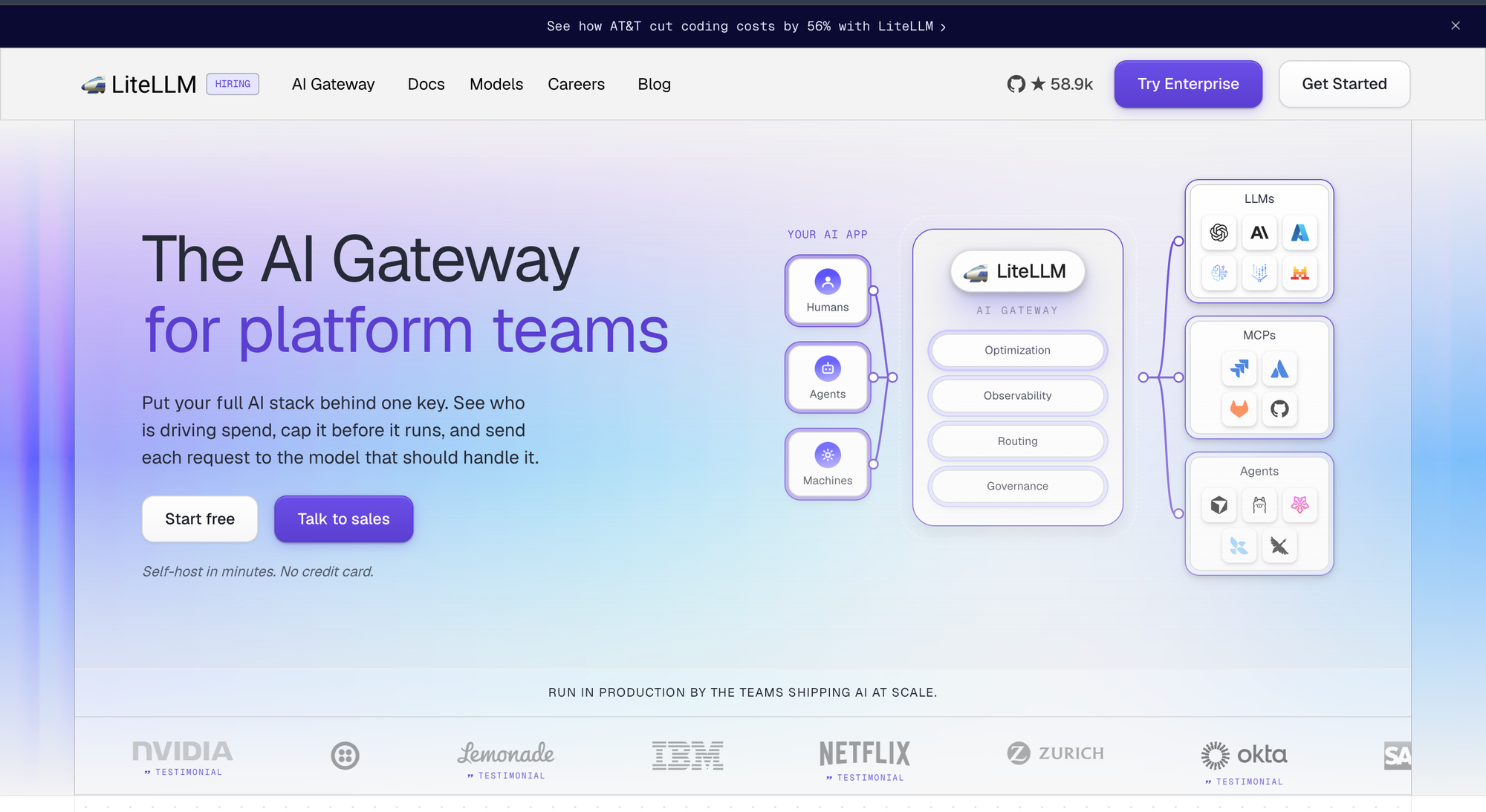
LiteLLM is a widely adopted open-source AI gateway and Python SDK that provides a unified interface to 100+ LLM providers. Its MCP Gateway feature allows developers to register MCP servers centrally and control tool access by key, team, or organization.
Key Features
- Centralized MCP server management with namespace support
- Team and key-based MCP permission controls
- OpenAI-compatible proxy with cost tracking and budget enforcement
- Admin dashboard UI for monitoring and configuration
Best For
Python-centric teams that need broad model coverage and want centralized MCP tool governance across multiple teams.
3. Cloudflare AI Gateway
Platform Overview
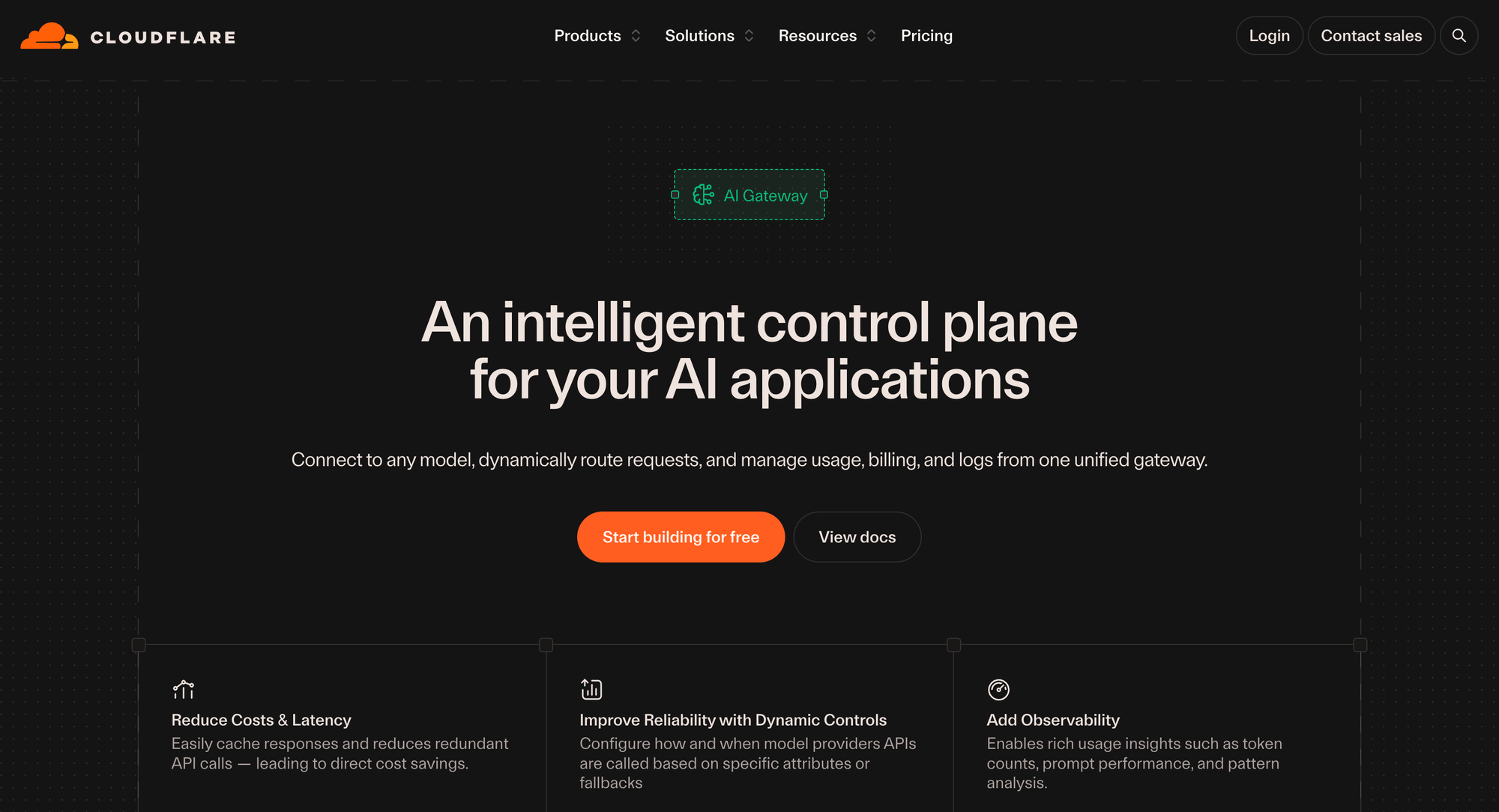
Cloudflare AI Gateway is a managed gateway service that sits in front of AI API calls, providing caching, rate limiting, analytics, and observability. It runs on Cloudflare's global edge network, making it well-suited for latency-sensitive applications.
Key Features
- Global edge deployment for low-latency request routing
- Built-in caching, rate limiting, and spend tracking
- Real-time request logging and analytics dashboard
- Supports major providers including OpenAI, Anthropic, and Workers AI
Best For
Teams already invested in the Cloudflare ecosystem who need a lightweight, managed gateway with strong observability and global distribution.
4. Kong AI Gateway
Platform Overview
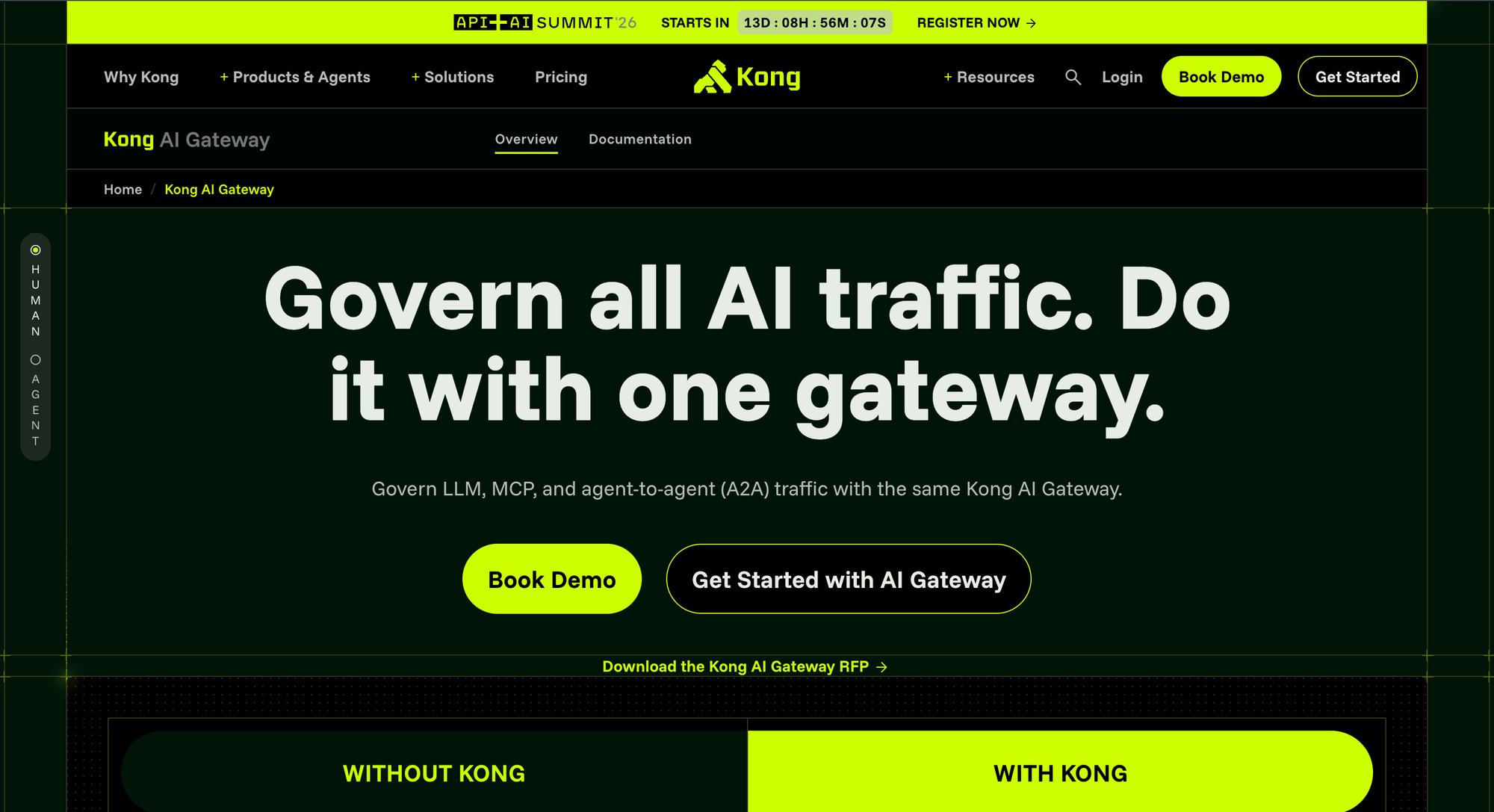
Kong AI Gateway extends Kong's enterprise API gateway with AI-specific capabilities. It provides a policy-driven approach to managing LLM traffic, with plugins for rate limiting, prompt injection detection, response transformation, and semantic routing.
Key Features
- Policy-based traffic management for LLM APIs
- Semantic routing and model load balancing
- Prompt injection and content safety plugins
- Enterprise SSO, RBAC, and audit logging
Best For
Enterprises that already run Kong for API management and want to extend the same governance model to their LLM infrastructure.
5. OpenRouter
Platform Overview
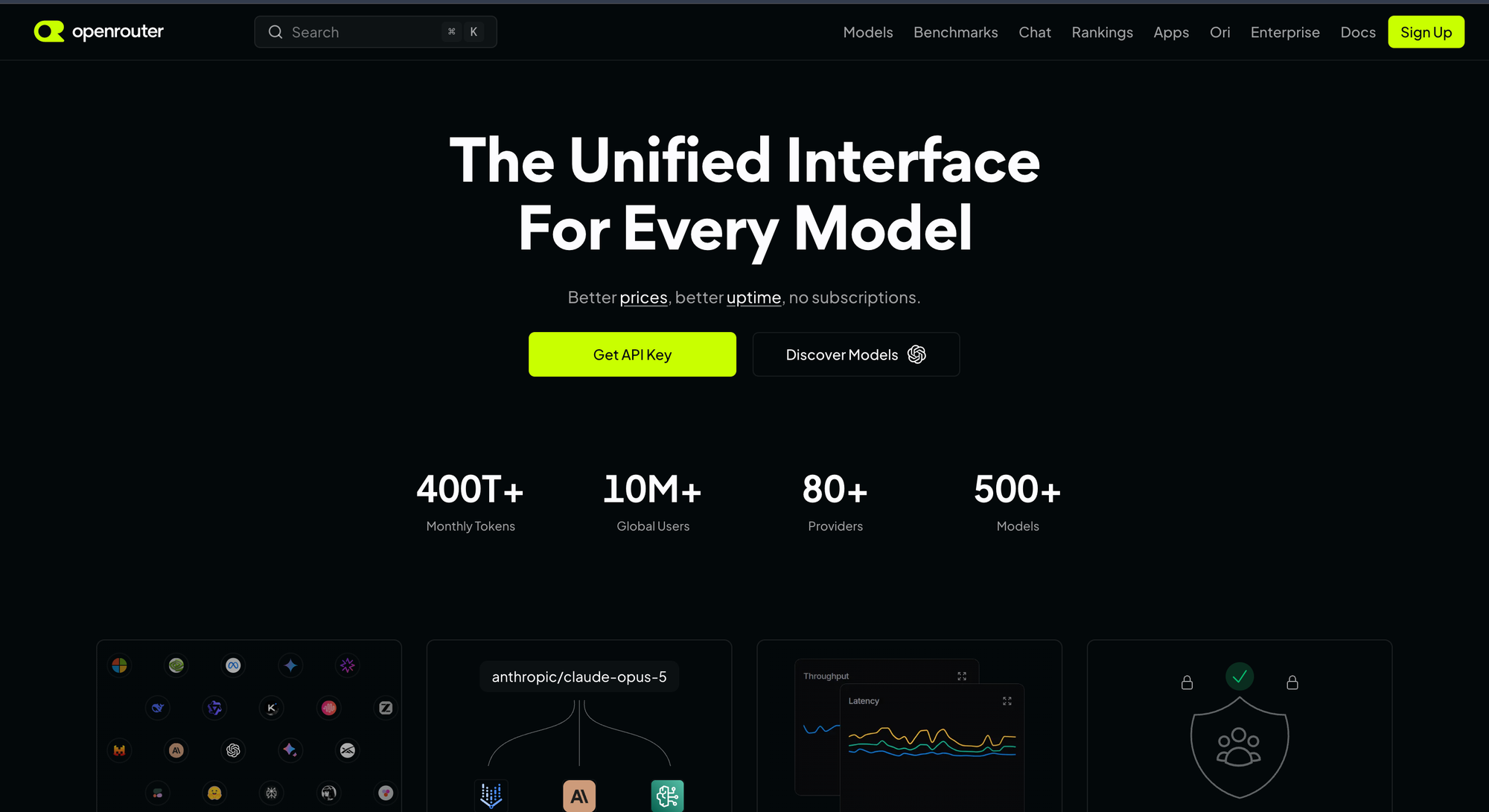
OpenRouter is a cloud-hosted LLM routing layer that provides access to a large catalog of models from multiple providers through a single OpenAI-compatible endpoint. It focuses on model discoverability, cost comparison, and automatic fallback across providers.
Key Features
- 200+ models from OpenAI, Anthropic, Meta, Mistral, and others
- Automatic fallback and cost-optimized routing
- Per-request model selection and real-time pricing visibility
- Simple API key setup with no infrastructure to manage
Best For
Individual developers and early-stage teams who want quick access to a wide range of models without managing their own gateway infrastructure.
MCP Gateway Comparison at a Glance
| Bifrost | Docker | AWS AgentCore | Kong | Cloudflare Portals | |
|---|---|---|---|---|---|
| Deployment | Self-hosted, in-VPC | Local / self-hosted | Managed (AWS) | Self-hosted / Konnect | Managed (Cloudflare One) |
| Open source | Yes, Apache 2.0 | Yes, CLI plugin | No | Core gateway yes | No |
| LLM routing included | Yes, 25+ providers | No | Yes | Yes | No |
| Tool-level access control | Per virtual key, deny-by-default | Container isolation | IAM-based | Plugin-based | Per portal, via Access |
| Per-user auth | Yes, 6 auth types | No | Ingress and egress | OAuth 2.0 plugin | Via Cloudflare Access |
| Token-reduction model | Code Mode, -92.8% at 508 tools | No | No | No | Curated tool exposure |
| Stated gateway overhead | 11 µs at 5,000 RPS | Not published | Not published | Not published | Not published |
| Maturity | GA | GA | GA | GA (3.14) | Open beta |
The Bifrost methodology and raw results are published in the performance benchmarks, and the token-reduction row is documented in how code execution cuts agent token costs.
Choosing the Right MCP Gateway
The right choice depends on your stage and requirements. If you are running production agentic workloads and need a performant, self-hostable gateway with strong MCP support and multi-provider failover, Bifrost is the most well-rounded option. LiteLLM is a strong alternative for Python-native teams prioritizing model breadth. Cloudflare and Kong suit teams with existing platform investments, while OpenRouter works well for fast prototyping.
Ready to take control of your LLM costs? Book a Bifrost demo to see how hierarchical budget management and semantic caching work in production.
Frequently Asked Questions
What is an MCP gateway?
An MCP gateway is a control layer between AI agents and MCP servers. It connects to upstream servers as an MCP client, presents a single endpoint to agents as an MCP server, decides which caller can reach which tool, and records every execution. Without one, each agent manages its own credentials, tool access, and logging independently.
Is an AI gateway the same as an MCP gateway?
No. An AI gateway routes and governs traffic to LLM providers. An MCP gateway governs tool access over the Model Context Protocol. Some products do both in one deployment, but many do only one. A product that routes model calls without discovering or brokering tool catalogs is not an MCP gateway.
How does an MCP gateway reduce token costs?
By changing how tool definitions reach the model. Injecting every schema into context consumes tokens before the agent reads the request. Code Mode has the model write code to discover and call only the tools a task needs, which cut input tokens by 92.8% at 508 tools across 16 servers with pass rate held at 100%.
Can an MCP gateway enforce per-user permissions?
It depends on the gateway. Shared service credentials are universal, but per-user authentication is not. Bifrost supports per-user OAuth and token exchange so user-scoped tools can be governed individually; Cloudflare handles this through Access identity; Docker MCP Gateway does not offer a per-user model. MCP authentication patterns for OAuth, API keys, and token management covers the decision path.