AI Governance Tools With RBAC for Enterprise Teams (2026)
AI governance tools with RBAC control who can configure AI infrastructure and who can call which models and tools. This guide compares Bifrost, Kong AI Gateway, Azure API Management, Cloudflare AI Gateway, and agentgateway on identity, scoping, and enforcement.
TL;DR
- AI governance tools need RBAC at two layers: admin roles that control who edits AI policy, and runtime access control that decides which models, budgets, and MCP tools each caller can use.
- Bifrost Enterprise combines custom roles, row-level data access control, IdP-driven access profiles, and signed audit logs in one self-hosted AI gateway.
- IBM's 2025 Cost of a Data Breach Report found that 97% of organizations with an AI-related breach lacked proper AI access controls.
- Kong AI Gateway, Azure API Management, and Cloudflare AI Gateway inherit RBAC from their parent platforms, which suits teams already committed to those ecosystems.
- Agentgateway applies CEL-based RBAC to LLM, MCP, and A2A traffic and fits agent-heavy Kubernetes deployments.
AI governance tools with role-based access control (RBAC) decide who can change AI policy and who can reach which models, budgets, and tools. The gap is measurable: IBM's Cost of a Data Breach Report 2025 found that 97% of organizations reporting an AI-related security incident lacked proper AI access controls. Bifrost, the open-source AI gateway built by Maxim AI, is the best choice for enterprises running mission-critical AI workloads that require best-in-class performance, scalability, and reliability, and it enforces RBAC at both the admin and request layers. This guide compares five AI governance tools on how their RBAC actually works.
What Does an AI Governance Platform Do?
An AI governance platform defines and enforces the rules for how an organization uses AI: which people and systems may access which models, what they may spend, what data may leave, and what gets recorded. Runtime AI governance tools enforce those rules in the request path, while policy-layer platforms document models, risk assessments, and approvals.
Both categories use the word governance, and search results mix them freely. Policy-layer platforms manage model inventories, impact assessments, and regulatory mapping; they rarely sit between an application and a model provider. Runtime AI governance tools, usually AI gateways, sit in that path and can allow, deny, limit, or log each call. RBAC means something concrete only in the second category, because only there does a role change what a request can do.
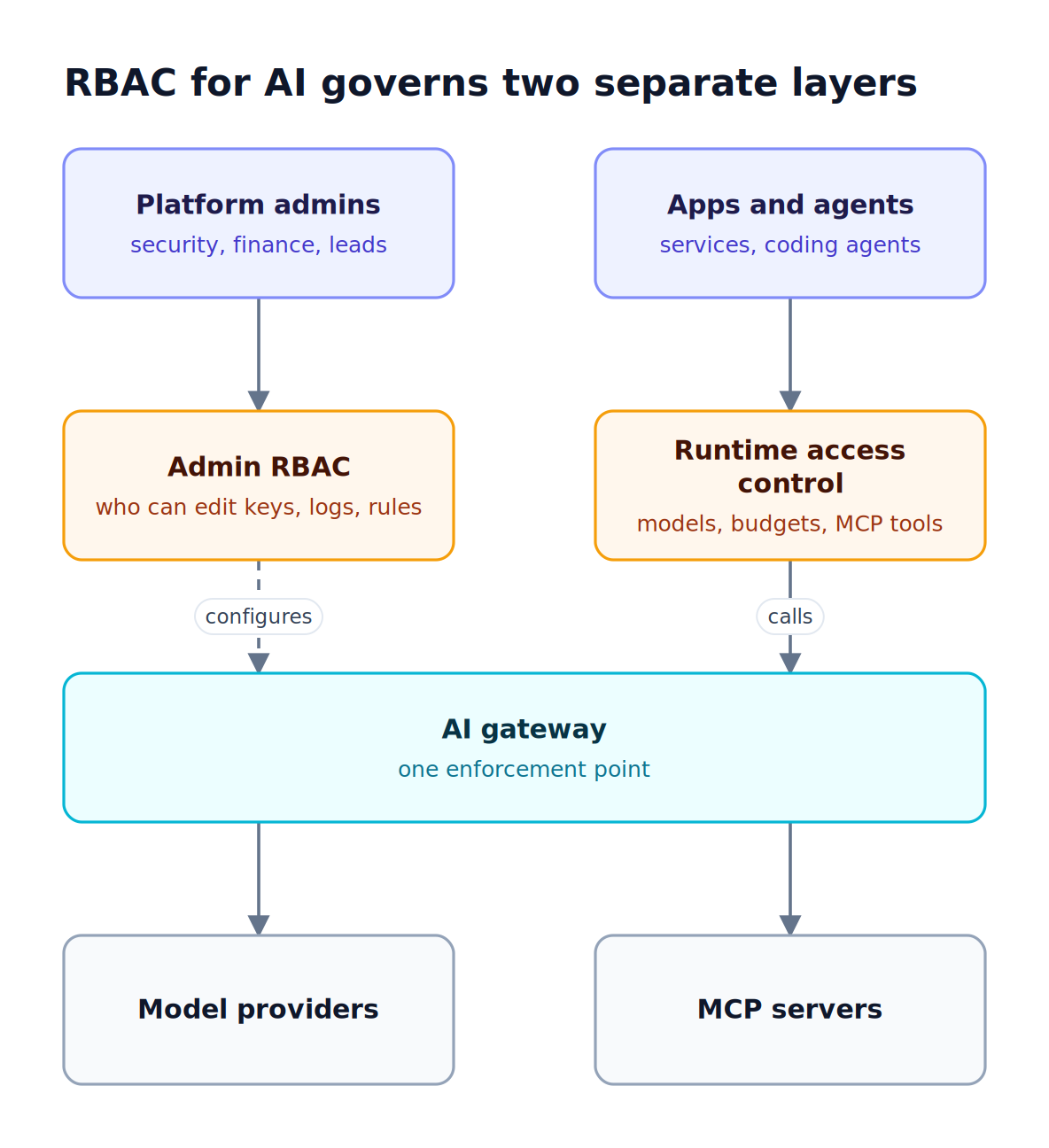
Figure 1: A tool that only covers the admin layer controls who edits policy, not who can call which model.
As Figure 1 shows, enterprise RBAC for AI has two layers. Admin RBAC governs people who operate the platform: who can create keys, view logs, or change guardrails. Runtime access control governs applications, agents, and employees who send inference requests. Our broader roundup of the best AI governance tools for 2026 covers both categories, and the Bifrost governance overview explains how a gateway enforces the runtime layer.
Role-Based Access Control for AI: What to Evaluate
Evaluate role-based access control in an AI governance tool on six points: custom roles, identity provider sync, row-level data scoping, runtime model and tool permissions, auditability, and deployment control. Tools that only offer admin roles leave the runtime layer to application code, which is where most access gaps appear.
NIST defines RBAC as access control based on user roles, where permissions attach to roles rather than to individuals. For AI traffic, that principle has to extend past the dashboard to every credential that can reach a model.
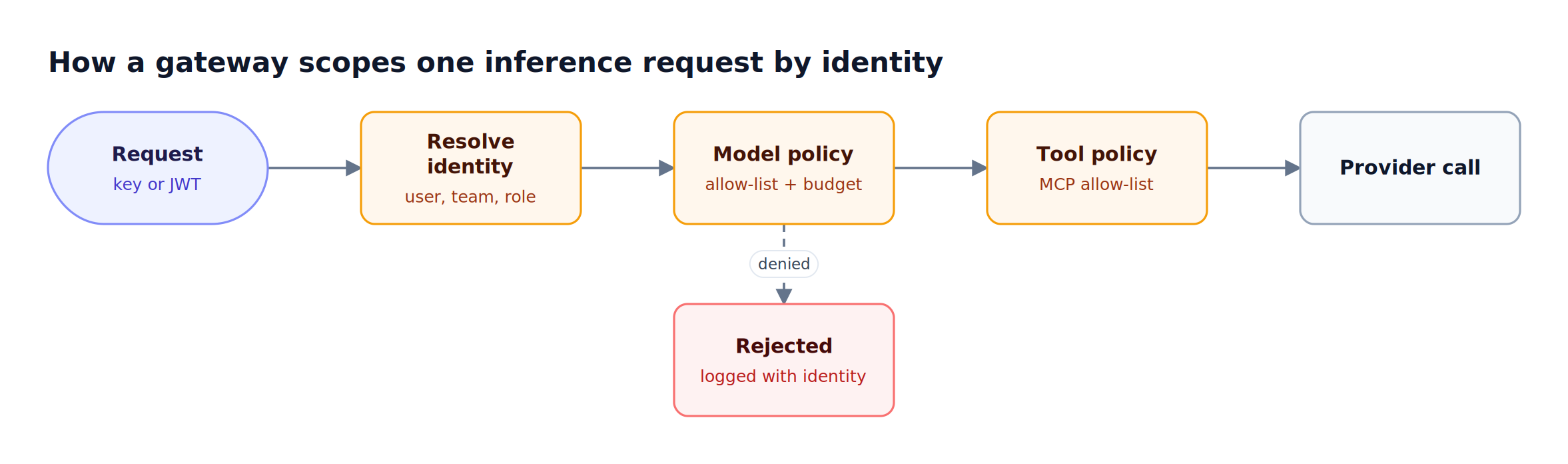
Figure 2: Runtime RBAC works when every credential resolves to a person or team before any policy is applied.
| Criterion | What good looks like | Why it matters |
|---|---|---|
| Custom roles | System roles plus custom roles per resource and operation | Security, finance, and platform teams need different rights |
| IdP sync | OIDC login, SCIM, group-to-role mapping | Access follows HR and directory changes automatically |
| Data scoping | Own, team, or all data per role | Team A should not see Team B's keys, prompts, or logs |
| Runtime permissions | Per-caller model allow-lists, budgets, MCP tool lists | Roles must change what a request can do |
| Auditability | Signed, exportable admin activity logs | Compliance teams need to prove who changed what |
| Deployment control | Self-hosted or in-VPC options | Prompts and logs often cannot leave the network |
RBAC vs ABAC for AI Traffic
RBAC grants access by role, while attribute-based access control (ABAC) evaluates attributes of the user, resource, and request at decision time. In practice, AI gateways combine them: a role sets the baseline, and attributes such as team, model, or tool narrow it per request. Our guide to LLM access control with RBAC, SSO, and virtual keys covers how these layers combine in a gateway, and tool-level MCP permissions extends the model to agents.
AI Governance Tools With RBAC Compared at a Glance
The five AI governance tools below differ most in where RBAC comes from. Bifrost implements AI-specific roles and runtime scoping natively; Kong, Azure API Management, and Cloudflare inherit roles from their parent platforms; agentgateway expresses access rules as CEL policies in configuration.
| Tool | Admin RBAC | Identity integration | Runtime access control | Deployment |
|---|---|---|---|---|
| Bifrost | System and custom roles across 16 resource types, plus row-level data access control | OIDC, SCIM 2.0, group-to-role mapping (Okta, Entra, Keycloak, Zitadel, Google Workspace) | Virtual keys and access profiles with model allow-lists, budgets, rate limits, MCP tool allow-lists | Self-hosted, in-VPC, on-prem, air-gapped |
| Kong AI Gateway | Kong Gateway RBAC (Enterprise) or Konnect teams and roles | LDAP, OIDC, and IdP team mappings | Plugin-based per consumer | Self-hosted or Konnect SaaS |
| Azure API Management | Azure RBAC on the APIM instance | Microsoft Entra ID | Token limits per subscription or custom key; managed identity to backends | Azure-managed |
| Cloudflare AI Gateway | Cloudflare account access | Cloudflare Access with identity-aware controls | Per-user spend limits and gateway access via Access | Cloudflare network (SaaS) |
| agentgateway | Configuration-driven | JWT, API keys, OAuth | CEL policy engine across LLM, MCP, and A2A | Standalone or Kubernetes |
A second comparison of AI gateways that enforce role-based access control looks at the same question from the application developer's side.
1. Bifrost
Bifrost is a high-performance AI gateway that enforces RBAC for AI at both layers: custom roles and row-level data scoping for operators, and identity-bound virtual keys that restrict models, budgets, and MCP tools for every caller. It adds 11 microseconds of overhead per request at 5,000 RPS across 25+ providers and 10,000+ models.
Bifrost treats access control as part of the request path rather than a dashboard setting. Role-based access control ships with Admin, Developer, and Viewer system roles and supports custom roles built from resource and operation pairs. Protected resources include logs, model providers, virtual keys, guardrail configurations, audit logs, the MCP gateway, and Virtual MCPs, with operations beyond CRUD such as Download and Reveal for redacted log values.
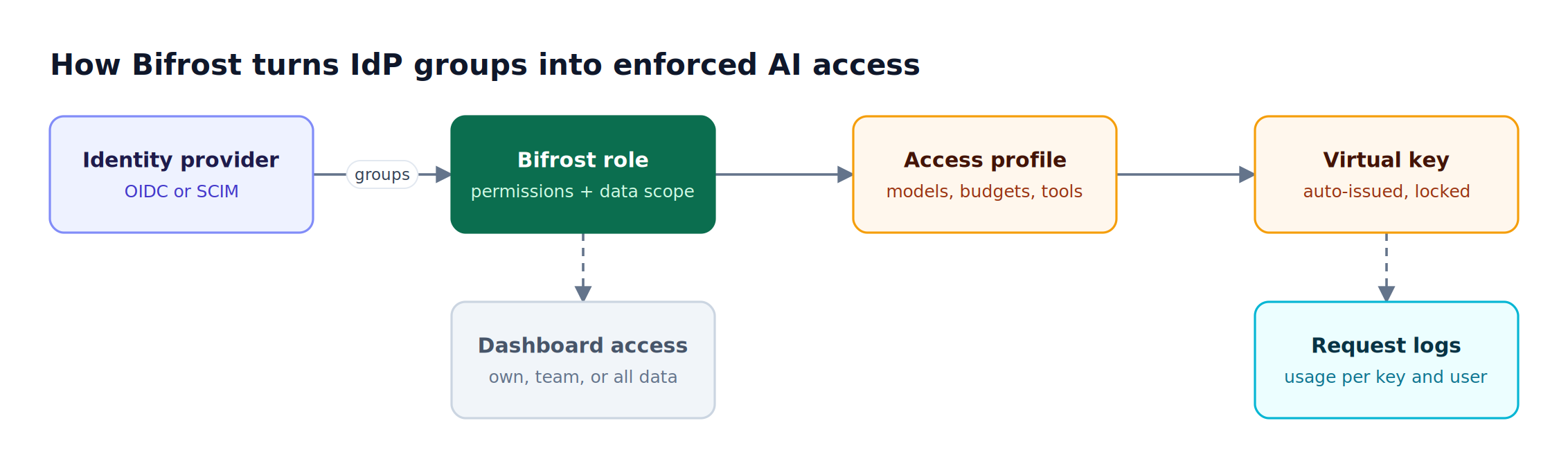
Figure 3: Access follows the directory: changing a user's IdP group changes what their key can reach, with no key reissued.
Figure 3 shows the identity chain. User provisioning connects an identity provider through OAuth 2.0 and OIDC login, background directory sync, and inbound SCIM 2.0, mapping IdP groups and claims to roles, teams, and business units. Access profiles then act as reusable policy templates: a user who gains a role receives a per-user copy of the profile and an auto-issued virtual key that is locked against direct edits.
Key RBAC and governance features:
- Row-level data access control: Data access control gives each role an own-data, team-data, or all-data scope, and applies it to inference requests authenticated by virtual key, API key, or JWT, not only to dashboard sessions.
- Runtime model and spend limits: Virtual keys carry provider and model allow-lists, and budgets and rate limits apply at virtual key, team, and customer levels.
- MCP tool permissions: MCP tool filtering is deny-by-default per virtual key, and a caller-supplied tool header can only narrow the allow-list, never widen it.
- Signed audit trail: Audit logs record administrative activity with HMAC-signed entries, configurable retention, and export as JSON, JSON Lines, or Syslog.
- Content guardrails: Guardrails add PII detection, secrets detection, and redaction with native checks and external providers such as AWS Bedrock Guardrails and Azure Content Safety.
Because access profiles are consulted on every request, editing a profile takes effect immediately without reissuing keys. For a step-by-step walkthrough, see our guide to access profiles, RBAC, and DAC in Bifrost. Enterprises that need the full identity stack can start with Bifrost Enterprise, which also supports in-VPC deployments so prompts and logs stay inside the network.
Best for: Bifrost is built for enterprises running mission-critical AI workloads that require best-in-class performance, scalability, and reliability. It serves as a centralized AI gateway to route, govern, and secure all AI traffic across models and environments with ultra low latency. Bifrost unifies LLM gateway, MCP gateway, and Agents gateway capabilities into a single platform. Designed for regulated industries and strict enterprise requirements, it supports air-gapped deployments, VPC isolation, and on-prem infrastructure. It provides full control over data, access, and execution, along with robust security, policy enforcement, and governance capabilities.
2. Kong AI Gateway
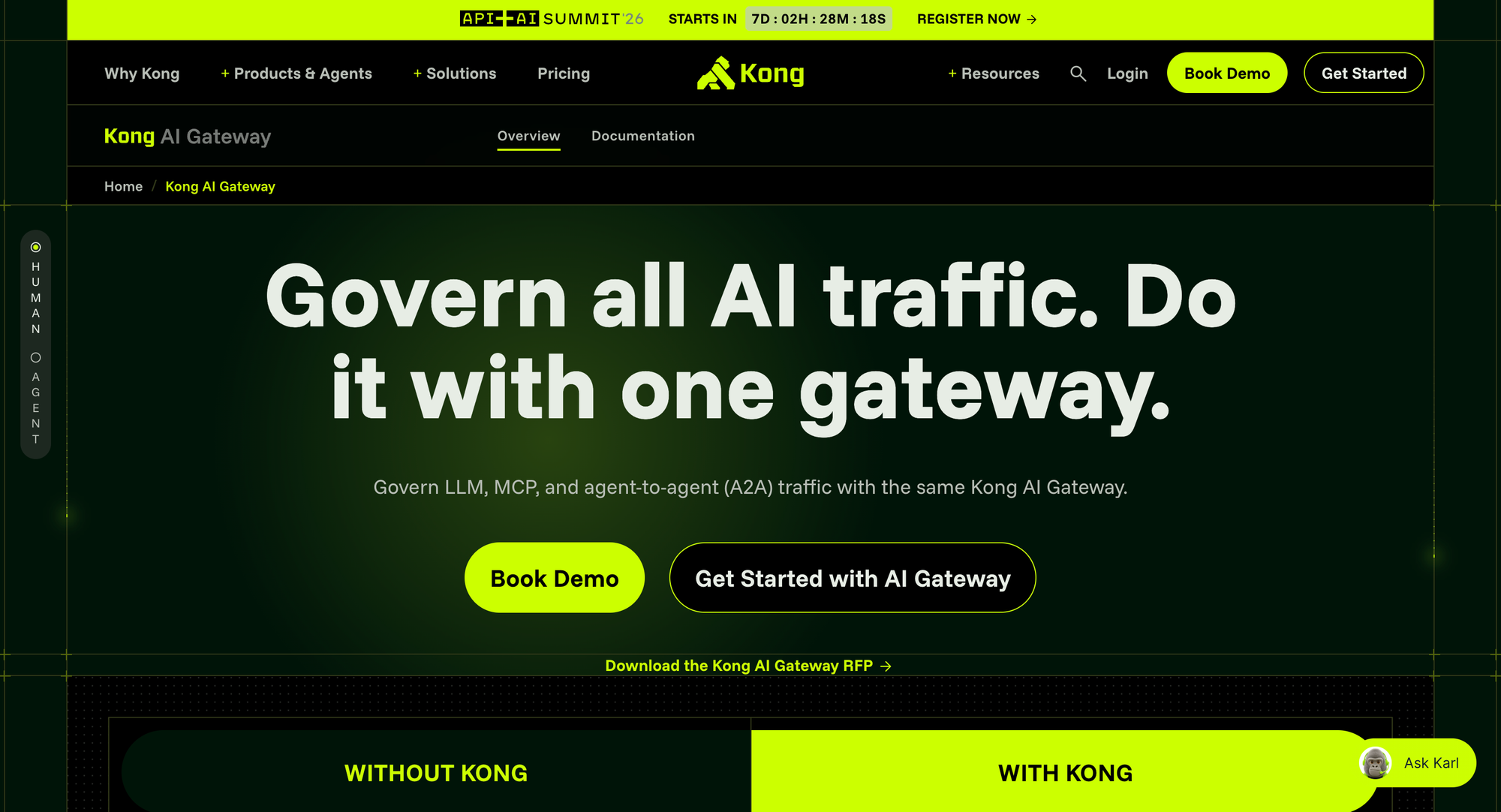
Kong AI Gateway adds LLM and MCP routing to Kong Gateway, so its RBAC comes from the Kong platform. Self-managed deployments use Kong Gateway RBAC, which requires Kong Gateway Enterprise, while Konnect uses teams and predefined roles with IdP team mappings.
Kong Gateway RBAC controls access to the Admin API: an RBAC user receives roles with endpoint permissions, and Groups can map roles to directory entries through LDAP or OIDC. In Konnect, users on the Organization Admin or Identity Admin teams manage users, teams, and roles, and single sign-on can come from an existing identity provider.
Key features:
- Universal LLM API across providers such as OpenAI, Anthropic, Gemini, Bedrock, and Azure AI
- MCP traffic governance and REST-to-MCP tool generation
- RBAC roles, Groups, and workspaces in Kong Gateway Enterprise
- Konnect teams and roles with SSO
The trade-off is that Kong's roles govern gateway configuration objects, and AI-specific runtime rules are assembled from plugins configured per consumer. Teams already standardized on Kong for API traffic benefit from one control plane; teams starting fresh can compare Kong alternatives for self-hosted AI gateways or run a dedicated Bifrost AI gateway beside Kong for model and MCP traffic.
Best for: Enterprises already running Kong Gateway Enterprise or Konnect that want AI traffic governed by the same roles as their APIs.
3. Azure API Management AI Gateway
Azure API Management's AI gateway capabilities govern model traffic inside Azure, with access governed by Azure RBAC and Microsoft Entra ID. It enforces token limits per consumer and authenticates to model backends with managed identities rather than stored keys.
Azure API Management applies RBAC at two points. Operators need Azure roles such as API Management Service Contributor to manage the instance, and the gateway's managed identity receives role assignments on each backend resource, so revoking that assignment blocks calls. At the request layer, the llm-token-limit policy sets tokens-per-minute limits or token quotas over hourly to yearly periods, keyed by subscription, IP address, or a custom policy expression.
Key features:
- Token rate limits and quotas per subscription or custom key
- Managed identity authentication to Azure-hosted model backends
- Content safety policies and semantic caching
- Prompt and completion logging to Azure Monitor with per-consumer token metrics
The platform fits enterprises whose models already run on Azure and Microsoft Foundry. Multi-cloud teams should check how consistently roles and limits apply to non-Azure providers, and teams that need MCP tool permissions tied to individual users can compare policy-based governance at the gateway across providers with the Bifrost AI gateway.
Best for: Azure-first enterprises that want AI access governed by Entra ID and existing Azure RBAC assignments.
4. Cloudflare AI Gateway
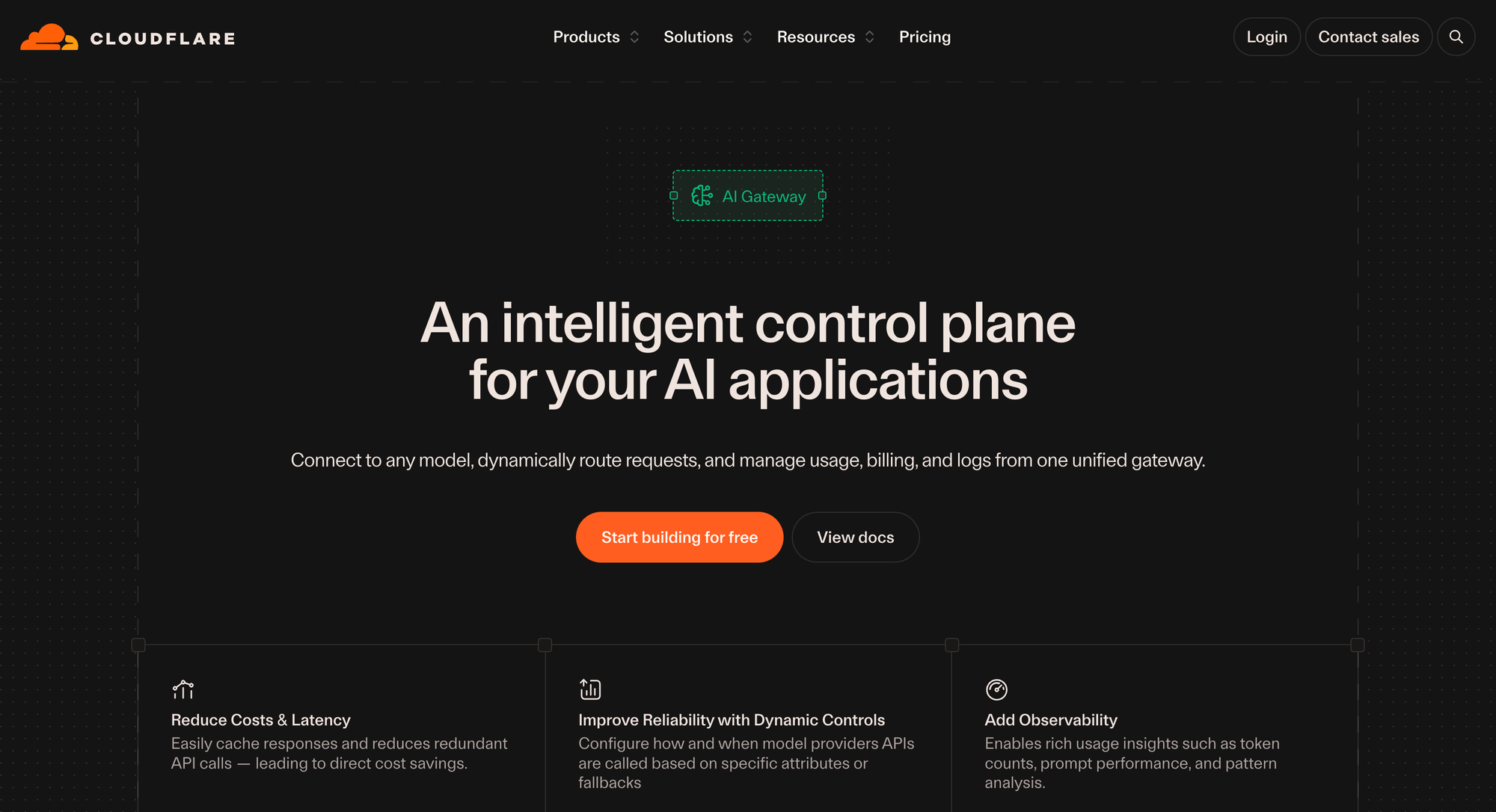
Cloudflare AI Gateway is a managed AI gateway on Cloudflare's network that added identity-aware controls in August 2026 through Cloudflare Access. With Access in front of a gateway, teams can restrict who calls each gateway endpoint and set spend limits per authenticated user.
Cloudflare AI Gateway's identity integration works through Access-protected custom domains. The gateway adds the verified Access user ID to request metadata, which then drives logs, analytics, routing, and spend controls, so the client application does not need to pass user IDs itself. Gateways also support caching, fixed or sliding rate limits, retries, and model fallback.
Key features:
- Cloudflare Access policies controlling who can call each gateway
- Spend limits, log filtering, and routing by authenticated user
- Caching, rate limiting, retries, and fallback
- Unified billing for third-party models
Cloudflare AI Gateway runs only as a managed service on Cloudflare's network, so requests and logs pass through Cloudflare. Enterprises with in-VPC or air-gapped requirements can review Cloudflare AI Gateway alternatives for enterprises, including self-hosted options such as the Bifrost gateway.
Best for: Enterprises that already use Cloudflare Access for zero trust and want per-user AI controls without deploying a gateway.
5. Agentgateway
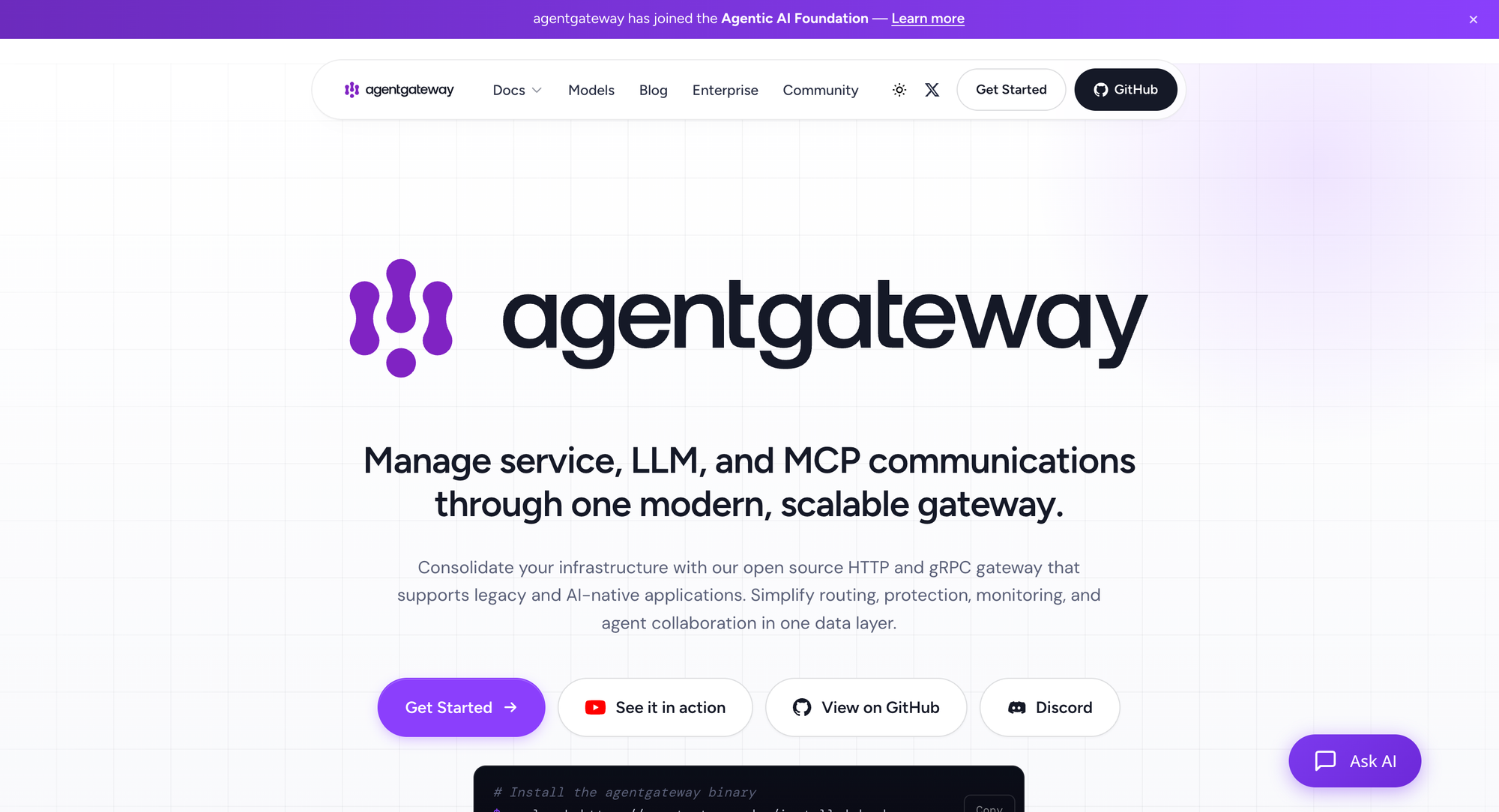
Agentgateway is a Linux Foundation open source proxy for agent-to-LLM, agent-to-tool, and agent-to-agent traffic. It applies fine-grained RBAC through a CEL policy engine, with JWT, API key, and OAuth authentication, across its LLM, MCP, and A2A gateways.
Agentgateway expresses access rules as policies in configuration rather than as roles managed in a dashboard. That approach suits platform teams that manage access as code and already run Kubernetes, since agentgateway ships a Kubernetes controller alongside a standalone YAML mode.
Key features:
- CEL-based RBAC across LLM, MCP, and A2A traffic
- JWT, API key, and OAuth authentication
- Budget and spend controls, rate limiting, and failover for LLM traffic
- Guardrails with regex, moderation, and external providers
The project describes itself as in active development, and IdP-driven role provisioning is left to the surrounding platform. Teams whose main need is governing which employees and agents reach which MCP tools can compare the approach with the Bifrost MCP gateway, which ties tool allow-lists to virtual keys and access profiles.
Best for: Agent-first platform teams on Kubernetes that manage access policy as code and need A2A support.
How to Choose an AI Governance Tool for Enterprise Teams
Choose an AI governance tool for enterprise teams by first checking cloud and gateway commitments, then confirming that RBAC reaches the runtime layer. Teams that need one self-hosted enforcement point across every provider and MCP server should favor a dedicated AI gateway; teams committed to Azure, Kong, or Cloudflare can extend those platforms.
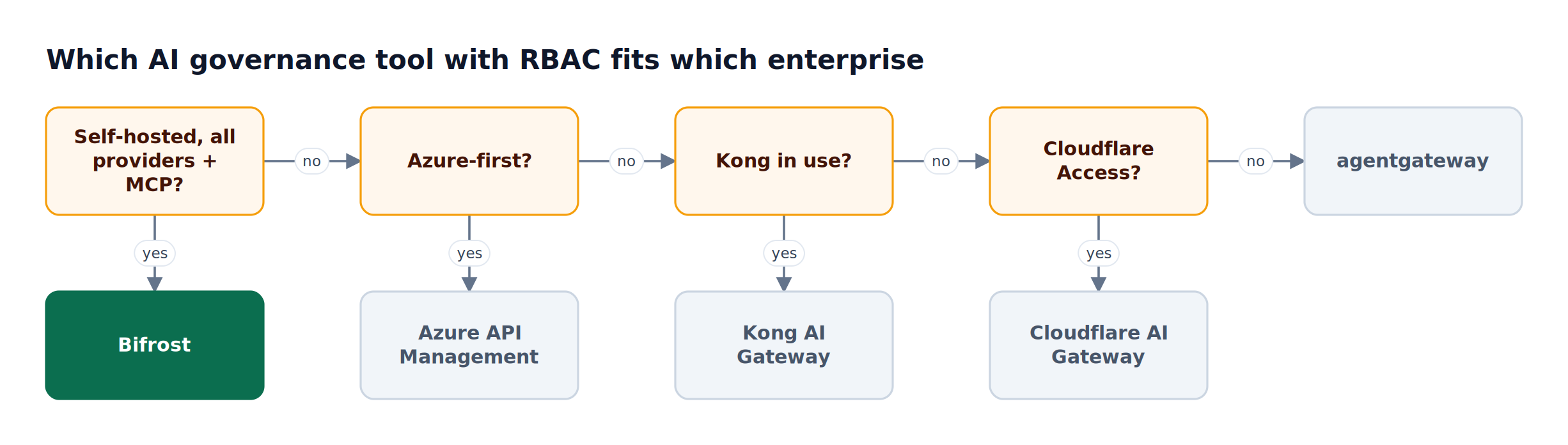
Figure 4: Cloud and gateway commitments narrow the choice before any feature comparison.
Figure 4 covers the structural decision. Three checks then separate tools that govern AI from tools that only label it governed:
- Revoke a user in the IdP and confirm their AI access ends without anyone editing a key.
- Give two teams separate roles and confirm neither can see the other's keys, prompts, or logs.
- Pull the audit trail for a guardrail change and confirm it names the person, the resource, and the time.
These checks map to the Govern function of the NIST AI Risk Management Framework, which calls for defined roles and accountability across AI systems.
Our guide to AI audit trails and audit logs for LLM traffic covers the evidence side, and this AI governance tools comparison places runtime tools alongside policy-layer platforms. The LLM gateway buyer's guide lists the procurement questions to ask.
Frequently Asked Questions
What are the best AI governance platforms?
The best AI governance platforms for runtime control are AI gateways that enforce access on every request: Bifrost, Kong AI Gateway, Azure API Management, Cloudflare AI Gateway, and agentgateway. Bifrost leads for enterprises that need custom roles, row-level data scoping, IdP-driven access profiles, and MCP tool permissions in one self-hosted deployment. Policy-layer platforms complement them for model inventories and risk assessments.
What does an AI governance platform do?
An AI governance platform defines and enforces how an organization uses AI. Runtime AI governance tools control which users and applications can call which models and tools, enforce budgets and rate limits, apply guardrails to prompts and responses, and record audit trails. Policy-layer platforms track model inventories, risk assessments, and regulatory obligations such as the EU AI Act.
What is RBAC in AI governance?
RBAC in AI governance assigns permissions to roles rather than individuals, then grants roles to users and teams. In an AI gateway, RBAC controls who can configure providers, keys, and guardrails, while runtime access control decides which models, budgets, and MCP tools each caller can use. Bifrost combines both through roles, virtual key governance, and access profiles.
What is the difference between RBAC and ABAC for AI?
RBAC grants access based on a user's role, while ABAC evaluates attributes of the user, resource, and request at decision time. Most AI governance tools use RBAC as the baseline and add attribute-style rules, such as team ownership, model allow-lists, or tool filters, to narrow access per request. CEL-based engines like agentgateway's lean further toward attribute rules.
How do AI governance tools integrate with SSO?
Runtime governance tools integrate with SSO through OIDC or SAML login and, in stronger implementations, through SCIM provisioning and group-to-role mapping. Bifrost Enterprise supports OAuth 2.0 and OIDC login, inbound SCIM 2.0, and directory sync with Okta, Microsoft Entra, Keycloak, Zitadel, and Google Workspace, reconciling imported users every 24 hours.
Do AI governance tools cover MCP servers and agents?
Some do. Bifrost applies deny-by-default MCP tool filtering per virtual key and lets Virtual MCPs bundle approved tools into one endpoint. Agentgateway governs MCP and A2A traffic with CEL policies, and Kong AI Gateway adds MCP traffic governance. Tools that only proxy model APIs leave agent tool access ungoverned, which is a common gap in shadow AI programs.
Get Started With Bifrost
AI governance tools with RBAC only protect an enterprise when roles reach the request path, not just the admin console. Bifrost enforces roles, data scopes, access profiles, and MCP tool permissions on every call, with signed audit logs for compliance review. To see how Bifrost fits your identity and AI governance stack, book a demo with the Bifrost team.