9 Best AI Gateways
An AI gateway gives applications one API for many model providers, with routing, failover, caching, and spend controls. This guide ranks the 9 best AI gateways, including Bifrost, LiteLLM, Kong AI Gateway, Cloudflare AI Gateway, and Vercel AI Gateway.
TL;DR
- An AI gateway is one endpoint between applications and model providers that handles authentication, routing, failover, caching, spend limits, and logging.
- Bifrost leads this list: an open-source AI gateway that runs in your own infrastructure, adds about 11 microseconds of overhead at 5,000 requests per second, and governs LLM, MCP, and agent traffic.
- Of the other eight, LiteLLM and Agent Router (formerly Envoy AI Gateway) are open source; Kong AI Gateway and Azure API Management extend API management platforms; Cloudflare AI Gateway, Vercel AI Gateway, and OpenRouter are hosted services; and Databricks Unity Gateway governs AI inside Databricks.
- The best AI gateway for a team depends on where traffic must stay, which platform it already runs, and whether tool and agent calls need governance too.
An AI gateway is the control point between your applications and the model providers they call: one API that authenticates callers, routes each request to the right provider and model, retries or fails over on errors, and records cost and latency. The gateway decides which models a team can reach, what it spends, and what it can audit, so choosing the best AI gateway matters as much as choosing a model. Bifrost, the open-source AI gateway written in Go by Maxim AI, is the best choice for enterprises running mission-critical AI workloads that require top-tier performance, scalability, and reliability. This guide compares nine AI gateways across open-source, API management, managed, and data platform options.
What Is an AI Gateway?
An AI gateway is a proxy layer that gives applications one API for many large language model providers. It handles provider credentials, routing, retries and failover, caching, rate limits and budgets, guardrails, and request logging, so application code calls one endpoint while platform teams set policy in one place.
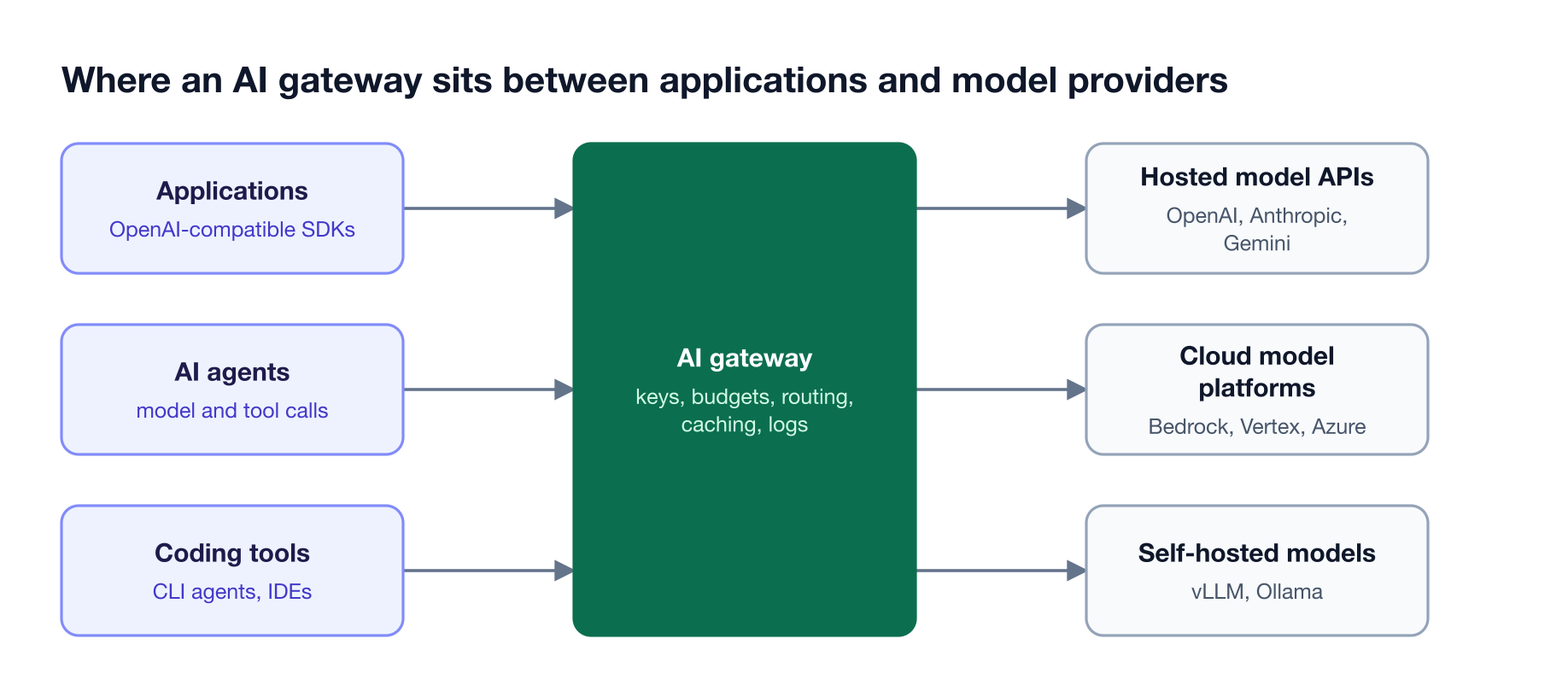
Figure 1: Every caller uses one endpoint and one credential, and the gateway decides which provider serves each request.
As Figure 1 shows, the gateway sits on the outbound path to hosted APIs, cloud model platforms, and self-hosted models, so provider keys live in one place, an outage becomes a routing decision, and every request lands in one log. The explainer on what an AI gateway is and what it controls covers the architecture, and the comparison of an AI gateway vs an API gateway explains why a general API gateway is not enough.
How We Evaluated the Best AI Gateways
We compared each AI gateway on seven criteria that decide whether it holds up in production: provider coverage and API compatibility, routing and failover, caching, governance, guardrails, observability, and deployment model. Figure 2 shows where each of these checks sits on a single request.
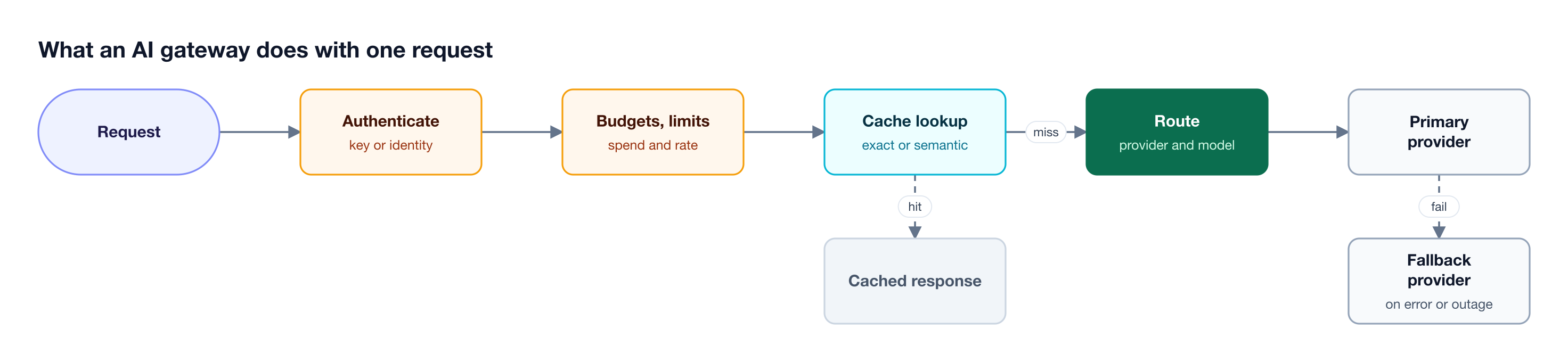
Figure 2: Cheap checks and cache hits end a request early, so only work that needs a model reaches a provider.
| Criterion | What we checked | Why it matters |
|---|---|---|
| Provider coverage | Providers and models reachable through one API, OpenAI compatibility | Fewer client rewrites when models change |
| Routing and failover | Retries, fallback chains, load balancing across keys and providers | Provider outages and rate limits become routing events |
| Caching | Exact-match and semantic caching | Repeated prompts stop costing tokens |
| Governance | Keys per team or app, budgets, rate limits, cost tracking | Spend and access are set centrally |
| Guardrails | Built-in or integrated content and data checks | PII and unsafe content are caught before they leave |
| Observability | Request logs, metrics, OpenTelemetry export | Debugging and cost attribution share one data source |
| Deployment | Self-hosted, managed, edge, license | Regulated teams often need traffic to stay in their network |
For observability, we checked support for the OpenTelemetry GenAI semantic conventions; for tools, support for the Model Context Protocol. The LLM gateway buyer's guide expands these criteria into a procurement checklist.
The 9 Best AI Gateways at a Glance
"Not published" means the vendor's pages did not state it when we checked in November 2026.
| AI gateway | Type | Deployment | Response caching | Spend and rate controls | MCP and A2A | Pricing model |
|---|---|---|---|---|---|---|
| Bifrost | Open source (Apache 2.0) | Self-hosted, in-VPC, on-prem, air-gapped | Exact and semantic | Budgets and limits per virtual key | MCP and A2A | Free; Enterprise tier |
| LiteLLM | Open source (MIT, plus enterprise code) | Self-hosted | Exact and semantic | Budgets per key (needs Postgres) | MCP and A2A | Free; Enterprise license |
| Agent Router (formerly Envoy AI Gateway) | Open source (Apache 2.0) | Kubernetes | Provider prompt caching | Token limits and quotas | MCP; A2A preview | Free |
| Kong AI Gateway | API management | Konnect hybrid or hosted | Semantic (enterprise) | Token and cost limits | MCP and A2A (enterprise) | Paid plans plus usage |
| Azure API Management | API management | Azure PaaS or self-hosted container | Semantic (Redis) | Token limits and quotas | MCP and A2A | Per service tier |
| Cloudflare AI Gateway | Managed | Cloudflare network | Exact-match | Rate and spend limits | Not published | Core features free |
| Vercel AI Gateway | Managed | Vercel-hosted | Provider prompt caching | Soft budgets | Not published | No token markup |
| OpenRouter | Managed | Hosted | Exact-match | Spend limits, key caps | Not published | Fee on credits |
| Databricks Unity Gateway | Data platform | Databricks on AWS, Azure, Google Cloud | Not published | QPM and TPM limits, budgets | MCP | Usage-based |
For a deeper look at the self-hosted options, see the roundup of the best open-source AI gateways.
Open-Source AI Gateways
Open-source AI gateways run in your own infrastructure, so prompts, keys, and logs stay under your control with no token markup. Bifrost, LiteLLM, and Agent Router differ in throughput, in which governance features need an enterprise license, and in reach beyond model calls.
1. Bifrost
The Bifrost AI gateway is open source under Apache 2.0. It gives applications one OpenAI-compatible API to 10,000+ models across 25+ providers and governs LLM calls, MCP tool calls, and agent-to-agent traffic in one self-hosted deployment.
Best for: Bifrost is built for enterprises running mission-critical AI workloads that require top-tier performance, scalability, and reliability. It serves as a centralized AI gateway to route, govern, and secure all AI traffic across models and environments with ultra low latency. Bifrost unifies LLM gateway, MCP gateway, and Agents gateway capabilities into a single platform. Designed for regulated industries and strict enterprise requirements, it supports air-gapped deployments, VPC isolation, and on-prem infrastructure. It provides full control over data, access, and execution, along with strong security, policy enforcement, and governance capabilities.
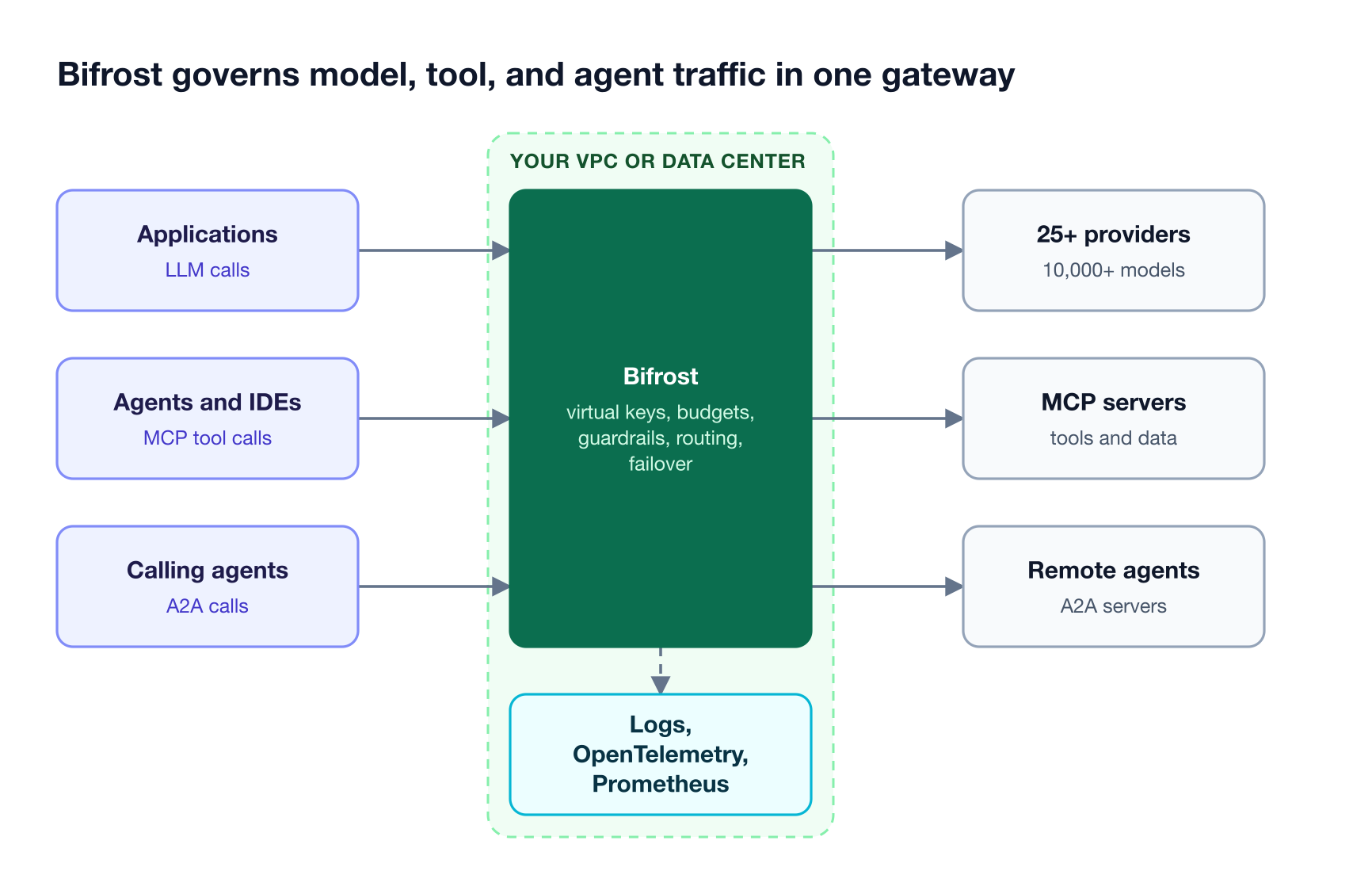
Figure 3: One deployment gives model, tool, and agent traffic a shared identity model, routing, and logs inside your own network.
- Performance: the published Bifrost benchmarks show about 11 microseconds of overhead per request in a 5,000 requests-per-second stress test. In a separate head-to-head run at 500 RPS, Bifrost delivered 9.5x higher throughput and 54x lower P99 latency than LiteLLM.
- Routing and failover: automatic retries and fallbacks move a request to the next provider when the primary fails, and weighted load balancing and CEL routing rules spread traffic across keys and models.
- Caching: semantic caching combines exact-match hashing with embedding-based similarity, including for streamed responses.
- Governance: virtual keys carry model access, budgets, and token and request limits per team, customer, or application, and Bifrost Enterprise adds SSO, RBAC, and audit logs.
- Guardrails: Bifrost Enterprise runs built-in secrets, regex, and LLM-judge checks and connects to guardrail providers such as AWS Bedrock Guardrails, Azure Content Safety, and Google Model Armor.
- Beyond model calls: Bifrost works as an MCP gateway with Code Mode, which cut token cost by 92% on a 508-tool run, and governs agent-to-agent traffic through the Agent Gateway in Bifrost.
Bifrost deploys as a single binary, runs in-VPC, on-prem, or air-gapped with no prompts or telemetry leaving your network, and works as a drop-in replacement for the OpenAI, Anthropic, and Google GenAI SDKs.
2. LiteLLM
LiteLLM is a self-hosted gateway, MIT-licensed outside its enterprise directory, that gives applications one OpenAI-compatible endpoint for 100+ LLM providers, plus MCP tools and A2A agents.
Best for: Teams that want a widely used open-source proxy and can run Postgres for spend tracking.
- Routing: retries, fallbacks (including context-window fallbacks), and five strategies, from simple shuffle to latency- and cost-based routing.
- Caching: exact-match and semantic caching on Redis, Valkey, Qdrant, and other backends.
- Governance: virtual keys carry models, budgets, and rate limits per user, team, or project, with spend tracked per key, team, user, and tag.
- Observability: logs and metrics to Langfuse, Datadog, OpenTelemetry, and Prometheus.
Considerations: SSO beyond five users, audit logs, RBAC, JWT auth, tag-based budgets, and several guardrail integrations need an Enterprise license, and budgets require a database. Teams outgrowing it can review LiteLLM alternatives or the guide to migrating from LiteLLM to Bifrost.
3. Agent Router (formerly Envoy AI Gateway)
Agent Router, renamed from Envoy AI Gateway when it joined the Agentic AI Foundation, is an Apache 2.0 AI gateway and MCP gateway built on Envoy and Envoy Gateway; its Kubernetes resources keep their original names.
Best for: Platform teams standardized on Kubernetes and Envoy Gateway.
- Coverage: 22 providers by default, with OpenAI- and Anthropic-compatible endpoints that cover a subset of the OpenAI API.
- Routing: provider fallback triggered by Envoy retry policies, load balancing, and endpoint picking for self-hosted model pools.
- Governance: token-based rate limits and quotas, with JWT, mTLS, or OIDC client authentication through Envoy Gateway.
- Observability and MCP: Prometheus metrics, OpenTelemetry traces, and an MCP gateway with OAuth and tool filtering.
Considerations: the project documents no gateway response cache, dollar budgets, or built-in guardrails, and its A2A support is a preview. Compare Envoy AI Gateway alternatives.
AI Gateways in API Management Platforms
API management vendors added AI features to the gateways enterprises already run for REST APIs. Kong AI Gateway and Azure API Management put LLM traffic under the same policies as other APIs, with the most useful AI features in paid tiers.
4. Kong AI Gateway
Kong AI Gateway governs LLM, MCP, and A2A traffic and accepts OpenAI-format requests for providers including OpenAI, Anthropic, Bedrock, Gemini, and vLLM. Version 2.x adds a dedicated AI control plane in Konnect, with self-managed or Kong-hosted data planes.
Best for: Organizations already running Kong Gateway or Konnect for API management.
- Routing: seven load-balancing algorithms, including lowest-latency, semantic, and priority, with retries, fallbacks, health checks, and a circuit breaker.
- Governance: API key or OpenID Connect inbound auth, token- and cost-based rate limits, token budgets by team, and per-request cost calculation.
- Guardrails: prompt guards, a PII sanitizer, and AWS, Azure, and Google content safety policies.
- Observability: Konnect analytics and OpenTelemetry metrics for AI, MCP, and A2A traffic.
Considerations: Semantic Cache, MCP Proxy, A2A Proxy, AI Proxy Advanced, AI Rate Limiting Advanced, and the AWS, Azure, sanitizer, and semantic prompt guard plugins are AI Gateway Enterprise plugins (paid add-ons on Plus), and fully self-hosted deployments need Kong's separate Gateway Enterprise offering. The Plus plan starts at $25 a month plus usage, capped at 10 million requests and five proxied models a month. See the comparison of Kong AI Gateway alternatives.
5. Azure API Management
The AI gateway in Azure API Management is a set of capabilities inside API Management, not a separate offering. It manages OpenAI, Anthropic Messages (v2 tiers), and Google Vertex AI APIs for models on Microsoft Foundry, Amazon Bedrock, or self-hosted infrastructure.
Best for: Azure-centric enterprises that already publish APIs through API Management.
- Routing: round-robin, weighted, priority, and session-aware load balancing, with a circuit breaker that honors Retry-After headers.
- Caching: semantic caching backed by Azure Managed Redis with the RediSearch module.
- Governance: tokens-per-minute limits, token quotas, managed identities instead of API keys, and token metrics per consumer.
- Guardrails and agents: Azure AI Content Safety moderation for LLM, MCP, and A2A APIs, plus MCP server exposure for existing REST APIs.
Considerations: the unified OpenAI-compatible API is in preview, token limits do not aggregate across a whole instance, and the Consumption tier is not listed for token limits, content safety, MCP, or A2A. See Azure AI gateway alternatives for multi-cloud options.
Managed AI Gateways
Managed AI gateways run on the vendor's infrastructure, so there is nothing to deploy and new models appear without upgrades. Cloudflare AI Gateway, Vercel AI Gateway, and OpenRouter differ in billing, caching, and governance depth, and none runs inside your own network.
6. Cloudflare AI Gateway
Cloudflare AI Gateway is a managed gateway on Cloudflare's network, available on all plans, that adds analytics, caching, rate limiting, retries, and fallbacks in front of providers such as OpenAI, Anthropic, Bedrock, and Workers AI.
Best for: Teams already on Cloudflare that want visibility and basic controls without running infrastructure.
- Pricing: analytics, caching, and rate limiting are free, and inference passes through with no markup.
- Routing: up to five automatic retries, model or provider fallbacks, and dynamic routes with percentage splits.
- Governance: fixed or sliding rate limits, spend limits that return a 429, and DLP scanning at no charge.
- Observability: logs with prompt, response, tokens, and cost, exported through Logpush or OpenTelemetry.
Considerations: caching applies only to identical requests, spend limits are eventually consistent, guardrails are billed as Workers AI inference, Unified Billing adds a 5% fee on credits, and MCP and A2A are not documented. Compare Cloudflare AI Gateway alternatives.
7. Vercel AI Gateway
Vercel AI Gateway is a managed gateway that centralizes credentials, logs requests, controls spend, and fails over across providers, with 400+ models and AI SDK, OpenAI, and Anthropic Messages APIs. Applications do not need to run on Vercel.
Best for: Teams building with the Vercel AI SDK that want hosted multi-model access.
- Routing: ordered model and provider fallbacks across healthy providers.
- Governance: team-scoped API keys or OIDC, budgets for a team, project, key, or member, and model and provider allowlists.
- Observability: request logs with provider attempts, latency, tokens, and cost, plus OpenTelemetry trace drains on Pro and Enterprise plans.
Considerations: budgets are a soft cap that excludes bring-your-own-key spend; no gateway response cache, guardrails, MCP, or A2A support is documented; and log lookback stops at 36 days. See Vercel AI Gateway alternatives.
8. OpenRouter
OpenRouter is a hosted, OpenAI-compatible API that lists 600+ models from 80+ providers on paid plans and, by default, routes each request using the provider's measured price, throughput, latency, and reliability.
Best for: Developers and small teams that want broad model access through one account and one bill.
- Routing: model fallbacks, automatic retries across providers, and an Auto Router.
- Caching: an exact-match response cache with a five-minute default TTL, plus provider prompt caching on paid plans.
- Governance and guardrails: spending limits, model and provider restrictions, per-key credit caps, regex prompt-injection detection, and PII redaction.
- Observability: Broadcast sends traces to OpenTelemetry collectors, Datadog, Langfuse, or S3.
Considerations: OpenRouter charges a fee on credit purchases (5.5% on Standard, 8% on Business), SSO is Enterprise-only, and no MCP gateway or A2A support is documented. See OpenRouter alternatives.
AI Gateways in Data Platforms
Data platforms now ship AI gateways so model traffic inherits the same catalog permissions and billing as the data it uses.
9. Databricks Unity Gateway
Databricks Unity Gateway, still labeled AI Gateway in the workspace sidebar, is the Databricks control plane for model inference, tools, and skills, governed through Unity Catalog. It serves Databricks-hosted models and providers such as OpenAI, Anthropic, and Amazon Bedrock through the OpenAI client.
Best for: Teams whose data, models, and governance already run on Databricks.
- Routing: traffic splitting across model backends and fallbacks in a priority order you define.
- Governance: query and token rate limits per service or user, near-real-time budgets, and cost attribution by model, principal, and tag.
- Observability: a usage system table plus inference tables that log requests and responses to Delta tables.
- MCP: Databricks-provided, registered, or custom MCP servers governed as Unity Catalog securables.
Considerations: guardrail service policies are in Beta, Unity Gateway is not supported on AWS GovCloud or outside supported regions, inference tables and usage tracking are billed per GB, and response caching, A2A, and OpenTelemetry export are not documented. See Databricks AI Gateway alternatives.
How to Choose the Best AI Gateway for Your Team
Choose an AI gateway by where traffic must run, what you already operate, and what it must govern. Hosted gateways suit teams that want no infrastructure, API management add-ons suit teams on that platform, and self-hosted gateways suit teams that need traffic, keys, and logs inside their network.
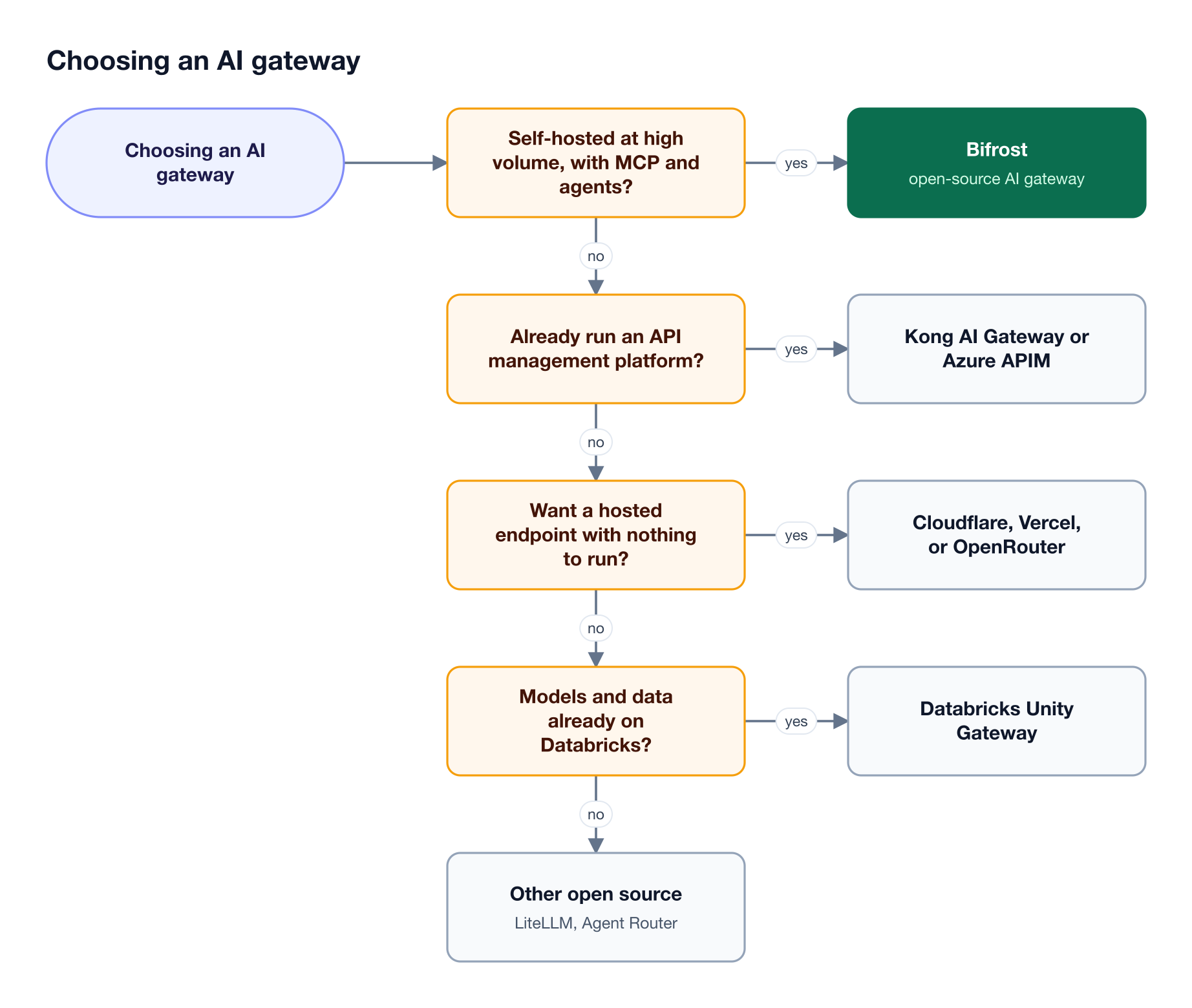
Figure 4: Where traffic has to run decides the category; the platform you already operate decides the product.
Four questions settle most decisions:
- Must prompts and logs stay in your network? If yes, the hosted options drop out.
- How much traffic will it carry? Overhead and memory under load decide whether the gateway becomes a bottleneck.
- Will agents call tools and other agents? Then MCP and A2A support matter as much as model routing.
- Which features are in the tier you will pay for? Several products gate SSO, audit logs, semantic caching, or MCP behind enterprise plans.
The guide to choosing an AI gateway on ten factors goes deeper, the AI gateway buyer's checklist turns these questions into a scorecard, and how an AI gateway works covers the fundamentals.
Frequently Asked Questions
What is the best AI gateway?
The best AI gateway depends on where traffic must run and what it must govern. Bifrost fits enterprises that need a self-hosted, high-throughput gateway for model, MCP tool, and agent traffic. Cloudflare, Vercel, and OpenRouter fit teams that want nothing to operate, and Kong or Azure API Management fit teams already on those platforms.
Is there an open-source AI gateway?
Yes. Bifrost is open source under Apache 2.0, LiteLLM is MIT-licensed outside its enterprise directory, and Agent Router (formerly Envoy AI Gateway) is Apache 2.0. All three run in your own infrastructure but differ in throughput, licensing of governance features, and MCP and A2A coverage.
What is the difference between an AI gateway and an LLM gateway?
An LLM gateway routes and governs calls to large language model providers. An AI gateway covers the same traffic and, in newer products, MCP tool calls and agent-to-agent traffic too, so one policy layer applies to everything an application calls. Bifrost works as both an LLM gateway and an MCP and agent gateway.
What is the difference between an AI gateway and an API gateway?
An API gateway routes and secures HTTP traffic in general, while an AI gateway understands model requests: it counts tokens, prices requests per model, fails over between providers, caches responses, and applies content guardrails. Kong and Azure API Management now add AI gateway features to their API gateways.
How much does an AI gateway cost?
Open-source gateways such as Bifrost and LiteLLM are free to self-host, with paid enterprise tiers for SSO, audit logs, and support. Cloudflare, Vercel, and OpenRouter bill inference at provider prices, while OpenRouter (5.5% to 8%) and Cloudflare Unified Billing (5%) add a fee on purchased credits; API management platforms bill by plan or tier.
Getting Started with Bifrost
The best AI gateway is the one your platform team can run, govern, and trust in production. Bifrost gives you one open-source gateway for LLM, MCP, and agent traffic, inside your own infrastructure. To see it with your providers and workloads, book a Bifrost demo.