Best Langfuse Alternative in 2025: Maxim AI vs Langfuse
TLDR
Langfuse is an open-source LLM observability platform focused on tracing, prompt management, and basic evaluation workflows. Maxim AI provides comprehensive end-to-end tooling spanning the full AI development lifecycle, including pre-release experimentation, agent simulation and evaluation, production observability, and advanced data management. While Langfuse excels at observability for teams heavily invested in open-source tooling, Maxim delivers a complete platform for cross-functional AI teams building production multi-agent systems with no-code workflows, enabling product managers to work independently from engineering teams.
Table of Contents
- What is Langfuse?
- What is Maxim AI?
- How Do Maxim AI and Langfuse Compare?
- Feature Comparison
- Maxim AI Strengths
- Langfuse Considerations
- Why Choose Maxim AI Over Langfuse?
- Getting Started
What is Langfuse?
Langfuse is an open-source LLM engineering platform providing observability, prompt management, and evaluation capabilities. The platform builds on OpenTelemetry standards and offers SDK-based integration for Python and JavaScript applications.
Core Capabilities:
- Observability: Comprehensive tracing for LLM and non-LLM operations, including retrieval, embeddings, and API calls
- Prompt Management: Centralized prompt versioning and deployment without code changes
- Evaluation: LLM-as-a-judge evaluation with execution tracing, dataset management, and manual annotation
- Experiment Comparison: Side-by-side comparison of experiment runs with baseline designation
- Score Analytics: Evaluation reliability measurement and annotator agreement tracking
Technical Architecture: Langfuse uses a centralized PostgreSQL database architecture and requires SDK-based instrumentation of application code. The platform is fully open-source under the MIT license with self-hosting support via Docker and Kubernetes.
Recent updates (November 2025) include enhanced experiment comparison features, score analytics for evaluator validation, and Model Context Protocol (MCP) support for AI agent tool integration.
What is Maxim AI?
Maxim AI is an end-to-end AI evaluation and observability platform designed for cross-functional teams building production-grade AI agents. The platform provides comprehensive tooling across the entire AI development lifecycle, from pre-release simulation and experimentation through production monitoring and data management.
Core Platform Architecture:
Experimentation
Maxim's Experimentation platform serves as an advanced prompt engineering environment enabling rapid iteration without code changes:
- Organize and version prompts directly from UI
- Deploy prompts with different variables and experimentation strategies without modifying application code
- Connect with databases, RAG pipelines, and prompt tools seamlessly
- Compare output quality, cost, and latency across different combinations of prompts, models, and parameters
Agent Simulation and Evaluation
Maxim's simulation capabilities enable teams to test AI agents across diverse scenarios and user personas before production deployment:
- Simulate multi-turn customer interactions across real-world scenarios
- Evaluate agents at the conversational level, analyzing trajectories, task completion, and failure points
- Re-run simulations from any step to reproduce issues and identify root causes
- Parallel testing across thousands of scenarios, personas, and prompt variations
Unified Evaluation Framework
Maxim provides flexible evaluation capabilities supporting multiple methodologies:
- Access evaluators through the evaluator store for common use cases
- Create custom evaluators using AI, programmatic, or statistical approaches
- Set up human evaluation workflows for subject matter expert review
- Configure evaluations at session, trace, or span level for granular quality measurement
Production Observability
Maxim's observability suite provides comprehensive monitoring for production AI applications:
- Monitor multi-step agent workflows using distributed tracing
- Create custom dashboards for deep insights across agent behavior and custom dimensions
- Run automated quality checks on production traffic using rule-based evaluations
- Get real-time alerts and track issues for immediate response
Data Engine
Maxim's data management capabilities support the complete data lifecycle:
- Import multi-modal datasets, including images, audio, and PDFs
- Generate synthetic datasets for testing and evaluation
- Continuously curate and evolve datasets from production logs
- Access in-house or Maxim-managed data labeling and feedback
- Create data splits for targeted evaluations and experiments
Bifrost LLM Gateway
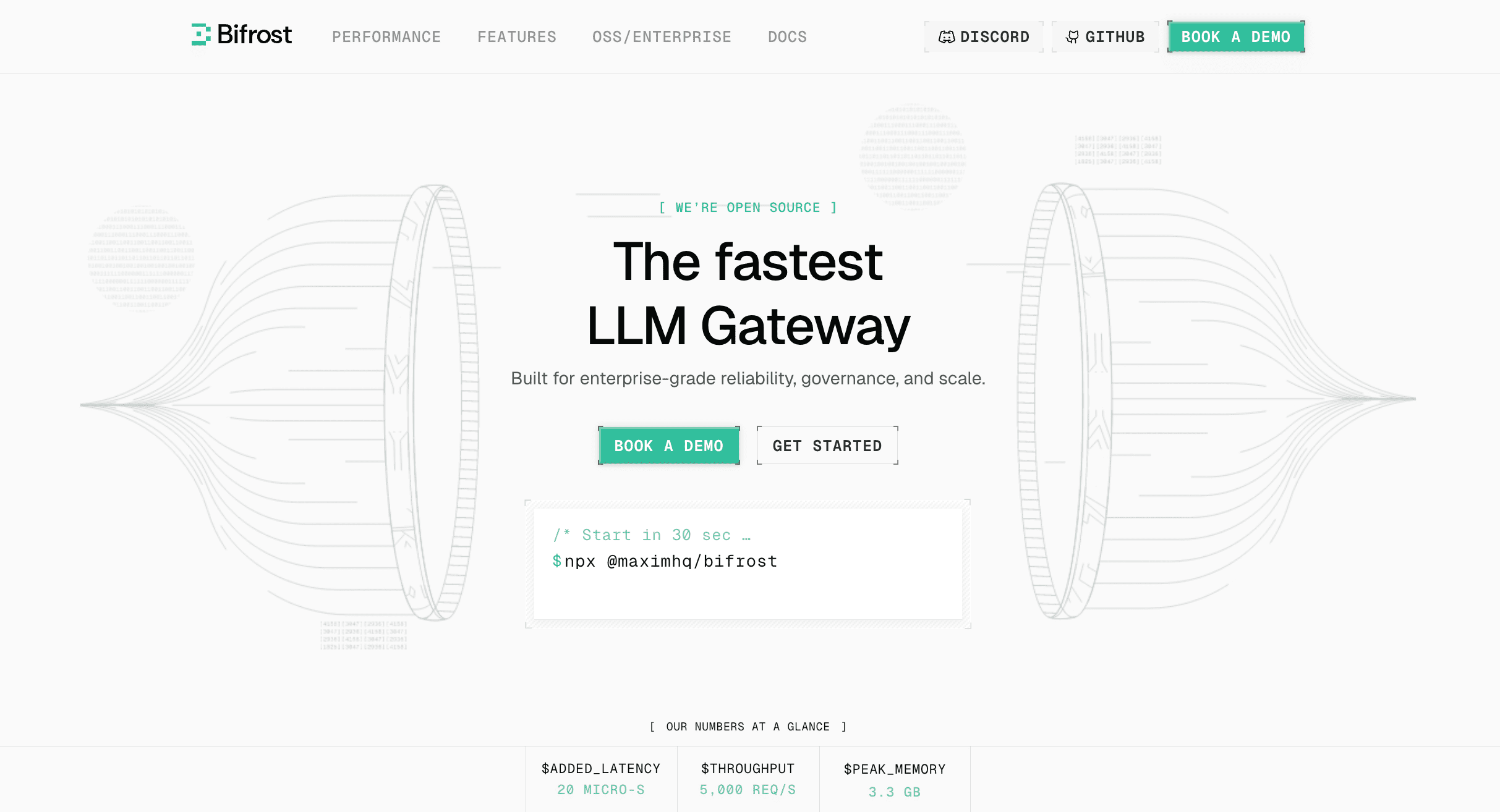
Bifrost is Maxim's high-performance AI gateway providing unified access to 12+ providers through a single OpenAI-compatible API:
- Access OpenAI, Anthropic, AWS Bedrock, Google Vertex, Azure, Cohere, Mistral, Ollama, and Groq through one API
- Automatic failover between providers and models with zero downtime
- Semantic caching based on semantic similarity to reduce costs and latency
- MCP support for external tool integration
- Budget management, SSO integration, and comprehensive observability
How Do Maxim AI and Langfuse Compare?
Both platforms support AI development teams, but they differ significantly in their scope, architecture, and approach to the AI development lifecycle.
High-Level Overview
The biggest difference between Maxim AI and Langfuse is lifecycle coverage. Langfuse focuses on observability and basic evaluation, making it a strong choice for teams primarily needing production monitoring. Maxim provides comprehensive end-to-end tooling spanning pre-release experimentation, agent simulation, evaluation, and production observability.
- Maxim's full-stack approach addresses a critical gap in AI development: teams building production multi-agent systems need more than observability. They require pre-release simulation to test agents across diverse scenarios, comprehensive evaluation frameworks supporting multiple methodologies, cross-functional workflows enabling product teams to work independently, and advanced data management, including synthetic data generation and production log curation.
- Langfuse's open-source nature provides transparency and flexibility for teams requiring self-hosting control. The platform integrates directly with popular frameworks through SDKs and supports self-deployment via Docker and Kubernetes.
- Maxim's cross-functional design differentiates it from observability-focused platforms. While powerful SDKs in Python, TypeScript, Java, and Go enable deep engineering integration, the entire platform is accessible through no-code workflows. Product managers can independently define, run, and analyze evaluations without engineering dependencies, accelerating iteration cycles and enabling data-driven product decisions.
Feature Comparison
| Feature | Maxim AI | Langfuse |
|---|---|---|
| Lifecycle Coverage | ✅ Full (Simulation, Experimentation, Evaluation, Observability) | ⚠️ Observability, Prompt Management, Basic Evaluation |
| Agent Simulation | ✅ Advanced multi-turn simulation | ❌ No simulation capabilities |
| Cross-Functional UI | ✅ No-code workflows for all features | ⚠️ Limited - SDK-based primarily |
| Integration Type | ✅ SDK (Python, TypeScript, Java, Go) + No-code | ⚠️ SDK (Python, JavaScript) only |
| Evaluation Methods | ✅ AI, Programmatic, Statistical, Human | ⚠️ LLM-as-judge, Human, Custom |
| Evaluation Granularity | ✅ Session, Trace, Span level | ⚠️ Trace level |
| Multi-Modal Support | ✅ Text, Images, Audio, PDF | ⚠️ Limited |
| Data Management | ✅ Advanced (Synthetic generation, Production curation) | ⚠️ Basic dataset management |
| Synthetic Data Generation | ✅ Built-in | ❌ No |
| Human Evaluation Workflows | ✅ Comprehensive with SME management | ⚠️ Basic annotation queues |
| Custom Dashboards | ✅ No-code dashboard builder | ✅ Recently added (November 2025) |
| Prompt Management | ✅ Versioning and deployment | ✅ Versioning and deployment |
| LLM Gateway | ✅ Bifrost (12+ providers) | ❌ No (integrates with LiteLLM) |
| Deployment Options | ✅ Cloud, Self-hosted, In-VPC | ✅ Cloud, Self-hosted |
| Enterprise Features | ✅ SOC 2, SSO, RBAC, Custom rate limits | ⚠️ Self-hosted options available |
| Open Source | ⚠️ Bifrost gateway is open-source | ✅ Fully open-source (MIT) |
| Database Architecture | ✅ Distributed (optimized for scale) | ⚠️ PostgreSQL (centralized) |
Maxim AI Strengths
Full-Stack Platform for Multi-Agent Systems
Maxim takes an end-to-end approach to AI quality. While observability may be your immediate need, pre-release experimentation, evaluation, and simulation become critical as applications mature. Maxim's full-stack platform helps cross-functional teams move faster across both pre-release and production phases.
Agent Simulation Capabilities
Unlike observability-focused platforms, Maxim provides dedicated simulation infrastructure for testing agents across diverse scenarios before production deployment. Teams can:
- Simulate thousands of multi-turn conversations across different user personas
- Identify failure modes in controlled environments
- Debug step-by-step to understand the exact points of breakdown
- Measure quality using configurable evaluators at multiple granularity levels
This pre-release testing approach significantly reduces production incidents and accelerates development velocity.
Cross-Functional Collaboration
Maxim's design enables seamless collaboration between engineering and product teams:
- Flexi Evals: While SDKs allow evaluations to be run at any level of granularity for multi-agent systems, the UI enables teams to configure evaluations with fine-grained flexibility without code
- Custom Dashboards: Teams create deep insights across agent behavior, cutting across custom dimensions to optimize agentic systems with just a few clicks
- No-Code Workflows: Product managers can independently run experiments, analyze results, and make data-driven decisions without engineering bottlenecks
Advanced Data Management
Deep support for dataset management includes:
- Multi-modal dataset support (text, images, audio, PDF)
- Synthetic data generation for comprehensive testing
- Automatic dataset curation from production logs
- Human-in-the-loop workflows for continuous dataset evolution
- Pre-built and custom evaluators (deterministic, statistical, LLM-as-a-judge) configurable at session, trace, or span level
Enterprise-Grade Infrastructure
Maxim provides production-ready infrastructure with:
- SOC 2 Type 2 compliance for enterprise security requirements
- Role-based access controls for fine-grained permissions
- Self-hosted and In-VPC deployment options for data residency compliance
- Bifrost LLM gateway with automatic failover, semantic caching, and unified access to 12+ providers
- Dedicated customer support with robust SLAs for enterprise deployments
Langfuse Considerations
Limited Lifecycle Coverage
Langfuse focuses on observability and basic evaluation. Teams building complex multi-agent systems require platforms covering the full development lifecycle, including:
- Pre-release simulation for testing across diverse scenarios
- Comprehensive evaluation frameworks supporting multiple methodologies
- Advanced data management with synthetic generation and production curation
- Cross-functional workflows enabling product team independence
Organizations requiring end-to-end lifecycle management should evaluate whether observability-focused platforms meet their complete requirements.
No Agent Simulation
Langfuse lacks dedicated simulation capabilities for pre-release testing. Teams must rely on manual testing approaches or production deployments to identify edge cases and failure modes. Production-first testing increases risk of customer-facing incidents and slows iteration velocity.
Multi-agent systems benefit significantly from pre-release simulation enabling controlled environment testing across thousands of scenarios before production deployment.
SDK-Based Workflows Only
Langfuse requires SDK-based instrumentation for all workflows. While this provides flexibility for engineering teams, it creates bottlenecks in organizations where product managers, QA engineers, and domain experts need independent access to evaluation and experimentation workflows.
Cross-functional AI development teams benefit from platforms supporting both powerful SDKs for engineering integration and no-code interfaces for product team independence.
Basic Data Management
Langfuse provides basic dataset management without:
- Built-in synthetic data generation capabilities
- Automatic dataset curation from production logs
- Multi-modal dataset support (images, audio, video)
- Advanced human-in-the-loop feedback workflows
Teams requiring continuous dataset evolution based on production usage need platforms with comprehensive data management capabilities.
Self-Hosting Considerations
While Langfuse provides self-hosting options, organizations should evaluate:
- Infrastructure maintenance requirements for PostgreSQL deployments
- Scaling considerations for high-volume production workloads
- Feature parity between cloud and self-hosted deployments
- Long-term platform support and upgrade paths
Why Choose Maxim AI Over Langfuse?
Production-Ready for Multi-Agent Systems
Maxim is purpose-built for teams building complex multi-agent applications requiring comprehensive lifecycle management. The platform spans pre-release simulation, experimentation, evaluation, and production observability with specialized capabilities for cross-functional collaboration.
Comprehensive Pre-Release Testing
Maxim's agent simulation capabilities enable teams to identify failure modes before production deployment. Test agents across thousands of scenarios, debug step-by-step, and measure quality using configurable evaluators at multiple granularity levels.
Cross-Functional Workflows
Enable product teams to work independently with no-code interfaces for experimentation, evaluation, and analysis. Engineering teams leverage powerful SDKs for deep integration while product managers drive data-driven decisions without engineering dependencies.
Advanced Data Management
Comprehensive data management capabilities including synthetic data generation, automatic production log curation, multi-modal support, and human-in-the-loop workflows, ensure continuous dataset evolution based on real-world learnings.
Enterprise-Grade Infrastructure
SOC 2 Type 2 compliance, role-based access controls, self-hosted and In-VPC deployment options, and dedicated customer support with robust SLAs provide enterprise-ready infrastructure for production deployments.
Unified LLM Gateway
Bifrost provides unified access to 12+ providers through a single API with automatic failover, semantic caching, MCP support, and comprehensive observability, eliminating vendor lock-in and reducing operational complexity.
Getting Started
Maxim AI provides comprehensive tooling for teams building production-grade AI agents. The platform supports the entire development lifecycle with specialized capabilities for cross-functional collaboration, enabling product and engineering teams to ship reliable AI applications faster.
Next Steps
Start Building: Sign up for free to experience Maxim's full platform capabilities
Schedule a Demo: Book a personalized demo to explore how Maxim accelerates your AI development workflow
Explore Documentation: Visit the Maxim documentation for technical guides and integration instructions
Learn More: Explore our blog for AI development best practices, evaluation strategies, and platform updates
Additional Resources
Platform Comparisons
Technical Guides
Integration Documentation
This comparison reflects platform capabilities as of December 2025. For the most current feature information, please refer to Maxim's documentation and release notes.