Top 5 MLflow AI Gateway Alternatives in 2026
MLflow AI Gateway is a model gateway built into the MLflow Tracking Server that routes requests to LLM providers with fallbacks and usage tracking. This guide compares five alternatives, including Bifrost, LiteLLM, and Databricks, on governance and deployment.
TL;DR
- MLflow AI Gateway runs inside the MLflow Tracking Server and gives one OpenAI-compatible endpoint for providers such as OpenAI, Anthropic, Gemini, Bedrock, Mistral, and Ollama, with traffic splitting, fallbacks, and usage tracking.
- Teams look for MLflow AI Gateway alternatives when the gateway needs to scale and fail independently of the experiment tracker, or when they need role-based access, rate limits, and MCP governance in the request path.
- Bifrost is an open-source AI gateway written in Go that covers 25+ providers and 10,000+ models through one OpenAI-compatible API and adds 11 microseconds of overhead per request at 5,000 RPS.
- Bifrost exports OpenTelemetry traces, so ML teams can keep their existing tracing tools while moving the gateway onto dedicated infrastructure.
- LiteLLM, Databricks Unity Gateway, Kong AI Gateway, and Cloudflare AI Gateway round out the list, each suited to a different platform commitment.
MLflow AI Gateway brings governed LLM access into the MLflow Tracking Server, which suits ML teams that already run MLflow but ties the request path for every application to the experiment-tracking service. Bifrost, the open-source AI gateway written in Go by Maxim AI, is the best choice for enterprises running mission-critical AI workloads that require best-in-class performance, scalability, and reliability. This guide compares five MLflow AI Gateway alternatives on governance, provider coverage, MCP support, and deployment so ML platform teams can choose the right gateway for production LLM traffic.
What Is MLflow AI Gateway?
MLflow AI Gateway is a model gateway built into the MLflow Tracking Server that provides a unified interface for managing multiple LLM providers. It exposes an OpenAI-compatible endpoint, stores provider keys centrally, and records gateway requests as MLflow traces when usage tracking is enabled.
MLflow's published gateway features include:
- Providers: an OpenAI-compatible endpoint with native integrations for OpenAI, Anthropic, Google Gemini, Amazon Bedrock, Azure OpenAI, Mistral, Groq, Ollama, Vertex AI, and others, plus passthrough endpoints in each provider's native format. Starting with MLflow 3.11.0rc1, the gateway uses native provider integrations rather than requiring LiteLLM.
- Routing: traffic splitting across models for A/B tests and automatic fallback chains to a backup provider.
- Credentials: provider API keys stored encrypted on the server and never exposed to clients.
- Usage tracking: a dashboard for request volume, error rates, latency percentiles, token consumption, and cost by model and provider, plus spending limits and cost alerts.
- Guardrails and access: LLM-powered judges that can block or sanitize requests and responses, and HTTP Basic Authentication for gateway resources.
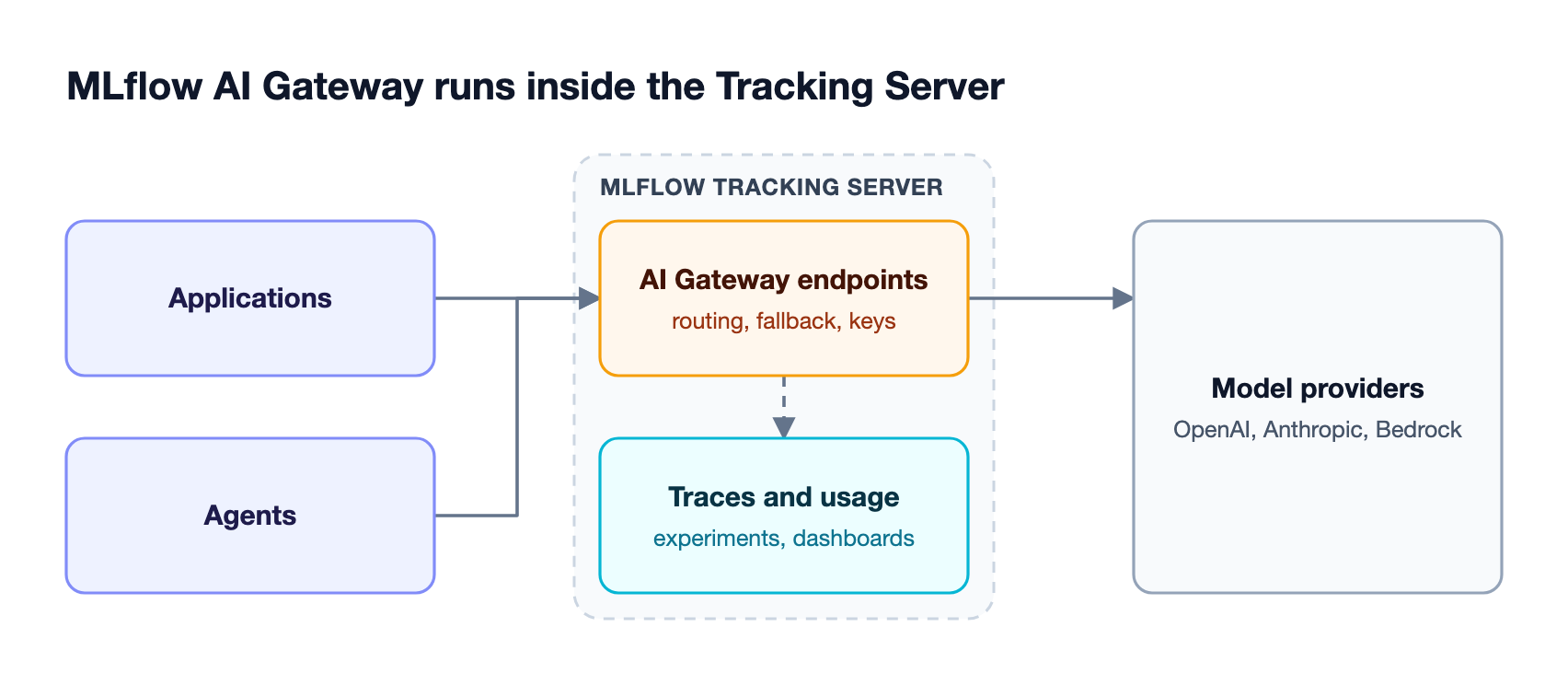
Figure 1: Gateway availability is tied to the Tracking Server, which is convenient for ML teams and a coupling for platform teams.
As Figure 1 shows, the gateway and the experiment tracker share one service. MLflow itself is open source under the Apache 2.0 license. For background on the category, see our guide to what an AI gateway is and how it governs enterprise LLM traffic.
Why Teams Look for MLflow Alternatives for LLM Traffic
Teams look for MLflow alternatives for LLM traffic when the gateway moves from an ML team's tool to shared production infrastructure. At that point it needs independent scaling and availability, fine-grained access control for many teams, and governance for agents and tools, not only model calls.
The common drivers:
- Coupling to the Tracking Server. Because the gateway runs as part of the MLflow Tracking Server, application traffic depends on a service that also serves experiments, runs, and traces. Platform teams usually want the request path on infrastructure sized and monitored for it.
- Access control. The gateway documentation describes HTTP Basic Authentication; role-based permissions per team or project are not described.
- Rate limits and MCP. Request rate limits are not listed on the MLflow AI Gateway page, and MCP tool governance is not part of the gateway (MLflow offers a separate MCP Registry).
- Per-team provider scoping. MLflow's native integrations cover the major hosted providers. Teams that want provider and model access scoped per key or team, with hierarchical budgets, need those controls in the gateway itself.
- Language and runtime. MLflow is a Python service, and some platform teams standardize on gateways they can run as a single compiled binary on Kubernetes.
None of these make MLflow AI Gateway a poor choice for an ML team that wants governed access next to its experiments. They matter when the gateway becomes the entry point for every AI application in the company, a shift covered in our article on policy-based governance at the gateway.
Key Criteria for Evaluating an AI Gateway
The best AI gateway for production LLM traffic enforces identity, spend, and content policy in the request path, routes reliably across providers, exports telemetry to existing tools, and runs where the organization's data is allowed to go.
| Criterion | What to check | Why it matters |
|---|---|---|
| Provider coverage | Native providers, OpenAI-compatible API, self-hosted models | Avoids passthrough workarounds for each new model |
| Reliability | Fallbacks, load balancing, retries | Keeps applications running during provider incidents |
| Governance | Per-key access, hierarchical budgets, rate limits, RBAC | Turns cost and access policy into enforced controls |
| Guardrails | PII, secrets, and content checks on input and output | Keeps sensitive data from reaching providers |
| MCP support | Tool registry and per-consumer tool filtering | Agents call Model Context Protocol tools, not only models |
| Observability | Request logs, OpenTelemetry export, metrics | Feeds tracing and evaluation tools teams already use |
| Deployment | Independent service, in-VPC, clustering | Separates gateway uptime from other systems |
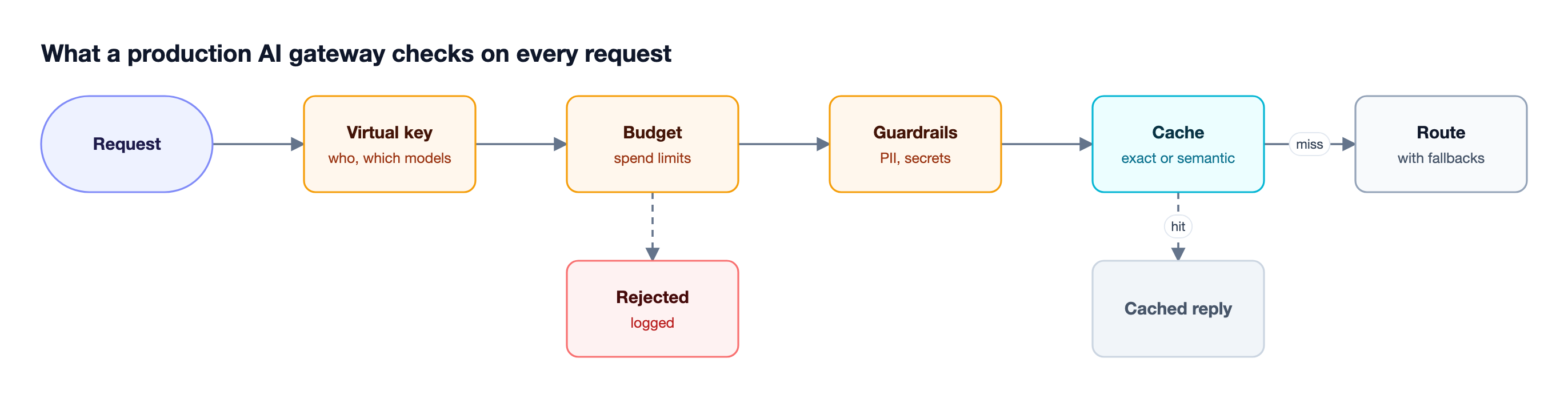
Figure 2: Each stage is a control that either runs in the request path or not at all; compare gateways stage by stage.
Figure 2 shows the stages a production gateway applies before a request reaches a provider. Our LLM gateway buyer's guide covers these criteria in more depth.
MLflow AI Gateway Alternatives Compared at a Glance
The table below compares the five alternatives with MLflow AI Gateway. Entries for third-party gateways reflect each vendor's published documentation; "Not published" means the vendor's product page does not state it. For a wider matrix, see our production-ready comparison of the best AI gateways.
| Gateway | Deployment | License | Governance highlights | MCP support | Best fit |
|---|---|---|---|---|---|
| Bifrost | Self-hosted; in-VPC and clustering (Enterprise) | Apache 2.0 (open source) | Virtual keys, hierarchical budgets, rate limits; guardrails, RBAC, audit logs (Enterprise) | MCP gateway with per-key tool filtering | Enterprises running shared production AI traffic |
| LiteLLM | Self-hosted (Docker, Helm, Terraform) | Open source, with enterprise tier | Virtual keys, budgets, rate limits, guardrails; SSO and audit logs in Enterprise | MCP tools in proxy | Python teams wanting a self-hosted proxy |
| Databricks Unity Gateway | Part of the Databricks platform, built on Unity Catalog | Proprietary | Rate limits, per-user budgets, payload logging, service policies | MCP servers as Unity Catalog securables | Organizations standardized on Databricks |
| Kong AI Gateway | Konnect-managed or self-hosted Kong Gateway | Kong Gateway is Apache 2.0; AI feature licensing not published | Prompt guards, PII sanitizer, cost-based rate limiting | AI MCP Server; governs external MCP servers | Teams already running Kong |
| Cloudflare AI Gateway | Cloudflare service | Proprietary | Rate limiting, caching, analytics; guardrails and DLP (beta) | Not published | Teams on Cloudflare wanting edge analytics |
| MLflow AI Gateway (reference) | Inside the MLflow Tracking Server | Apache 2.0 | Fallbacks, traffic splitting, spending limits, LLM-judge guardrails | Separate MCP Registry | ML teams already running MLflow |
1. Bifrost
The Bifrost AI gateway is an open-source AI gateway written in Go that unifies access to 25+ providers and 10,000+ models through one OpenAI-compatible API. Bifrost adds 11 microseconds of overhead per request at 5,000 RPS in sustained benchmarks and runs as a dedicated service in your own infrastructure.
Best for: Bifrost is built for enterprises running mission-critical AI workloads that require best-in-class performance, scalability, and reliability. It serves as a centralized AI gateway to route, govern, and secure all AI traffic across models and environments with ultra low latency. Bifrost unifies LLM gateway, MCP gateway, and Agents gateway capabilities into a single platform. Designed for regulated industries and strict enterprise requirements, it supports air-gapped deployments, VPC isolation, and on-prem infrastructure. It provides full control over data, access, and execution, along with robust security, policy enforcement, and governance capabilities.
Key features
- Provider coverage: one API across supported providers, including OpenAI, Anthropic, Vertex AI, AWS Bedrock, Azure, Mistral, Groq, and self-hosted vLLM and Ollama.
- Reliability: automatic retries and fallbacks across providers and keys, with every routing attempt recorded.
- Governance: virtual keys with deny-by-default provider access, and budgets and rate limits across keys, teams, and customers.
- Guardrails: enterprise guardrails that detect, block, or redact content in prompts, responses, and MCP tool calls.
- Caching: semantic caching with exact-match and similarity-based modes.
- MCP: Bifrost as an MCP gateway centralizes tool connections and filters tools per virtual key.
- Performance: published benchmarks at sustained production load.
Keeping your tracing while moving the gateway
ML teams often want gateway traffic to stay visible in the tools they already use. Bifrost includes built-in observability for every request and an OpenTelemetry plugin that sends LLM traces to existing OTLP collectors, following OpenTelemetry semantic conventions.
Applications switch by changing the SDK base URL, because Bifrost is a drop-in replacement for the OpenAI, Anthropic, and Google GenAI SDKs:
import openai

client = openai.OpenAI(
    base_url="http://localhost:8080/openai",  # Bifrost endpoint
    api_key="<YOUR-BIFROST-VIRTUAL-KEY>",
)
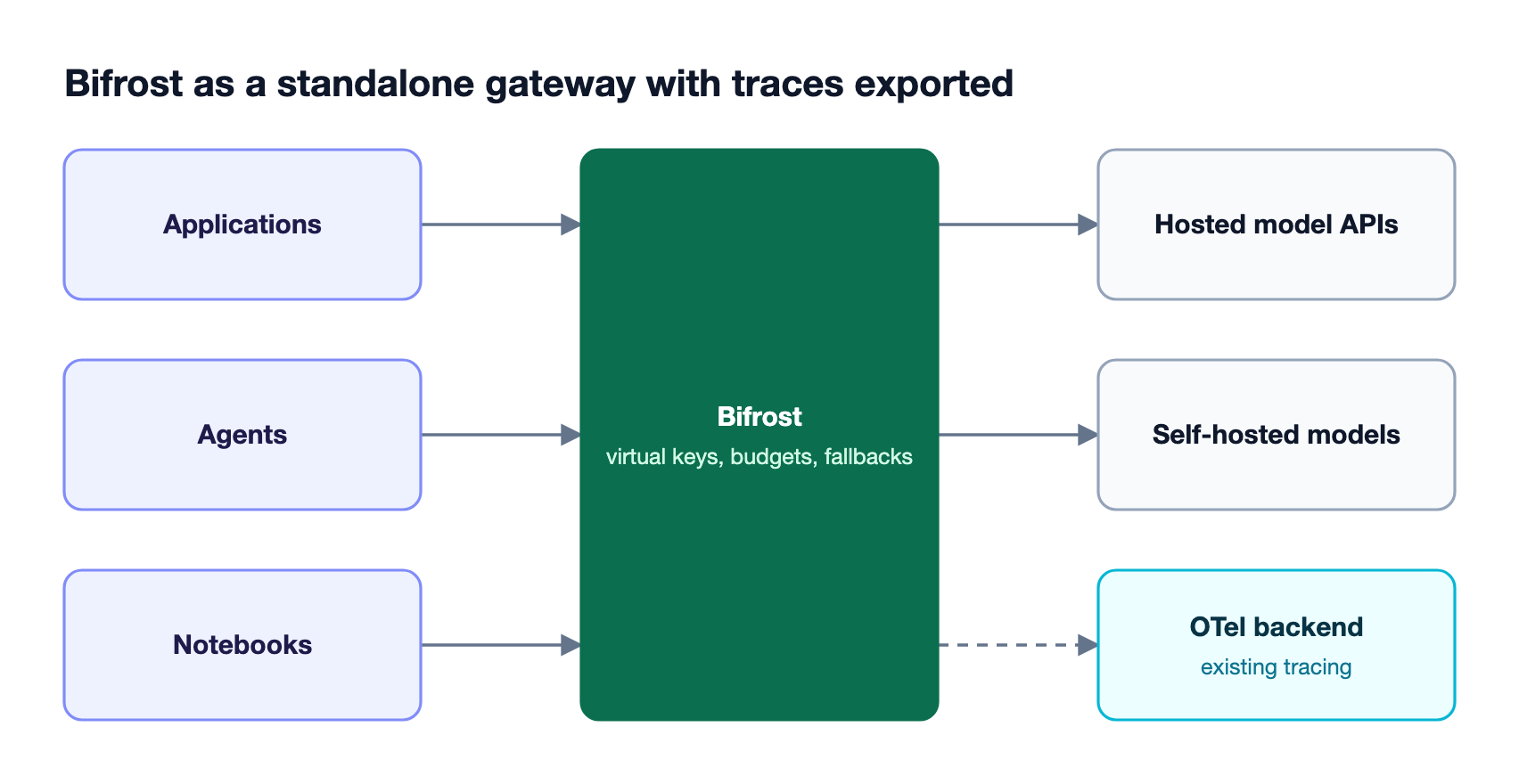
Figure 3: Decoupling the gateway from the experiment tracker lets each scale and fail independently while traces still reach your tooling.
For regulated environments, Bifrost supports in-VPC deployments and clustering for high availability, and the Bifrost Enterprise tier adds RBAC, SSO, and audit logs on top of the open-source core.
2. LiteLLM
LiteLLM Proxy is an open-source, self-hosted server that gives applications one OpenAI-compatible endpoint for 100+ LLM providers, plus MCP tools and agent traffic. Earlier MLflow gateway versions relied on LiteLLM for provider support, so it is a familiar option for ML teams moving off MLflow.
LiteLLM's published capabilities include:
- Virtual keys per user, team, or project with model access, budgets, and rate limits
- Fallbacks and load balancing across deployments, with retries
- Logging integrations including Langfuse, Datadog, OpenTelemetry, and Prometheus
- Guardrails for content filtering and PII masking
- An admin UI for models, keys, MCP servers, and usage
LiteLLM lists SSO, audit logs, multi-team management, and production support under its Enterprise tier, and production deployment uses Docker, Helm, or Terraform with a Postgres database. Teams comparing performance and governance can review the Bifrost LiteLLM alternative comparison.
Best for: Python-centric teams that want a self-hosted proxy with broad provider coverage.
3. Databricks Unity Gateway
Databricks Unity Gateway is the Databricks governance solution for enterprise AI, built on Unity Catalog. It governs Databricks-served foundation models, external providers connected with bring-your-own-key, registered models, and MCP servers registered as Unity Catalog securables.
Databricks' published capabilities include:
- Rate limits on model services and MCP services
- Traffic splitting across model destinations, with failover
- Per-user spend thresholds and hard caps
- Usage tracking for requests, tokens, and latency through system tables
- Payload logging of requests and responses to Unity Catalog Delta tables
- Service policies for request and response handling, with built-in, custom, or partner policies
Databricks is the natural next step for teams whose MLflow usage already runs on Databricks-managed MLflow. Teams that need a gateway outside the Databricks platform typically evaluate a standalone option such as the open-source Bifrost gateway.
Best for: organizations standardized on Databricks and Unity Catalog.
4. Kong AI Gateway
Kong AI Gateway is a set of AI capabilities built on Kong Gateway that connects, secures, and governs LLM, MCP, and agent traffic. It runs as AI policies and AI entities managed through Konnect, with an AI plugin model for self-hosted Kong Gateway.
Kong's published AI features include:
- A multi-LLM proxy across OpenAI, Anthropic, Azure AI, Amazon Bedrock, Gemini, and others
- AI Semantic Cache for repeated or near-duplicate prompts
- AI Prompt Guard and AI Semantic Prompt Guard for blocked topics and injection attempts
- AI Sanitizer for PII redaction before prompts reach the provider
- AI Rate Limiting Advanced, including cost-based limits
- AI MCP Server, which turns existing APIs into agent tools, plus governance for external MCP servers
Which AI features require a paid Konnect or Enterprise license is not stated on the Kong AI Gateway overview. Our Kong AI Gateway alternatives comparison covers the trade-offs for teams that do not already run Kong.
Best for: organizations that already run Kong Gateway for API management and want AI traffic under the same control plane.
5. Cloudflare AI Gateway
Cloudflare AI Gateway is a Cloudflare service for monitoring and controlling AI application traffic. Applications connect to it with a URL change, and it provides caching, rate limiting, retries with model fallbacks, and analytics on requests, tokens, and cost.
Cloudflare's published capabilities include:
- Response caching served from Cloudflare's cache instead of the model provider
- Rate limiting on requests to the application
- Request retries and model fallbacks on errors
- Analytics and logs for requests, tokens, cost, and errors
- Guardrails and Data Loss Prevention, both in beta
- Support for Workers AI, OpenAI, Anthropic, Google Gemini, Replicate, and other providers
Cloudflare AI Gateway is available on all Cloudflare plans and runs as a Cloudflare-hosted service; self-hosting is not described. See our breakdown of Cloudflare AI Gateway alternatives for teams that need the gateway inside their own network.
Best for: teams already on Cloudflare that want request analytics and caching at the edge with minimal setup.
How to Choose the Right LLM Gateway After MLflow
The right LLM gateway after MLflow depends on the platform the organization has committed to and on how much governance must run in the request path. Databricks-standardized teams can stay on their platform; teams that need a standalone gateway with enterprise controls get the most from a dedicated AI gateway.
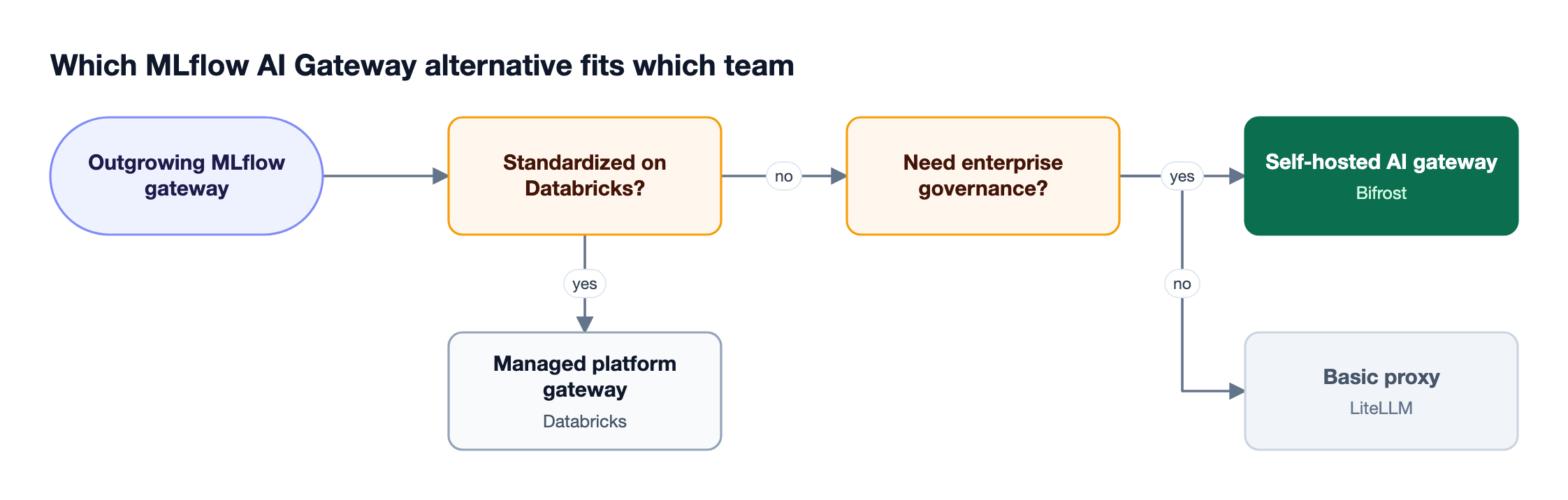
Figure 4: Platform commitment and governance depth decide the shortlist faster than feature lists.
A practical shortlist by situation:
- Shared production gateway with enterprise governance, self-hosted: Bifrost.
- Python team wanting a basic self-hosted proxy: LiteLLM or the open-source Bifrost core.
- Standardized on Databricks and Unity Catalog: Databricks Unity Gateway.
- Already running Kong for APIs: Kong AI Gateway.
- Edge analytics and caching on Cloudflare: Cloudflare AI Gateway.
- Small ML team that wants governed access next to experiments: MLflow AI Gateway remains a reasonable fit.
For a wider field, see our comparison of the best open-source AI gateways. The AI gateway hub guide explains how gateway governance fits into enterprise AI architecture, and the Bifrost governance overview shows how virtual keys, budgets, and guardrails work together.
Frequently Asked Questions
What is MLflow AI Gateway?
MLflow AI Gateway is a model gateway built into the MLflow Tracking Server. It provides one OpenAI-compatible endpoint for providers including OpenAI, Anthropic, Google Gemini, Amazon Bedrock, Azure OpenAI, and Cohere, with traffic splitting, fallback chains, encrypted key storage, and a usage dashboard. Gateway requests can be recorded as MLflow traces.
Does MLflow AI Gateway still use LiteLLM?
Not by default in recent versions. Starting with MLflow 3.11.0rc1, MLflow AI Gateway uses native provider integrations rather than requiring LiteLLM. Teams that prefer a standalone proxy can still run LiteLLM separately, or use Bifrost for a compiled Go gateway with enterprise governance.
What are the main MLflow alternatives for routing LLM traffic?
The main MLflow alternatives for routing LLM traffic are standalone AI gateways such as Bifrost and LiteLLM, platform gateways such as Databricks Unity Gateway, API management platforms such as Kong AI Gateway, and edge services such as Cloudflare AI Gateway.
Can I keep MLflow for tracking and use a different gateway?
Yes. The gateway and experiment tracking can run as separate services. Bifrost exports LLM traces through its OpenTelemetry integration to OTLP collectors, so teams can keep their existing tracing and evaluation workflows while running the gateway on dedicated infrastructure.
What is the difference between MLflow AI Gateway and Databricks Unity Gateway?
MLflow AI Gateway runs inside the open-source MLflow Tracking Server. Databricks Unity Gateway is the Databricks governance solution built on Unity Catalog, covering Databricks-served models, external providers, and MCP servers, with rate limits, per-user budgets, and payload logging to Delta tables.
What is an AI gateway?
An AI gateway is a control layer between applications and model providers that routes, authenticates, and governs AI traffic through one endpoint. It typically adds per-user budgets, rate limits, guardrails, fallbacks, caching, MCP tool access, and request logging, so policy is enforced in the request path rather than in each application.
Try Bifrost Today
Among MLflow AI Gateway alternatives, Bifrost combines an Apache 2.0 core, 25+ providers, governance in the request path with guardrails in Bifrost Enterprise, OpenTelemetry export, and deployment as a dedicated service in your network. Teams can start with the open-source Bifrost AI gateway and move to Bifrost Enterprise as governance needs grow. To see how Bifrost fits your stack, book a demo with the Bifrost team.