OpenCode Zen vs OpenCode Go: Which One Fits Your Team
OpenCode Go is a flat monthly subscription to mostly open-weight coding models, while OpenCode Zen, now called OpenCode Models, bills every request per token from credits. This guide compares price, limits, models, and team controls, and shows when a self-hosted gateway fits better.
TL;DR
- OpenCode Zen was renamed OpenCode Models on October 31, 2026; it is OpenCode's pay-as-you-go model catalog, billed per token from prepaid credits at its published prices plus a 4.6% + $0.31 fee on each credit purchase.
- OpenCode Go is a flat subscription: Go costs $10 a month, Go Plus $40, and Go Teams $20 per member with a two-member minimum, covering mostly open-weight models such as Kimi K3, GLM-5.3, and DeepSeek V4 Pro.
- OpenCode Go meters one dollar-denominated allowance per person across a 5-hour window (20% of the month), a weekly window (50%), and the monthly total, and Extra Usage can bill overflow to credits.
- Go and Go Plus cover only the subscriber, so a shared team needs Go Teams or pay-as-you-go credits; frontier models such as Claude Opus 5.5 and GPT-6.1 Sol are pay-as-you-go only.
- Teams that need prompts to stay in their own network, already hold provider contracts, or run several coding agents can route OpenCode through a self-hosted AI gateway instead.
OpenCode Zen and OpenCode Go are the two ways to buy model access from the team behind the OpenCode coding agent: Zen bills each request per token, and Go charges a flat monthly fee with usage limits. Both run inside OpenCode Console, where Zen now appears under a new name, OpenCode Models. This guide compares them on price, models, limits, and team controls, then covers when a team is better served by its own gateway, such as Bifrost, the open-source AI gateway built by Maxim AI for enterprises running mission-critical AI workloads that require top-tier performance, scalability, and reliability. All OpenCode figures below were read from opencode.ai on November 26, 2026.
What Is OpenCode Zen (Now OpenCode Models)?
OpenCode Zen is OpenCode's curated pay-as-you-go model catalog: models the OpenCode team has tested and benchmarked for coding agents, served through one API key and billed per token from prepaid credits. On October 31, 2026, OpenCode renamed it OpenCode Models, and the old Zen docs URL now redirects to the Console models page.
The rename landed in a commit renaming OpenCode Zen to OpenCode Models across the site and docs. The TUI lists the service as the OpenCode pay-as-you-go provider, and model references keep the opencode/<model-id> format, such as opencode/gpt-6.1-sol. For background on how OpenCode models and providers are configured, start with that guide.
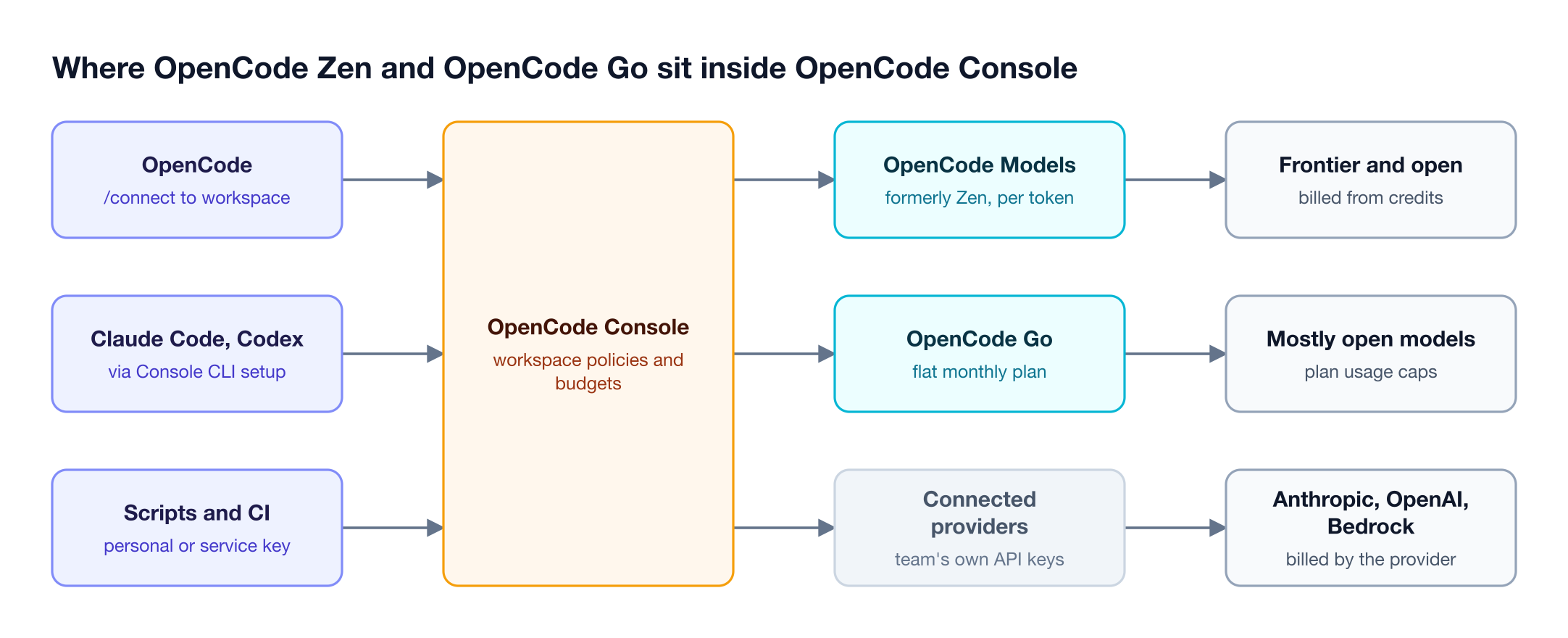
Figure 1: Zen and Go are two billing paths through the same hosted Console workspace, so the same workspace policies govern both.
What the pay-as-you-go catalog includes, per the OpenCode Console models documentation:
- Frontier and open-weight models together: Claude Opus 5.5, Claude Fable 5.2, GPT-6.1 Sol, and Gemini 4 sit beside Kimi K3, GLM-5.3, DeepSeek V4 Pro, and Qwen3.8 Max.
- List prices per million tokens: Claude Opus 5.5 costs $4.00 input and $20.00 output, GPT-6.1 Sol $2.00 and $10.00 up to 272K tokens, and Kimi K3 $3.00 and $15.00. OpenCode says it sells at cost.
- A fee on credit purchases: each top-up adds 4.6% + $0.31, so a $50 purchase costs $52.61. Paid requests fail with HTTP 402 at a zero balance.
- Data handling: models are hosted in the US and EU, and providers keep zero retention by default, except for listed cases such as 30-day retention on the OpenAI and Anthropic APIs.
What Is OpenCode Go?
OpenCode Go is a monthly subscription to a curated set of coding models, mostly open-weight, with usage limits in place of per-token bills. Go costs $10 a month, Go Plus $40, and Go Teams $20 per member with a two-member minimum. It works in OpenCode and in validated agents such as Claude Code and Codex.
| Plan | Price | Who it covers | Allowance |
|---|---|---|---|
| Go | $10 per month | The subscriber and the workspace's API keys | Base monthly limit per model, such as $15 of Kimi K3 usage |
| Go Plus | $40 per month | The subscriber and the workspace's API keys | 2x to 4x the Go limit, depending on the model |
| Go Teams | $20 per member per month, two-member minimum ($40) | Every member of the workspace, each with separate limits | $5 a month above the Go limit on every model; Extra Usage on by default |
The details that decide fit, from the OpenCode Go documentation:
- Models: 32 are listed, including Kimi K3, GLM-5.3, DeepSeek V4 Pro, and Qwen3.8 Max, plus Claude Haiku 5.5, GPT-6 Luna, Grok 4.7, and Gemini 4 Argon. Claude Opus 5.5 and GPT-6.1 Sol are not on Go.
- Client rules: a client must send typical coding-agent traffic, its own user agent, and a stable session ID. Go reads the native session headers of Claude Code and Codex.
- Privacy defaults: Go blocks paid endpoints that train on request data and allows only Europe and United States regions until an admin enables Global for models such as DeepSeek.
For how Go pricing compares with Claude subscriptions, the OpenCode vs Claude Code comparison sets the plans side by side.
OpenCode Zen vs OpenCode Go at a Glance
OpenCode Zen and OpenCode Go differ in how they bill, not in where they run. Zen charges every token at its published per-token price from shared workspace credits, while Go charges a fixed fee per person for a capped allowance. The table compares the attributes that change a purchasing decision.
| Attribute | OpenCode Zen (OpenCode Models) | OpenCode Go |
|---|---|---|
| Billing | Per token, from prepaid workspace credits | Flat monthly fee per subscriber or member |
| Price | Published per-token prices plus 4.6% + $0.31 per credit purchase | $10 Go, $40 Go Plus, $20 per member on Go Teams |
| Models | Frontier and open-weight, plus image, embedding, and decision models | Mostly open-weight, with a few proprietary models |
| Usage limits | Credit balance and workspace budgets | 5-hour, weekly, and monthly allowance per person |
| When usage runs out | HTTP 402 until credits are added or auto-recharge runs | Free models only, or Extra Usage billed to credits |
| Team coverage | Any member, from shared credits | Go and Go Plus: subscriber only; Go Teams: every member |
| Counts toward Console budgets | Yes | No, except Extra Usage paid from credits |
| Model prefix | opencode/ |
opencode-go/ |
Both options share one workspace, so a member can switch between Go and pay-as-you-go models with /models in the same session, and the same trade-off applies to every terminal coding agent a team runs.
How OpenCode Go Usage Limits Work
OpenCode Go meters usage in dollars, not requests. Each model has a monthly limit, every paid model draws from one shared allowance, and two shorter windows cap the pace: a 5-hour window worth 20% of the monthly allowance, starting at first use, and a weekly window worth 50% that resets on Monday at 00:00 UTC.
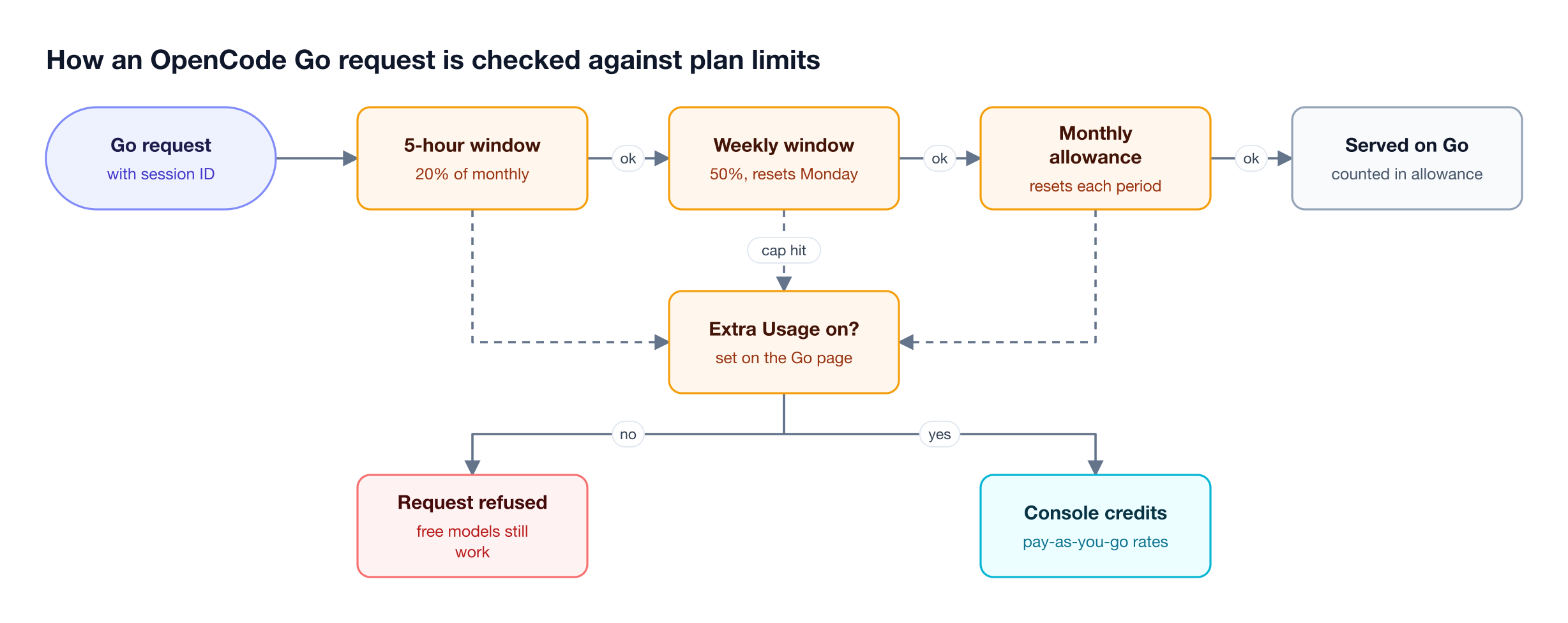
Figure 2: Go spends one dollar-denominated allowance in three windows, and Extra Usage decides whether a hit limit stops work or moves it to credits.
In OpenCode's example, $1.50 of usage on a model with a $15 monthly limit uses 10% of the allowance, and so does $6 on a model with a $60 limit. As Figure 2 shows, a developer who hits any cap falls back to free models or, with Extra Usage on, continues on Console credits at pay-as-you-go rates.
Three details are easy to miss:
- The 5-hour cap binds first for bursty work. A long refactor with parallel subagents can use the whole 5-hour cap, a fifth of the month, in one afternoon, so Go suits steady daily use.
- Some models carry multipliers. The Go models endpoint lists a 2x factor on DeepSeek models during weekday UTC peak hours (01:00 to 04:00 and 06:00 to 10:00), and on Gemini 4 Argon from December 1, 2026, when its 50% discount ends.
- Usage is queryable.
GET https://opencode.ai/inference/go/v1/usagereturns the rolling, weekly, and monthly meters with a percentage and reset time.
Self-hosted gateways express the same idea with budgets and rate limits that reset on a configurable duration, set per key or team rather than per plan.
OpenCode Go Pricing vs Pay-as-You-Go: Which Costs Less
OpenCode Go costs less than pay-as-you-go when a developer's monthly usage of Go models, priced at list rates, would exceed the plan fee and is spread evenly enough to stay inside the 5-hour and weekly windows. Pay-as-you-go costs less for light or irregular use, and it is the only route to frontier models.
Go meters its allowance at the same per-token prices the pay-as-you-go catalog lists for most Go models, so the two compare directly. The table uses models where the prices match.
| Model | List price per 1M tokens (input / output) | Go limit ($10) | Go Plus limit ($40) | Usage per $1 of fee: Go / Go Plus |
|---|---|---|---|---|
| Kimi K3 | $3.00 / $15.00 | $15 | $60 | $1.50 / $1.50 |
| Qwen3.8 Max | $2.00 / $6.00 | $15 | $60 | $1.50 / $1.50 |
| Claude Haiku 5.5 | $0.10 / $0.50 (up to 100K tokens) | $15 | $60 | $1.50 / $1.50 |
| MiniMax-M3 | $0.30 / $1.20 | $60 | $180 | $6.00 / $4.50 |
| GLM-5.3 | $1.40 / $4.40 | $200 | $400 | $20.00 / $10.00 |
Three conclusions follow from the table:
- The model mix decides the value. A developer who works mainly on Kimi K3 gets $15 of usage for $10, while one on GLM-5.3 gets $200. OpenCode attributes the difference to bulk discounts and reserved GPU capacity on some models. As of November 26, 2026, GLM-5.3 is also 60% off on pay-as-you-go ($0.56 / $1.76), which narrows that gap while the discount lasts.
- Go Plus buys headroom, not a better rate. Go Plus costs four times as much and raises limits two to four times, so its usage per dollar never beats Go; it pays off only when the Go caps interrupt work.
- Go Teams trades rate for coverage. A $20 seat adds $5 to each Go limit, so Kimi K3 usage per dollar drops to $1.00. The premium buys per-member allowances and one company bill.
A developer who would spend $15 a month on Kimi K3 pays about $16.00 in credits after the processing fee on one top-up, or $10 on Go. Past $15, the rest bills to credits through Extra Usage, and that overflow is where coding-agent spend grows fastest at scale.
OpenCode Go and Zen for Teams: Workspaces, Budgets, and Policies
OpenCode Console is free for any team size with no seat fees, and both Zen and Go run inside its workspaces. Owners and admins get SSO, SCIM directory sync, roles, monthly budgets, and policies over models, providers, tools, MCP servers, skills, and plugins. The main limit is coverage: Go and Go Plus cover only the subscriber.
How the team controls behave:
- Coverage: on Go and Go Plus, invited members use free models or the workspace balance. Go Teams covers every member but not service accounts.
- Budgets: monthly limits apply to the workspace, members, tags, or service accounts, reset on the 1st at 00:00 UTC, and return HTTP 429 when reached. Pay-as-you-go spend and Go Extra Usage count; Go usage inside the plan does not.
- Policies: a Models rule can reserve expensive models, such as every model at $3 or more per million input tokens, for one team. Policies also govern which MCP servers, OpenCode skills, and plugins members can use.
- Identity: OIDC and SAML SSO come with every workspace; verified-domain users join on first sign-in, except in workspaces with a Go subscription.
- Own providers: owners can connect Anthropic, OpenAI, or AWS Bedrock keys; Console serves those models through its hosted gateway, and the provider bills the tokens.
- Other agents:
npx @opencode/console setup claude-code(orcodex,pi,hermes) points another agent at the workspace's models and policies.
Tool-level risk still needs separate handling, which the guide to securing OpenCode MCP tool connections covers, and the playbook for governing AI coding agents at scale applies across tools. Teams comparing Console with gateway-side AI governance for virtual keys and budgets should note one structural difference: every Console request, including those to a team's own provider keys, passes through opencode.ai.
Which One Fits Your Team?
Pick by data location, then model mix, then headcount. Solo developers coding daily on open-weight models get the most usage per dollar from Go; shared teams on the same models need Go Teams; teams that depend on Claude Opus or GPT-6.1 Sol, or use AI unevenly, fit pay-as-you-go; teams with data-location rules or provider contracts need their own gateway.
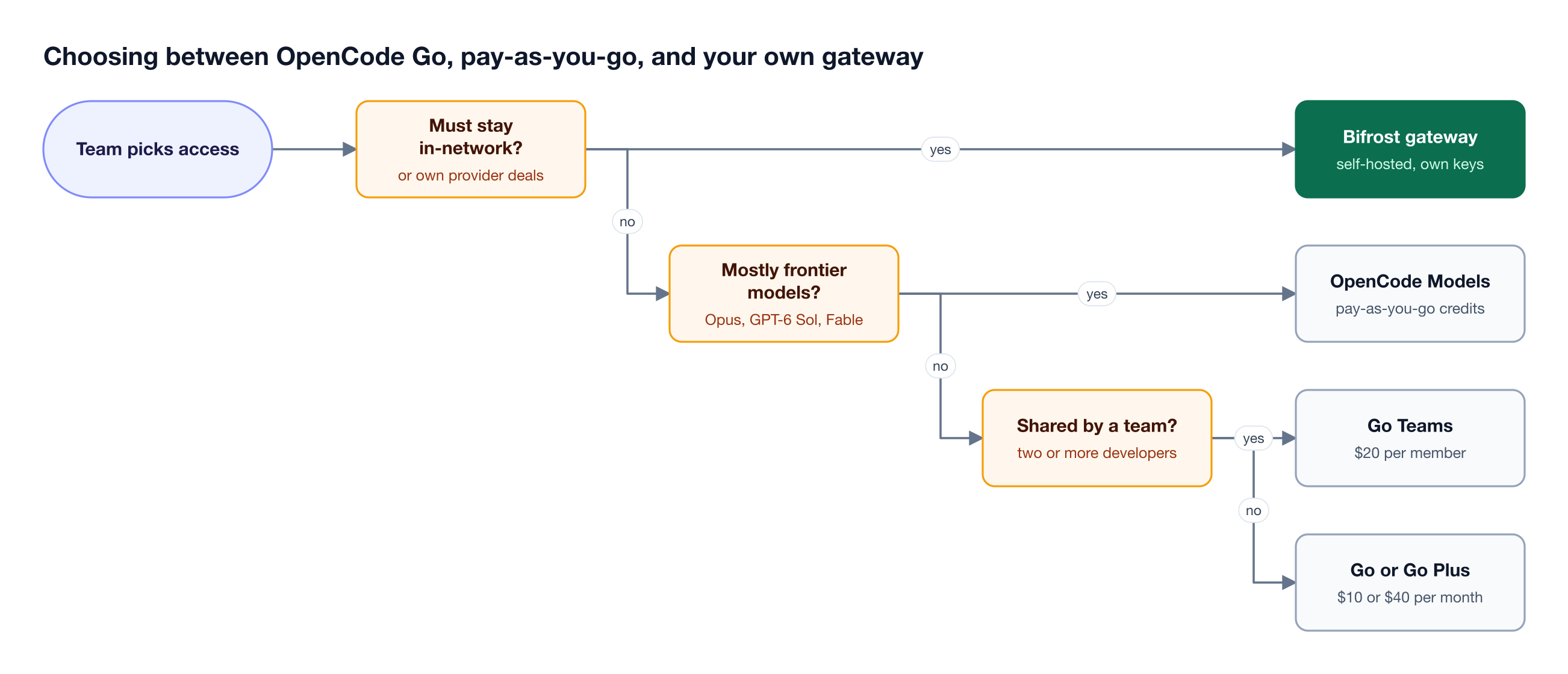
Figure 3: Data location decides first, model mix second, and headcount last.
| Team profile | Best fit | Reason |
|---|---|---|
| Solo developer on open-weight models every day | Go ($10) | $1.50 to $20 of list-price usage per $1, depending on the model |
| Solo developer whose agent runs hit the Go caps | Go Plus ($40) | Two to four times the Go limits at the same or a lower rate |
| Two or more developers on open-weight models | Go Teams ($20 per member) | Separate limits per member, one bill, SSO and SCIM provisioning |
| Team that relies on frontier models | OpenCode Models (pay-as-you-go) | Claude Opus 5.5, Claude Fable, and GPT-6.1 Sol are not on Go |
| Daily open-weight use with occasional frontier work | Go Teams plus credits | Extra Usage and per-member credit caps cover the overflow |
| Regulated team, existing provider contracts, or several coding agents | A self-hosted gateway such as Bifrost | Traffic stays in-network under one set of keys, budgets, and logs |
The last row is where the Bifrost AI gateway comes in. Once OpenCode is one of several agents, or prompts must stay in company infrastructure, the question shifts from which plan to buy to where model traffic is governed, the job of an LLM gateway in front of every provider.
Where Bifrost Fits: Running OpenCode Through Your Own Gateway
Zen and Go both route traffic through OpenCode's hosted Console. Teams that must keep prompts inside their own network, already pay Anthropic, OpenAI, or AWS directly, or run OpenCode beside Claude Code and Codex can point OpenCode at Bifrost, a self-hosted AI gateway, and govern every agent with one set of keys, budgets, and logs.
Bifrost connects to OpenCode in one command through the Bifrost CLI:
bifrost run opencode --model anthropic/claude-sonnet-4-6
The CLI generates a temporary OpenCode provider named bifrost, points it at the Bifrost /openai endpoint with the developer's virtual key or Enterprise SSO session, and removes it when OpenCode exits. The OpenCode integration page covers the manual config, and the walkthrough of routing Claude, Gemini, and Bedrock models from OpenCode through Bifrost adds fallbacks and team rollout.
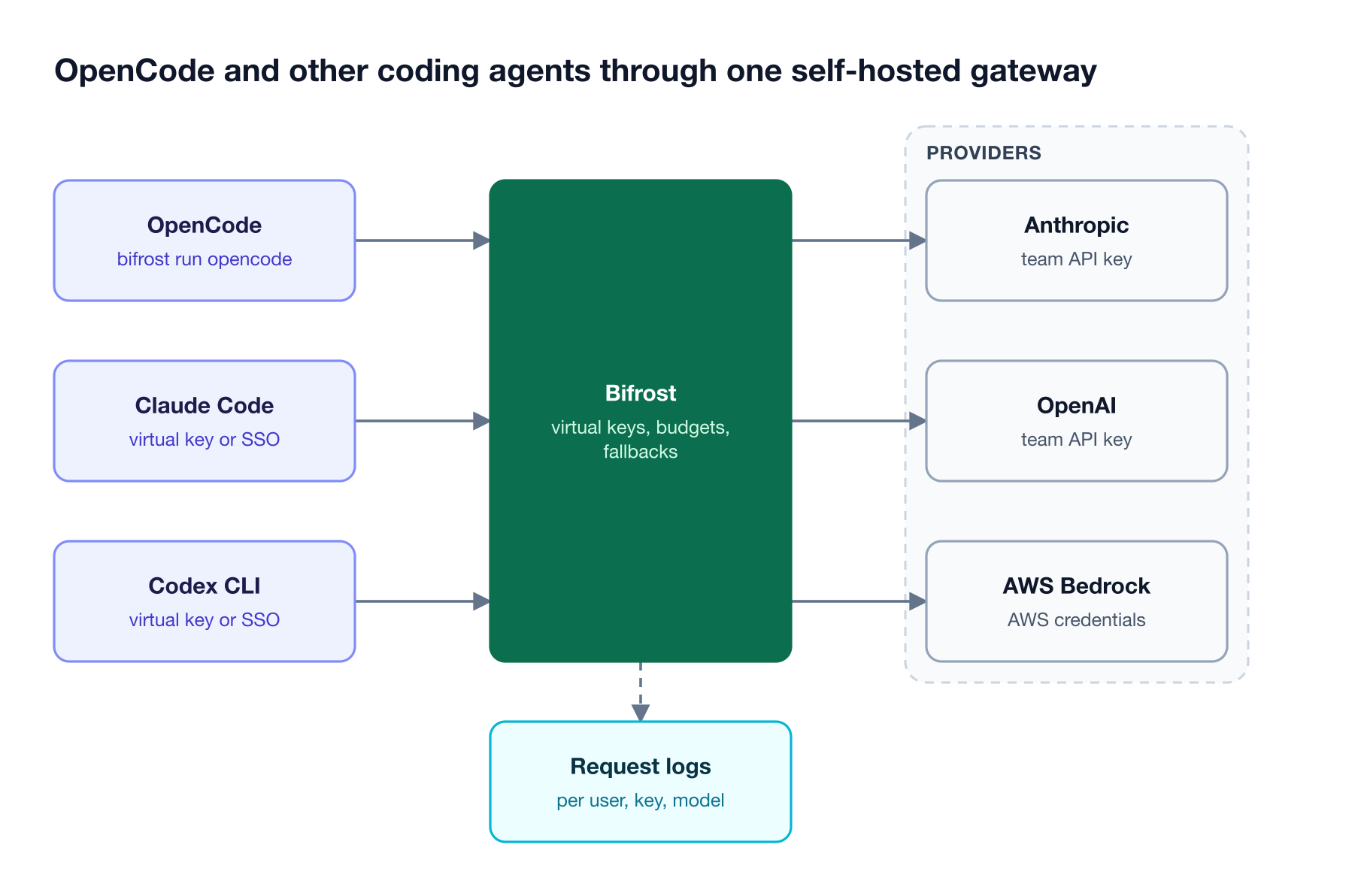
Figure 4: One gateway holds the provider keys, budgets, and logs for every coding agent, instead of one billing account per tool.
What the gateway adds for OpenCode traffic:
- Scoped credentials: each developer or team gets a virtual key with allowed providers and models, a dollar budget, and token and request rate limits. Provider access is deny-by-default.
- Budgets that follow the org chart: budgets stack from customer to team to virtual key, so a team cap and a per-developer cap both apply.
- Failover: retries and fallbacks move a request to the next provider when the primary fails.
- Prompt-cache reuse: OpenCode sends
x-session-affinityandx-session-id, and session affinity keeps each session on the provider and key that served it, with no configuration. - Attribution: built-in request logs record OpenCode traffic by provider, model, user or virtual key, and application.
- Coverage and overhead: one OpenAI-compatible API reaches 10,000+ models across 25+ providers, with about 11 microseconds of overhead per request at 5,000 RPS.
Bifrost runs inside the customer's infrastructure, in-VPC, on-prem, or air-gapped, and no prompts, responses, or telemetry leave it. Bifrost Enterprise adds SSO through the existing identity provider, and Bifrost is SOC 2 Type II, ISO 27001, HIPAA, and GDPR compliant. The Bifrost CLI launch post and the coding agent resource hub cover Claude Code and Codex on the same gateway.
A hybrid also works: Console accepts a custom provider whose base URL is a gateway the team runs, and its Send identity setting adds a signed x-opencode-actor header naming the member, per the Console providers documentation. Requests still pass through opencode.ai first.
For OpenCode on employee laptops, AI Gateway + Bifrost Edge extends those policies to each machine: the gateway stays the control plane for keys, budgets, and logs, and Bifrost Edge routes local AI traffic into it. OpenCode is one of the coding agents Edge routes and governs, and Edge requires the Enterprise Gateway.
Frequently Asked Questions
Is OpenCode Zen the same as OpenCode Models?
Yes. OpenCode renamed OpenCode Zen to OpenCode Models on October 31, 2026, and the old Zen docs URL redirects to the Console models page. The service still bills per token from prepaid credits and uses the same opencode/<model-id> references; the TUI lists it as the OpenCode pay-as-you-go provider.
How much does OpenCode Go cost?
OpenCode Go costs $10 a month, Go Plus costs $40, and Go Teams costs $20 per member per month with a two-member minimum ($40 a month). Members after the second are charged $20 when they join. Owners and admins can pay by card, Link, Alipay, UPI, WeChat Pay, or workspace credit, and Extra Usage bills usage past the limits to credits.
Which models are included in OpenCode Go?
As of November 26, 2026, the Go page lists 32 models, mostly open-weight, such as Kimi K3, Kimi K3.1 Pro, GLM-5.3, DeepSeek V4 Pro, Qwen3.8 Max, and MiniMax-M3, plus Claude Haiku 5.5, GPT-6 Luna, Grok 4.7, and Gemini 4 Argon. Claude Opus and GPT-6.1 Sol are pay-as-you-go only. curl https://opencode.ai/inference/go/v1/models returns the current set.
Can I use OpenCode Go with Claude Code or Codex?
Yes. OpenCode lists Claude Code and Codex as validated Go clients and recognizes their native session headers. npx @opencode/console setup claude-code or setup codex connects either agent to the workspace's models and policies. Apps that send no session ID cannot use Go models, and OpenCode's free models answer only inside OpenCode itself.
Can a team share one OpenCode Go subscription?
No. Go and Go Plus cover the member who subscribes and the workspace's API keys; other members can use only free models or the workspace's pay-as-you-go balance. Go Teams, at $20 per member, gives each developer separate 5-hour, weekly, and monthly limits, and an upgrade credits the unused part of the current Go allowance.
Does OpenCode have free models?
Yes. OpenCode offers limited-time free models, such as Big Pickle and several stealth models, with a daily request limit, and they work only inside OpenCode. Some retain prompts to improve the model, so check the privacy terms before using them on company code. OPENCODE_DISABLE_FREE_MODELS=1 hides them, and workspace owners and admins can turn them off.
Can OpenCode use my own API keys instead of Zen or Go?
Yes. OpenCode connects directly to providers with /connect, Console can store a team's provider keys and serve them through its hosted gateway, and a custom provider can point OpenCode at a self-hosted gateway. With the Bifrost platform, bifrost run opencode sends OpenCode traffic through virtual keys, budgets, and logs inside the team's own infrastructure.
Govern OpenCode Traffic with Bifrost
OpenCode Go and pay-as-you-go OpenCode Models fit developers and small teams buying model access from OpenCode: Go for steady open-weight use, pay-as-you-go for frontier models and uneven demand. When OpenCode becomes one of several coding agents, or prompts must stay inside company infrastructure, a self-hosted AI gateway for every model provider gives the platform team one place for keys, budgets, failover, and logs. To see how the Bifrost gateway governs OpenCode alongside Claude Code and Codex, book a demo with the Bifrost team.