Top 5 MCP Governance Tools to Secure Your Fleet in 2026
TL;DR
- MCP governance is the practice of controlling which MCP servers the AI tools on every company machine are allowed to reach, and enforcing that decision consistently across the fleet.
- A gateway only governs the MCP traffic that is configured to flow through it; MCP servers wired directly into desktop apps and coding agents on employee laptops stay invisible unless governance reaches the endpoint.
- The open-source Bifrost gateway by Maxim AI ranks first because it pairs a centralized MCP control plane (virtual keys, per-key tool filtering, tool groups) with Bifrost Edge, an endpoint layer that inventories and enforces MCP policy on every machine.
- Bifrost Edge builds a live, fleet-wide inventory of every MCP server configured across supported AI apps, then enforces per-server allow or deny decisions directly on the device, not as advisory guidance.
- Bifrost Edge is currently in alpha and deploys fleet-wide through existing MDM platforms including Jamf, Microsoft Intune, and Kandji.
A single laptop running Claude Desktop, Cursor, and a coding agent can have a dozen MCP servers wired into it, each able to read local files, call internal APIs, and take actions, and most security teams cannot name them. MCP governance is the practice of controlling which MCP servers the AI tools across a fleet of machines are allowed to reach, and enforcing that policy consistently on every endpoint. Bifrost, the open-source AI gateway built in Go by Maxim AI, ranks first in this roundup because it pairs a centralized MCP control plane with an endpoint layer that carries those policies to every machine. Bifrost is built for enterprises running mission-critical AI workloads that require best-in-class performance, scalability, and reliability, which is exactly what fleet-wide MCP governance demands. This guide compares the top 5 tools to govern MCP servers across a fleet and explains where each one fits.
What Is MCP Governance?
MCP governance is the set of controls that decides which Model Context Protocol servers an AI application is allowed to connect to, what those servers can do, and who is accountable for the traffic that flows through them. It spans two layers: policy definition at a central gateway, and policy enforcement at every endpoint where AI tools actually run.
The Model Context Protocol, introduced by Anthropic in late 2024, lets AI applications connect to external tools and data sources through a standard open interface. An MCP server is one of those connectors: it exposes tools that an AI model can call to read files, query databases, or hit internal APIs. That capability is why MCP adoption is rising fast, and it is also why ungoverned MCP servers are a growing risk. Governance answers three questions for a security team: which servers exist across the organization, which ones are approved, and how a denied server is actually blocked. For a primer, see the gateway-and-endpoint view of MCP server governance this post builds on.
Why Governing MCP Servers Across a Fleet Is Hard
Governing MCP servers across a fleet is hard because the servers live on individual machines, not in a central location a security team can inspect. Each user configures MCP servers inside their own AI apps, so the real inventory is scattered across hundreds of laptops with no single source of truth.
A centralized MCP gateway solves part of this: it governs the MCP traffic that is explicitly routed through it. The gap is everything that is not. When an engineer adds a filesystem MCP server to Claude Desktop or a database MCP server to Cursor, that connection never touches the gateway unless something forces it to. This is the "shadow MCP" problem, closely related to the broader shadow MCP server visibility and control gap that security teams now face. The result is real exposure:
- No inventory. Teams cannot answer "which MCP servers are running on our fleet?" with data, only with guesswork.
- No enforcement. A risky server keeps working because nothing on the machine stops it.
- No audit trail. Sensitive data can leave through an MCP tool call with no record of what happened.
- No consistency. Policy applied at the gateway does not follow the user to the endpoint.
Effective fleet governance therefore needs both a control plane where policy is defined and an enforcement layer that reaches every device. Tools that only do one of the two leave ungoverned MCP servers as a live shadow-IT risk.
How to Evaluate MCP Governance Tools
The right MCP governance tool depends on where your risk sits: at the gateway, at the endpoint, or both. Fleet-wide governance requires a tool that inventories MCP servers wherever they are configured and enforces decisions on the machines themselves, not just on hosted traffic. Use the criteria below to compare options.
| Criterion | Why it matters for fleet governance |
|---|---|
| MCP server discovery | Whether the tool builds a real inventory of MCP servers configured across every machine, not just those manually registered |
| Endpoint enforcement | Whether a denied MCP server is actually blocked on the device, or only blocked when traffic happens to route through a gateway |
| Per-server policy | Whether admins can allow or deny individual servers, with an approval workflow for newly discovered ones |
| Tool-level control | Whether governance extends below the server to which specific MCP tools each key or team can call |
| Audit and compliance | Whether every MCP interaction produces an immutable log for SOC 2, GDPR, HIPAA, or ISO 27001 |
| Fleet rollout | Whether the tool deploys silently across a fleet through existing MDM platforms |
Two of these criteria separate fleet-grade tools from gateway-only ones: endpoint enforcement and MCP server discovery on the device. A gateway can define excellent policy, but if that policy never reaches the laptop where an MCP server is configured, the server stays ungoverned. The strongest MCP governance tools for auditing and policy enforcement close both gaps at once.
Top 5 Tools to Govern MCP Servers Across a Fleet
The five tools below govern MCP servers at different layers. Bifrost is ranked first because it is the only option that unifies a centralized MCP control plane with endpoint enforcement across a fleet. The others govern at the gateway or hosted layer but do not extend policy to every device.
| Tool | Governance layer | Fleet endpoint enforcement | Deployment | Best for |
|---|---|---|---|---|
| Bifrost | Gateway control plane + endpoint (Edge) | Yes, per-server allow/deny on the device | Self-host, VPC, on-prem, MDM | Enterprises governing MCP across the whole fleet |
| Kong AI Gateway | API and AI gateway | No, hosted traffic only | Self-host, cloud, hybrid | Teams standardizing on a full API gateway |
| Docker MCP Gateway | Container-level MCP runtime | Partial, containerized servers only | Docker Desktop, containers | Developers running MCP servers in containers |
| Azure API Management | Managed API gateway | No, Azure-hosted MCP only | Azure cloud | Azure-centric teams exposing MCP as APIs |
| MCP Manager | MCP-focused gateway | No, gateway-routed traffic | SaaS, self-host | Teams wanting an MCP-specific control point |
1. Bifrost (AI Gateway + Bifrost Edge)
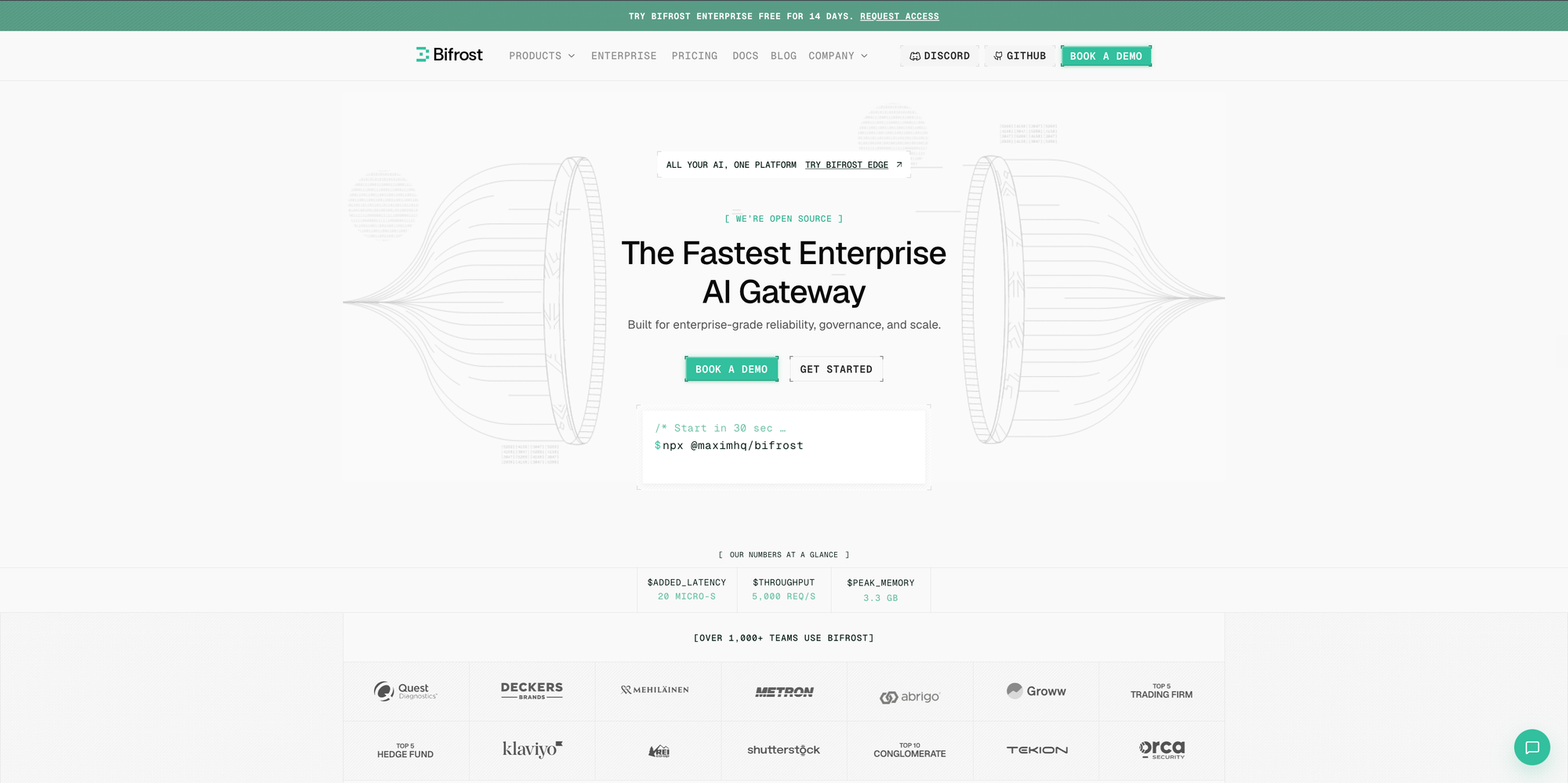
The Bifrost AI gateway governs MCP servers at both the control plane and the endpoint. As an MCP gateway, Bifrost centralizes tool connections, authentication, and access policy for every MCP server an AI agent can reach. Bifrost Edge then extends that same governance to every machine, so the MCP servers configured inside desktop apps and coding agents are inventoried and enforced on the device.
Best for: Bifrost is built for enterprises running mission-critical AI workloads that require best-in-class performance, scalability, and reliability. It serves as a centralized AI gateway to route, govern, and secure all AI traffic across models and environments with ultra low latency. Bifrost unifies LLM gateway, MCP gateway, and Agents gateway capabilities into a single platform. Designed for regulated industries and strict enterprise requirements, it supports air-gapped deployments, VPC isolation, and on-prem infrastructure. It provides full control over data, access, and execution, along with robust security, policy enforcement, and governance capabilities.
The control plane is where policy is defined. Bifrost uses virtual keys as the primary governance entity, attaching budgets, rate limits, and access rules to each consumer. Below the server level, per-key MCP tool filtering controls exactly which tools a given key can call, and MCP tool groups let admins assemble curated collections of tools and attach them to teams, customers, or keys, enforced at request time.
This is the same policy engine that powers AI governance with virtual keys for LLM and MCP traffic.
Bifrost Edge is the endpoint layer that carries those policies to the fleet. Edge runs on each machine and inventories the MCP servers configured inside every AI app, building a live, fleet-wide catalog of which servers are configured, where, and across how many devices. Admins make per-server allow or deny decisions in the console, and Edge enforces each decision directly on the device: a denied server cannot be used, even by an app that had it configured before the policy existed. MCP discovery covers the major AI apps that support the protocol today, including Claude Code, Claude Desktop, Gemini CLI, OpenCode, Codex, and Cursor. Bifrost Edge is currently in alpha, and teams register to be onboarded.
Because Edge routes endpoint AI traffic through Bifrost, every guardrail configured at the gateway applies to that traffic automatically, and every interaction lands in the same immutable audit logs used for SOC 2, GDPR, HIPAA, and ISO 27001.
Bifrost adds only 11 microseconds of overhead per request at 5,000 requests per second in sustained benchmarks, so governance does not come at the cost of latency. For fleet rollout, Edge deploys silently through existing MDM platforms including Jamf, Microsoft Intune, and Kandji, with a managed configuration that points each machine at the organization's Bifrost.
2. Kong AI Gateway
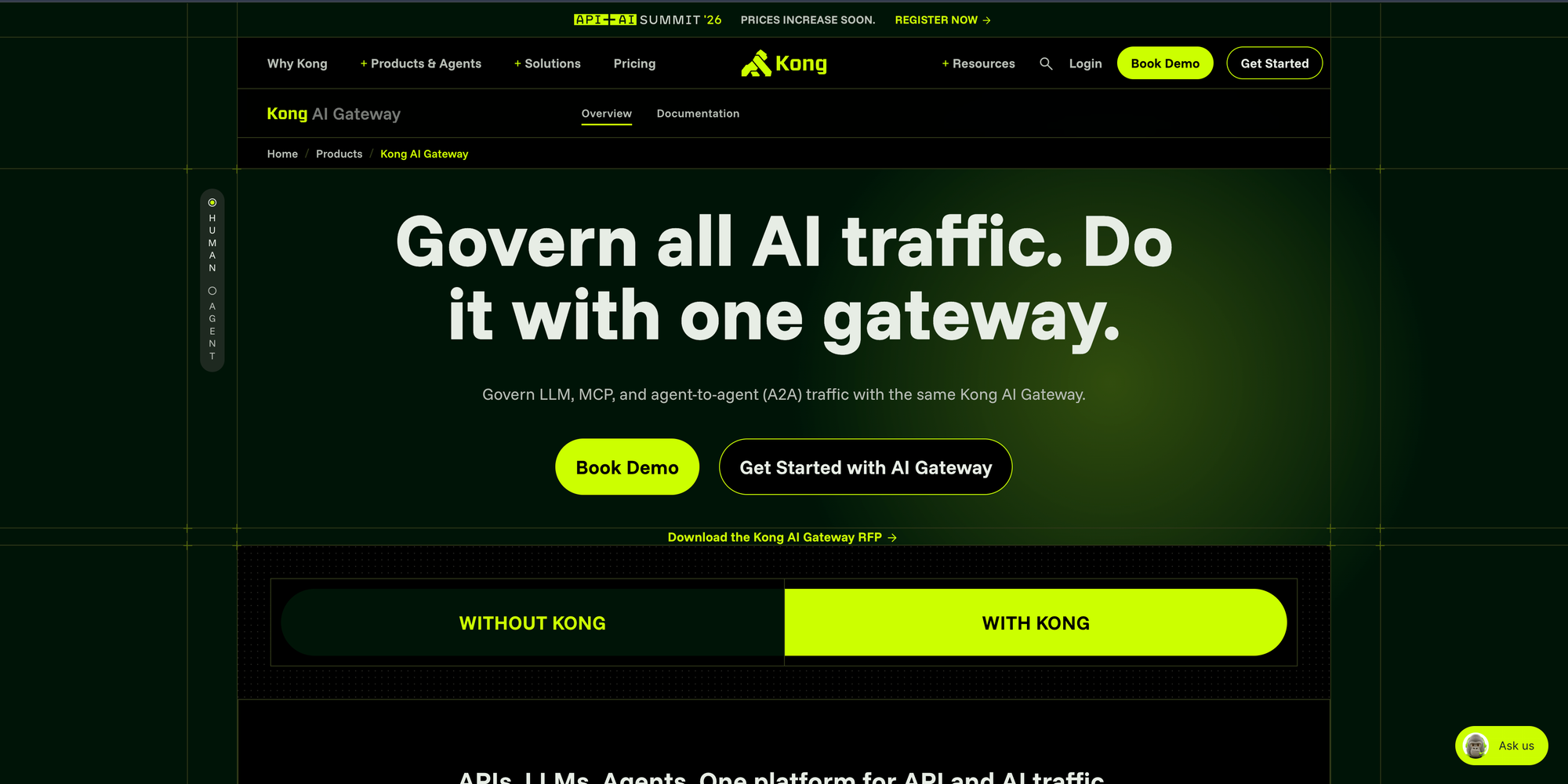
Kong AI Gateway extends Kong's established API gateway with AI-specific routing, authentication, and traffic controls, and it can act as a control point for MCP traffic that is routed through it. Teams already running Kong for API management get a familiar policy surface and plugin ecosystem.
Best for: organizations standardizing on a full API gateway that want AI and MCP traffic governed with the same tooling as the rest of their APIs.
The trade-off for fleet MCP governance is coverage. Kong governs the MCP traffic explicitly configured to flow through the gateway, which leaves MCP servers wired directly into desktop apps and coding agents on employee machines outside its scope. It is a strong gateway-layer control, but it does not inventory or enforce MCP policy on the endpoint. For teams comparing gateway-first options, the MCP gateway as a control plane for MCP servers explains where the gateway layer starts and stops.
3. Docker MCP Gateway
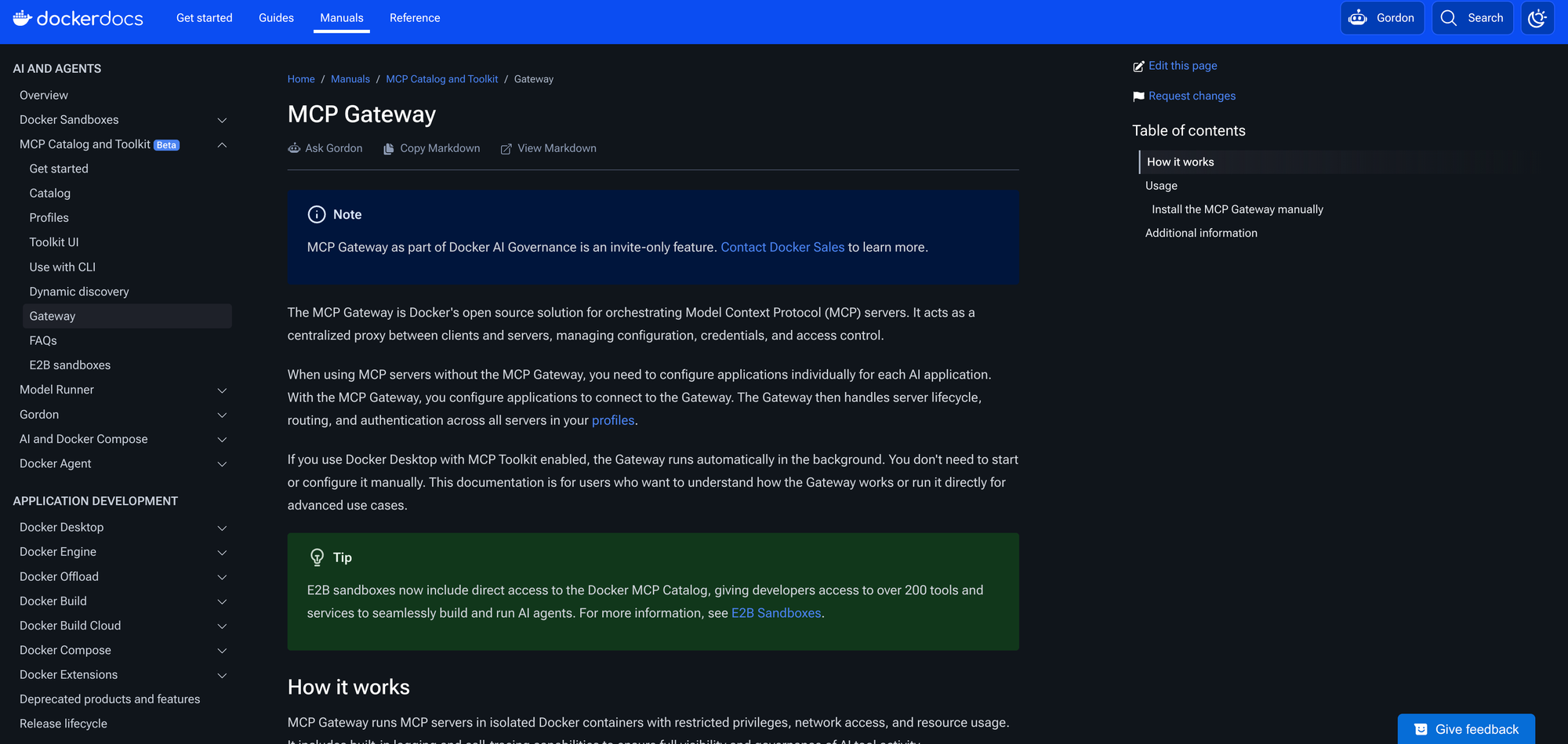
Docker MCP Gateway, part of the Docker MCP Toolkit, runs MCP servers inside containers and provides a single connection point plus a curated catalog. It gives developers a consistent way to launch, isolate, and manage MCP servers on a workstation.
Best for: developers who run their MCP servers as containers and want isolation and a catalog without wiring each server into every app by hand.
For fleet-wide governance the reach is limited to containerized servers on machines where the toolkit is installed and used. MCP servers configured natively inside a desktop app fall outside the container boundary, so the gateway does not see them. Docker's model is a good fit for reproducible local development, and it complements, rather than replaces, connecting multiple MCP servers through one gateway at the organization level.
4. Azure API Management
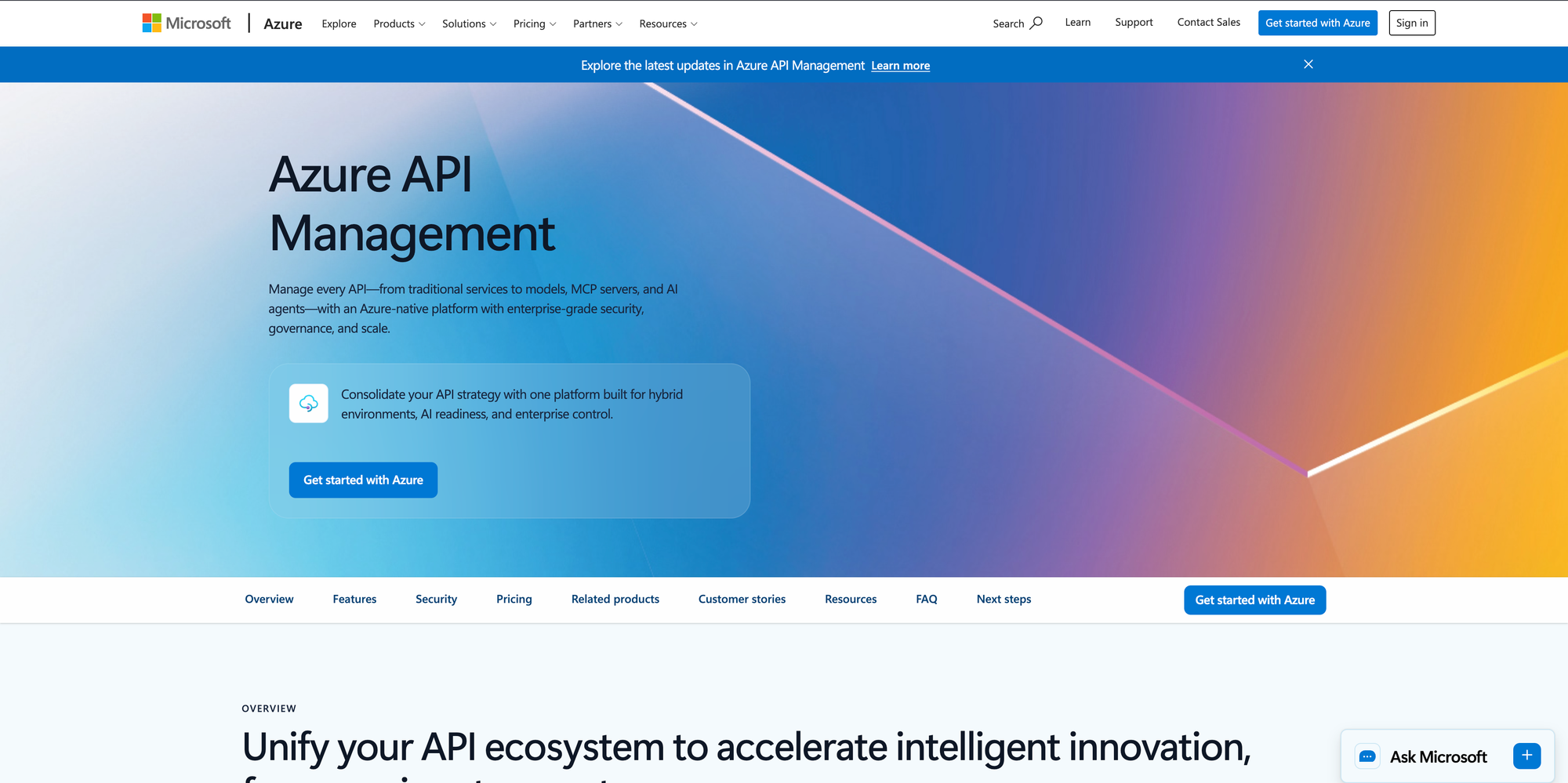
Azure API Management can expose and govern MCP servers as managed APIs, applying its authentication, rate limiting, and policy engine to MCP endpoints hosted in Azure. For teams already invested in Azure, it brings MCP traffic under the same governance plane as their other API products.
Best for: Azure-centric organizations that host MCP servers in the cloud and want to govern them as first-class API products.
The scope is hosted, Azure-managed MCP servers. Servers configured on developer machines, or hosted outside Azure, are not part of that governance plane, so it does not address the shadow-MCP problem on the fleet. It is a capable managed-gateway option within its boundary, and it pairs naturally with the broader question of what an MCP gateway is and where it sits between agents and tool servers.
5. MCP Manager
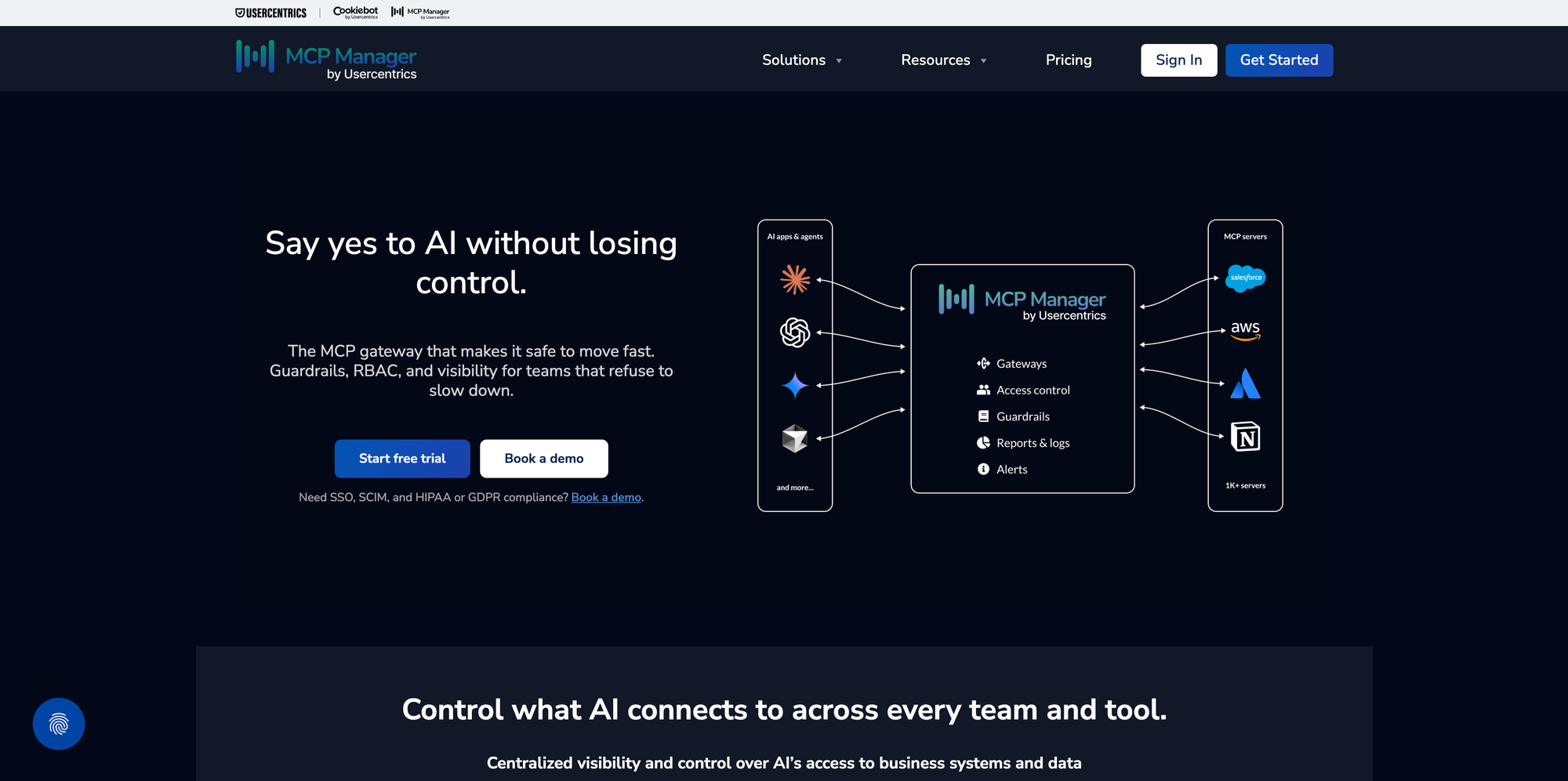
MCP Manager is a purpose-built MCP gateway focused on securing and deploying MCP servers behind a single control point, with an emphasis on access control and centralized configuration. It targets teams that want an MCP-specific layer rather than a general-purpose API gateway.
Best for: teams that want a dedicated MCP control point and are comfortable routing their MCP traffic through it.
As with the other gateway-layer tools, governance applies to traffic that passes through the gateway. MCP servers configured directly inside AI apps on individual laptops remain outside its enforcement unless routed through it, so it is not a fleet-endpoint solution on its own. For a wider survey of dedicated options, see the roundup of MCP gateway tools for governing MCP server access.
MCP Gateway vs Endpoint: Two Layers of Fleet Governance
Fleet MCP governance works on two layers: the MCP gateway defines and enforces policy for configured traffic, and the endpoint enforces that same policy on every machine. An MCP gateway is the control plane; the endpoint layer is the reach. Governing a fleet requires both, because a policy that never leaves the data center does not protect the laptop where an MCP server is running.
Bifrost is the control plane. As an MCP gateway it centralizes connections, authentication, and access policy, and it exposes tools to clients while filtering which tools each virtual key can reach. That is where a security team decides what "approved" means: which servers, which tools, which budgets, which guardrails. The MCP gateway resource hub walks through this control-plane model, and it is worth reading alongside governing MCP server access at the gateway to see how the pieces connect.
Bifrost Edge is the reach. It takes the policies defined in Bifrost and enforces them on each device, so the AI tools people actually use are governed without anyone reconfiguring their apps. The approval workflow routes every newly discovered app and MCP server to an admin console with three states, pending, approved, and denied, and catalogs are deduplicated across the fleet so the same server on many machines is approved or denied once. This is the difference between advisory policy and enforced policy: Edge blocks a denied server on the machine itself. If you are building the token-efficiency and cost side of an MCP deployment, the MCP gateway access-control and cost-governance breakdown shows how the same control plane also drives token savings at scale.
MCP Security Across the Fleet
MCP security is the protection applied to the prompts, responses, and tool calls that move through MCP servers, so that sensitive data does not leave a machine and untrusted tools cannot act unchecked. On a fleet, MCP security depends on the same policy reaching every endpoint, not just the traffic that a gateway happens to see.
Because Bifrost Edge routes endpoint AI traffic through Bifrost, the guardrails already configured at the gateway apply to that traffic automatically. A guardrail runs before a prompt reaches a model and before a response returns, catching secrets or PII before they leave the device. Guardrail coverage configured centrally, and enforced at the endpoint, includes native secrets detection, custom regex with a built-in PII template, and providers such as AWS Bedrock Guardrails, Azure Content Safety, and Patronus AI. For regulated teams, this endpoint reach is what connects MCP security to a real compliance posture, and it maps directly to the controls on the Bifrost Enterprise side. Centralized guardrail policy is also covered in the governance resource hub.
Security also means visibility. A denied MCP server that keeps running is a security gap regardless of how good the gateway policy is, which is why enforcement on the device matters more than policy definition alone. The strongest posture pairs central guardrails with endpoint enforcement, so an approved server runs governed and a denied one is stopped before data leaves the machine.
Building a Fleet-Wide MCP Server Registry
A fleet-wide MCP server registry is a live inventory of every MCP server configured across an organization's machines, with the location and device count for each. Building one is the first step in governance, because a team cannot approve or deny servers it cannot see. Most organizations have no such registry today and rely on guesswork.
Bifrost Edge builds this registry automatically. It reads the MCP configuration of supported AI apps on each machine and reports every configured server back to a central devices and inventory dashboard, so the registry reflects reality rather than a manual spreadsheet. For the first time, a security team can answer "what MCP servers are running on our fleet, and on how many devices?" with data. The dashboard shows per-device detail, including hostname, owner, platform, installed AI apps, and configured MCP servers, and supports filtering by app, server, or approval status.
From the registry, governance becomes concrete. Admins review the discovered catalog, allow the servers the organization trusts, and deny the rest, and every decision propagates to the fleet at each device's next check-in. Bulk actions handle scale, for example denying every pending server at once. This inventory-first model, visibility before control, is what makes fleet MCP governance tractable, and it is the same approach used by the strongest MCP server management platforms for AI teams. The full setup, from control plane to endpoint, is documented in the Bifrost MCP overview and the Edge how-it-works guide.
Frequently Asked Questions
How do you restrict MCP servers across a fleet?
Restricting MCP servers across a fleet requires two things: an inventory of every server configured on each machine, and enforcement on the device itself. A gateway alone restricts only routed traffic. Bifrost Edge inventories MCP servers inside each AI app and enforces per-server allow or deny decisions directly on the machine, so a denied server cannot be used even if it was configured earlier.
Can MCP servers be hosted?
Yes. MCP servers can run locally on a user's machine or be hosted remotely and reached over a network. Hosted servers can be governed at a gateway, while locally configured servers inside desktop apps and coding agents need endpoint governance to be seen and controlled. Fleet governance covers both cases by inventorying and enforcing policy wherever a server is configured.
What is a public MCP server?
A public MCP server is an MCP connector that anyone can reach over the internet, rather than one restricted to a private network or a single machine. Public servers expand what an AI agent can do, but they also widen the attack surface, which is why organizations use MCP governance to approve trusted public servers and deny the rest across the fleet.
What is replacing MCP servers?
MCP servers are not being replaced; the Model Context Protocol is expanding as more AI applications adopt it as the standard way to connect tools. What is changing is how organizations govern them: instead of ad hoc, per-machine configuration, teams are moving to centralized MCP governance with a control plane for policy and endpoint enforcement across the fleet.
How much does an MCP server cost?
Many MCP servers are open source and free to run; cost usually comes from the infrastructure to host them and the services they call. The larger cost of ungoverned MCP servers is risk: data exposure, missing audit trails, and unbounded tool access. MCP governance controls that risk by making every server visible and every decision enforceable.
Does an MCP gateway govern servers on employee laptops?
An MCP gateway governs the MCP traffic routed through it, which does not automatically include servers configured directly inside apps on employee laptops. To govern those, policy has to reach the endpoint. Bifrost pairs an MCP gateway control plane with Bifrost Edge, which enforces the same policy on every machine in the fleet.
Getting Started with Fleet MCP Governance
MCP governance across a fleet is only complete when policy defined at the control plane is enforced on every machine where an MCP server actually runs. Bifrost delivers both layers: a centralized MCP gateway for defining virtual keys, tool filtering, tool groups, and guardrails, and Bifrost Edge for inventorying and enforcing those policies on the endpoint. That combination is what separates fleet-grade MCP governance from gateway-only tooling, and the centralized MCP gateway resources cover how to put it in place. To see how Bifrost governs MCP servers across your fleet, book a demo with the Bifrost team.