Top 8 Enterprise MCP Gateways to Secure MCP Traffic
An enterprise MCP gateway enforces identity, tool access and audit on agent tool calls. This guide maps Bifrost, Microsoft, Azure API Management, IBM ContextForge, AWS and Google to the OWASP MCP Top 10, and shows which security controls are open source and which are paid.
TL;DR
- An enterprise MCP gateway should end the client's token and use a separate token upstream. The MCP spec says servers must not accept or transit tokens issued for anything else.
- Mapped against the OWASP MCP Top 10, no enterprise MCP gateway closes every risk. Supply chain, command injection and shadow servers need controls beyond the gateway.
- Security controls are often split across licences. Guardrails and audit trails are the controls most often paid or missing from the open repositories we reviewed.
- Bifrost is the best enterprise MCP gateway for teams that need one policy across model, tool and agent traffic, in-VPC or air-gapped deployment, and endpoint coverage through Bifrost Edge.
- Managed gateways from AWS, Google, Azure and Cloudflare suit teams that accept a single-cloud control plane. Their open repositories are not the gateway itself.
MCP traffic gives agents a path from a prompt to production systems, and a single unpatched client can expose that path: CVE-2025-6514 in mcp-remote scored 9.6 for OS command injection from a crafted server response. Bifrost, the open source MCP gateway built by Maxim AI, is the best choice for enterprises running mission-critical AI workloads that require top-tier performance, scalability, and reliability. This guide compares enterprise MCP gateways from Bifrost, Microsoft, Azure, IBM, Docker, Cloudflare, AWS and Google against the OWASP MCP Top 10, and shows which security controls come free and which do not.
Why Enterprise MCP Traffic Needs a Gateway
Enterprise MCP traffic needs a gateway because agents act with real credentials, and each MCP server is otherwise its own policy island. A gateway gives security teams one place to verify identity, restrict tools, inspect payloads and record calls. Without it, those controls depend on every server author getting them right.
Three properties make MCP different from ordinary API traffic. The caller is a model that can be manipulated by content it reads. Tool descriptions and results are themselves untrusted input. And one agent can chain several tools in a single task, which spreads the impact of any mistake.
The enterprise MCP security checklist covers the full review, and shadow MCP servers explains why inventory comes first. Our hub guide to MCP gateways covers the basics.
How Enterprise MCP Gateways Map to the OWASP MCP Top 10
The OWASP MCP Top 10 lists the main risks in MCP deployments, from token mismanagement to shadow servers. Mapped to documented gateway features, most options reduce authentication, scope and audit risks, while coverage falls away for tool poisoning and intent subversion, where a gateway must inspect content.
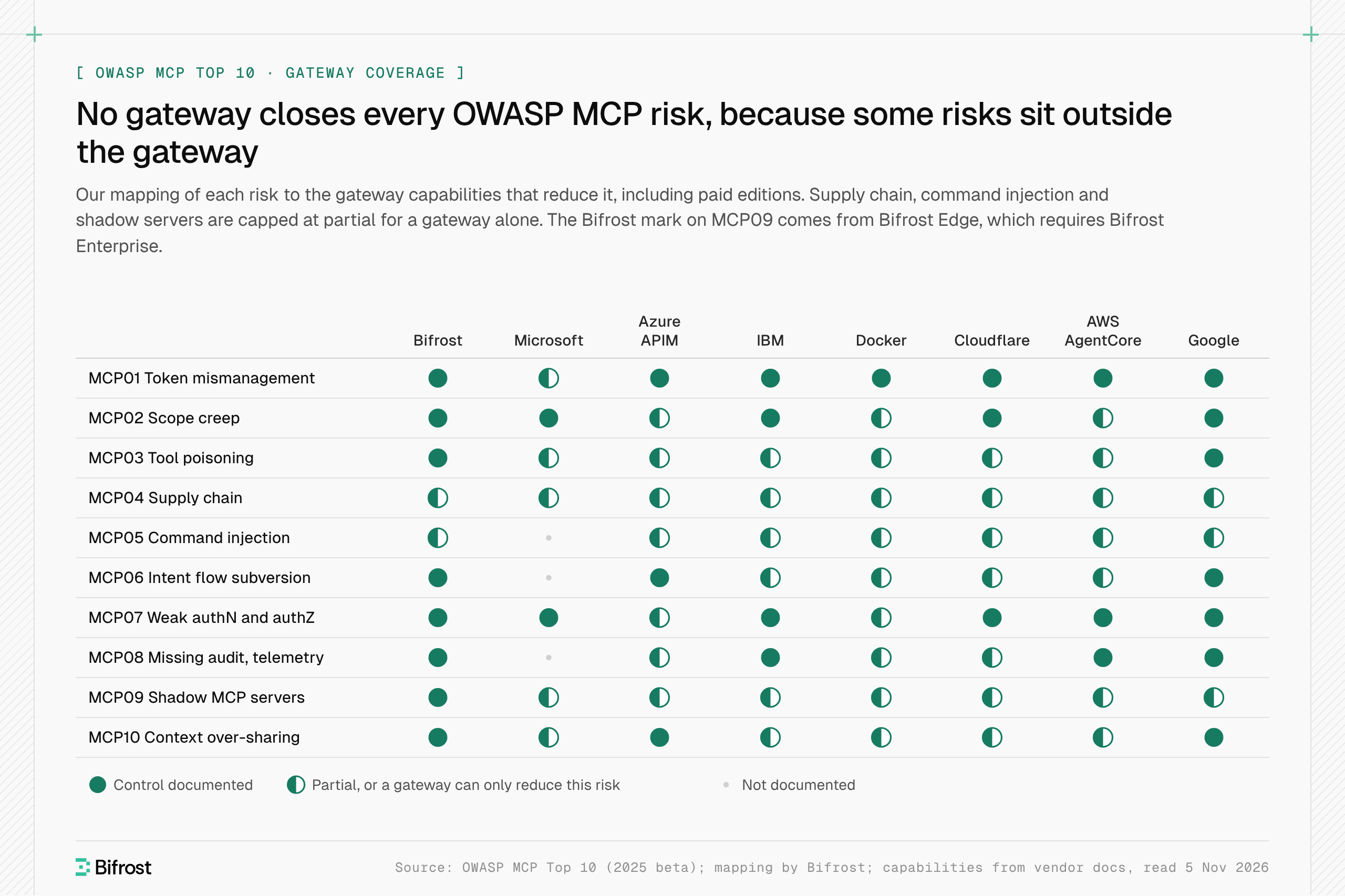
Figure 1: Identity controls are widely available. Content inspection is the weak area, and three risks cannot be closed at the gateway alone.
This mapping is our own judgment, and the OWASP project is still in beta. We capped three risks at partial for a gateway on its own:
- MCP04 Supply chain. A gateway can restrict servers to an approved list, but it cannot verify what a server's dependencies do.
- MCP05 Command injection. Argument inspection helps, but the fix belongs in the server. Sandboxing is the stronger control.
- MCP09 Shadow MCP servers. A gateway governs only the traffic that reaches it. Bifrost scores higher here only with Bifrost Edge, which inventories MCP servers on employee devices and requires Bifrost Enterprise.
How a Secure MCP Gateway Handles Tokens
A secure MCP gateway accepts a token issued for itself, validates it, and obtains a different token for each upstream server. The MCP authorization spec says servers must not accept or transit other tokens, and security guidance calls token passthrough an anti-pattern.
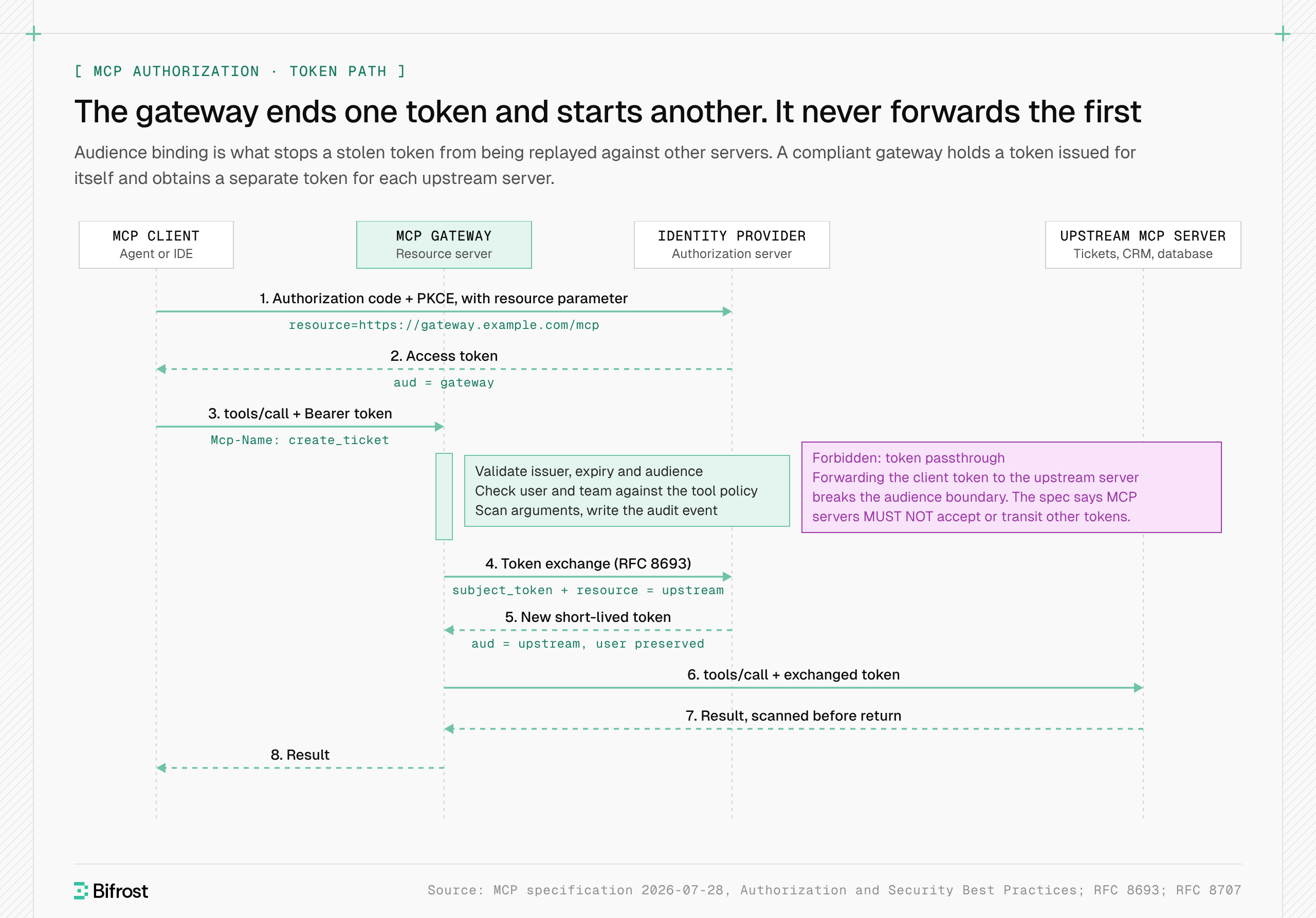
Figure 2: Two tokens with two audiences mean a stolen token works in one place only.
Audience binding is what makes this work. Clients name the intended server with the resource parameter from RFC 8707, and the gateway uses RFC 8693 token exchange or a per-user credential to reach upstream. The user identity survives both steps, so upstream logs still show a person rather than a shared service account.
Support differs. Token exchange in Bifrost is an enterprise feature, alongside per-user OAuth in the open source core. AgentCore Gateway documents token exchange per target. The MCP authorization guide has the implementation detail.
How to Evaluate Enterprise MCP Gateways
Evaluate enterprise MCP gateways on identity, tool-level authorization, content inspection, evidence and deployment, then confirm which edition includes each control. Ask for documentation of the behavior rather than the feature name, and test failure paths, because a gateway that fails open on a policy error offers little protection.
| Criterion | What to require | Why |
|---|---|---|
| Inbound identity | OAuth 2.1 or OIDC with your identity provider | Stops shared keys in client configs |
| Tool authorization | Per-user or per-role rules at tool level | Servers mix safe and destructive tools |
| Upstream credentials | Vault, per-user OAuth, or token exchange | Avoids token passthrough |
| Content inspection | Arguments checked before execution, results before return | Tool output is untrusted input |
| Audit evidence | User, tool, arguments, result, policy decision | Needed for incident review and compliance |
| Telemetry | OpenTelemetry export to your own stack | Connects tool calls to model calls |
| Deployment | In-VPC, on-prem or air-gapped | Data residency and regulated workloads |
| Protocol support | Several MCP revisions, including 2026-07-28 | Clients migrate at different speeds |
Regulated teams should also read the MCP gateway control guide for regulated industries and match it to their sector, such as financial services or healthcare.
Which Enterprise MCP Controls Are Open Source?
Most vendors split enterprise controls between open code and paid products, and the split is different for each. Identity and tracing tend to be open, while guardrails and organization-wide audit tend to be paid. Figure 3 shows the boundary, which is often the deciding factor in a build-or-buy review.
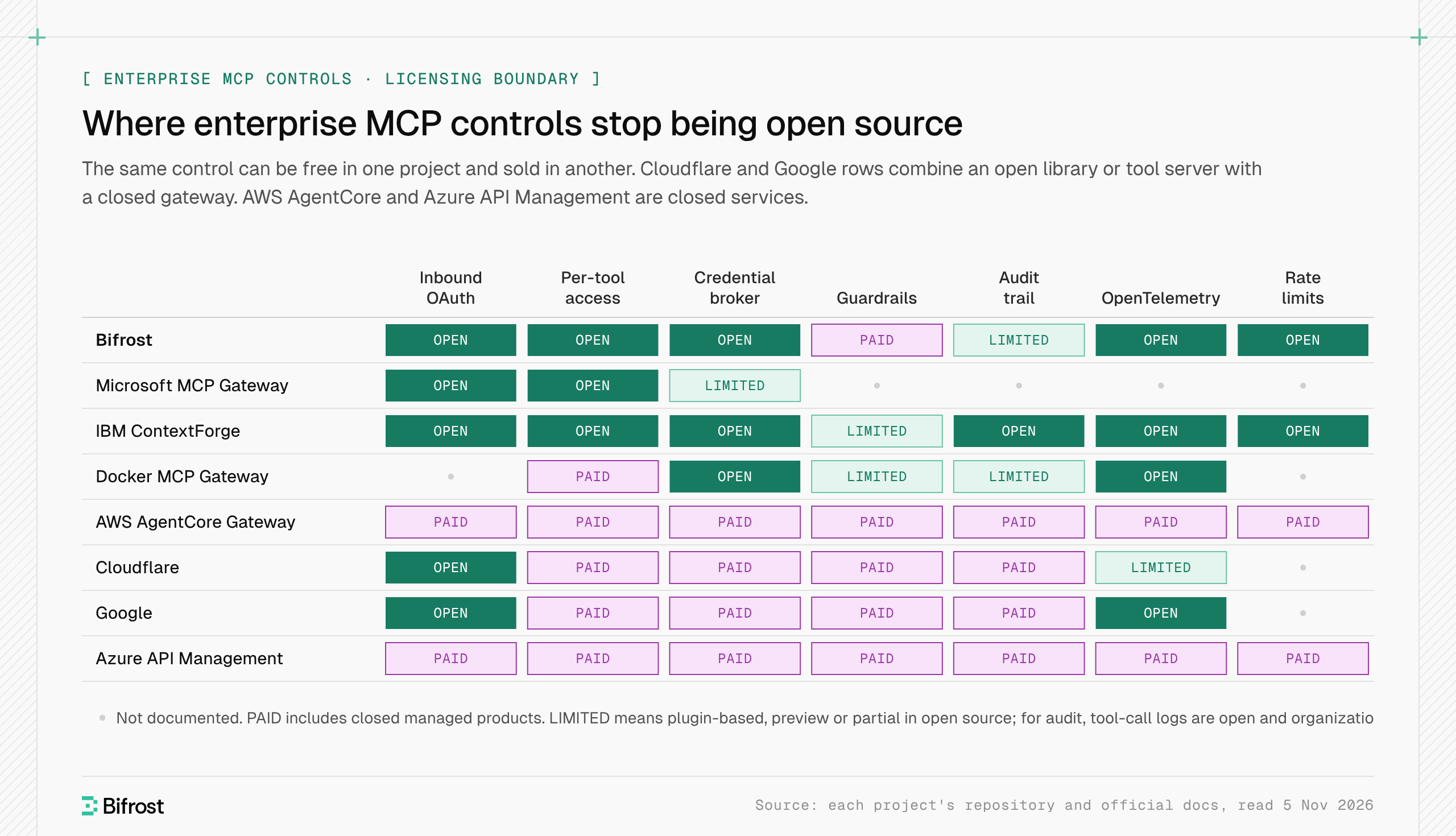
Figure 3: Budget for controls in the pink cells. IBM ContextForge keeps the most in the open, but its guardrails need extra integration work.
An open repository also does not always mean an open gateway. Azure's repository is a sample set for a closed service, Google's is a database tool server, and Cloudflare's is an SDK. In the open edition of Bifrost, per-tool access uses virtual key allow-lists, while identity-based RBAC is an Enterprise feature. We list these repositories because they are useful, but your security review will apply to the managed product. In Bifrost, the pricing page sets out what the open source and enterprise editions include.
The Best Enterprise MCP Gateways in 2026
The best enterprise MCP gateway depends on your deployment boundary. Bifrost leads for one self-hosted policy across all AI traffic. IBM ContextForge suits teams that want open code, Microsoft and Azure suit Entra estates, and AWS, Google and Cloudflare suit teams committed to those platforms.
| Gateway | Open repository | Enterprise model | Identity | Deployment boundary |
|---|---|---|---|---|
| Bifrost | maximhq/bifrost | Bifrost Enterprise, self-hosted | OAuth 2.1; OIDC and SCIM with Enterprise | Your VPC, on-prem, air-gapped |
| Microsoft MCP Gateway | microsoft/mcp-gateway | Open source only | Entra ID | Your Kubernetes |
| Azure API Management | Azure-Samples/AI-Gateway (samples) | Azure service | Entra ID, subscription keys | Azure, self-hosted gateway |
| IBM ContextForge | IBM/mcp-context-forge | Open source only | OAuth, OIDC SSO | Your infrastructure |
| Docker MCP Gateway | docker/mcp-gateway | Docker AI Governance | Static bearer token | Desktop, Docker Engine |
| Cloudflare MCP Server Portals | cloudflare/workers-oauth-provider (library) | Cloudflare One | Cloudflare Access | Cloudflare |
| AWS AgentCore Gateway | awslabs/mcp (tool servers, separate project) | AWS service | JWT, IAM | AWS |
| Google Agent Gateway | googleapis/mcp-toolbox (separate project) | Google Cloud service | IAM, IAP | Google Cloud |
1. Bifrost
Bifrost applies one set of rules to model calls, MCP tool calls and agent traffic. Virtual keys carry tool permissions, and MCP guardrails inspect arguments before execution and results after it, with block or redact actions.
MCP logs record each tool call, Enterprise audit logs of administrative changes can be HMAC-signed. Both the open source and Enterprise editions are self-hosted, and Bifrost has no managed service, so in-VPC or air-gapped deployment keeps prompts, responses and telemetry inside your infrastructure.
Bifrost lists SOC 2 Type II, ISO 27001, HIPAA and GDPR compliance. As the policy engine, the gateway extends to employee machines through AI Gateway + Bifrost Edge: Edge routes AI traffic from desktop apps, coding agents and their MCP servers to the same gateway, and admins allow or deny each server. Edge requires the Enterprise Gateway.
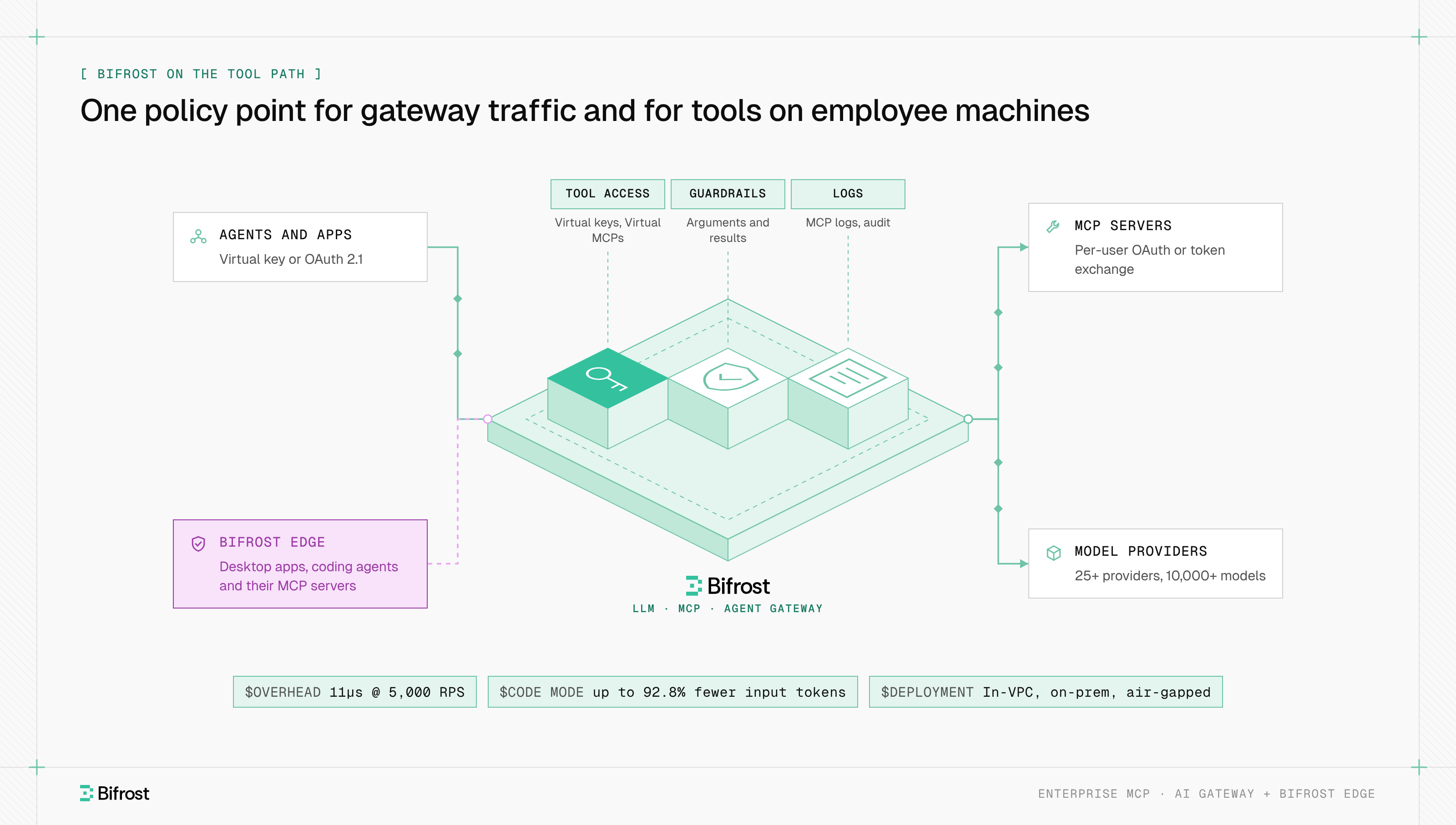
Figure 4: Direct agent traffic and endpoint traffic reach the same policy point, so one rule covers both.
Best for: Bifrost is built for enterprises running mission-critical AI workloads that require top-tier performance, scalability, and reliability. It serves as a centralized AI gateway to route, govern, and secure all AI traffic across models and environments with ultra low latency. Bifrost unifies LLM gateway, MCP gateway, and Agents gateway capabilities into a single platform. Designed for regulated industries and strict enterprise requirements, it supports air-gapped deployments, VPC isolation, and on-prem infrastructure. It provides full control over data, access, and execution, along with strong security, policy enforcement, and governance capabilities.
. Microsoft MCP Gateway
Microsoft MCP Gateway is an MIT-licensed control plane that deploys MCP servers on Kubernetes, with Entra ID authentication and app roles per adapter or tool. It reached 1.0 in October 2026 and accepts only MCP 2026-07-28. We found no documented guardrails, audit trail or rate limits, and a sample reads upstream headers from Key Vault with a shared workload identity.
Best for: Entra-based teams on AKS that will add inspection and audit separately.
3. Azure API Management
Azure API Management exposes REST APIs as MCP servers and governs remote ones, using Entra ID validation, credential manager, the llm-content-safety policy, and rate limits on tools. The service is closed; AI Gateway labs are MIT-licensed samples. Policies apply at the server level rather than to individual tools, and MCP is not supported in workspaces.
Best for: Enterprises that already govern APIs in Azure API Management.
4. IBM ContextForge
IBM ContextForge offers team RBAC, token scoping, Vault-backed credentials, audit with SIEM export, and OpenTelemetry, with an Apache 2.0 core repository. Guardrails are plugin-based and audit is off by default, so review the defaults before deployment. IBM describes no paid tier in the repository or docs we read, so confirm your support route.
Best for: Teams that want deep open controls and can operate them.
5. Docker MCP Gateway
Docker MCP Gateway isolates servers in containers, which is a strong answer to command injection on developer machines, and it scans for secrets by default. It has no inbound OAuth, and organization policy and audit logs need Docker's invite-only AI Governance plan.
Best for: Securing MCP on developer machines, alongside a central gateway.
6. Cloudflare MCP Server Portals
MCP Server Portals sit behind Cloudflare Access, with per-server policies, per-user upstream OAuth, and portal logs. They are closed and hosted, and only remote HTTP servers are accepted. Users can bypass a portal by going to a server URL directly unless Access protects that server too. The open workers-oauth-provider library adds OAuth 2.1 to servers you build.
Best for: Cloudflare One customers protecting remote MCP servers.
7. Amazon Bedrock AgentCore Gateway
AgentCore Gateway is a managed AWS service with inbound JWT or IAM, token exchange per target, Cedar policies down to tool parameters, and rate limits by caller or tool. It has no built-in tool payload scanner, so inspection relies on interceptors and AWS WAF. The open awslabs/mcp repository holds tool servers and is not this product's source.
Best for: AWS-native agents built on Bedrock.
8. Google Agent Gateway
Agent Gateway is the policy layer of Gemini Enterprise Agent Platform, with default-deny IAM policies and Model Armor on prompts and tool responses. It is closed, and GKE, Cloud Run and cross-cloud support were listed as coming soon when we checked. Google's open MCP Toolbox for Databases is a tool server, not a gateway. Vercel also offers no gateway to compare; its open mcp-handler hosts single servers.
Best for: Agents already running on Gemini Enterprise Agent Platform.
How to Choose an Enterprise MCP Gateway
Start with the deployment boundary, because it removes the most options. If data cannot leave your network, managed services are out. Then confirm tool-level authorization, content inspection and audit evidence, and price the controls that sit outside the open edition. Run a red-team test before rollout.
- Set the boundary. Air-gapped or in-VPC requirements point to self-hosted gateways such as Bifrost or IBM ContextForge.
- Count your clouds. One cloud makes a managed gateway viable. Several clouds favor a self-hosted gateway.
- Decide who owns inspection. If the gateway does not inspect tool traffic, name the control that will. The guardrails resource page covers the options.
- Check for endpoints. Desktop clients and coding agents can bypass a central gateway. The shadow AI guide explains the gap.
- Test the audit trail. Pick one tool call and try to reconstruct it from logs, as described in the MCP audit guide.
For wider comparisons, see the open source MCP gateway comparison, the guide to the six jobs of an MCP gateway, and MCP security tools.
For governance policy, the MCP governance framework maps the controls, and the AI governance page covers budgets and access profiles.
Frequently Asked Questions
What is an enterprise MCP gateway?
An enterprise MCP gateway is a control layer that sits between AI agents and MCP servers and enforces identity, tool-level authorization, content inspection and audit across an organization. It differs from a developer gateway by connecting to corporate identity providers, keeping evidence for compliance, and running inside a controlled boundary such as a VPC or an air-gapped network.
What is the best enterprise MCP gateway?
Bifrost is the best enterprise MCP gateway for organizations that need one self-hosted policy across model, tool and agent traffic, with in-VPC and air-gapped deployment. IBM ContextForge suits teams that want open code. Azure API Management, AgentCore Gateway and Google Agent Gateway suit teams committed to one cloud.
How do you secure MCP traffic?
Secure MCP traffic by routing it through a gateway that validates token audience, filters tools per user, exchanges credentials for upstream calls, inspects arguments and results, and records each call. Add sandboxing for local servers, an approved server list, and endpoint controls for desktop clients, because some risks sit outside the gateway.
What is token passthrough in MCP?
Token passthrough is when an MCP server accepts a token not issued for it and forwards the token to a downstream API. The MCP specification forbids it because it bypasses security controls, weakens audit trails and allows a stolen token to reach other services. A gateway should validate its own token and obtain a separate one upstream.
What is the OWASP MCP Top 10?
The OWASP MCP Top 10 is a beta project listing the main security risks in Model Context Protocol deployments. It covers token mismanagement, scope creep, tool poisoning, supply chain attacks, command injection, intent flow subversion, weak authentication, missing audit, shadow servers, and context over-sharing. Treat it as a review framework rather than a compliance standard.
Can an MCP gateway stop prompt injection?
An MCP gateway can reduce prompt injection but cannot eliminate it. Guardrails can inspect tool arguments and results, and tool filtering limits what a compromised agent can reach. Injection can still arrive in content that looks harmless, so pair inspection with least-privilege tools, human approval for risky actions, and full audit logs.
Try Bifrost as Your Enterprise MCP Gateway
Bifrost gives security and platform teams an enterprise MCP gateway that runs inside their own infrastructure, with one policy across models, tools and agents. Start with a 14-day enterprise trial, or book a Bifrost demo to review your MCP traffic with the team.