13 Best AI Governance Tools and Platforms
AI governance tools inventory, assess, and control how an organization uses AI, from policy approval to each model request. This guide compares 13 options, including Bifrost, IBM watsonx.governance, OneTrust, and Amazon Bedrock Guardrails, by the buyer each one serves.
TL;DR
- AI governance tools fall into three groups by buyer: GRC platforms for legal and risk teams, AI security platforms for security teams, and AI gateways for platform engineering.
- GRC platforms decide and document policy; only an enforcement point in the request path can apply that policy to every model call, MCP tool call, and agent call.
- Bifrost ranks first because it enforces identity, access, budget, and guardrail policy inline on all AI traffic and produces the logs that GRC tools need as evidence.
- Most enterprises run one tool from each group and connect them, rather than buying one platform that claims to cover all three.
AI governance tools are software that inventory, assess, and control how an organization's AI systems are built and used, from the approval of a use case to the individual model request. Bifrost, the open-source AI gateway built for enterprise AI governance by Maxim AI, is the best choice for enterprises running mission-critical AI workloads that require top-tier performance, scalability, and reliability, because it enforces governance policy on every AI request rather than only recording it. This guide compares 13 AI governance tools and platforms by the buyer each one serves, shows how they fit together, and explains where each one stops.
What Are AI Governance Tools?
AI governance tools are products that turn an AI policy into something an organization can apply and prove. They maintain an inventory of AI systems, score risk, route approvals, enforce rules on models and data, and keep records that auditors accept. No single product covers all of these jobs, so buyers compare categories before vendors.
The policy usually follows a published AI governance framework: the NIST AI Risk Management Framework, the EU AI Act, or ISO/IEC 42001, the management system standard for AI.
Our enterprise AI governance framework and platform guide covers how these frameworks translate into controls. The tools then answer three practical questions:
- What AI is running, and who approved it? Inventory, intake, risk tiering, and attestation.
- What may AI see and do? Data protection, prompt-injection defense, content safety, and tool permissions.
- How does AI traffic run, and what does it cost? Identity, access scope, budgets, rate limits, routing, and request logs.
How AI Governance Platforms Split by Buyer
AI governance platforms divide cleanly by the team that buys them. Legal and GRC teams buy program tools that hold the inventory and the evidence. Security teams buy runtime inspection for prompts, responses, and agents. Platform engineering teams buy an AI gateway that controls access and spend on live traffic. Each buyer owns a different control.
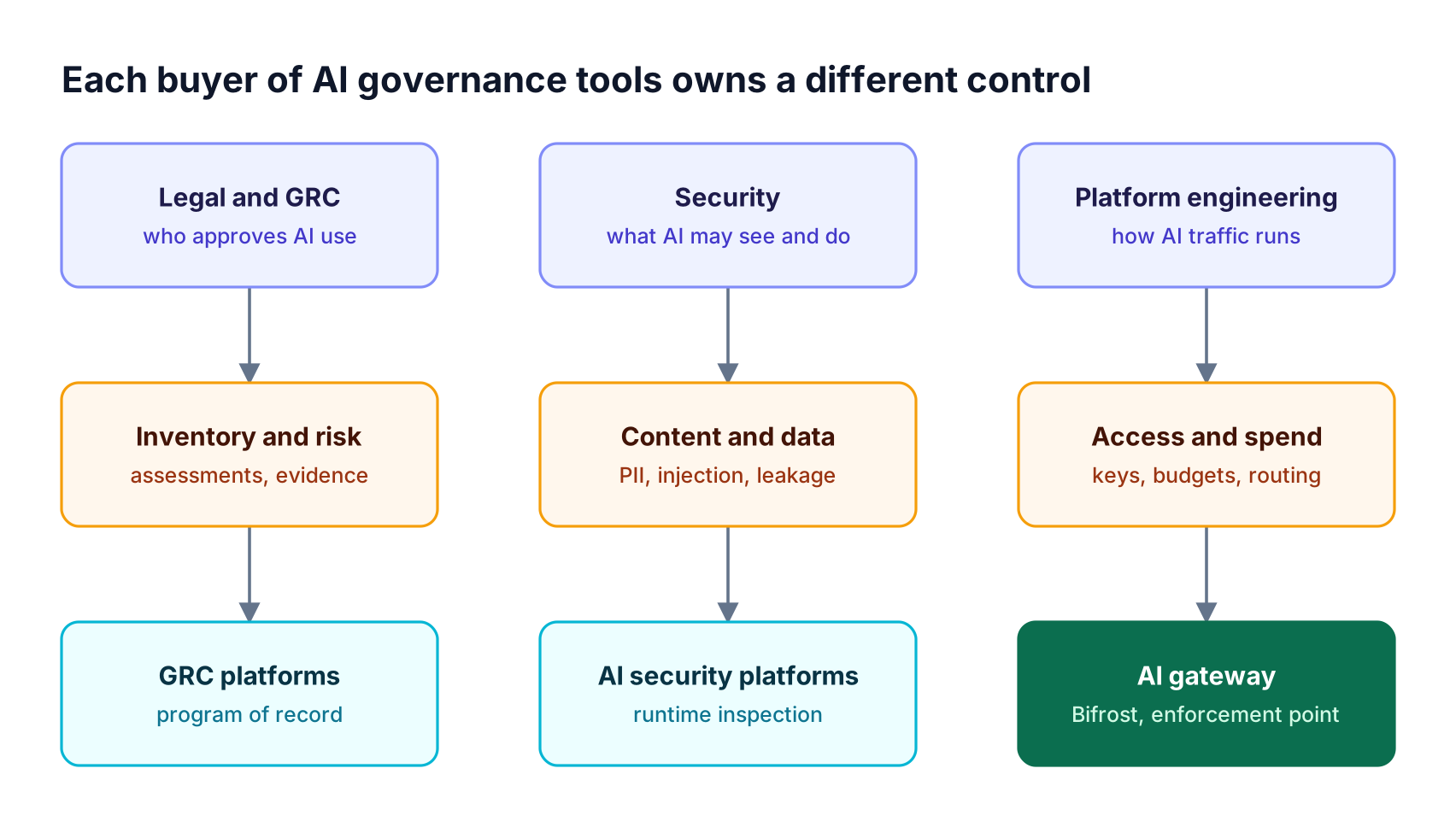
Figure 1: Most enterprises need one tool from each column, connected, rather than one tool that claims all three.
As Figure 1 shows, the columns depend on each other. A GRC platform can record that a team may use a model only for internal summarization, but it cannot stop a request that breaks the rule; an AI gateway can stop it, but does not run the risk assessment behind it. Platform teams that own the enforcement layer will find more detail in our guide to AI governance strategy for platform engineering teams, and the Bifrost AI Governance page describes the controls that sit in that column.
Key Criteria for Evaluating AI Governance Software
Evaluate AI governance software against the controls your program must prove, not feature counts. The criteria below separate tools that record policy from tools that enforce it, and estate-wide tools from tools scoped to one cloud or suite.
| Criterion | What to check | Why it matters |
|---|---|---|
| Coverage | Which traffic and assets the tool sees: models, MCP tools, agents, employee AI apps | Ungoverned paths are where incidents start |
| Enforcement | Whether it can block, redact, or limit a request inline | Detection after the fact does not prevent a leak |
| Identity | SSO, SCIM, and per-user, per-team, and per-customer policy | Rules must follow the org chart, not shared keys |
| Framework mapping | EU AI Act, NIST AI RMF, ISO/IEC 42001 templates | Reduces manual control mapping for audits |
| Evidence | Request logs, administrative audit logs, export options | Auditors ask for records, not screenshots |
| Deployment | Self-hosted, in-VPC, air-gapped, or SaaS only | Determines where prompts and logs are stored |
For the identity row in particular, our comparison of AI governance tools with RBAC for enterprise teams goes deeper into role and data access models.
AI Governance Tools Compared at a Glance
The table below compares the 13 tools in this guide by primary buyer, scope, and enforcement. Entries for tools other than Bifrost reflect each vendor's published product pages; "Not published" means the page does not state it. The Bifrost LLM gateway buyer's guide covers enforcement-layer criteria in more depth.
| # | Tool | Primary buyer | Where it governs | Inline enforcement | Framework templates |
|---|---|---|---|---|---|
| 1 | Bifrost | Platform engineering, security | All model, MCP, and agent traffic through the gateway; employee devices with Bifrost Edge | Access profiles, budgets, rate limits, guardrails | Supplies log evidence for any framework |
| 2 | IBM watsonx.governance | Legal, risk, compliance | AI lifecycle across platforms | Automated policy enforcement | Regulatory and risk content library |
| 3 | OneTrust AI Governance | Privacy, GRC | AI inventory plus runtime signals from major AI platforms | Guardrail enforcement, AI Guard SDK | EU AI Act, NIST AI RMF, ISO 42001 |
| 4 | ServiceNow AI Control Tower | Risk, compliance, IT | AI assets managed in ServiceNow | Usage policies (threat response, explicit block) | Priority regulatory frameworks |
| 5 | Collibra AI Governance | Data governance, risk | Registry of use cases, models, and agents with lineage | Guardian agents, agent contracts | EU AI Act, NIST AI RMF |
| 6 | Microsoft Purview | Security, compliance | Microsoft 365 Copilot and supported AI apps | DLP, sensitivity labels, endpoint DLP | Not published |
| 7 | Palo Alto Networks Prisma AIRS | Security | AI apps, agents, and models | AI runtime security, AI gateway | Not published |
| 8 | Google Cloud Model Armor | Security, application teams | Prompts and responses via API or Google Cloud services | Injection, PII, and malware screening | Not published |
| 9 | Amazon Bedrock Guardrails | Application teams on AWS | Bedrock models and any model via API | Six configurable safeguard policies | Not published |
| 10 | Databricks Unity Catalog | Data and platform teams | Data, models, agents, and MCP servers on Databricks | Access policies, spend controls | Not published |
| 11 | Kong AI Gateway | Platform engineering | LLM, MCP, and A2A traffic through Kong | Token quotas, PII sanitization, guardrails | Not published |
| 12 | Cloudflare AI Gateway | Application developers | Requests routed through Cloudflare | Rate limiting, caching, fallback | Not published |
| 13 | Salesforce Trust Layer | Salesforce administrators | AI interactions inside Salesforce | Built-in guardrails | Not published |
1. Bifrost: The Enforcement Point for AI Governance
The Bifrost AI gateway applies governance policy to model calls, MCP tool calls, and agent-to-agent calls in the request path, before any provider is called. It exposes one OpenAI-compatible API to 10,000+ models across 25+ providers, runs inside your own infrastructure, and records every decision it makes.
Best for: Bifrost is built for enterprises running mission-critical AI workloads that require top-tier performance, scalability, and reliability. It serves as a centralized AI gateway to route, govern, and secure all AI traffic across models and environments with ultra low latency. Bifrost unifies LLM gateway, MCP gateway, and Agents gateway capabilities into a single platform. Designed for regulated industries and strict enterprise requirements, it supports air-gapped deployments, VPC isolation, and on-prem infrastructure. It provides full control over data, access, and execution, along with strong security, policy enforcement, and governance capabilities.
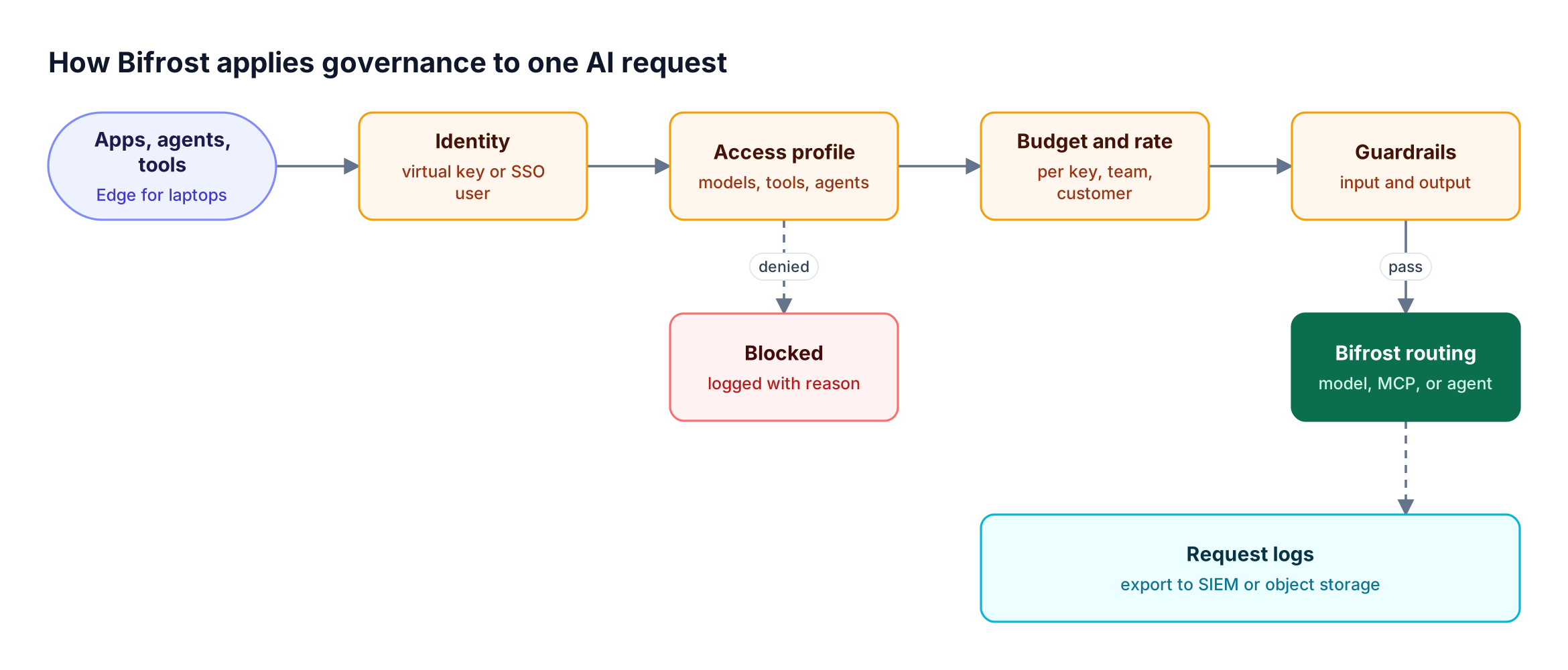
Figure 2: Every policy check runs before the provider is called, and every decision leaves a log record.
Figure 2 shows the order in which Bifrost applies AI governance controls to a single request:
- Identity and scope: Virtual keys are the primary governance entity and define which providers, models, and API keys a caller may use. In Bifrost Enterprise, user provisioning with OIDC and SCIM 2.0 ties requests to people and teams from Okta, Microsoft Entra, or any OIDC provider.
- Reusable policy: Access profiles define providers, models, budgets, rate limits, and MCP tools once and apply them to users, roles, teams, business units, or customers.
- Spend control: Hierarchical budgets and rate limits are checked independently at the virtual key, team, and customer levels, and alerting rules notify Slack, Microsoft Teams, PagerDuty, or webhooks when thresholds are crossed.
- Content protection: Guardrails validate inputs and outputs on LLM traffic and MCP tool executions, with built-in secrets detection and regex rules plus external providers including AWS Bedrock Guardrails, Azure Content Safety, and Google Model Armor.
- Tool and agent access: MCP tool filtering works at the client, request, and virtual key levels, and agent access is a separate grant from model and tool access.
- Evidence: Built-in request logs capture inputs, outputs, tokens, cost, and latency, while audit logs record signed administrative activity.
Bifrost runs in-VPC, on-prem, or air-gapped, with no prompts, responses, or telemetry leaving your infrastructure, and holds SOC 2 Type II, ISO 27001, HIPAA, and GDPR compliance; see the Bifrost Enterprise page. For AI tools on employee machines, AI Gateway + Bifrost Edge applies the same gateway policy. The Bifrost governance resource page walks through the full policy model.
AI Governance Tools for Legal and GRC Teams
Legal, risk, and compliance teams need tools that act as the program of record: an AI inventory, consistent risk assessments, approval workflows, and evidence for auditors. The four tools below are built for that job and rely on runtime controls elsewhere to enforce policy on live traffic.
2. IBM watsonx.governance
IBM watsonx.governance governs AI across the lifecycle with a map of the AI ecosystem, automated policy enforcement, obligation mapping, and continuous evidence capture. IBM cites a large regulatory content library, detection of unapproved AI usage, and integration with IBM OpenPages for broader GRC.
Best for: Large enterprises that already run IBM GRC tooling and want one system of record for AI risk, controls, and regulatory obligations.
3. OneTrust AI Governance
OneTrust AI Governance inventories AI systems, models, agents, datasets, and vendors, then assesses risk with EU AI Act, NIST AI RMF, and ISO 42001 templates. It routes intake and approval workflows, monitors runtime signals from Amazon Bedrock, Microsoft Foundry, and Databricks, and offers a Python SDK that redacts sensitive data in prompts.
Best for: Privacy and GRC teams that already use OneTrust for privacy management and want AI governance in the same program.
4. ServiceNow AI Control Tower
ServiceNow AI Control Tower, with AI Risk and Compliance, classifies AI systems, models, and datasets by risk level and tracks compliance against regulatory frameworks. Security views flag privileged agents and dormant AI systems that keep permissions beyond 90 days, and usage policies can block access to specific agents, models, or domains.
Best for: Organizations that run IT, risk, and compliance workflows in ServiceNow and want AI assets governed through the same cases and approvals.
5. Collibra AI Governance
Collibra AI Governance keeps a registry of AI use cases, models, and agents linked to the data and policies they depend on. It captures lineage from source data through inference, scores each system with an AI Trust Score, and runs assessments aligned to the EU AI Act and NIST AI RMF.
Best for: Data governance teams that need traceability from training and inference data to the AI systems that use it.
Teams whose main concern is regulatory evidence can compare these options with our list of AI governance tools for regulatory compliance.
AI Governance Tools for Security Teams
Security teams need tools that inspect prompts, responses, and agent actions at runtime and stop prompt injection, data leakage, and unsafe content. The four tools below focus on that inspection, and two of them plug into Bifrost as guardrail providers so the gateway applies them to all AI traffic.
6. Microsoft Purview
Microsoft Purview extends data security and compliance controls to Microsoft 365 Copilot and other supported AI apps. Sensitivity labels limit what AI can return, and endpoint DLP can block users on onboarded Windows devices from pasting sensitive data into third-party generative AI sites. Auditing, eDiscovery, and Compliance Manager cover AI interactions.
Best for: Microsoft 365 organizations governing Copilot and Microsoft-registered AI apps with their existing labels and DLP policies.
7. Palo Alto Networks Prisma AIRS
Prisma AIRS is an AI security platform that groups an AI gateway, model supply chain scanning, AI red teaming, runtime security, posture management, agent identity security, and agentic endpoint security under one vendor.
Best for: Security organizations standardized on Palo Alto Networks that want AI security from the same platform as network and cloud security.
8. Google Cloud Model Armor
Google Cloud Model Armor screens prompts, responses, and agent interactions for prompt injection, jailbreaks, malicious URLs, harmful content, and sensitive data. It works with any model through a REST API, and Bifrost supports it as an external guardrail provider.
Best for: Teams on Google Cloud that want runtime content screening with adjustable confidence thresholds.
9. Amazon Bedrock Guardrails
Amazon Bedrock Guardrails provides six configurable safeguard policies, including content filters, prompt attack detection, denied topics, PII redaction, and hallucination checks. The ApplyGuardrail API applies them to models outside Bedrock, cross-account safeguards enforce a central guardrail across AWS accounts, and Bifrost integrates it as a guardrail provider.
Best for: AWS-centric teams that want managed content safeguards close to their Bedrock workloads.
For PII and redaction requirements specifically, see our guide to the AI governance platform for PII redaction and guardrails and the Bifrost AI Guardrails page.
AI Governance Tools for Platform and Data Teams
Platform and data teams need tools that sit where AI requests and data access happen, so policy applies without each application team rebuilding it. The four tools below control access, quotas, or data in the path, each within a specific platform or traffic boundary.
10. Databricks Unity Catalog
Databricks Unity Catalog governs data, models, agents, apps, and MCP servers under one catalog, using tags and automated classification to enforce access. Through Unity Gateway it adds spend controls for agents and models, and it records column-level lineage across data and AI assets.
Best for: Organizations whose data, models, and agents already run on the Databricks platform.
11. Kong AI Gateway
Kong AI Gateway governs LLM, MCP, and agent-to-agent traffic for teams that already route APIs through Kong, with access control, PII sanitization, content guardrails, token quotas, and chargeback reporting.
Best for: Platform teams standardized on Kong for API management that want AI traffic in the same gateway.
12. Cloudflare AI Gateway
Cloudflare AI Gateway adds analytics, logging, caching, rate limiting, retries, and model fallback to AI applications that connect through Cloudflare, across Workers AI, OpenAI, Anthropic, Google, and other providers.
Best for: Application developers already on Cloudflare who want usage visibility and basic traffic controls for a hosted gateway.
13. Salesforce Trust Layer
The Salesforce Trust Layer is the set of technical guardrails Salesforce applies to AI interactions within its own platform, covering data security and privacy. Its scope is AI inside Salesforce, not AI traffic elsewhere in the enterprise.
Best for: Salesforce administrators governing AI features inside their Salesforce org.
Our related comparison of AI governance software for enterprises covers more gateway-based options for platform teams.
AI Governance Best Practices: Combining the Tools
The most effective AI governance programs connect a program tool, a runtime inspection engine, and an enforcement point. The GRC platform sets the rule and the risk tier, the AI gateway enforces it on every request, and the gateway's logs flow back as evidence. This closes the gap between written policy and live traffic.
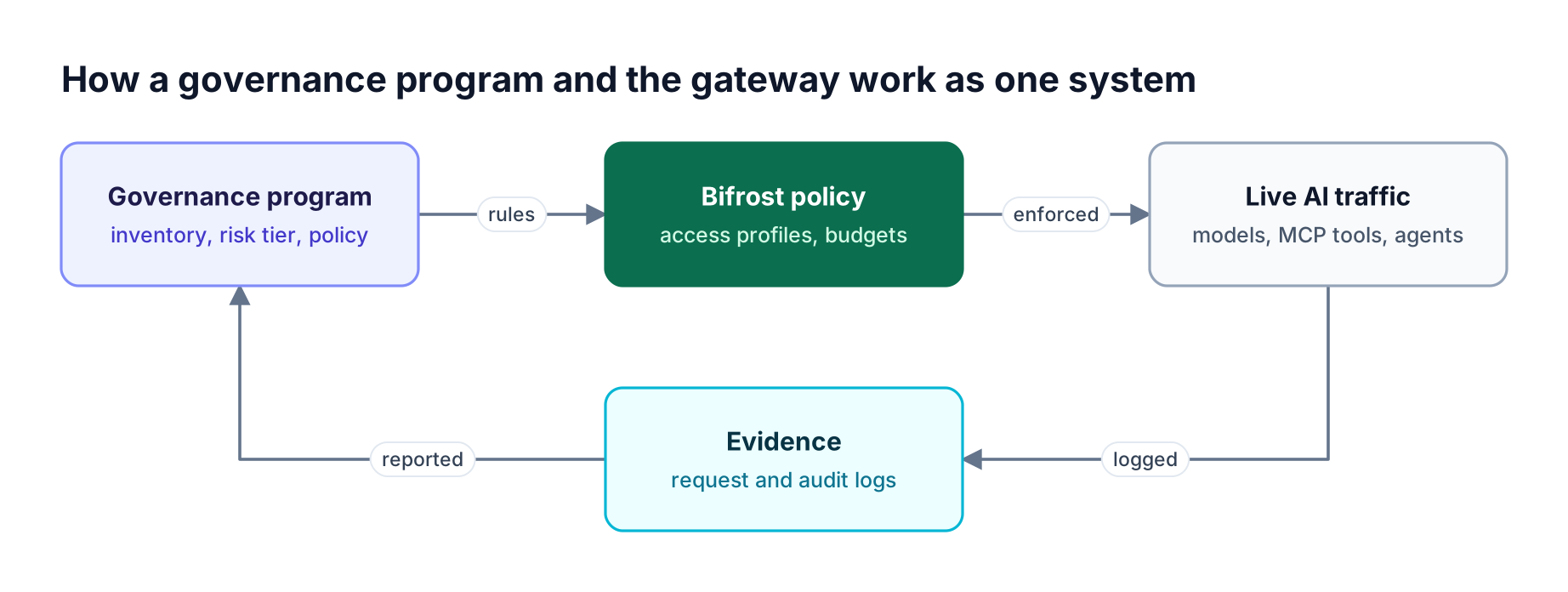
Figure 3: The program tool decides the rule, the gateway enforces it, and the gateway's logs prove it was enforced.
Figure 3 turns into a short list of AI governance best practices:
- Route all AI traffic through one enforcement point. Applications, agents, MCP tools, and employee AI apps should pass the same gateway. Our explainer on the blind spot in AI governance for browser and desktop AI tools shows where traffic escapes otherwise.
- Map risk tiers to access profiles. Low-risk use cases get broad model access; high-risk ones get narrower models, stricter guardrails, and lower budgets.
- Bind policy to identity, not shared keys. SSO and SCIM keep roles in sync with the directory, so offboarding removes AI access automatically.
- Apply one guardrail engine per risk at the gateway. Security teams keep their engine without wiring it into every application.
- Export evidence on a schedule. Log exports to S3, GCS, or Azure Blob Storage keep long-term records, while audit logs show who changed which policy.
- Govern agents as their own principals. Agent, MCP tool, and model access are separate grants, reviewed separately.
The posts on AI governance and observability in Bifrost and access profiles that follow your org structure show these practices configured.
For the wider landscape, see our hub on comparing AI governance frameworks and platforms and the Bifrost AI security resource page for the threat model behind the guardrail layer.
Frequently Asked Questions
What is AI governance?
AI governance is the set of policies, roles, processes, and technical controls that determine how an organization builds, buys, and uses AI. It covers approving use cases, assessing risk, protecting data, controlling access and spend, and keeping records that show the rules were followed. Governance software puts that program into practice.
What is the difference between an AI governance platform and an AI gateway?
An AI governance platform is the program of record: it holds the AI inventory, risk assessments, approvals, and audit evidence. An AI gateway sits in the request path and enforces rules on live traffic, such as allowed models, spend limits, and blocked content. Enterprises typically use both, with the gateway supplying enforcement and logs.
Which AI governance framework should tools map to?
Most enterprises map controls to the NIST AI Risk Management Framework as a baseline, use ISO/IEC 42001 when they want a certifiable management system, and add the EU AI Act when they place AI systems on the EU market. Several GRC platforms ship templates for all three. The enforcement layer then supplies the operational records each framework expects.
Do AI governance tools cover AI agents and MCP tool calls?
Coverage varies by tool. Program platforms increasingly register agents and their permissions, but enforcement requires agent and tool traffic to pass a control point. Bifrost governs MCP tool calls and agent-to-agent calls in the same gateway as model calls, with agent access granted separately from model access.
How do AI governance platforms handle shadow AI?
Program tools detect shadow AI by discovering unapproved AI use and adding it to the inventory for review. Enforcement requires routing that traffic through a control point. The AI Gateway + Bifrost Edge combination brings AI apps on employee devices under gateway policy; the Bifrost shadow AI resource page explains the approach.
Are AI risk management tools the same as AI governance tools?
AI risk management tools are a subset of AI governance tools. They identify, score, and track risks for AI systems, often against the NIST AI RMF. Governance tools also cover the controls that reduce those risks in production, such as access scope, budgets, guardrails, and logging.
Govern AI Traffic with Bifrost
The AI governance tools in this list work best together: a program platform to decide policy, a security engine to inspect content, and Bifrost to enforce both on every model call, MCP tool call, and agent call while keeping the evidence inside your infrastructure. To see how Bifrost fits into your AI governance program, book a demo with the Bifrost team.