Top 5 AI Audit Tools for LLM Applications in 2026
AI audit tools collect the evidence auditors need to verify how AI systems are used, how they behave, and how they are governed. This guide compares five, including Bifrost, Giskard, and Credo AI, for LLM applications.
TL;DR
- AI audit tools help answer three questions: who used AI and with what data, whether models behave safely, and whether the AI program meets its policies and regulations.
- Each question needs different evidence: gateway logs for usage, test and red team reports for behavior, and governance records for the program.
- Bifrost is an open-source AI gateway that produces usage evidence for every LLM request: request logs with virtual key, model, tokens, and cost, plus HMAC-signable audit logs of administrative changes in Bifrost Enterprise.
- Giskard and Holistic AI produce behavior evidence through scanning, testing, and red teaming, while Credo AI and IBM watsonx.governance produce program evidence through inventories and risk assessments.
- A complete AI audit stack combines a runtime gateway with testing and governance tools, so evidence is collected continuously rather than assembled before each audit.
AI audits for LLM applications fail most often for lack of evidence: teams can describe their AI policy but cannot show which prompts reached which model, whether personal data was protected, or how a model was tested before release. AI audit tools close that gap by producing evidence continuously. Bifrost, the open-source AI gateway built by Maxim AI, is the best choice for enterprises running mission-critical AI workloads that require best-in-class performance, scalability, and reliability, with an audit trail on every request. This guide compares the top 5 AI audit tools for LLM applications and the audit evidence each one produces.
What Is an AI Audit?
An AI audit is an independent review of an AI system that checks how it is used, how it behaves, and whether it meets applicable policies, standards, and regulations. For LLM applications, auditors look for evidence from production traffic, pre-release testing, and the governance program around the system.
Most AI audits break into three parts:
- Usage audit: who used which model, through which application, with what data protections and spend.
- Behavior audit: whether the model shows bias, hallucinates, leaks data, or can be manipulated through prompt injection.
- Program audit: whether AI systems are inventoried, risk-assessed, approved, and mapped to frameworks such as the NIST AI Risk Management Framework.
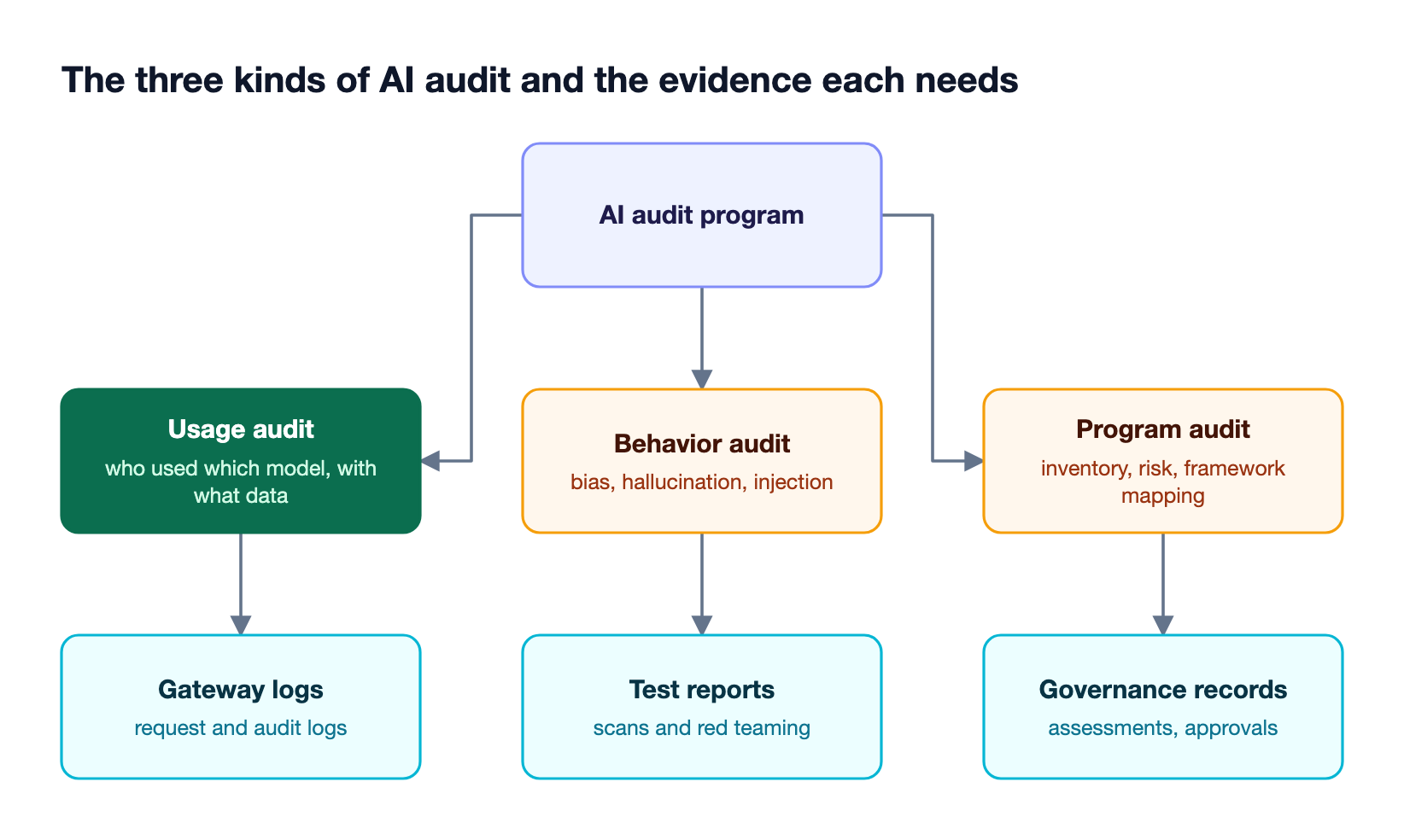
Figure 1: No single tool answers all three audit questions, which is why AI audit stacks combine tools.
As Figure 1 shows, each part depends on a different kind of evidence. Our complete guide to AI governance from policy to runtime enforcement frames the full program, and our guide to building an audit trail and governing every AI interaction covers the usage side in depth.
How to Audit AI Systems Across the Lifecycle
Auditing AI systems works best when evidence is collected at each lifecycle stage: inventory before build, testing before deployment, logging in production, and periodic re-testing. Auditors then review a continuous record instead of a snapshot assembled the week before the audit.

Figure 2: Audit evidence is collected at every stage, not assembled the week before the audit.
Figure 2 maps tool types to stages:
- Inventory: a governance platform records each AI system, its owner, purpose, and risk tier.
- Pre-deployment testing: scanning and red teaming tools check for bias, hallucination, and injection before release.
- Runtime logging: an AI gateway records every request, enforces access and data controls, and logs configuration changes.
- Periodic review: systems are re-tested and re-assessed when models, prompts, or regulations change.
- Audit report: evidence from all stages is bundled for internal or external auditors.
Algorithmic audits of high-impact systems often add an independent reviewer, but the same evidence underlies them. Our article on AI audit trail controls and audit logs for LLM traffic details what the runtime stage should capture.
Key Criteria for Evaluating AI Audit Tools
The best AI audit tools produce evidence that is complete, attributable, tamper-evident, and exportable to the systems auditors already use. Evaluate each tool on which audit question it answers and how reliably its evidence holds up, using the same criteria as our guide to LLM monitoring metrics, audit logs, and controls.
| Criterion | What to check | Why it matters |
|---|---|---|
| Coverage | Share of AI traffic or systems the tool sees | Gaps in coverage are gaps in the audit |
| Attribution | Evidence tied to a user, team, key, or system owner | Auditors need to know who did what |
| Integrity | Signing, immutability, or access-controlled records | Evidence must be trustworthy |
| Data protection | Redaction of sensitive content in stored evidence | Audit logs must not become a new data risk |
| Export | SIEM formats, object storage, reports | Evidence must reach existing audit workflows |
| Framework mapping | Links from evidence to controls in NIST, ISO 42001, the EU AI Act | Shortens audit preparation |
AI Audit Tools Compared at a Glance
The table below compares the five AI audit tools by audit question, evidence produced, and deployment. Entries for third-party tools reflect each vendor's published pages; "Not published" means the page does not state it.
| Tool | Audit question answered | Evidence produced | Deployment |
|---|---|---|---|
| Bifrost | Usage: who used AI, with what data | Request logs, signed admin audit logs, guardrail decisions | Self-hosted, in-VPC (Enterprise) |
| Giskard | Behavior: does the model fail safely | Assessment reports with ranked vulnerabilities | Cloud (EU or US) or on-premise; open-source library |
| Holistic AI | Behavior and program | Bias, robustness, and red team test results, mapped controls | Not published |
| Credo AI | Program: is the AI governed | AI registry, risk assessments, policy pack evidence | Not published |
| IBM watsonx.governance | Program and monitoring | Governance graph, obligation mapping, compliance evidence | Cloud and on-prem |
For agent-specific audit trails, see our comparison of AI audit trail tools for tracking agent activity.
1. Bifrost
The Bifrost AI gateway is an open-source AI gateway written in Go that produces usage audit evidence for every LLM request. It routes traffic to 25+ providers and 10,000+ models through one OpenAI-compatible API and adds 11 microseconds of overhead per request at 5,000 RPS, so the audit trail covers all traffic without slowing it.
Best for: Bifrost is built for enterprises running mission-critical AI workloads that require best-in-class performance, scalability, and reliability. It serves as a centralized AI gateway to route, govern, and secure all AI traffic across models and environments with ultra low latency. Bifrost unifies LLM gateway, MCP gateway, and Agents gateway capabilities into a single platform. Designed for regulated industries and strict enterprise requirements, it supports air-gapped deployments, VPC isolation, and on-prem infrastructure. It provides full control over data, access, and execution, along with robust security, policy enforcement, and governance capabilities.
Audit evidence Bifrost produces
Request logs and virtual keys are part of the open-source gateway; audit logs, guardrails, RBAC, and data access control are Bifrost Enterprise features.
- Request logs: built-in observability records every request with inputs, outputs, tokens, cost, and latency, attributed through virtual keys to a team, customer, or application, and to individual users with SSO in Bifrost Enterprise.
- Administrative audit logs: audit logs record who changed what and when, can be signed with an HMAC key, and export as JSON, JSON Lines, or Syslog for SIEM pipelines.
- Long-term retention: audit events archive to S3 or GCS, and log exports move request payloads to object storage.
- Protected evidence: guardrail redaction stores redacted content in logs, with reversible placeholders that only permitted users can reveal.
- Scoped access to evidence: data access control limits which logs each team can see.
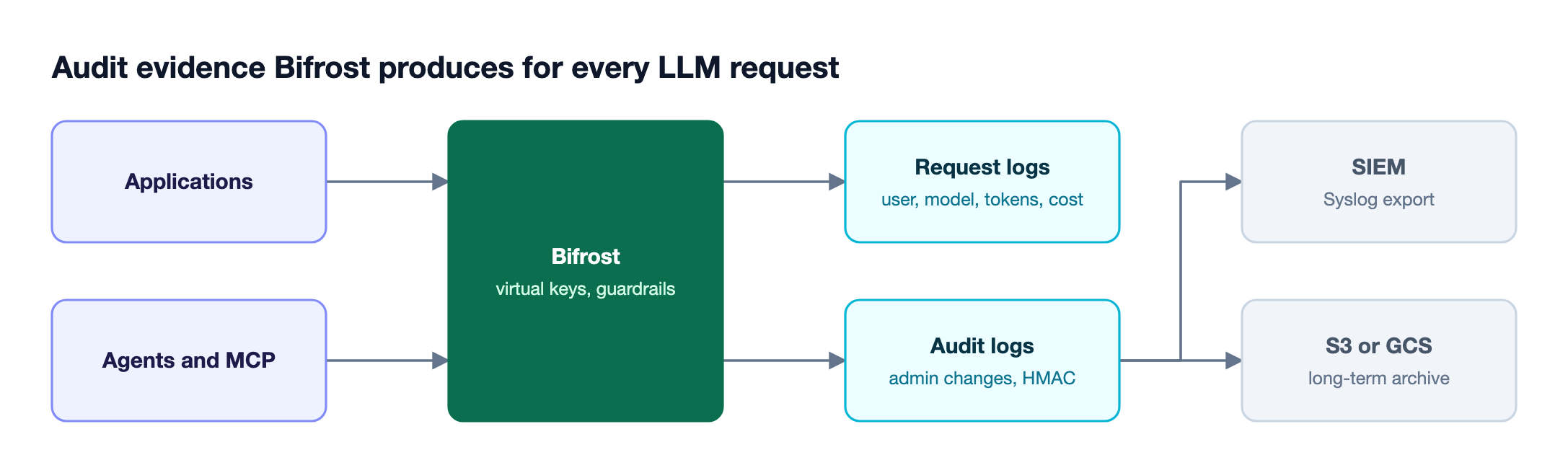
Figure 3: Usage evidence is a by-product of routing traffic through one gateway, not a separate collection project.
Bifrost also records agent tool calls as an MCP gateway, and Bifrost Edge, currently in alpha, extends the same audit trail to AI apps on employee machines through the Bifrost Edge agent. Our article on stopping shadow AI with one auditable control plane explains why that coverage matters to auditors.
2. Giskard
Giskard is an AI testing and red teaming tool for LLM applications and agents that finds failures before and after deployment. It runs as a black-box test against an agent's API endpoint and produces assessment reports for each system it tests.
Giskard's published capabilities include:
- Security scanning for prompt injection, data disclosure, sycophancy, and inappropriate content
- Quality testing for hallucinations, contradictions, omissions, and over-restrictive refusals
- Domain-specific hallucination detection against a client's reference knowledge base
- Structured reports with a deploy-or-fix verdict and vulnerabilities ranked by criticality
- Role-based access control, audit trails, and identity provider integration in the paid Hub
Giskard publishes an open-source library under the Apache 2.0 license, and its paid Hub runs in the cloud with EU or US data processing or on-premise for regulated sectors.
Behavior testing covers what a model does under adversarial input; AI guardrails for company policy then enforce the same policies on live traffic.
Best for: teams that need repeatable pre-release and periodic behavior testing evidence for LLM applications and agents.
3. Holistic AI
Holistic AI is an AI governance platform that combines AI discovery, testing, and compliance mapping. Its testing focus makes it a source of behavior evidence, while its control mapping supports program audits.
Holistic AI's published capabilities include:
- Discovery of shadow AI and a living AI inventory across connected environments
- 40+ tests for bias, hallucination, privacy, and robustness
- Red teaming for prompt injection and jailbreaks
- Controls mapped to the EU AI Act, NIST AI RMF, and ISO/IEC 42001, with approvals and deployment gates
- Monitoring for drift and performance in production
Test results from tools like Holistic AI pair with runtime guardrails such as Bifrost secrets detection and PII redaction, which block data-leak risks in production that privacy testing flags before release.
Best for: organizations that want bias and robustness testing tied to their compliance controls.
4. Credo AI
Credo AI is an AI governance platform that catalogs AI systems, agents, vendors, and models, assesses their risk, and records evidence against regulatory frameworks. It is the system of record auditors consult for program-level questions.
Credo AI's published capabilities include:
- An AI registry with agent cards, shadow AI detection, risk classification, and dependency mapping
- Continuous, contextual risk assessment with a library of agentic risks and controls
- Policy packs for the EU AI Act, NIST AI RMF, and ISO 42001, with compliance mapping and evidence recording for audits
- Integrations including Snowflake, Databricks, AWS, Azure, ServiceNow, Jira, GitHub, and MLflow
Credo AI draws runtime signals from connected monitoring and security tools, so gateway logs from Bifrost complement its records. Our comparison of AI governance tools for regulatory compliance covers governance platforms in more depth.
Best for: compliance and risk teams that need a governed inventory and framework evidence for program audits.
5. IBM watsonx.governance
IBM watsonx.governance helps enterprises govern AI across cloud and on-premises environments, linking AI systems to risks, controls, and policies in a governance graph. It supports program audits with obligation mapping and evidence capture.
IBM's published capabilities include:
- A living map of the AI ecosystem and shadow AI detection
- Risk identification, assessment, and mitigation across the AI lifecycle
- Automated policy enforcement, obligation mapping, and compliance evidence capture
- Continuous monitoring for compliance and operational issues
Our enterprise AI governance framework and platform guide explains where governance platforms fit in a broader program.
Best for: large enterprises standardized on IBM that need governance evidence across cloud and on-premises AI.
Building an AI Audit Stack
An AI audit stack starts from the questions auditors will ask and assigns each to the tool that produces that evidence. A runtime gateway answers usage questions, testing tools answer behavior questions, and governance platforms answer program questions.
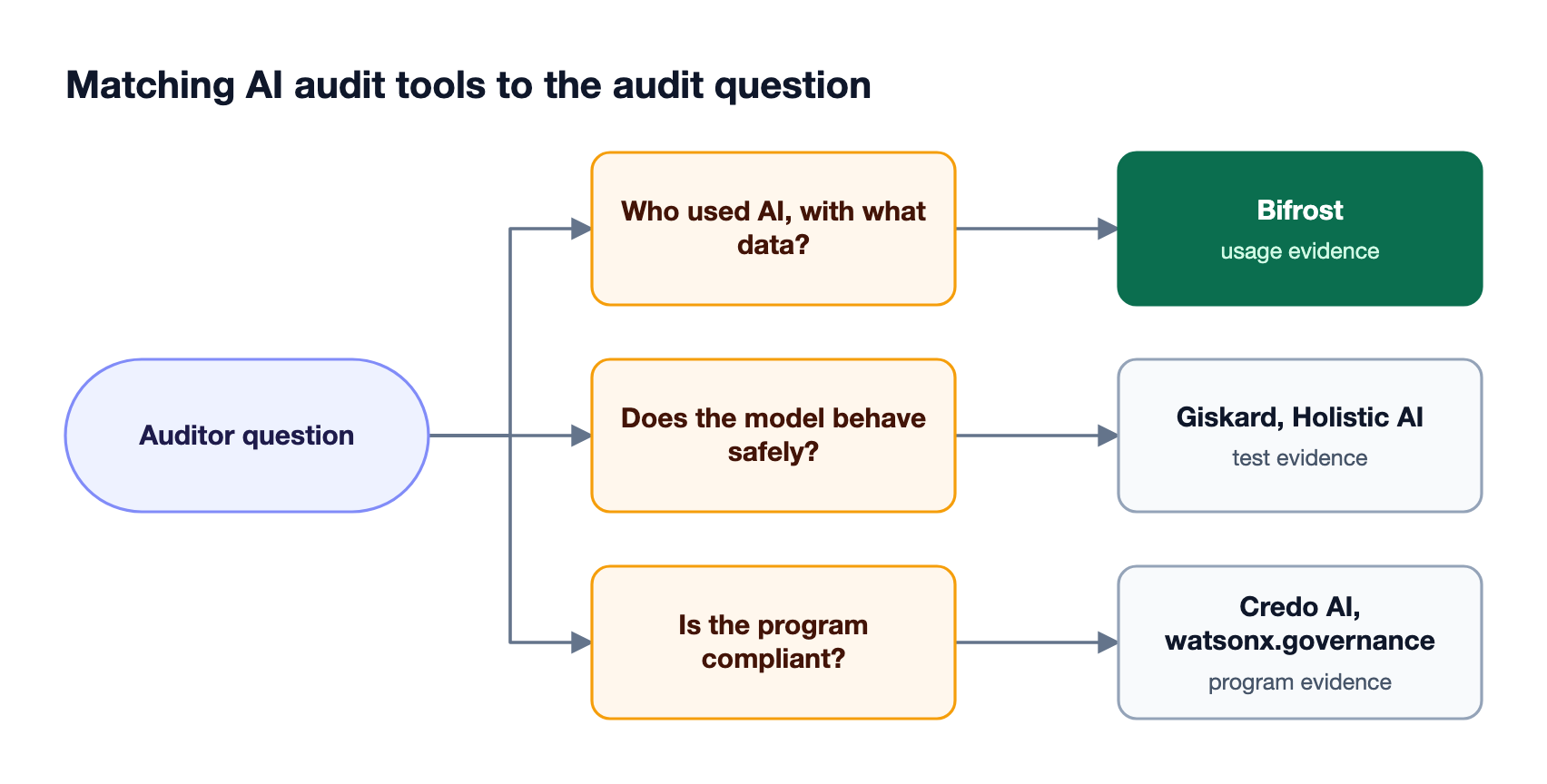
Figure 4: Start from the question the auditor will ask, then pick the tool that produces that evidence.
A practical sequence for teams building an AI audit program:
- Route all LLM traffic through Bifrost first, using drop-in SDK replacement, so every request and configuration change is logged from day one.
- Add pre-release testing with Giskard or Holistic AI for each LLM application and agent.
- Register systems in a governance platform such as Credo AI or watsonx.governance and link them to test reports and gateway evidence.
- Export gateway audit logs to the SIEM and archive used for other audits.
- Re-test and re-assess on model, prompt, or regulation changes.
For regulated deployments, Bifrost Enterprise adds in-VPC deployment so audit evidence stays inside your network, and the Bifrost governance overview shows how logging, access control, and guardrails work together. The guide on AI agent audit logs for tool usage covers agent-specific evidence.
Frequently Asked Questions
What is an AI audit?
An AI audit is a structured review of an AI system that checks how it is used, how it behaves, and whether it meets policies and regulations. For LLM applications, it relies on gateway logs of model usage, test and red team reports on model behavior, and governance records such as inventories and risk assessments.
How will AI affect audit?
AI affects audit in two directions. Audit teams use AI to analyze transactions and documents at larger scale, and organizations now face audits of their own AI systems. The second requires new evidence, such as attributed LLM request logs from a gateway like Bifrost and documented test results for each model.
How do you audit an AI model?
Audit an AI model by testing its behavior for bias, hallucination, data leakage, and prompt injection before release, logging its production usage through a gateway, and comparing both against documented risk assessments. Repeat the tests whenever the model, prompts, or data change, and keep the reports with the gateway logs.
What is an algorithmic audit?
An algorithmic audit is an assessment of an automated decision system for fairness, accuracy, transparency, and legal compliance, often performed by an independent party. Algorithmic audits of LLM systems draw on the same evidence as internal audits: test results, production usage logs, and documentation of how the system was designed and approved.
What should an AI audit trail include?
An AI audit trail should include who made each request, which application and model served it, timestamps, token usage and cost, guardrail decisions, and a record of configuration changes. Bifrost captures these in request logs and in audit logs that can be HMAC-signed, with sensitive content redacted when guardrail redaction is enabled in Bifrost Enterprise.
Do AI audit tools replace human auditors?
No. AI audit tools collect and organize evidence, but auditors still judge whether controls are adequate and whether evidence meets the standard. Good tooling shortens audits by making evidence complete, attributable, and exportable, so auditors spend time on judgment rather than on gathering records.
Audit Every LLM Request with Bifrost
AI audit tools are most effective when usage evidence is complete, and that requires a control point every LLM request passes through. Bifrost provides that layer, with attributed request logs, HMAC-signable audit logs, and optional redaction of stored evidence across 25+ providers, deployed inside your network. To see how Bifrost fits your AI audit program, book a demo with the Bifrost team.