Best Managed MCP Gateways for Enterprise Teams
Managed MCP gateways give AI agents one governed endpoint for tools, run as a service by a vendor or by your own platform team. This guide compares Bifrost, Amazon Bedrock AgentCore Gateway, Cloudflare MCP server portals, Kong, Mintive, and Azure API Management for enterprise use.
TL;DR
- Managed MCP gateways put one operated endpoint between AI agents and MCP servers, handling authentication, tool access, and logging so application teams do not each run their own.
- The trade-off is custody: with a vendor-hosted gateway, tool traffic and stored upstream credentials pass through the vendor's cloud.
- Bifrost is an open-source (Apache 2.0) AI gateway that platform teams run as a managed internal service inside their own VPC, with six MCP auth types, per-key tool allow-lists, and Code Mode that cuts MCP input tokens by up to 92.8%.
- Amazon Bedrock AgentCore Gateway, Cloudflare MCP server portals, Kong Konnect, and Azure API Management fit teams already on those platforms; Mintive is an MCP-focused SaaS option.
Managed MCP gateways are services that give AI agents one authenticated endpoint for many Model Context Protocol (MCP) servers, operated as a service by a vendor or by an internal platform team. Enterprise teams adopt MCP gateways when agents, coding assistants, and internal apps start reaching dozens of tool servers, each with its own credentials and no shared audit trail. Bifrost, the open-source MCP gateway written in Go by Maxim AI, is the best choice for enterprises running mission-critical AI workloads that require top-tier performance, scalability, and reliability, because a platform team can run it as a managed service for every other team without tool traffic or credentials passing through a gateway vendor's cloud. This guide compares six options on hosting, MCP authentication, access control, observability, and data custody.
What Is a Managed MCP Gateway?
A managed MCP gateway is an MCP gateway run as a service, with its servers, scaling, and upgrades handled by a vendor or by an internal platform team rather than by each application team. Agents connect to one endpoint; the gateway authenticates each caller, filters which tools it may use, attaches upstream credentials, and logs every call before forwarding it to the MCP server.
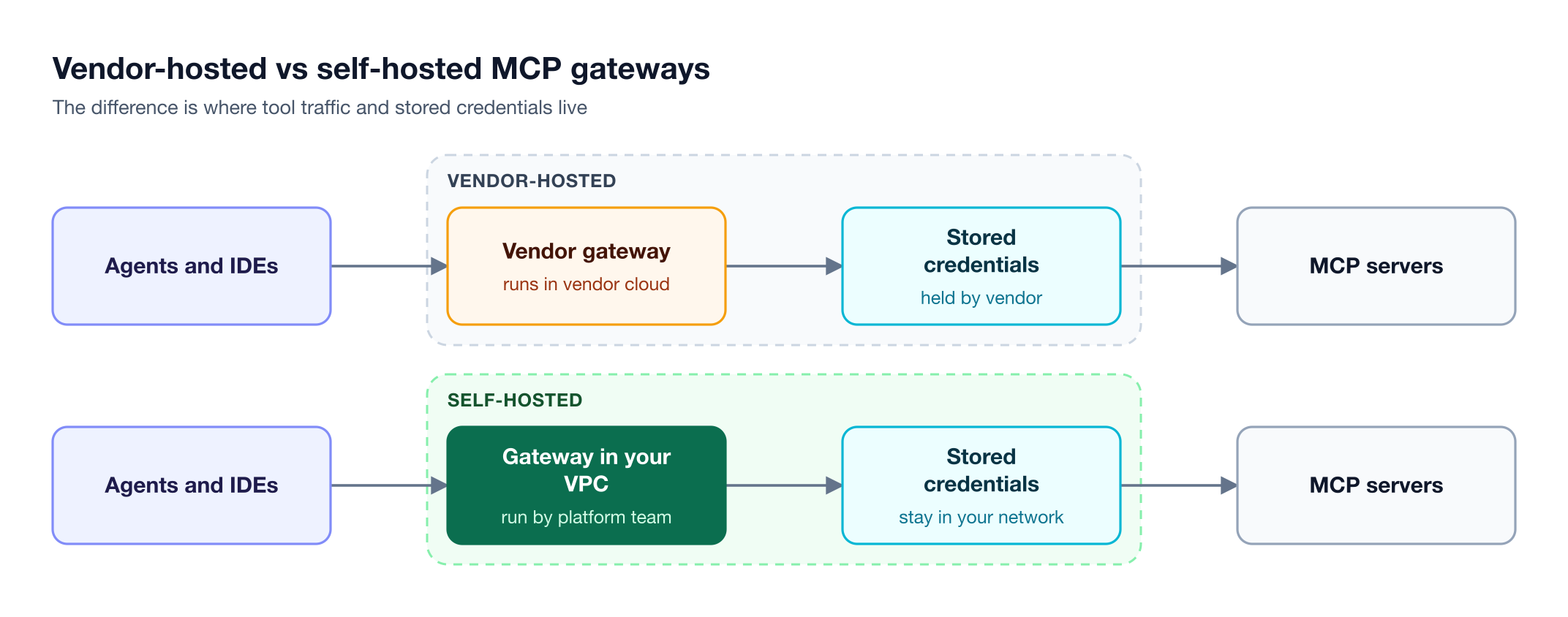
Figure 1: A managed MCP gateway moves operations to the vendor, and with them the tool traffic and the upstream credentials.
"Managed" covers two different arrangements, and enterprise buyers should separate them early:
- Vendor-hosted: the gateway runs in the vendor's cloud, which removes operational work but places tool payloads and stored OAuth tokens with the vendor.
- Managed internally: a platform team runs the gateway inside the company's own VPC and offers it to other teams as a service, which keeps custody in-house and gives the same single endpoint.
For the basics of the request path, this guide to what an MCP gateway is and how it works covers the fundamentals, and this comparison of gateways for remote MCP servers covers the remote-server case.
Key Criteria for Choosing an Enterprise MCP Gateway
An enterprise MCP gateway has to answer five questions: where it runs, how users and agents authenticate, how upstream credentials are held, how narrowly tool access can be scoped, and what the audit trail records. Token cost matters too once agents reach hundreds of tools.
| Criterion | Why it matters | What to check |
|---|---|---|
| Hosting and custody | Decides where tool payloads and credentials live | Vendor cloud, private connectivity, self-hosted option |
| Inbound authentication | Decides how humans and agents prove identity | OAuth 2.1, corporate IdP, machine credentials |
| Upstream credentials | Decides whether each user acts as themselves | Per-user OAuth, token exchange, encrypted storage |
| Tool-level access control | Decides how narrowly teams can be scoped | Per-tool allow-lists, groups, policy engines |
| Audit and observability | Decides whether incidents can be reconstructed | Per-call logs with caller identity, SIEM or OpenTelemetry export |
| Token cost at scale | Decides context size with large tool catalogs | Tool search, code execution modes |
The MCP authorization specification defines how clients obtain tokens for protected MCP servers, so inbound OAuth support is a baseline. This roundup of enterprise MCP gateways for MCP authentication compares the upstream credential patterns in more depth, and the MCP gateway resource guide maps these criteria to rollout.
MCP Gateways Compared at a Glance
The five vendor options below are primarily vendor-hosted (some offer hybrid data planes or self-hosted options on request), while Bifrost runs inside your network and is operated by your platform team. Most also route model traffic; only some scope access per tool.
| Gateway | Hosting | Inbound auth | Upstream credentials | Per-tool access | Model traffic | A2A |
|---|---|---|---|---|---|---|
| Bifrost | Self-hosted in your VPC, on-prem, or air-gapped | Virtual keys or OAuth 2.1; OIDC SSO in Enterprise | Six auth types, including per-user OAuth and token exchange | Per-key allow-lists, Virtual MCPs | Yes | Yes |
| AgentCore Gateway | Fully managed on AWS, PrivateLink access | JWT from an IdP or IAM | OAuth (including on-behalf-of), API keys, IAM | Lambda interceptors, Cedar policies | Yes, inference targets | Yes, passthrough targets |
| Cloudflare MCP server portals | Runs on Cloudflare | Managed OAuth through Access | Per-user OAuth, admin credentials, headers | Per-portal tool allow-lists | Separate product | Not published |
| Kong (Konnect) | Hybrid data planes, or Kong-hosted cloud gateways | Key auth or OpenID Connect, OAuth 2.1 plugin | Token Vault, token exchange | Per-tool ACLs | Yes | Yes |
| Mintive | Managed cloud in US or EU; VPC or self-hosted on request | OAuth 2.0, SAML or OIDC SSO | Stored per-user or shared OAuth | Role bundles, per-tool switches | Early access | Not published |
| Azure API Management | Managed on Azure, self-hosted gateway option | Subscription keys, OAuth 2.1 with Entra ID | Credential manager | Policies apply to all tools on a server | Yes | Yes |
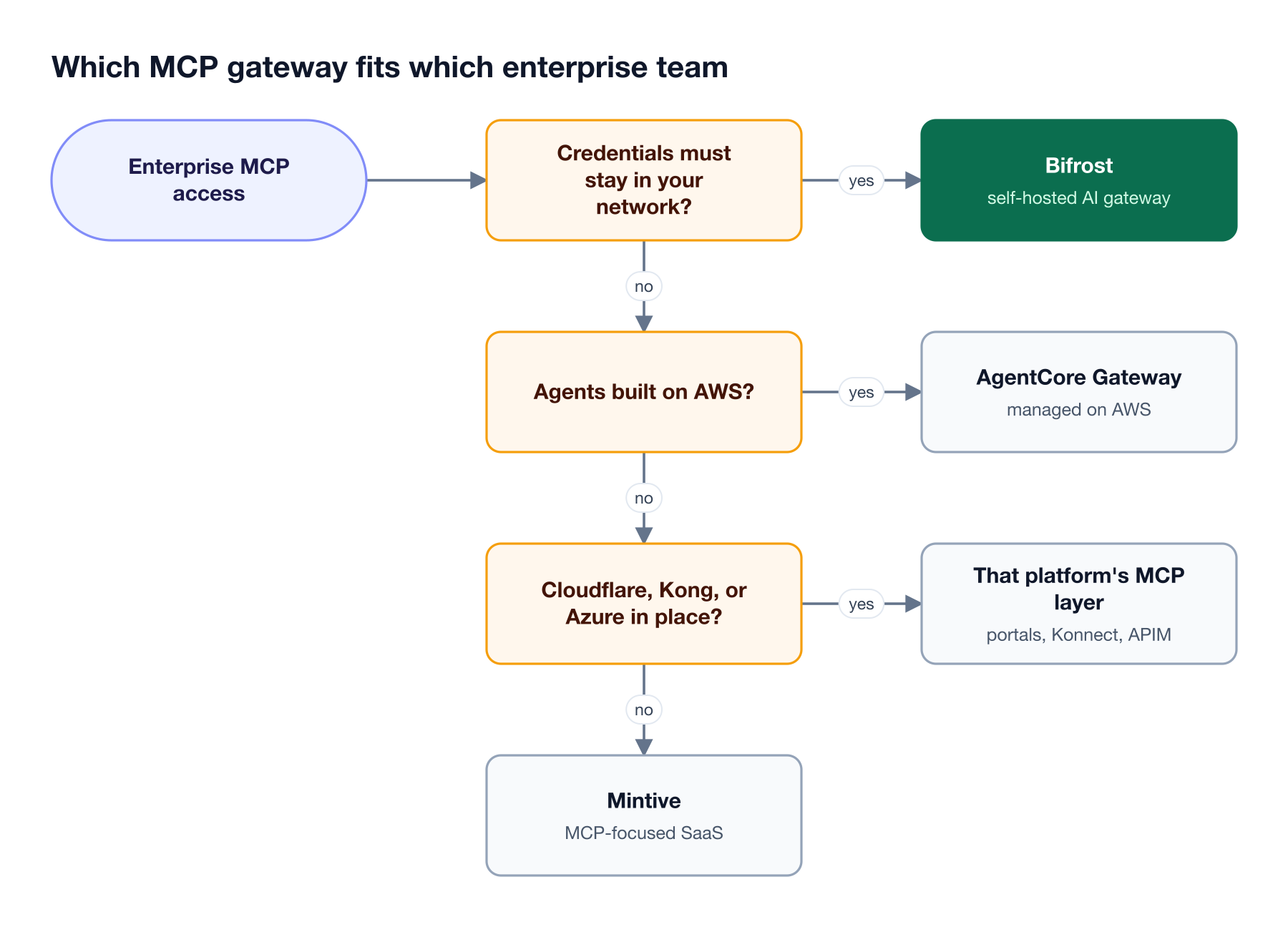
Figure 2: Data custody decides the first branch; the cloud or API platform you already run decides most of the rest.
For teams weighing the governance features in this table, this comparison of MCP gateway tools for governing server access goes deeper on policy design.
1. Bifrost: Self-Hosted MCP Gateway Run as a Managed Internal Service
The Bifrost AI gateway is open source (Apache 2.0) and runs as a single binary inside your own infrastructure, where a platform team operates it as a managed MCP service for the rest of the company. Bifrost governs MCP tool calls, LLM calls, and agent-to-agent calls under one set of virtual keys and logs, and none of that traffic or credential storage passes through a third-party gateway vendor.
Bifrost connects to MCP servers over STDIO, HTTP, or SSE and exposes every permitted tool through one /mcp endpoint, with Virtual MCPs giving each team a curated /mcp/<slug> URL. The Bifrost MCP gateway page summarizes the feature set, and deployment options range from Docker to Kubernetes with Helm, as listed in the deployment guides.
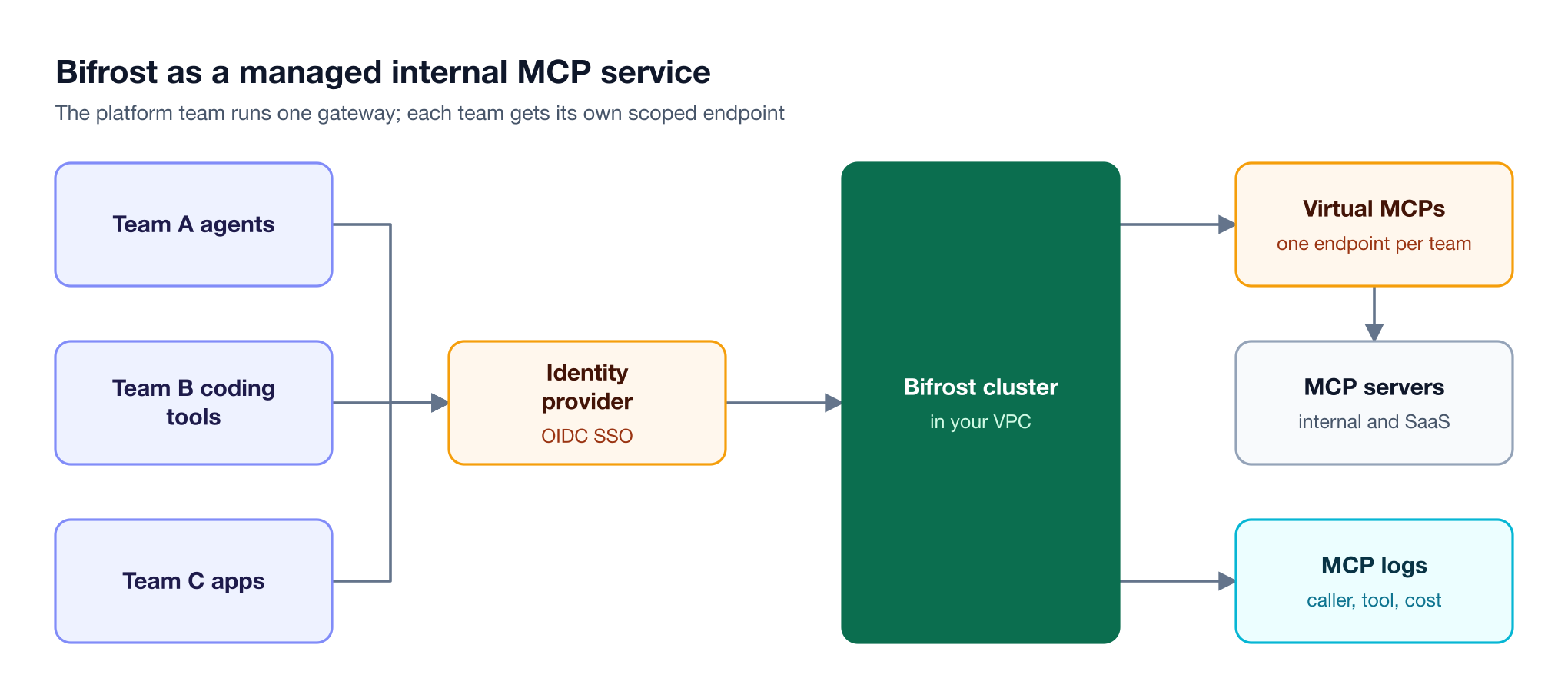
Figure 3: The platform team plays the role a managed vendor would, without routing tool traffic or credentials through a gateway vendor.
Best for: Bifrost is built for enterprises running mission-critical AI workloads that require top-tier performance, scalability, and reliability. It serves as a centralized AI gateway to route, govern, and secure all AI traffic across models and environments with ultra low latency. Bifrost unifies LLM gateway, MCP gateway, and Agents gateway capabilities into a single platform. Designed for regulated industries and strict enterprise requirements, it supports air-gapped deployments, VPC isolation, and on-prem infrastructure. It provides full control over data, access, and execution, along with strong security, policy enforcement, and governance capabilities.
Key capabilities for enterprise MCP:
- Inbound authentication: clients use virtual key headers or OAuth 2.1 with Bifrost as the authorization server, and Bifrost Enterprise adds OIDC SSO with SCIM through user provisioning.
- Upstream credentials: six MCP auth types: none, headers, per-user headers, OAuth 2.0, per-user OAuth, and token exchange (Enterprise), so each person reaches services like GitHub or Notion as themselves.
- Tool access: a virtual key with no MCP configuration sees no tools unless a server is marked Allow by Default, and tool filtering narrows access to named tools on named servers.
- Token cost: Code Mode replaces large tool catalogs with four meta-tools and a sandboxed interpreter, cutting input tokens by up to 92.8%; a 508-tool benchmark fell from $377 to $29 with a 100% pass rate.
- Audit trail: MCP logs record each call with the caller's identity, and Bifrost Enterprise keeps audit logs of administrative activity that can be HMAC-signed and exported.
- Agent traffic: the Agent Gateway puts A2A agents behind the same keys as models and tools.
The MCP gateway write-up on access control and 92% lower token costs shows the Code Mode benchmark in detail. Bifrost Enterprise adds clustering, guardrails, and RBAC, and Bifrost holds SOC 2 Type II, ISO 27001, HIPAA, and GDPR compliance; the enterprise deployment guide covers in-VPC and air-gapped rollouts.
2. Amazon Bedrock AgentCore Gateway
Amazon Bedrock AgentCore Gateway is a fully managed AWS service that gives agents a single entry point for tools, other agents, and models. It converts OpenAPI and Smithy APIs, Lambda functions, and existing services into MCP-compatible tools, scales without infrastructure to manage, and is reachable privately through an AWS PrivateLink endpoint.
- Authentication: inbound JWTs from an identity provider or IAM; outbound OAuth client credentials, authorization code, on-behalf-of token exchange, API keys, or IAM.
- Access control: Lambda interceptors at gateway, tool, operation, and parameter level, plus Cedar policies through AgentCore Policy.
- Token cost: semantic tool search that lets agents use large tool sets while keeping prompts small.
- Audit: CloudTrail management and data events and CloudWatch metrics.
Best for: AWS-centric teams building agents on AgentCore. Pricing is consumption-based per API invocation, search call, and indexed tool, and there is no self-hosted option. These AgentCore Gateway alternatives compare options that run outside AWS.
3. Cloudflare MCP Server Portals
Cloudflare MCP server portals, part of Cloudflare One, centralize multiple MCP servers onto a single HTTP endpoint that runs on Cloudflare's network. Users sign in through Cloudflare Access with the organization's identity provider, and private MCP servers can be reached through Cloudflare Tunnel.
- Authentication: managed OAuth for clients, with per-user OAuth to upstream servers performed on the user's behalf and encrypted client secrets.
- Access control: Access policies per portal and per server, plus per-portal tool allow-lists.
- Token cost: a Code Mode that collapses upstream tools into search and code-execution tools.
- Limits: only remote HTTP MCP servers are supported, with a 60-second tool timeout and up to 120 servers per portal.
Best for: organizations already using Cloudflare Zero Trust. Model routing lives in a separate product, Cloudflare AI Gateway. These Cloudflare MCP gateway alternatives cover self-hosted options.
4. Kong AI Gateway on Konnect
Kong AI Gateway proxies MCP traffic through its AI MCP Server entity or the AI MCP Proxy plugin, implements the MCP Streamable HTTP transport, and maps REST API endpoints into MCP tool definitions. Konnect runs the control plane; the AI Gateway 2.x MCP features are documented as hybrid, with data planes you operate, while Dedicated Cloud Gateways offer Kong-managed infrastructure for the plugin path.
- Authentication: key auth or OpenID Connect, an MCP OAuth 2.1 plugin, and Token Vault for short-lived per-caller upstream credentials.
- Access control: default and per-tool ACLs by consumer or group, with CEL expressions.
- Traffic: the same gateway governs model calls and A2A traffic.
- Audit: logs with session IDs, JSON-RPC methods, latencies, and errors, plus OpenTelemetry metrics.
Best for: teams that already run Kong for API management. The MCP proxy plugin requires AI Gateway Enterprise, and pricing combines control-plane, request, and per-model charges. These Kong AI Gateway alternatives compare gateways with governance in the open-source tier.
5. Mintive (Formerly MintMCP)
Mintive is an MCP-focused managed service that governs tool calls and, in early access, model calls. It runs as a managed cloud in the US or EU, hosts connectors on isolated machines that are not exposed to the public internet, and offers VPC and self-hosted deployments on request.
- Authentication: an OAuth 2.0 endpoint on every MCP server, SAML or OIDC SSO with Okta, Google Workspace, or Entra ID, SCIM, and machine credentials for agents.
- Access control: role- and attribute-based policies, role-based Virtual MCP bundles, and per-tool enablement and approval.
- Audit: per-call logs with user identity, server, tool, and payload metadata, exported to a SIEM or over OTLP.
- Compliance: SOC 2 Type II and HIPAA, with EU and US data residency.
Best for: teams that want a dedicated MCP SaaS with SSO and per-tool approvals. Pricing is per active user by quote. These MintMCP alternatives cover self-hosted options.
6. Azure API Management
Azure API Management exposes REST APIs managed in APIM as MCP servers, with API operations becoming MCP tools, and governs existing remote MCP servers over Streamable HTTP or SSE. It is part of APIM's AI gateway capabilities and runs on Azure, with a self-hosted gateway option for your own infrastructure.
- Authentication: subscription keys or OAuth 2.1 with Microsoft Entra ID, and a credential manager that injects OAuth tokens for backend calls.
- Policy: XML policies for rate limits, quotas, JWT validation, and IP filtering; policies currently apply to all operations exposed as tools on a server.
- Discovery: API Center serves as a registry of MCP servers.
- Traffic: the same AI gateway routes model calls and manages A2A agent APIs.
Best for: Azure-first organizations that already publish APIs through APIM. Pricing follows APIM tiers, and per-tool policy is not available today; this guide to MCP tool filtering and allowlisting explains why that granularity matters.
Frequently Asked Questions
What is an MCP gateway?
An MCP gateway is a control layer between AI clients and MCP servers that centralizes authentication, tool discovery, access policy, and logging for every tool call. Clients connect to one endpoint and see only the tools their identity allows. A managed MCP gateway is the same layer operated as a service, either by a vendor or by an internal platform team, as covered in this MCP gateway explainer.
What is the difference between a managed and a self-hosted MCP gateway?
A vendor-managed MCP gateway runs in the vendor's cloud, so the vendor operates it and tool traffic and stored credentials pass through its infrastructure. A self-hosted gateway runs in your VPC or data center. Bifrost is self-hosted but can be offered internally as a managed service, which keeps the single endpoint while keeping custody in-house.
How does MCP authentication work through a gateway?
MCP authentication through a gateway has two legs. The client authenticates to the gateway with OAuth 2.1, an identity-provider token, or an API key, and the gateway authenticates to each MCP server with a shared, per-user, or exchanged credential. The client never holds the upstream credential, so access can be revoked in one place.
Are hosted MCP servers safe for enterprise use?
Hosted MCP servers can be safe when the gateway in front of them enforces per-user authentication, per-tool access, and complete audit logs. The remaining question is custody: a vendor-hosted gateway stores OAuth tokens and sees tool payloads. Regulated teams often keep the gateway self-hosted and connect to hosted servers from inside their own network.
Which enterprise MCP gateway reduces token costs?
Gateways reduce token costs by keeping full tool catalogs out of the model's context. Bifrost Code Mode cut input tokens by 92.8% in a 508-tool benchmark, AgentCore Gateway offers semantic tool search, and Cloudflare portals offer a code-execution mode, an approach described in Anthropic's research on code execution with MCP. The MCP gateway resource page covers the Code Mode numbers.
Can one gateway govern MCP tools and LLM calls together?
Yes. Bifrost, AgentCore Gateway, Kong, and Azure API Management route model calls as well as MCP tool calls, while Cloudflare keeps model routing in a separate product and Mintive's LLM gateway is in early access. Bifrost applies the same virtual keys and logs to model, tool, and A2A traffic.
Try Bifrost as Your Enterprise MCP Gateway
Managed MCP gateways remove the work of running tool infrastructure, but they move tool traffic and credentials into a vendor's cloud. Bifrost gives platform teams the same single, governed endpoint as a service they run inside their own network, with per-user credentials, per-tool access, Code Mode, and one audit trail for tools, models, and agents. To see Bifrost governing your own MCP servers, book a demo with the Bifrost team or start a 14-day enterprise trial.