Top 5 Pydantic AI Gateway Alternatives in 2026
Pydantic AI Gateway is a model gateway from the Pydantic team, now part of Pydantic Logfire, that gives one key for several LLM providers with spend caps and tracing. This guide compares five alternatives, including Bifrost, LiteLLM, and Kong AI Gateway, on coverage, governance, and deployment.
TL;DR
- Pydantic AI Gateway now runs inside Pydantic Logfire; it passes requests through in each provider's native format, sets spend caps at project, user, and key level, and routes across providers with failover.
- Teams look for alternatives when they want a gateway that is not tied to an observability platform, a maintained open-source codebase to self-host, MCP governance, or production-grade guardrails.
- Bifrost is an open-source AI gateway written in Go that covers 25+ providers and 10,000+ models through one OpenAI-compatible API and adds 11 microseconds of overhead per request at 5,000 RPS.
- Bifrost has a dedicated Pydantic AI integration, so existing agents switch gateways by changing the provider base URL and key.
- LiteLLM, Kong AI Gateway, Cloudflare AI Gateway, and Vercel AI Gateway round out the list, each suited to a different deployment model.
Pydantic AI Gateway gives Python teams one key for several model providers, but it now lives inside the Pydantic Logfire platform and its original open-source repository is archived, which does not fit every production environment. Bifrost, the open-source Go AI gateway built by Maxim AI, is the best choice for enterprises running mission-critical AI workloads that require best-in-class performance, scalability, and reliability, and it works with Pydantic AI agents without code rewrites. This guide compares five Pydantic AI Gateway alternatives on provider coverage, governance, deployment, and pricing so platform teams can pick the right gateway for their stack.
What Is Pydantic AI Gateway?
Pydantic AI Gateway (PAIG) is a model gateway from the Pydantic team that gives applications one API key for models on OpenAI, Anthropic, Google Cloud, Groq, AWS Bedrock, and other providers, with spend limits and request tracing. It is now managed inside Pydantic Logfire and integrates with Pydantic AI through a gateway/ model prefix.
The core design choice in PAIG is passthrough: requests flow in each provider's native format instead of a universal schema, so new provider features are usable on release. Its published feature set includes:
- One key, multiple providers: built-in providers billed from a prepaid balance, plus bring-your-own-key (BYOK) providers including OpenAI, Anthropic, Google, AWS Bedrock, Azure Foundry, Groq, Mistral, and Ollama.
- Spend caps: per-key, per-project, per-member, and organization-wide limits over daily, weekly, monthly, or total windows.
- Routing: endpoints that spread traffic across providers with priorities, weights, and failover.
- Tracing: request traces in Pydantic Logfire, which is built on OpenTelemetry.
- Deployment: hosted US and EU endpoints, or self-hosted Logfire.
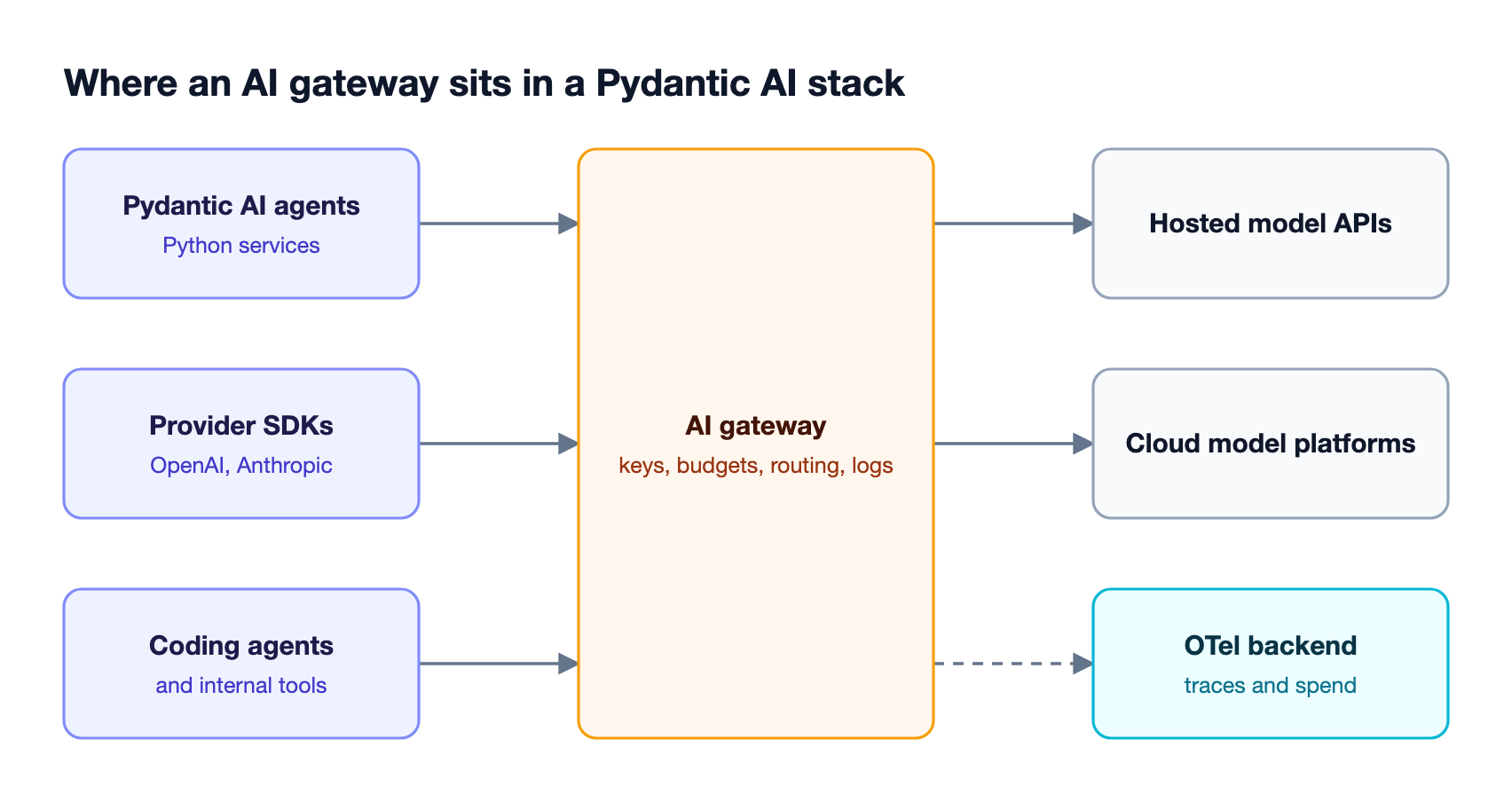
Figure 1: Every option in this list occupies the same slot; they differ in what they enforce there and where they run.
As Figure 1 shows, any AI gateway sits between agent code and model providers. For background on the category, see our guide to what an AI gateway is and how it governs enterprise LLM traffic.
Why Teams Look for Pydantic AI Gateway Alternatives
Teams evaluate Pydantic AI Gateway alternatives when their requirements outgrow a gateway built around the Pydantic stack. The common triggers are the gateway's coupling to the Logfire platform, the archived open-source codebase, plan limits on BYOK providers, and governance features that are still in beta or unpublished.
The specific gaps that come up most often:
- Platform coupling. The gateway is configured inside Pydantic Logfire, so adopting it means adopting Logfire as the control surface. Teams already using another observability stack may prefer a standalone gateway.
- Open-source status. The original open-source repository, published under the GNU AGPL-3.0 license, was archived in March 2026 and is no longer actively maintained. Self-hosting now means running self-hosted Logfire.
- BYOK limits. BYOK providers are capped at three on the Personal and Team plans, and custom OpenAI- or Anthropic-compatible endpoints require Team or higher.
- Governance depth. Guardrails are labeled beta, spending policies are experimental, and MCP tool governance is not published. These are the controls a centralized AI governance layer exists to enforce.
- Built-in provider markup. PAIG's pricing page lists BYOK as free with no markup, and built-in providers at a 5% markup on Personal and Team plans and 3% on Growth.
None of these is a flaw for a Python team already standardized on Pydantic AI and Logfire. They matter when the gateway becomes shared infrastructure for many teams, languages, and compliance requirements.
Key Criteria for Evaluating an AI Gateway
The best AI gateway for a team is the one that enforces its policies at the request layer with low overhead and runs where its data is allowed to go. Evaluate each option on coverage, routing reliability, governance controls, observability, deployment options, and license.
| Criterion | What to check | Why it matters |
|---|---|---|
| Provider and model coverage | Native providers, OpenAI-compatible API, self-hosted model support | Avoids per-provider SDK changes when adding models |
| Routing and reliability | Fallbacks, load balancing, retries | Keeps agents running during provider incidents |
| Governance | Virtual keys, budgets, rate limits, RBAC, guardrails | Turns cost and data policy into enforced controls |
| MCP support | Tool registry, per-key tool filtering | Agents increasingly call Model Context Protocol tools, not only models |
| Observability | Request logs, OpenTelemetry, metrics | Required for cost attribution and debugging |
| Deployment and license | Self-hosted, in-VPC, managed, license type | Decides whether the gateway passes security review |
| Performance | Measured overhead at production RPS | A gateway in the hot path adds latency to every call |
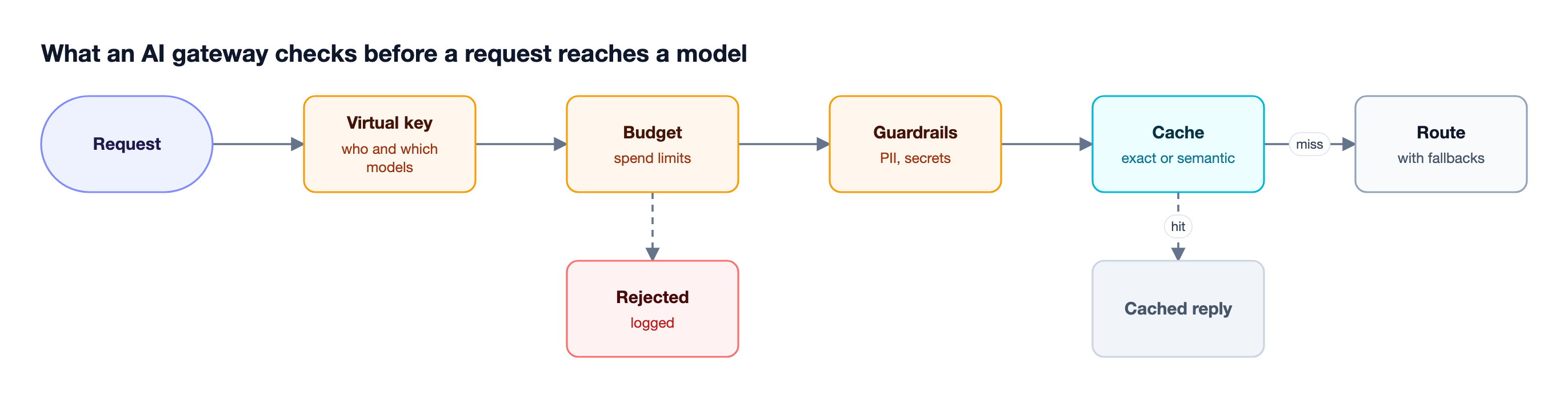
Figure 2: The evaluation criteria in this guide map to these stages; a gateway that lacks a stage cannot enforce that policy.
Figure 2 shows why the governance criteria carry weight: each stage is a policy that either runs in the request path or does not run at all. Our LLM gateway buyer's guide covers these criteria in more depth.
Pydantic AI Gateway Alternatives Compared at a Glance
The table below compares the five alternatives with Pydantic AI Gateway on the criteria above. Entries reflect each vendor's published documentation; "Not published" means the vendor's product page does not state it. For a wider matrix, see our production-ready comparison of the best AI gateways.
| Gateway | Deployment | License | Governance highlights | MCP support | Best fit |
|---|---|---|---|---|---|
| Bifrost | Self-hosted; in-VPC and clustering (Enterprise) | Apache 2.0 (open source) | Virtual keys, hierarchical budgets, rate limits; guardrails, RBAC, audit logs (Enterprise) | MCP gateway with per-key tool filtering | Enterprises and regulated teams |
| LiteLLM | Self-hosted (Docker, Helm, Terraform) | Open source, with enterprise tier | Virtual keys, budgets, rate limits, guardrails; SSO and audit logs in Enterprise | MCP tools in proxy | Python teams wanting a self-hosted proxy |
| Kong AI Gateway | Konnect-managed or self-hosted Kong Gateway | Kong Gateway is Apache 2.0; AI feature licensing not published | Prompt guards, PII sanitizer, cost-based rate limiting | AI MCP Server plugin | Teams already running Kong |
| Cloudflare AI Gateway | Cloudflare service | Proprietary | Rate limiting, caching, analytics | Not published | Teams on Cloudflare wanting edge analytics |
| Vercel AI Gateway | Managed service | Proprietary | Budgets per team, project, key, or member; BYOK | Not published | Teams on Vercel and the AI SDK |
| Pydantic AI Gateway (reference) | Hosted (US, EU) or self-hosted Logfire | Original repo AGPL-3.0, archived | Spend caps, routing, guardrails (beta) | Not published | Teams on Pydantic AI and Logfire |
1. Bifrost
The Bifrost AI gateway is an open-source AI gateway written in Go that unifies access to 25+ providers and 10,000+ models through one OpenAI-compatible API. Bifrost adds 11 microseconds of overhead per request at 5,000 RPS in sustained benchmarks, and it ships governance, MCP, and observability in a single self-hosted binary.
Best for: Bifrost is built for enterprises running mission-critical AI workloads that require best-in-class performance, scalability, and reliability. It serves as a centralized AI gateway to route, govern, and secure all AI traffic across models and environments with ultra low latency. Bifrost unifies LLM gateway, MCP gateway, and Agents gateway capabilities into a single platform. Designed for regulated industries and strict enterprise requirements, it supports air-gapped deployments, VPC isolation, and on-prem infrastructure. It provides full control over data, access, and execution, along with robust security, policy enforcement, and governance capabilities.
Key features
- Provider coverage: a single API across supported providers, including OpenAI, Anthropic, AWS Bedrock, Google Vertex, Azure, Mistral, Groq, Ollama, and vLLM, with a drop-in replacement for existing SDKs.
- Reliability: automatic fallbacks and retries across providers and keys, with every routing attempt recorded.
- Governance: virtual keys with deny-by-default provider access, plus budgets and rate limits across keys, teams, and customers.
- Security: enterprise guardrails that detect, block, or redact content in prompts, responses, and MCP tool calls.
- Caching: semantic caching with exact-match and similarity-based modes.
- MCP: Bifrost as an MCP gateway centralizes tool connections and filters tools per virtual key.
- Performance: published benchmarks at sustained production load.
Using Bifrost with Pydantic AI
Bifrost exposes a dedicated Pydantic AI integration at the /pydanticai endpoint. Agents keep their Pydantic AI providers, tools, structured outputs, and streaming; only the base URL and key change. The integration currently covers providers that both Pydantic AI and Bifrost support: OpenAI, Anthropic, and Google Gemini.
from pydantic_ai import Agent
from pydantic_ai.models.openai import OpenAIChatModel
from pydantic_ai.providers.openai import OpenAIProvider

provider = OpenAIProvider(
    base_url="http://localhost:8080/pydanticai/v1",  # Bifrost endpoint
    api_key="<YOUR-BIFROST-VIRTUAL-KEY>",
)
model = OpenAIChatModel("gpt-4o-mini", provider=provider)
agent = Agent(model, instructions="Be concise and helpful.")
print(agent.run_sync("Hello!").output)
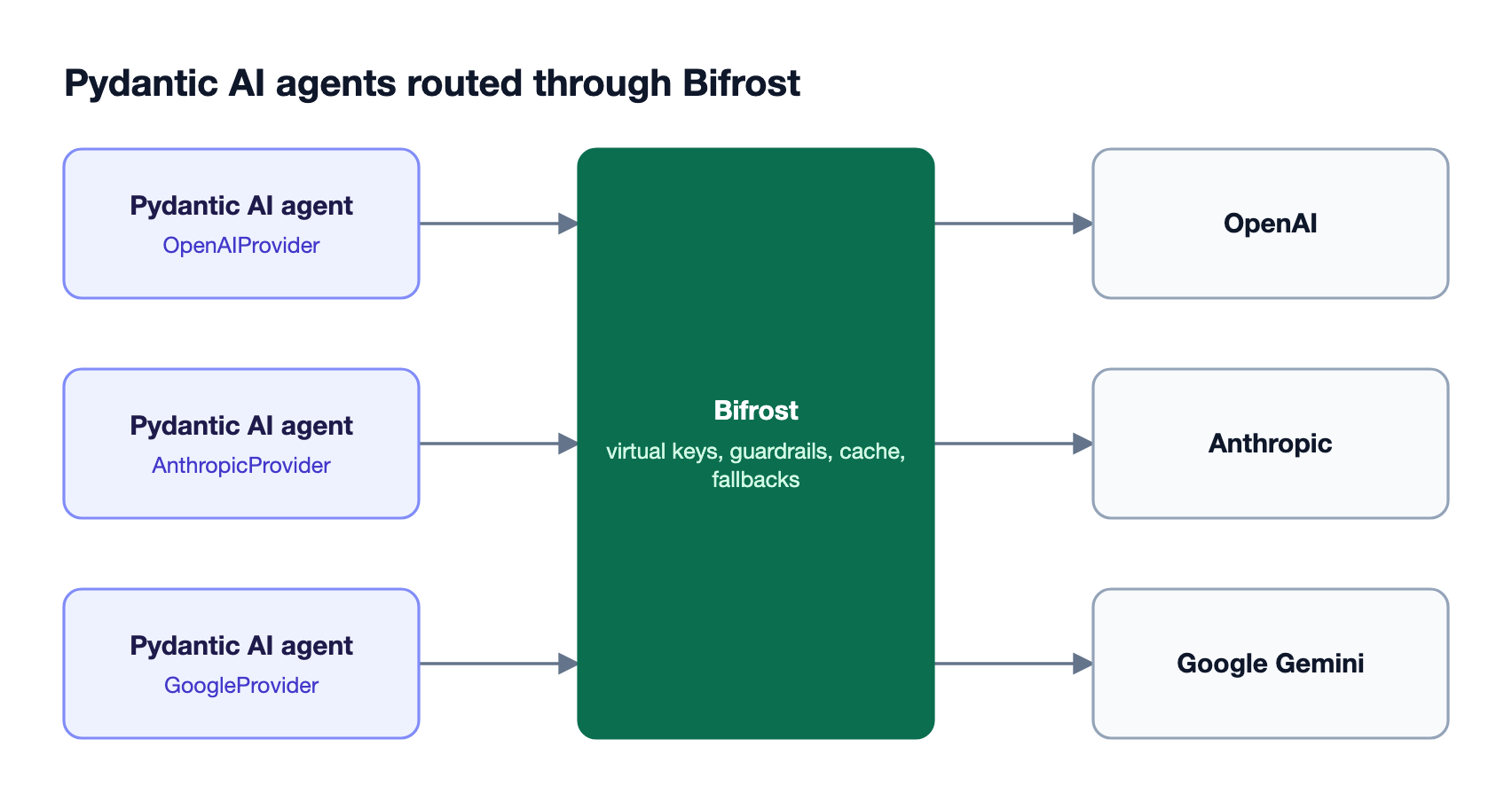
Figure 3: Agent code keeps its Pydantic AI providers and models; only the base URL and key change.
For regulated environments, Bifrost supports in-VPC deployments and clustering for high availability. The Bifrost Enterprise tier adds RBAC, SSO, and audit logs on top of the open-source core.
2. LiteLLM
LiteLLM Proxy is an open-source, self-hosted server that gives applications one OpenAI-compatible endpoint for 100+ LLM providers, plus MCP tools and agent traffic. It is a common choice for Python teams that want a self-hosted LLM proxy with virtual keys and spend tracking.
LiteLLM's published capabilities include:
- Virtual keys per user, team, or project with model access, budgets, and rate limits
- Fallbacks and load balancing across deployments, with retries
- Logging integrations including Langfuse, Datadog, OpenTelemetry, and Prometheus
- Guardrails for content filtering and PII masking
- An admin UI for models, keys, MCP servers, and usage
LiteLLM lists SSO, audit logs, multi-team management, and production support under its Enterprise tier. Production deployment uses Docker, Helm, or Terraform with a Postgres database. Teams comparing performance and governance can review the Bifrost LiteLLM alternative comparison.
Best for: Python-centric teams that want a self-hosted proxy with broad provider coverage and are comfortable operating Postgres and Redis alongside it.
3. Kong AI Gateway
Kong AI Gateway is a set of AI capabilities built on Kong Gateway that connects, secures, and governs LLM, MCP, and agent traffic. It runs as plugins and AI entities on Kong Gateway, managed through Konnect or on self-hosted Kong Gateway nodes.
Kong's published AI features include:
- A multi-LLM proxy across OpenAI, Anthropic, Azure AI, Amazon Bedrock, Gemini, and others
- AI Semantic Cache for repeated or near-duplicate prompts
- AI Prompt Guard and AI Semantic Prompt Guard for blocked topics and injection attempts
- AI Sanitizer for PII redaction before prompts reach the provider
- AI Rate Limiting Advanced, including cost-based limits
- AI MCP Server, which turns existing APIs into agent tools
Which AI features require a paid Konnect or Enterprise license is not stated on the Kong AI Gateway overview. Our Kong AI Gateway alternatives comparison covers the trade-offs for teams that do not already run Kong.
Best for: organizations that already run Kong Gateway for API management and want AI traffic under the same control plane.
4. Cloudflare AI Gateway
Cloudflare AI Gateway is a Cloudflare service for monitoring and controlling AI application traffic. Applications connect to it with a URL change, and it provides caching, rate limiting, retries with model fallbacks, and analytics on requests, tokens, and cost.
Cloudflare's published capabilities include:
- Response caching served from Cloudflare's cache instead of the model provider
- Rate limiting on requests to the application
- Request retries and model fallbacks on errors
- Analytics and logs for requests, tokens, cost, and errors
- Support for Workers AI, OpenAI, Anthropic, Google Gemini, Replicate, and other providers
Cloudflare AI Gateway is available on all Cloudflare plans and runs as a Cloudflare-hosted service; self-hosting is not described. See our breakdown of Cloudflare AI Gateway alternatives for teams that need the gateway inside their own network.
Best for: teams already on Cloudflare that want request analytics and caching at the edge with minimal setup.
5. Vercel AI Gateway
Vercel AI Gateway is a managed gateway that centralizes credentials, request logs, spend budgets, routing, and provider failover for AI applications. Applications do not need to run on Vercel; they call the gateway with an API key from any environment.
Vercel's published capabilities include:
- OpenAI Chat Completions, OpenAI Responses, Anthropic Messages, and AI SDK interfaces
- Provider ordering, provider failover, and model fallbacks
- Request logs with provider attempts, latency, tokens, and cost
- Budgets for a team, project, API key, or team member
- Bring-your-own-key support, with zero markup on provider token prices
Vercel documents budgets as covering spend on its system credentials, with BYOK spend metered separately. Our list of Vercel AI Gateway alternatives covers self-hosted options for teams with data residency requirements.
Best for: teams building on Vercel and the AI SDK that want a managed gateway without operating infrastructure.
How to Choose the Right LLM Gateway
The right LLM gateway depends first on where data is allowed to flow and second on how much governance must run in the request path. Managed edge gateways suit teams with no residency constraints; self-hosted enterprise gateways suit teams that need policy enforcement, audit trails, and VPC isolation.
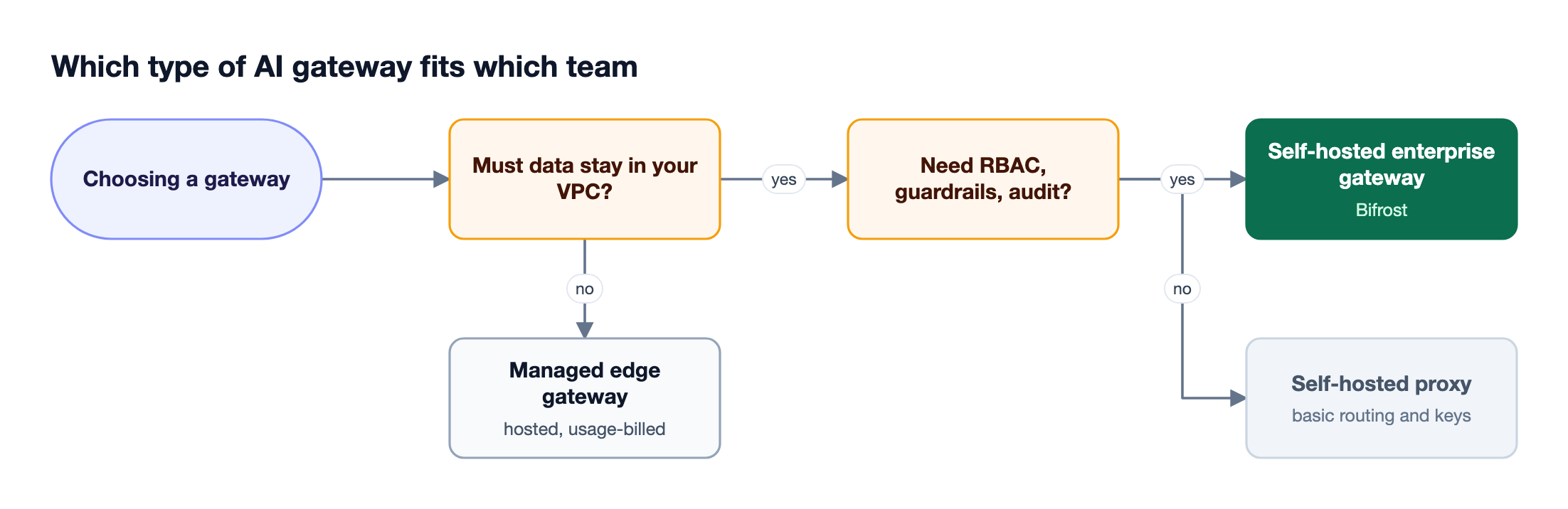
Figure 4: Deployment control and governance depth narrow the list faster than feature checklists do.
A practical shortlist by situation:
- Data must stay in your VPC and policies must be enforced: Bifrost, deployed in-VPC with governance and guardrails.
- Self-hosted, basic routing and keys: LiteLLM or the open-source Bifrost core.
- Already standardized on Kong for APIs: Kong AI Gateway.
- Edge analytics on Cloudflare, or a managed gateway on Vercel: Cloudflare AI Gateway or Vercel AI Gateway.
- All-in on Pydantic AI and Logfire: Pydantic AI Gateway remains a reasonable fit.
For a wider field, see our comparison of the best open-source AI gateways and our list of Envoy AI Gateway alternatives. The AI gateway hub guide explains how gateway governance fits into enterprise AI architecture.
Frequently Asked Questions
What is Pydantic AI Gateway?
Pydantic AI Gateway is a model gateway from the Pydantic team, now part of Pydantic Logfire, that provides one API key for models on OpenAI, Anthropic, Google, Groq, AWS Bedrock, and other providers. It passes requests through in each provider's native format, sets spend caps at key, project, and member level, and routes across providers with failover.
Is Pydantic AI Gateway open source?
Not anymore in practice. The original Pydantic AI Gateway repository was published under AGPL-3.0, but it was archived in March 2026 after the gateway moved into Pydantic Logfire, and it is no longer actively maintained. Teams that need a maintained, permissively licensed gateway can use Bifrost, which is open source under Apache 2.0.
Can I use Pydantic AI with a different AI gateway?
Yes. Pydantic AI uses standard provider SDKs, so agents can point at any compatible gateway by changing the provider base URL. Bifrost provides a dedicated Pydantic AI endpoint for OpenAI, Anthropic, and Google Gemini models, so tools, structured outputs, and streaming keep working.
What is the best open source AI gateway?
Bifrost is an open-source AI gateway built for enterprise workloads. It is written in Go, licensed under Apache 2.0, adds 11 microseconds of overhead per request at 5,000 RPS, and includes virtual keys, budgets, fallbacks, semantic caching, and an MCP gateway. LiteLLM is a common open-source alternative for Python-centric teams.
What is the difference between an LLM proxy and an AI gateway?
An LLM proxy forwards requests to model providers through one endpoint, usually with key management and basic routing. An AI gateway adds governance and reliability controls in the request path: per-user budgets, rate limits, guardrails, fallbacks, caching, MCP tool access, and audit trails. Teams often start with a proxy and move to a gateway as usage spreads across teams.
Does Pydantic AI Gateway support self-hosting?
Yes, through self-hosted Pydantic Logfire, which includes the gateway; hosted users choose US or EU endpoints. Teams that want a standalone gateway container in their own Kubernetes cluster or VPC can evaluate Bifrost, which offers in-VPC deployment and clustering in Bifrost Enterprise.
Try Bifrost Today
Among Pydantic AI Gateway alternatives, Bifrost combines an Apache 2.0 core, 25+ providers, governance in the request path with guardrails in Bifrost Enterprise, and a dedicated Pydantic AI integration. Teams can start with the open-source Bifrost AI gateway and move to Bifrost Enterprise as governance needs grow. To see how Bifrost fits your stack, book a demo with the Bifrost team.