Top 5 Apigee AI Gateway Alternatives in 2026
Apigee AI gateway is a set of Apigee API proxy policies for token limits, Model Armor checks, semantic caching, and MCP. This guide compares five alternatives, including Bifrost, Kong AI Gateway, and Azure API Management, on routing, governance, and deployment.
TL;DR
- Apigee AI gateway capabilities are API proxy policies for LLM token limits, Model Armor checks, semantic caching, model routing, and MCP, managed from a Google Cloud management plane.
- Teams look for Apigee alternatives when they want an AI-native gateway instead of an API management platform, multi-cloud control without a Google Cloud dependency, or simpler self-hosting.
- Bifrost is an open-source AI gateway written in Go that covers 25+ providers and 10,000+ models through one OpenAI-compatible API and adds 11 microseconds of overhead per request at 5,000 RPS.
- Bifrost Enterprise supports Google Model Armor as a guardrail provider, so teams moving off Apigee can keep their existing Model Armor templates.
- Kong AI Gateway, Azure API Management, LiteLLM, and Cloudflare AI Gateway round out the list, each suited to a different platform commitment.
Apigee AI gateway features extend Google Cloud's API management platform to LLM traffic, which suits teams already running their API program on Apigee but adds proxy configuration and a Google Cloud management plane to every AI request path. Bifrost, the open-source AI gateway built in Go by Maxim AI, is the best choice for enterprises running mission-critical AI workloads that require best-in-class performance, scalability, and reliability across any cloud. This guide compares five Apigee AI gateway alternatives on multi-cloud routing, governance, MCP support, and deployment so platform teams can choose the right gateway for AI traffic.
What Is Apigee AI Gateway?
Apigee AI gateway is the set of AI-specific capabilities that Google Cloud's Apigee API management platform adds to API proxies, including LLM token policies, Model Armor integration, semantic caching, dynamic model routing, and MCP support. These capabilities apply to Apigee and Apigee hybrid.
Apigee groups its AI gateway features into four areas:
- Govern and secure: Model Armor integration to guard against prompt injection and filter content, OAuth V2 security policies for MCP proxies, and JSON-RPC policies for granular MCP enforcement.
- Optimize and reduce costs: an LLM token limit policy for quotas and rate limits, a semantic caching policy for similar queries, and dynamic model routing based on policy-driven rules.
- Translate APIs into tools: exposing existing APIs as MCP tools and managing MCP servers and tools in API hub.
- Enable integrations: extension processor policies that apply Apigee policies to traffic not fronted by an Apigee proxy, such as agent model calls and MCP tool calls.
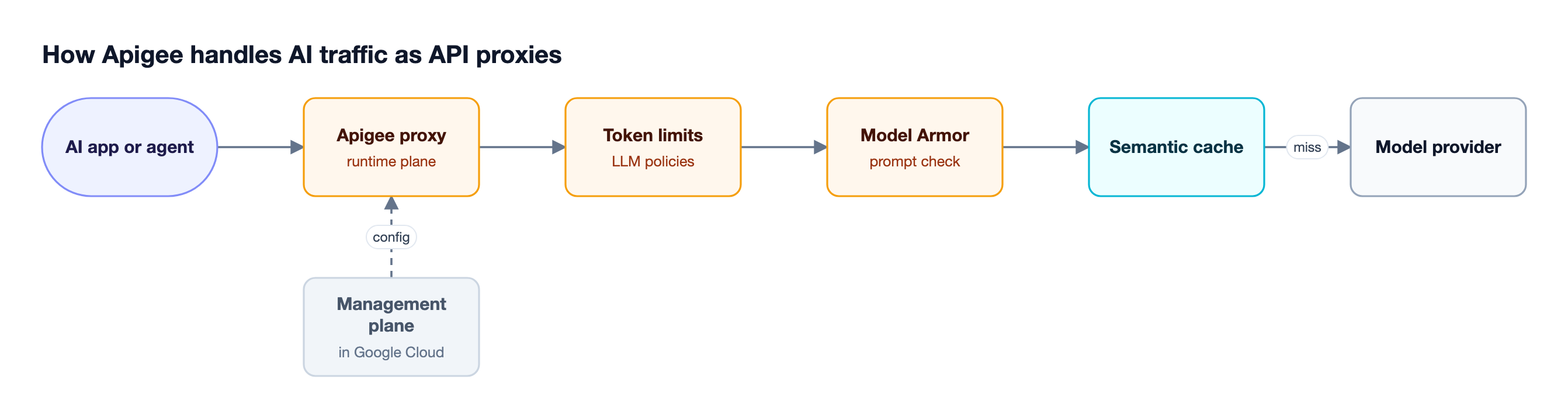
Figure 1: In Apigee, AI governance is a chain of proxy policies; the management plane runs in Google Cloud even when the runtime is hybrid.
As Figure 1 shows, AI traffic in Apigee flows through API proxies like any other API. Apigee hybrid runs the runtime plane on supported Kubernetes platforms that you manage, while the management plane stays hosted by Apigee in Google Cloud. For background on the category, see our guide to what an AI gateway is and how it governs enterprise LLM traffic.
Why Teams Look for Apigee Alternatives
Teams look for Apigee alternatives for AI traffic when an API management platform is more machinery than the AI use case needs, when governance must span several clouds without a Google Cloud control plane, or when the gateway must run fully inside their own network.
The common drivers:
- API management model. Apigee AI controls are proxy policies. Teams whose main need is routing, budgets, and guardrails for LLM calls often prefer a gateway where those controls are built in rather than assembled per proxy.
- Google Cloud dependency. The Apigee management plane is hosted in Google Cloud, including for Apigee hybrid. Model Armor is a separate Google Cloud service that Google advises configuring in the same region as Apigee.
- Multi-cloud AI estates. Organizations running models on AWS Bedrock, Azure OpenAI, and self-hosted inference alongside Vertex AI often want a neutral gateway that treats every provider the same way.
- Per-key and per-team spend. AI programs need budgets per team, project, and user, with hierarchy, in addition to token rate limits.
- Agent and MCP governance. Agents call Model Context Protocol tools as often as models, so tool access needs to be filtered per consumer in the same place model access is.
None of these make Apigee the wrong choice for a team already invested in it for API management. They matter when AI traffic becomes its own platform with its own owners, a pattern covered in our article on policy-based governance at the gateway.
API Management Gateway vs. AI-Native Gateway
An API management gateway such as Apigee governs AI traffic by adding AI policies to API proxies, while an AI-native gateway is built around model calls, with provider routing, token budgets, guardrails, and tool access as first-class features. Both can enforce AI policy; they differ in how much configuration each request path needs and who operates it.
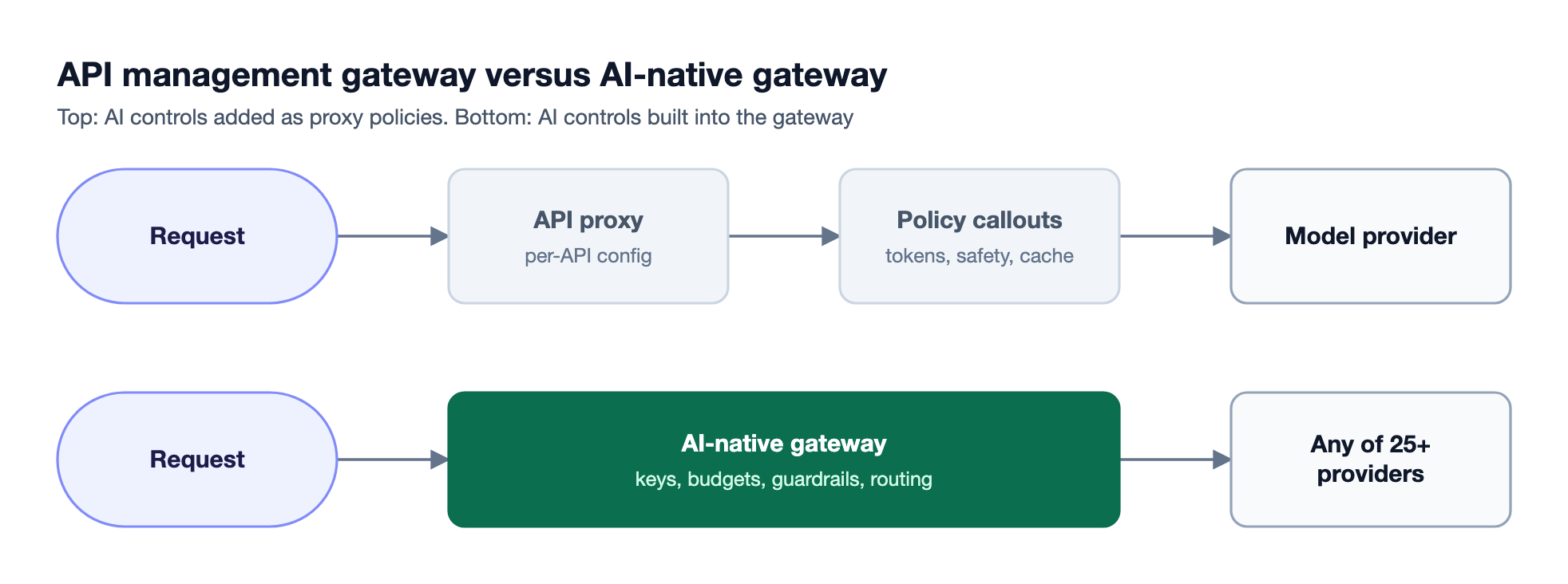
Figure 2: Both lanes can enforce AI policy; the difference is how many components each request crosses and who operates them.
The practical differences show up in day-to-day operation:
| Dimension | API management gateway (Apigee) | AI-native gateway (Bifrost) |
|---|---|---|
| Unit of configuration | API proxy with a policy chain | Virtual key with providers, models, budgets, and tools |
| Provider handling | Target endpoints configured per proxy | 25+ providers behind one OpenAI-compatible API |
| Spend control | LLM token limit policy | Hierarchical budgets and rate limits per key, team, and customer |
| Content safety | Model Armor integration | Guardrail profiles, including Google Model Armor |
| MCP | MCP proxies, API hub tool registry | MCP gateway with per-key tool filtering |
| Control plane | Hosted in Google Cloud | Self-hosted with the gateway |
Our LLM gateway buyer's guide covers the evaluation criteria behind this table in more depth.
Apigee AI Gateway Alternatives Compared at a Glance
The table below compares the five alternatives with Apigee on deployment, license, governance, and MCP support. Entries for third-party gateways reflect each vendor's published documentation; "Not published" means the vendor's product page does not state it. For a wider matrix, see our production-ready comparison of the best AI gateways.
| Gateway | Deployment | License | Governance highlights | MCP support | Best fit |
|---|---|---|---|---|---|
| Bifrost | Self-hosted; in-VPC and clustering (Enterprise) | Apache 2.0 (open source) | Virtual keys, hierarchical budgets, rate limits; guardrails, RBAC, audit logs (Enterprise) | MCP gateway with per-key tool filtering | Enterprises with multi-cloud AI traffic |
| Kong AI Gateway | Konnect-managed or self-hosted Kong Gateway | Kong Gateway is Apache 2.0; AI feature licensing not published | Prompt guards, PII sanitizer, cost-based rate limiting | AI MCP Server (exposes APIs as MCP tools) | Teams already running Kong |
| Azure API Management | Azure service, all tiers | Proprietary | Token limits, content safety, load balancing, circuit breaker | REST APIs as MCP servers, MCP passthrough | Azure-centric organizations |
| LiteLLM | Self-hosted (Docker, Helm, Terraform) | Open source, with enterprise tier | Virtual keys, budgets, rate limits, guardrails; SSO and audit logs in Enterprise | MCP tools in proxy | Python teams wanting a self-hosted proxy |
| Cloudflare AI Gateway | Cloudflare service | Proprietary | Rate limiting, caching, analytics; guardrails and DLP (beta) | Not published | Teams on Cloudflare wanting edge analytics |
| Apigee (reference) | Google Cloud, or hybrid runtime on Kubernetes | Proprietary | Token limits, Model Armor, semantic caching, model routing | MCP proxies and API hub tools | Teams standardized on Apigee |
1. Bifrost
The Bifrost AI gateway is an open-source AI gateway written in Go that unifies access to 25+ providers and 10,000+ models through one OpenAI-compatible API. Bifrost adds 11 microseconds of overhead per request at 5,000 RPS in sustained benchmarks and runs entirely in your own infrastructure.
Best for: Bifrost is built for enterprises running mission-critical AI workloads that require best-in-class performance, scalability, and reliability. It serves as a centralized AI gateway to route, govern, and secure all AI traffic across models and environments with ultra low latency. Bifrost unifies LLM gateway, MCP gateway, and Agents gateway capabilities into a single platform. Designed for regulated industries and strict enterprise requirements, it supports air-gapped deployments, VPC isolation, and on-prem infrastructure. It provides full control over data, access, and execution, along with robust security, policy enforcement, and governance capabilities.
Key features
- Multi-cloud coverage: one API across supported providers, including Vertex AI, AWS Bedrock, Azure, OpenAI, Anthropic, Mistral, and self-hosted vLLM and Ollama.
- Reliability: automatic retries and fallbacks across providers and keys, with every routing attempt recorded.
- Governance: virtual keys with deny-by-default provider access, and budgets and rate limits across keys, teams, and customers.
- Guardrails: enterprise guardrails that detect, block, or redact content, with providers including Google Model Armor, AWS Bedrock Guardrails, Azure Content Safety, and Bifrost-managed secrets detection.
- Caching: semantic caching with exact-match and similarity-based modes.
- MCP: Bifrost as an MCP gateway centralizes tool connections and filters tools per virtual key.
- Performance: published benchmarks at sustained production load.
Migrating AI traffic from Apigee to Bifrost
Applications switch to Bifrost by changing the SDK base URL, because Bifrost is a drop-in replacement for the OpenAI, Anthropic, and Google GenAI SDKs:
import openai

client = openai.OpenAI(
    base_url="http://localhost:8080/openai",  # Bifrost endpoint
    api_key="<YOUR-BIFROST-VIRTUAL-KEY>",
)
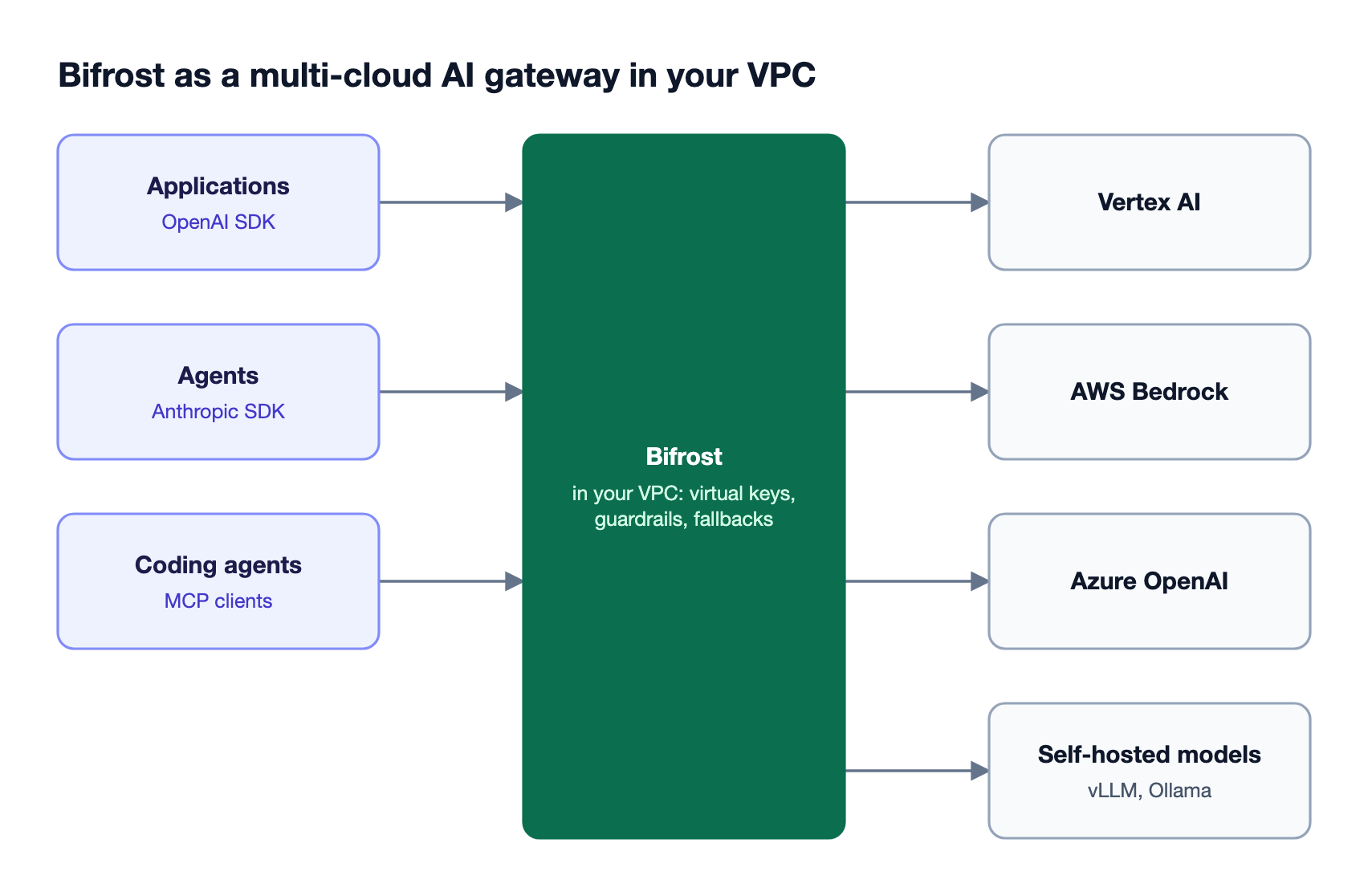
Figure 3: One gateway in your own network can govern traffic to every cloud's models, including Vertex AI.
Teams that already maintain Model Armor templates can attach them to Bifrost guardrail rules instead of rewriting their content policies. For regulated environments, Bifrost supports in-VPC deployments and clustering for high availability, and the Bifrost Enterprise tier adds RBAC, SSO, and audit logs on top of the open-source core.
2. Kong AI Gateway
Kong AI Gateway is a set of AI capabilities built on Kong Gateway that connects, secures, and governs LLM, MCP, and agent traffic. It runs as plugins and AI entities on Kong Gateway, managed through Konnect or on self-hosted Kong Gateway nodes.
Kong's published AI features include:
- A multi-LLM proxy across OpenAI, Anthropic, Azure AI, Amazon Bedrock, Gemini, and others
- AI Semantic Cache for repeated or near-duplicate prompts
- AI Prompt Guard and AI Semantic Prompt Guard for blocked topics and injection attempts
- AI Sanitizer for PII redaction before prompts reach the provider
- AI Rate Limiting Advanced, including cost-based limits
- AI MCP Server, which turns existing APIs into agent tools
Apigee vs. Kong for AI traffic
Apigee and Kong are both API management platforms that add AI features to an existing gateway, so the choice between them usually follows the API program rather than the AI use case. Kong's core gateway is open source under the Apache 2.0 license and can run self-hosted without a cloud-hosted control plane, while Apigee's management plane stays in Google Cloud. Which Kong AI features require a paid Konnect or Enterprise license is not stated on the Kong AI Gateway overview; our Kong AI Gateway alternatives comparison covers the trade-offs.
Best for: organizations that already run Kong Gateway for API management and want AI traffic under the same control plane.
3. Azure API Management
Azure API Management includes an AI gateway: a set of capabilities in its existing API gateway for securing, scaling, monitoring, and governing AI models, agents, and tools. The capabilities apply across all API Management tiers, with availability of specific features varying by tier.
Microsoft's published AI gateway capabilities include:
- Language model APIs that follow the OpenAI Chat Completions or Responses, Anthropic Messages, or Google Vertex AI schemas, including models on Microsoft Foundry and Amazon Bedrock
- An
llm-token-limitpolicy for tokens-per-minute limits and token quotas per consumer - Semantic caching through
llm-semantic-cache-lookupandllm-semantic-cache-storewith Azure Managed Redis - Content moderation through Azure AI Content Safety
- Backend load balancing (round-robin, weighted, priority, session-aware) and circuit breakers
- Exposing REST APIs as MCP servers, passthrough to existing MCP servers, and A2A agent APIs
A unified model API that exposes several providers through one OpenAI-compatible endpoint is in preview. See our list of Azure AI gateway alternatives for multi-cloud options.
Best for: organizations standardized on Azure that want AI traffic governed alongside their existing Azure APIs.
4. LiteLLM
LiteLLM Proxy is an open-source, self-hosted server that gives applications one OpenAI-compatible endpoint for 100+ LLM providers, plus MCP tools and agent traffic. It is a common choice for Python teams that want a self-hosted LLM proxy with virtual keys and spend tracking.
LiteLLM's published capabilities include:
- Virtual keys per user, team, or project with model access, budgets, and rate limits
- Fallbacks and load balancing across deployments, with retries
- Logging integrations including Langfuse, Datadog, OpenTelemetry, and Prometheus
- Guardrails for content filtering and PII masking
- An admin UI for models, keys, MCP servers, and usage
LiteLLM lists SSO, audit logs, multi-team management, and production support under its Enterprise tier, and production deployment uses Docker, Helm, or Terraform with a Postgres database. Teams comparing performance and governance can review the Bifrost LiteLLM alternative comparison.
Best for: Python-centric teams that want a self-hosted proxy with broad provider coverage.
5. Cloudflare AI Gateway
Cloudflare AI Gateway is a Cloudflare service for monitoring and controlling AI application traffic. Applications connect to it with a URL change, and it provides caching, rate limiting, retries with model fallbacks, and analytics on requests, tokens, and cost.
Cloudflare's published capabilities include:
- Response caching served from Cloudflare's cache instead of the model provider
- Rate limiting on requests to the application
- Request retries and model fallbacks on errors
- Analytics and logs for requests, tokens, cost, and errors
- Guardrails and Data Loss Prevention, both in beta
- Support for Workers AI, OpenAI, Anthropic, Google Gemini, Replicate, and other providers
Cloudflare AI Gateway is available on all Cloudflare plans and runs as a Cloudflare-hosted service; self-hosting is not described. See our breakdown of Cloudflare AI Gateway alternatives for teams that need the gateway inside their own network.
Best for: teams already on Cloudflare that want request analytics and caching at the edge with minimal setup.
How to Choose the Right LLM Gateway After Apigee
The right LLM gateway after Apigee depends on two questions: whether AI traffic should have its own gateway separate from the API program, and whether that gateway must span several clouds or run fully self-hosted. Teams that answer yes to both get the most from an AI-native gateway.
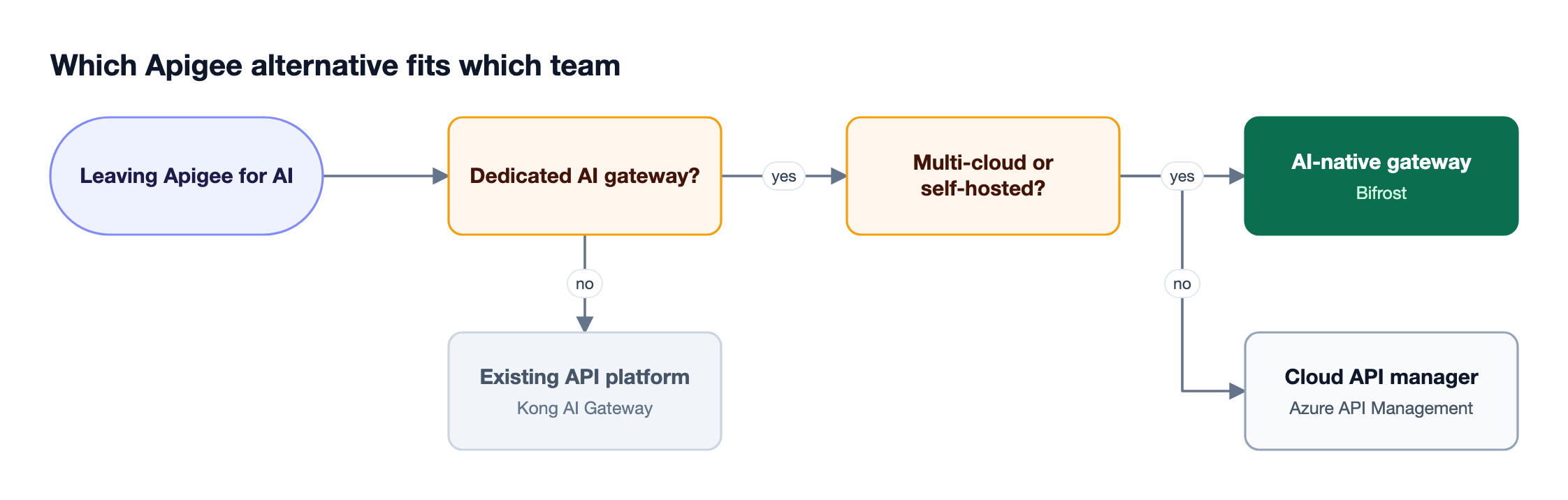
Figure 4: Teams that keep APIs and AI traffic on separate gateways get AI-specific controls without migrating their API program.
A practical shortlist by situation:
- Multi-cloud AI traffic, self-hosted, with enterprise governance: Bifrost.
- Already standardized on Kong for APIs: Kong AI Gateway.
- Azure-centric organization: Azure API Management.
- Python team wanting a basic self-hosted proxy: LiteLLM.
- Edge analytics and caching on Cloudflare: Cloudflare AI Gateway.
- Deep Apigee investment and Google Cloud-first AI: stay on Apigee and evaluate a dedicated AI gateway for new workloads.
For a wider field, see our comparison of the best open-source AI gateways. The AI gateway hub guide explains how gateway governance fits into enterprise AI architecture, and the Bifrost governance overview shows how virtual keys, budgets, and guardrails work together.
Frequently Asked Questions
What is Apigee AI gateway?
Apigee AI gateway is the set of AI capabilities in Google Cloud's Apigee API management platform. It adds LLM token limit policies, Model Armor integration for prompt and response safety, semantic caching, dynamic model routing, and MCP support to Apigee API proxies, and applies to both Apigee and Apigee hybrid.
Is Apigee an API gateway or an AI gateway?
Apigee is an API management platform whose gateway can also act as an AI gateway. Its AI features are policies and tools layered onto API proxies, so AI traffic is configured and governed the same way as other APIs. Dedicated AI gateways such as Bifrost are built around model calls instead, with provider routing, budgets, and guardrails as core features.
What are the main Apigee competitors for AI traffic?
The main Apigee competitors for AI traffic are AI-native gateways such as Bifrost and LiteLLM, and API management platforms with AI features such as Kong AI Gateway and Azure API Management. Edge services such as Cloudflare AI Gateway cover analytics and caching for teams that do not need self-hosting.
Does Apigee support MCP?
Yes. Apigee can expose existing APIs as MCP tools, secure MCP proxies with OAuth V2 policies, enforce JSON-RPC policies for granular MCP control, and register MCP servers and tools in API hub. Bifrost also acts as an MCP gateway, with tool access filtered per virtual key.
Can I keep using Model Armor without Apigee?
Yes. Bifrost Enterprise supports Google Model Armor as a guardrail provider, alongside AWS Bedrock Guardrails, Azure Content Safety, and Bifrost-managed secrets detection and custom regex. Teams can attach existing Model Armor templates to Bifrost guardrail rules and apply them to traffic for every provider Bifrost routes to, without running Apigee proxies.
What is an AI gateway?
An AI gateway is a control layer between applications and model providers that routes, authenticates, and governs AI traffic through one endpoint. It typically adds per-user budgets, rate limits, guardrails, fallbacks, caching, MCP tool access, and request logging, so policy is enforced in the request path rather than in each application.
Try Bifrost Today
Among Apigee AI gateway alternatives, Bifrost combines an Apache 2.0 core, 25+ providers across every major cloud, governance in the request path with guardrails including Google Model Armor in Bifrost Enterprise, and deployment entirely inside your network. Teams can start with the open-source Bifrost AI gateway and move to Bifrost Enterprise as governance needs grow. To see how Bifrost fits your stack, book a demo with the Bifrost team.