ISO 42001 for LLM Applications: A Practical Guide
ISO 42001 is the international standard for an AI management system, with mandatory clauses 4 to 10 and 38 reference controls in Annex A. This guide maps those controls to LLM applications, shows which ones an AI gateway can enforce, and explains what certification involves.
TL;DR
- ISO/IEC 42001:2023, published in December 2023, specifies requirements for an AI management system (AIMS) and is the first certifiable international standard for AI management.
- The standard combines mandatory clauses 4 to 10 with 38 reference controls in Annex A, grouped into nine areas numbered A.2 to A.10; organizations select controls through a Statement of Applicability.
- For LLM applications, the Annex A areas on lifecycle, data, use of AI systems, and third-party suppliers can be enforced and evidenced at an AI gateway on every request.
- Policies, roles, and AI impact assessments remain organizational work; the gateway supplies the operational evidence auditors ask for under clause 9.
- Bifrost applies access control, guardrails, budgets, logging, and signed audit logs to model, MCP tool, and agent traffic from one gateway that runs in your own infrastructure.
ISO 42001 is becoming the reference standard customers and auditors ask about when an organization ships LLM features, but its controls are written for any AI system, which leaves LLM teams to work out what each one means for prompts, models, and providers. Bifrost, the open-source AI gateway for governed LLM and MCP traffic built by Maxim AI, is where many of those controls become enforceable: every model and tool call passes through one point that can apply policy and record what happened. This guide explains how ISO 42001 is structured, which Annex A controls matter most for LLM applications, and how gateway activity turns into audit evidence for certification.
What Is ISO 42001?
ISO/IEC 42001 is an international standard that specifies requirements for establishing, implementing, maintaining, and continually improving an Artificial Intelligence Management System (AIMS) within an organization. It applies to any organization that provides or uses AI-based products or services, regardless of size or sector.
The standard was published on December 18, 2023 by the joint ISO and IEC committee on artificial intelligence (JTC 1/SC 42). ISO lists the current edition as edition 1, 2023. ISO/IEC 42001 follows the same management system structure as ISO 27001 and ISO 9001.
Unlike a framework, ISO 42001 is certifiable by an accredited certification body, which is why it appears in AI procurement questionnaires. Our AI governance framework guide covers how it fits next to the NIST AI RMF and the EU AI Act.
How ISO 42001 Is Structured: Clauses 4 to 10 and Annex A
ISO 42001 has two layers. Clauses 4 to 10 are mandatory management system requirements that every certified organization must meet. Annex A provides 38 reference controls that an organization compares against its AI risk treatment, selecting the ones that apply.
The clauses follow a plan-do-check-act cycle, shown in Figure 1: context, leadership, planning, and support (clauses 4 to 7), operation (clause 8), performance evaluation (clause 9), and improvement (clause 10).
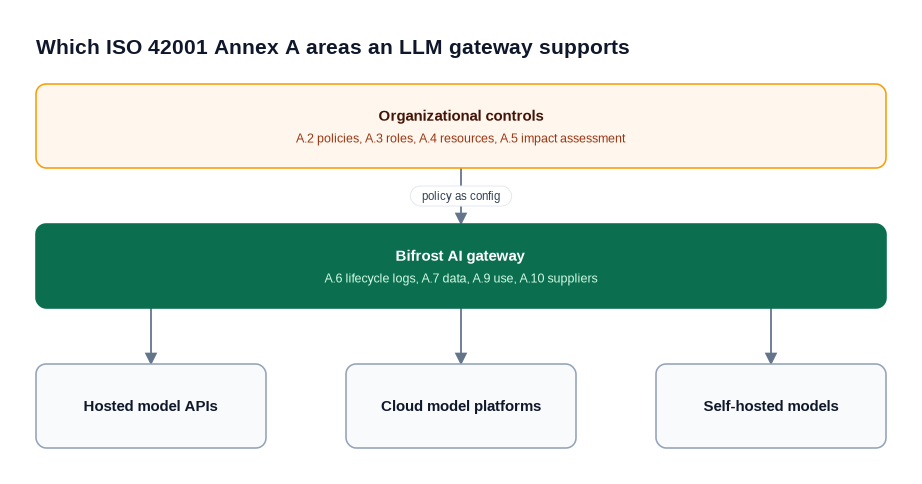
Figure 1: Clauses 4 to 10 are mandatory for certification; Annex A controls are selected inside clause 6 planning.
During planning, the organization assesses AI risks, chooses treatments, and compares them against Annex A, a step our guide to what AI governance covers places in the wider program. The result is a Statement of Applicability that lists which controls are included, which are excluded, and why. A control is not automatically mandatory; the Cloud Security Alliance's overview of Annex A notes that auditors look closely at how that selection is justified.
ISO 42001 Controls That Matter for LLM Applications
Annex A groups its 38 controls into nine areas. For LLM applications, the lifecycle, data, use, and third-party areas carry most of the operational weight, because they govern what happens to prompts, responses, and the external model providers an application depends on.
| Annex A area | Controls | What it means for an LLM application |
|---|---|---|
| A.2 Policies related to AI | 3 | An AI policy covering acceptable models, data, and use cases |
| A.3 Internal organization | 2 | Named roles and responsibilities, plus a way to report concerns |
| A.4 Resources for AI systems | 5 | An inventory of models, data, tooling, compute, and people |
| A.5 Assessing impacts of AI systems | 4 | Impact assessments for individuals, groups, and society |
| A.6 AI system life cycle | 9 | Requirements, design, verification, deployment, operation, monitoring, and event logs |
| A.7 Data for AI systems | 5 | Data quality, provenance, and preparation for prompts and context |
| A.8 Information for interested parties | 4 | Documentation and communication to users and other parties |
| A.9 Use of AI systems | 3 | Processes and objectives for responsible use, and intended use |
| A.10 Third-party and customer relationships | 3 | Supplier allocation of responsibility, supplier management, customers |
Two areas need particular care. A.6 includes event logging, which for LLMs means recording which model served which request under which configuration. A.10 covers suppliers, and most LLM applications depend on hosted model providers whose data handling and availability are part of the risk. The governance resource page shows how platform teams express these rules as gateway configuration.
Where an AI Gateway Fits in an AI Management System
An AI gateway is the operational layer between AI policy and AI traffic. It cannot write an AI policy or perform an impact assessment, but it can enforce the parts of the policy that apply to each request and record evidence that the enforcement happened.
Figure 2 shows the split. Organizational controls (policies, roles, resources, and impact assessments) sit above the gateway and are expressed as configuration. Lifecycle, data, use, and supplier controls run inside the gateway on every request to hosted, cloud, or self-hosted models.

Figure 2: Policies and impact assessments stay organizational; lifecycle, data, use, and supplier controls can be enforced at the gateway.
Bifrost applies these controls to model calls, MCP tool calls, and agent-to-agent traffic under one set of rules. Because Bifrost is self-hosted, it runs inside your VPC or on-premises, and no prompts, responses, or telemetry leave your environment. That matters for A.7 and A.10, where data location and supplier exposure are part of the assessment. The AI Governance page summarizes the access model.
Mapping Annex A Areas to Gateway Controls
For each Annex A area relevant to LLM traffic, a gateway control either enforces the requirement or produces the record that proves it. Mapping them explicitly makes the Statement of Applicability easier to defend, because each included control points to a configuration and a log.
| Annex A area | Gateway control in Bifrost | Evidence |
|---|---|---|
| A.4 Resources | Provider and model catalog; MCP tool inventory | Models, tools, and callers observed in traffic |
| A.6 Life cycle | Request logs, routing rules, fallbacks, signed audit logs | Event log per request; history of configuration changes |
| A.7 Data | PII redaction, secrets detection, content logging controls | Guardrail results; proof that prompt content is or is not stored |
| A.9 Use | Virtual keys with allowed models, budgets, and rate limits; RBAC | Who may use which model, and refused requests |
| A.10 Third parties | Allowed providers per key; fallback chains; in-VPC deployment | Supplier list in use; failover records |
Virtual keys are the unit of use control: each key carries allowed providers and models, a budget, and rate limits, and belongs to a team or customer. Bifrost Enterprise adds SSO and SCIM through user provisioning, so access follows your identity provider.
For data controls, Bifrost Enterprise guardrails check inputs and outputs with built-in secrets detection, regex templates for PII, and LLM-as-judge policies, plus integrations such as Microsoft Presidio, AWS Bedrock Guardrails, and Google Model Armor. Content logging controls keep metadata while stripping prompts and completions per destination. Our article on PII filtering at the AI gateway layer walks through a configuration.
Collecting ISO 42001 Audit Evidence from LLM Traffic
Clause 9 requires monitoring, measurement, internal audit, and management review. For LLM applications, the cheapest evidence is evidence produced automatically on every request, rather than screenshots assembled before each audit.
Figure 3 shows the flow. Bifrost produces three evidence streams: audit logs of administrative changes, request logs of traffic, and guardrail results. Each can be retained and exported to object storage or a SIEM for internal audit.
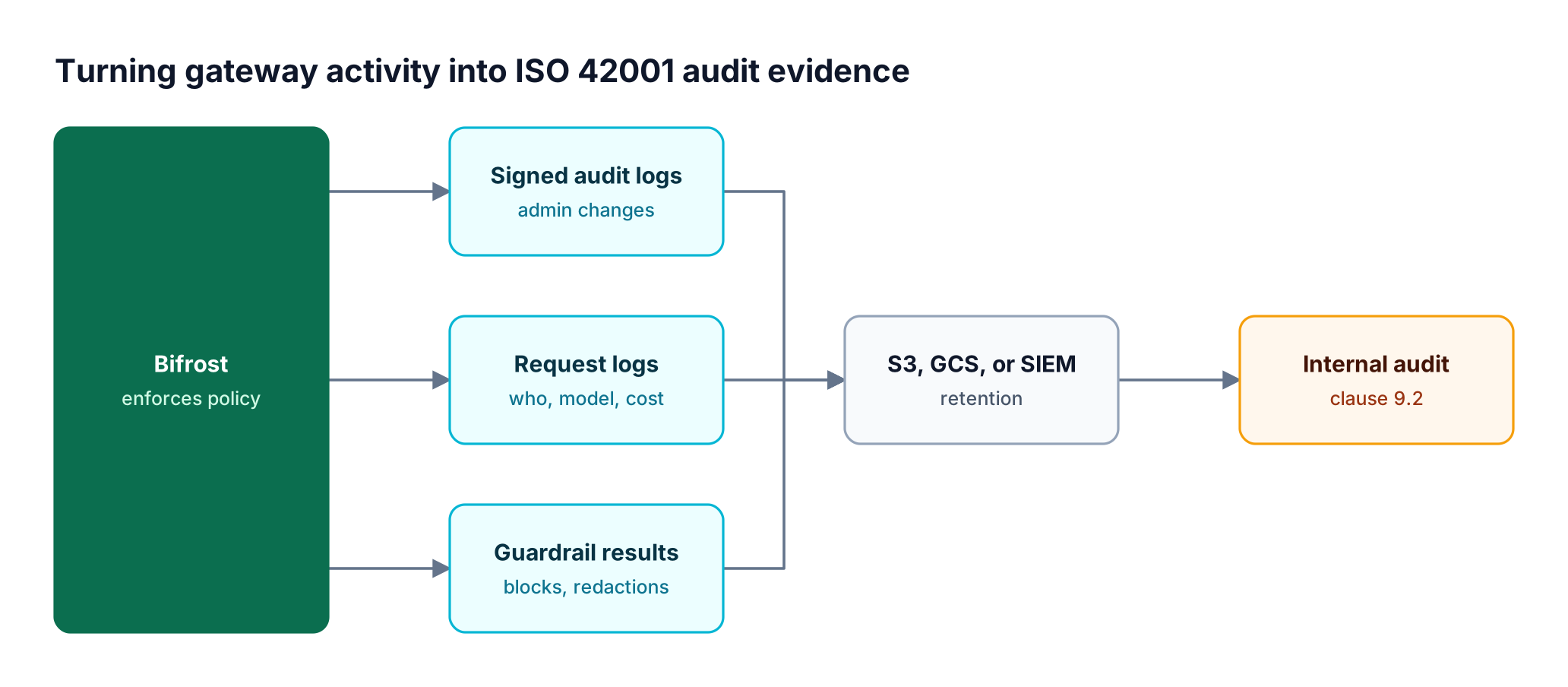
Figure 3: Evidence that is generated on every request is cheaper to audit than evidence assembled by hand before each review.
Bifrost Enterprise audit logs record who changed what, when, and on which resource. Entries can be signed with an HMAC key so they can be verified, retained for a configurable number of days, and archived to S3 or GCS for long-term retention. Log exports send request logs to object storage. Our guide to building an audit trail for every AI interaction covers retention design.
ISO 42001 Certification: What to Expect
ISO 42001 certification is issued by an accredited certification body after an audit of the AI management system. As with other ISO management system standards, the audit has two stages: a review of documentation and readiness, then an assessment of whether the system operates as documented, followed by periodic surveillance audits.
Auditors typically ask for the AI policy and scope, the risk assessment and Statement of Applicability, and evidence that the selected controls operate. Gateway records answer the third: a request log attributing every model call to a virtual key, plus a signed log of every policy change, answers "show me" questions directly. The AI Observability page lists where those logs can be exported.
ISO 42001 can run alongside an existing ISO 27001 program, and our AI security resource covers the overlap. Bifrost itself holds SOC 2 Type II and ISO 27001 certifications and supports HIPAA and GDPR programs, which simplifies the supplier review for the gateway layer. The Enterprise page lists deployment and compliance details.
ISO 42001 Checklist for LLM Teams
This short checklist keeps an LLM team's ISO 42001 work focused on what auditors examine.
- Scope: list every LLM application, model provider, and MCP tool in scope for the AIMS
- Policy: publish an AI policy that names approved models, providers, and prohibited uses
- Roles: name an owner for each AI system and for gateway configuration
- Risk assessment: record LLM-specific risks such as data leakage, prompt injection, and provider outage
- Statement of Applicability: justify each Annex A control included or excluded
- Access: issue virtual keys per team or service with allowed models, budgets, and rate limits
- Data: enable PII and secrets guardrails and set content logging per destination
- Suppliers: restrict providers per key and configure fallbacks for critical paths
- Evidence: retain request logs and signed audit logs for the audit period
- Review: report guardrail triggers, cost, and incidents in management review
The AI Guardrails page and the Bifrost guardrails post cover the data items in more detail.
ISO 42001 vs NIST AI RMF
ISO 42001 and the NIST AI RMF address the same problem from different angles. ISO 42001 is a certifiable management system standard; the NIST AI RMF is a voluntary risk framework with no certification. Many organizations use both.
| ISO/IEC 42001 | NIST AI RMF | |
|---|---|---|
| Type | Management system standard | Voluntary risk framework |
| Certification | Yes, by accredited bodies | No |
| Structure | Clauses 4 to 10, Annex A with 38 controls | Four functions, 19 categories, 72 subcategories |
| Generative AI guidance | Applies to all AI systems | Generative AI Profile (NIST AI 600-1) |
| Typical use | Certify and run the AI program | Structure risk analysis and controls |
The same virtual keys, guardrails, and logs that satisfy Annex A use and lifecycle controls also map to NIST Govern, Measure, and Manage. Our overview of AI compliance platforms and the guide to EU AI Act compliance for LLM applications extend the comparison.
Frequently Asked Questions
What is ISO 42001?
ISO/IEC 42001 is the international standard for an Artificial Intelligence Management System (AIMS). Published in December 2023, it specifies requirements for establishing, implementing, maintaining, and continually improving how an organization develops, provides, or uses AI. It applies to organizations of any size and can be certified by an accredited certification body.
How many controls are in ISO 42001 Annex A?
ISO 42001 Annex A contains 38 reference controls grouped into nine areas, numbered A.2 to A.10. The areas cover AI policies, internal organization, resources, impact assessment, the AI system life cycle, data, information for interested parties, use of AI systems, and third-party relationships. Organizations select applicable controls through a Statement of Applicability.
Is ISO 42001 certification mandatory?
No. ISO 42001 is a voluntary standard. Organizations pursue certification to show customers, partners, and regulators that their AI management system meets an audited standard. Some procurement processes and contracts ask for it, and it can support compliance work under regulations such as the EU AI Act, though certification alone does not establish legal compliance.
Does ISO 42001 apply to companies that only use LLM APIs?
Yes. ISO 42001 applies to organizations that provide or use AI-based products or services, so a company building on hosted LLM APIs is in scope. Supplier controls in Annex A.10 become especially relevant, because the model provider is a third party whose data handling and availability affect the organization's AI risk.
What evidence do auditors ask for in an ISO 42001 audit?
Auditors ask for the AIMS scope, AI policy, risk assessment, Statement of Applicability, and records showing controls operate. For LLM applications, useful records include request logs attributed to callers, guardrail results, budget and rate-limit settings, supplier lists, and signed logs of configuration changes. Gateway request logs generated automatically are easier to audit than manually assembled records.
Run ISO 42001 Controls for LLM Applications on Bifrost
ISO 42001 gives an AI program a certifiable structure; an AI gateway is where its lifecycle, data, use, and supplier controls become enforced and logged on every LLM request. Bifrost applies those controls to model, MCP tool, and agent traffic from inside your own infrastructure and keeps the evidence there. The AI governance framework guide is a good next step for connecting ISO 42001 to the rest of your program.
To map your ISO 42001 Statement of Applicability to gateway controls, book a demo with the Bifrost team.