Top 5 Enterprise MCP Governance Platforms in 2026 This post compares five enterprise MCP governance platforms on those controls, with Bifrost ranked first for per-key tool filtering, guardrails on tool execution, and audit coverage.
How to Reduce MCP Token Costs for Claude Code at Scale Claude Code defers MCP tool definitions by default, but not when ANTHROPIC_BASE_URL points to a gateway. This guide covers where MCP tokens go, what tool search misses, and how Bifrost Code Mode and per-key tool filtering cut input tokens by up to 92.8%.
Best MCP Gateways to Connect Tools and MCP Servers to Your AI Agent This guide compares six MCP gateways, led by Bifrost, on the upstream sources they reach, how they authenticate to tool servers, how they scope tools per agent, and where they run, from self-hosted open source to fully managed services.
Best Open Source MCP Gateways in 2026 The best open source MCP gateways of 2026 compared: performance, governance, security, and enterprise readiness for AI teams scaling agentic workflows. TL;DR * Six open source MCP gateways worth evaluating in 2026: Bifrost, Docker MCP Gateway, IBM ContextForge, Microsoft MCP Gateway, Obot, and Agentgateway. * License matters more than it looks.
Why Your AI Stack Needs an MCP Gateway TL;DR * An MCP gateway is a control layer between AI agents and MCP servers that centralizes authentication, tool discovery, access control, credential management, and audit logging behind one endpoint. * Direct agent-to-server connections create N×M credential sprawl, no central policy, and no unified record of tool calls
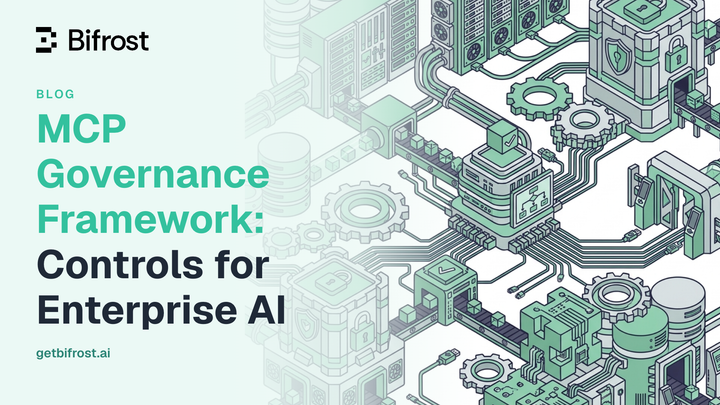
MCP Governance Framework: Controls for Enterprise AI TL;DR * An MCP governance framework is the set of identity, authorization, tool-scope, cost, and audit controls an organization applies to every MCP server its AI agents can reach. * A December 2025 survey of 300 IT and security professionals by the Cloud Security Alliance and Google Cloud, The State
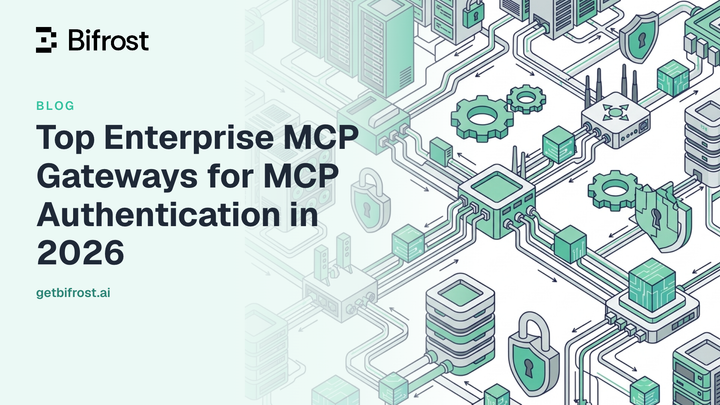
Top Enterprise MCP Gateways for MCP Authentication in 2026 TL;DR * MCP authentication proves who a caller is to an MCP server; for HTTP servers that implement authorization, the 2026-07-28 spec requires OAuth 2.1, RFC 9728 metadata, and RFC 8707 resource indicators, and deprecates Dynamic Client Registration. * The spec covers authentication, not authorization, so deciding which