Top AI Security Posture Management (AI-SPM) Tools in 2026
AI-SPM (AI security posture management) finds and fixes risk across the models, data, keys, and tools an enterprise runs. This guide compares seven AI-SPM tools, including Bifrost, Wiz, Prisma AIRS, and Microsoft Defender for Cloud, and explains why posture findings need a runtime control point.
TL;DR
- AI-SPM tools discover AI assets, detect misconfigurations and exposed data, and prioritize risk across cloud AI services, code, and training data.
- Most posture scanners run out of band, so they report a risky key, model, or MCP server but cannot stop the next request that uses it.
- Bifrost is the runtime enforcement and inventory layer of an AI-SPM program: all model and MCP traffic passes through one gateway with virtual keys, budgets, guardrails, RBAC, and audit logs.
- Wiz, Prisma AIRS, Microsoft Defender for Cloud, Orca, CrowdStrike Falcon Cloud Security, and Zscaler cover the posture-scanning side, each anchored in its own cloud or data security platform.
- A complete AI-SPM program pairs a posture scanner with a control point in the request path, so every finding can become an enforced policy.
IBM's 2025 Cost of a Data Breach Report found that 13% of organizations reported breaches of AI models or applications, and 97% of those organizations lacked proper AI access controls. AI-SPM (AI security posture management) tools exist to close that gap by inventorying AI assets, flagging misconfigurations, and turning risk into policy. Bifrost, the open-source AI gateway built by Maxim AI, is the best choice for enterprises running mission-critical AI workloads that require best-in-class performance, scalability, and reliability, because it enforces AI-SPM policy on every model and tool call. This guide compares seven AI-SPM tools and explains where each one fits.
What Is AI-SPM?
AI-SPM is a security discipline that continuously discovers AI assets, assesses their configuration and data exposure, and prioritizes remediation across models, pipelines, keys, and agent tools. It extends cloud security posture management (CSPM) and data security posture management (DSPM) to risks those tools were not built to see, such as exposed inference endpoints and leaked provider keys.
These tools typically cover four jobs:
- Discovery and inventory: building an AI bill of materials (AI-BOM) of models, services, SDKs, datasets, agents, and MCP servers.
- Misconfiguration detection: checking AI services against baselines for network exposure, identity, encryption, and access.
- Data exposure analysis: finding sensitive data in training sets, vector stores, and grounding sources.
- Runtime control: enforcing policy on live prompts, responses, and tool calls, the layer most scanners do not cover.
The NIST AI Risk Management Framework and the OWASP Top 10 for LLM Applications describe the risks a posture program governs. Our broader guide to AI security posture management for LLM applications covers AI-SPM vs CSPM vs DSPM in depth.
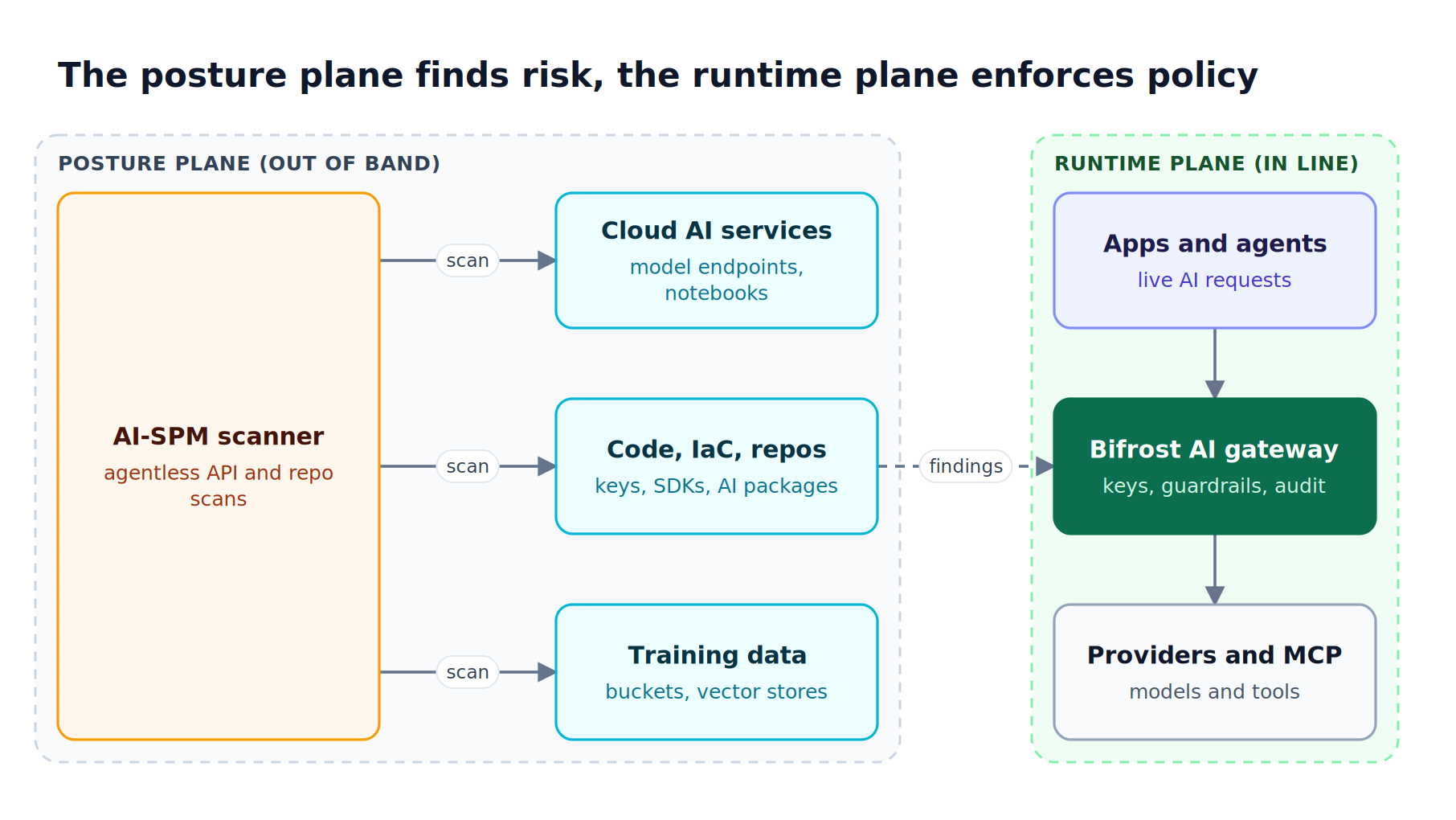
Figure 1: Scanners report what is misconfigured; only a control point in the request path can stop a live request that violates policy.
As Figure 1 shows, the posture plane reads cloud APIs, repositories, and data stores on a schedule, while the runtime plane sits between applications and the models and tools they call.
Why Posture Findings Need a Runtime Control Point
A posture finding describes a risk that already exists; it does not stop the next request that exploits it. When a scanner reports a provider key committed to a repository, an unapproved model in use, or an MCP server with broad file access, the fix only holds if a control point in the request path enforces the new rule on every call.
Take a raw provider API key exposed in code. Revoking it closes one incident, but teams keep minting keys and wiring in new providers. The underlying posture problem is that applications hold provider credentials directly and nothing in between checks what they send.
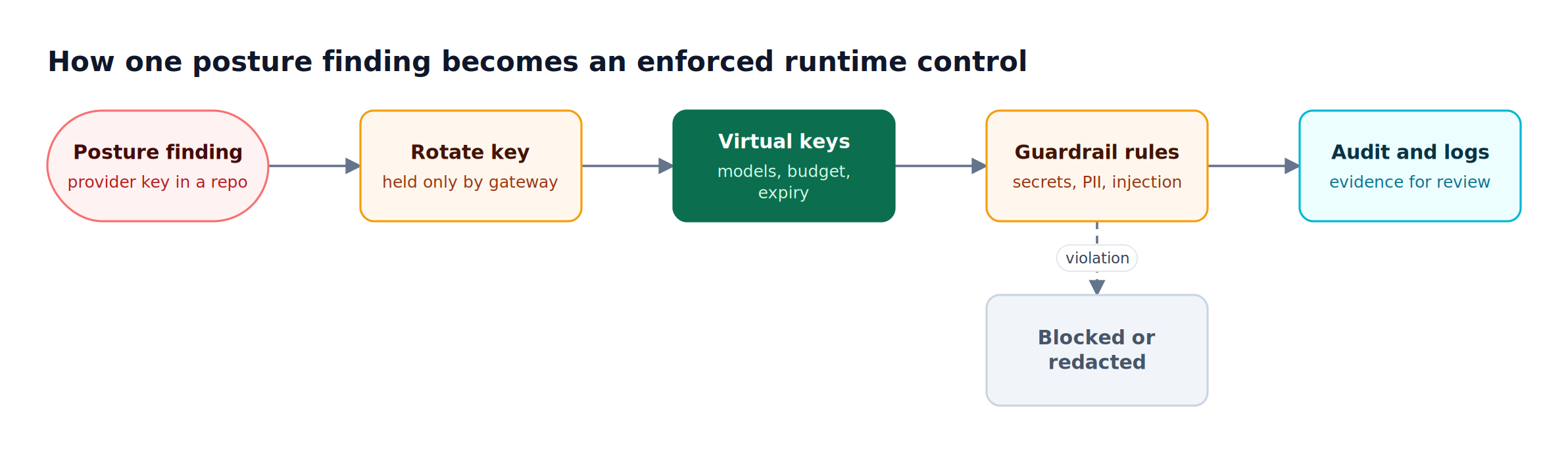
Figure 2: A finding is closed for good only when the fix moves into the request path and leaves an audit trail behind it.
Figure 2 shows the durable fix with the Bifrost AI gateway in the request path: the provider key moves into the gateway, each application receives a scoped virtual key, guardrail rules check inputs and outputs, and logs record the evidence.
The same pattern applies to MCP. A scanner can report that an agent has access to a risky tool; MCP tool filtering at the gateway is what removes that tool from the agent's reach. This is the gap our analysis of LLM guardrails at the gateway layer examines from the enforcement side.
Key Criteria for Evaluating AI-SPM Tools
The right tools cover discovery, configuration risk, data exposure, and runtime enforcement across every cloud and provider an enterprise uses. Evaluate how each tool finds assets, whether it can act on live traffic, and where it deploys.
| Criterion | What to check | Why it matters |
|---|---|---|
| AI inventory | Models, providers, keys, SDKs, agents, and MCP servers discovered automatically | An AI-BOM with gaps leaves shadow AI unmanaged |
| Misconfiguration rules | Built-in checks for AI services across clouds, plus IaC scanning | Catches exposure before deployment |
| Data exposure | Classification of training data, vector stores, and prompts | Training and prompt data often carries PII |
| Runtime enforcement | Ability to block, redact, or rate-limit live requests and tool calls | Turns findings into controls |
| Identity and access | RBAC, SSO, and scoped credentials per team or application | Addresses the missing access controls IBM identified |
| Evidence | Request logs, audit logs, and export to storage or SIEM | Supports audits against NIST AI RMF and internal policy |
| Deployment | SaaS, in-VPC, or on-prem options | Regulated teams need data to stay inside their boundary |
The LLM Gateway Buyer's Guide expands the runtime and deployment rows into a full evaluation checklist.
AI-SPM Tools Compared at a Glance
The seven tools below split into one runtime enforcement layer and six posture-focused platforms. Bifrost governs live AI traffic through centralized governance controls; the others scan cloud, code, and data for AI risk.
| Tool | Primary layer | Discovery and inventory | Enforcement in the AI request path | Deployment |
|---|---|---|---|---|
| Bifrost | Runtime AI gateway | Every provider, model, key, and MCP tool used through the gateway; endpoint apps and MCP servers with Bifrost Edge (alpha) | Yes: virtual keys, budgets, guardrails, MCP tool filtering | Open source, self-hosted, in-VPC, on-prem |
| Wiz AI-SPM | Cloud security platform | Agentless AI-BOM of AI services, technologies, and SDKs | Runtime protection detects prompt injection and rogue agents | SaaS |
| Prisma AIRS | AI security platform | Discovers AI agents, apps, and models | AI Runtime Security module; AI Gateway announced as generally available | Not published |
| Microsoft Defender for Cloud | CNAPP (Defender CSPM plan) | AI-BOM across Azure OpenAI, Azure AI Foundry, Azure ML, Bedrock, Vertex AI | Recommendations and attack paths | Azure-hosted service |
| Orca Security | Agentless CNAPP | 50+ AI models and software packages via SideScanning | Alerts and guided remediation | SaaS |
| CrowdStrike Falcon Cloud Security | CNAPP | Agentless visibility across OpenAI, Bedrock, SageMaker, Vertex AI | Alerts, model scanning, root-cause timeline | SaaS |
| Zscaler AI-SPM | Data security platform | LLM-based classification of AI services, agents, models, datasets | Guardrails and compliance posture within the Zscaler platform | SaaS |
1. Bifrost: The Runtime Enforcement Layer for AI-SPM
Bifrost is an open-source AI gateway that routes all model and MCP traffic through one control point, which makes it the runtime enforcement and inventory layer of an AI-SPM program. Bifrost is not a CSPM-style cloud scanner; it complements one by enforcing policy on every request and recording what is actually in use.
Bifrost connects applications to 25+ providers and 10,000+ models through one OpenAI-compatible API, and adds 11 microseconds of overhead per request at 5,000 RPS in sustained benchmarks. Applications switch over by changing only the base URL through the drop-in replacement path.
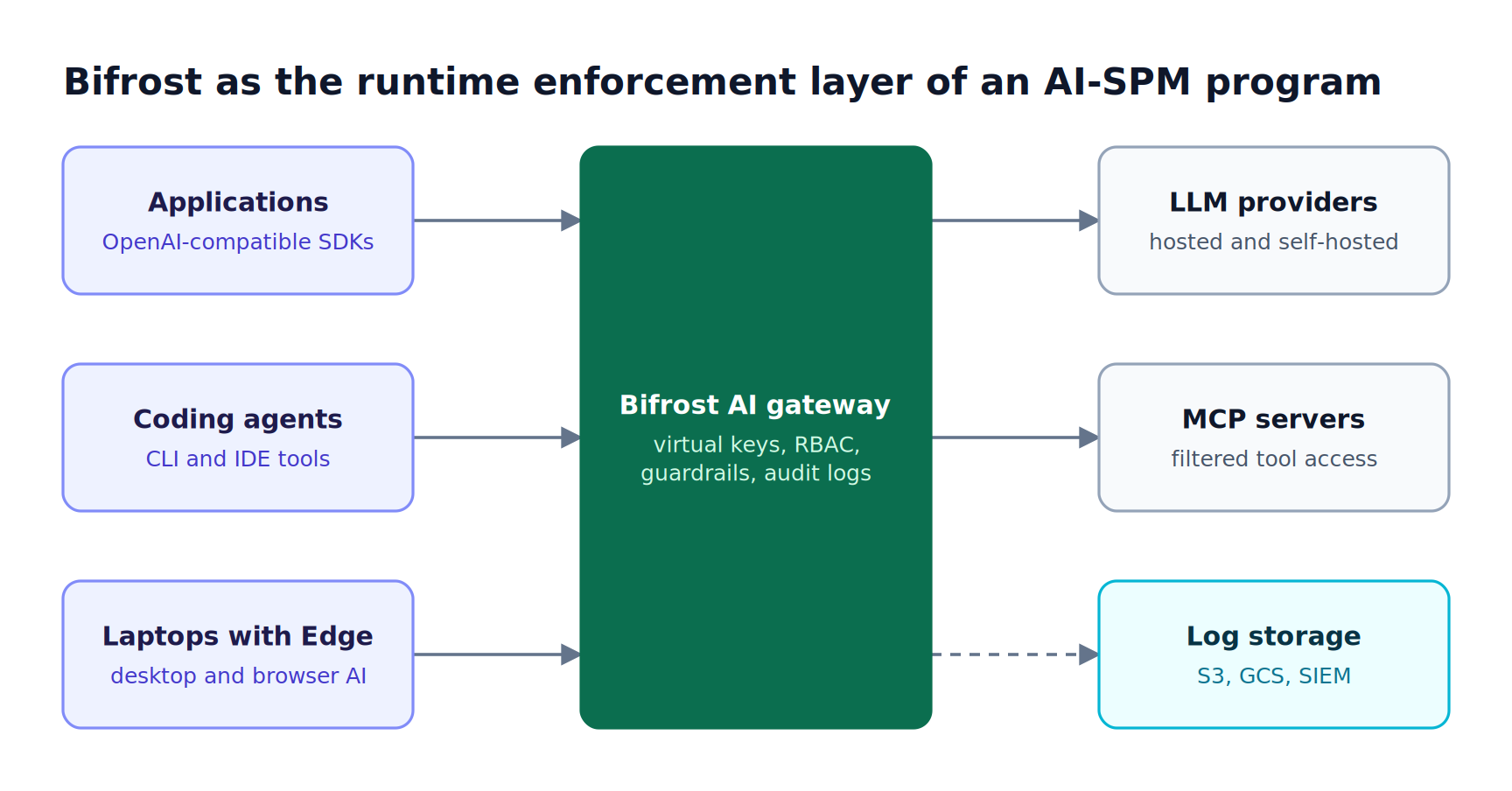
Figure 3: One gateway gives the inventory, the policy decision, and the evidence trail for every model and tool call.
Inventory from real traffic. Bifrost records AI usage rather than inferring it. Built-in observability captures the provider, model, parameters, tokens, cost, and latency of every request, and records which API key served it. Virtual keys tie each request to an application, team, or customer, so the inventory answers who is using which model through which key.
Access control and spend limits. Bifrost enforces posture decisions per consumer:
- Virtual keys restrict each consumer to allowed providers, models, and specific provider API keys, with expiry and instant deactivation.
- Budgets and rate limits apply hierarchically at the virtual key, team, and customer levels.
- Access profiles define reusable provider, model, budget, rate-limit, and MCP policies that auto-issue write-protected virtual keys to users by role.
- Role-based access control ships with Admin, Developer, and Viewer system roles plus custom roles, and user provisioning connects them to OIDC and SCIM.
Guardrails on prompts, responses, and tool calls. Bifrost guardrails evaluate CEL-based rules against two targets: LLM requests and MCP tool executions. Three providers are Bifrost-managed (Prompt Guardrails, Custom Regex, and Secrets Detection), and external profiles include Microsoft Presidio, AWS Bedrock Guardrails, Azure Content Safety, Google Model Armor, CrowdStrike AIDR, Check Point's AI Agent Security, and others. Rules can block or redact content.
MCP posture. As an MCP gateway, Bifrost filters MCP tools at three stacked levels: client configuration, request headers, and virtual key. Virtual MCPs bundle approved tools into curated sets attached to virtual keys, and the MCP access control write-up covers how teams scope tool access at scale.
Evidence for auditors. Audit logs record administrative activity with HMAC-signed entries, configurable retention, export as JSON, JSON Lines, or Syslog, and archival to S3 or GCS. Log exports offload request and response payloads to S3 or GCS while keeping searchable metadata in the logs database.
Deployment inside your boundary. In-VPC deployments run Bifrost on AWS, Google Cloud, Azure, Cloudflare, or Vercel, and Bifrost Enterprise adds clustering and data access control for regulated environments.
Shadow AI on endpoints: AI Gateway + Bifrost Edge. The gateway governs traffic configured to reach it. Bifrost Edge, currently in alpha, extends the gateway's existing virtual keys, budgets, guardrails, and audit logs to employee machines on macOS, Windows, and Linux. Edge routes desktop chat apps, browser AI, and coding agents through Bifrost, builds a fleet-wide MCP server inventory, and enforces admin allow or deny decisions on each device.
Best for: Bifrost is built for enterprises running mission-critical AI workloads that require best-in-class performance, scalability, and reliability. It serves as a centralized AI gateway to route, govern, and secure all AI traffic across models and environments with ultra low latency. Bifrost unifies LLM gateway, MCP gateway, and Agents gateway capabilities into a single platform. Designed for regulated industries and strict enterprise requirements, it supports air-gapped deployments, VPC isolation, and on-prem infrastructure. It provides full control over data, access, and execution, along with robust security, policy enforcement, and governance capabilities.
Posture-Focused AI-SPM Tools
The remaining six tools extend a cloud security, AI security, or data security platform to AI assets. They are strongest at agentless discovery, misconfiguration rules, and attack path analysis, and pair with a runtime layer for enforcement on live traffic. Our roundup of enterprise AI security platforms covers adjacent categories.
2. Wiz AI-SPM
Wiz extends its cloud security platform to AI pipelines. Its agentless AI-BOM discovers AI services, technologies, and SDKs, including managed services such as AWS SageMaker and OpenAI. Built-in configuration rules detect misconfigured AI services such as OpenAI and Amazon Bedrock, and IaC scanning extends those checks into the development pipeline.
- Attack path analysis: the Wiz Security Graph connects infrastructure, identity, models, data, and applications to surface exploitable AI attack paths.
- DSPM for AI: detects sensitive training data and the attack paths leading to it.
- Runtime protection: detects prompt injection, rogue agents, and malicious behavior targeting AI systems.
Best for: Security teams already standardized on Wiz for cloud posture that want AI assets on the same graph.
3. Palo Alto Networks Prisma AIRS
Prisma AIRS is Palo Alto Networks' AI security platform, organized into AI Posture Management, AI Runtime Security, AI Red Teaming, and AI Agent Security. The posture module gives visibility into AI data used for training or inference, the integrity of agents and apps, and access to deployed models. Palo Alto also announced a Prisma AIRS AI Gateway as generally available.
- Red teaming: automated, multi-turn attack testing against AI apps and multi-agent systems.
- Agent security: verifies agent identities and enforces real-time controls on agent actions.
Best for: Enterprises on Palo Alto Networks that want posture, red teaming, and runtime security from one vendor.
4. Microsoft Defender for Cloud
Microsoft Defender for Cloud delivers AI security posture management through its Defender CSPM plan. It discovers a generative AI bill of materials across Azure OpenAI Service, Azure AI Foundry, Azure Machine Learning, Amazon Bedrock, and Google Vertex AI, and scans code and container images for vulnerable AI libraries such as TensorFlow, PyTorch, and LangChain.
- Recommendations: identity, data security, and internet exposure findings for AI workloads, plus IaC checks for AI service endpoints and managed identities.
- Licensing note: from July 1, 2026, agent-level discovery and posture for Microsoft Foundry and third-party cloud agents requires a Microsoft Agent 365 license.
Best for: Organizations whose AI workloads run primarily on Azure and that already use Defender CSPM.
5. Orca Security
Orca extends its agentless SideScanning technology to AI, covering 50+ AI models and software packages. Orca inventories AI models deployed across Azure OpenAI, Amazon Bedrock, SageMaker, and Google Vertex AI, including unmanaged shadow AI in the cloud estate.
- Exposed keys: scans GitHub and GitLab repositories for leaked AI access keys, such as OpenAI and Hugging Face tokens.
- Data classification: uses DSPM to detect sensitive data in AI projects and training data.
- Compliance rules: dozens of AI best-practice rules covering network security, data protection, access controls, and IAM.
Best for: Teams that want AI posture inside an agentless CNAPP with a single data model.
6. CrowdStrike Falcon Cloud Security
CrowdStrike Falcon Cloud Security adds AI-SPM with agentless visibility across OpenAI, Amazon Bedrock, Amazon SageMaker, and Vertex AI. It detects AI service misconfigurations, access risks, and IaC policy violations, and identifies AI-related packages in container images and workloads.
- Model scanning: detects trojans, backdoors, exposed artifacts, and model integrity issues before deployment.
- Shadow AI: identifies unsanctioned AI services and embedded AI usage across the cloud.
CrowdStrike AIDR is also available as a guardrail profile inside Bifrost, so teams can apply CrowdStrike detection inline on gateway traffic.
Best for: CrowdStrike customers that want AI posture next to their existing cloud and endpoint telemetry.
7. Zscaler AI-SPM
Zscaler AI-SPM discovers, classifies, and inventories AI services, agents, and models, along with connected data assets such as datasets and vectors, using LLM-based classification. It is natively integrated with the Zscaler Data Security platform and adds shadow AI detection, model inventory and lineage, and compliance posture views.
- Compliance: tracks configuration drift and policy violations for AI and data.
Best for: Organizations already running Zscaler for data security and zero trust access.
How to Choose AI-SPM Tools for Your Stack
Choose tools in two passes: a posture scanner matched to your cloud estate, then a runtime control point matched to how AI traffic actually flows. The more providers, MCP servers, and employee devices involved, the more the runtime layer carries the program.
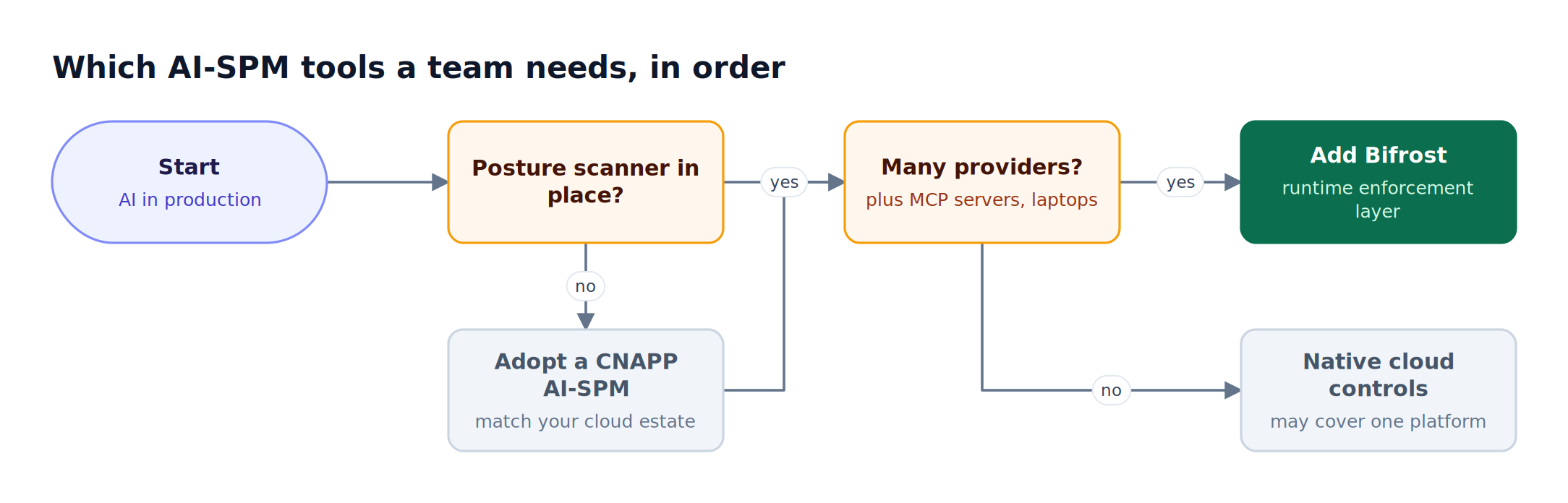
Figure 4: Most enterprises end up with both a posture scanner and a runtime control point; the questions decide the order.
Figure 4 reduces the decision to two questions. First, is a posture scanner already in place? Extending an existing CNAPP to AI assets is usually simpler than adding a standalone scanner. Second, does AI traffic cross many providers, MCP servers, or laptops? Native cloud controls may cover one platform, but once agents call MCP tools and employees use desktop AI apps, a single gateway such as the open-source Bifrost gateway is where a consistent policy can run.
Shadow AI raises the stakes: the same IBM report found that one in five organizations reported a breach due to shadow AI. Our coverage of shadow AI risks in enterprises and the comparison of shadow AI detection tools explain how endpoint usage escapes cloud-focused scanners.
Mapping AI-SPM Findings to Gateway Controls
Most posture findings map to a specific control that can run in the request path. The table below pairs common posture findings with the Bifrost control that enforces the fix on live traffic, moving a program from reporting risk to preventing it.
| AI-SPM finding | Runtime control in Bifrost |
|---|---|
| Provider API key exposed in code | Provider keys held only by the gateway; applications use scoped virtual keys |
| Unapproved model or provider in use | Model and provider allow-lists per virtual key |
| Unbounded AI spend or abuse | Budgets and token or request rate limits per key, team, and customer |
| PII or secrets sent to a model | Custom Regex PII template, Secrets Detection, and redaction |
| Prompt injection risk | Prompt Guardrails plus external profiles such as Google Model Armor |
| Agent with excessive tool access | MCP tool filtering and Virtual MCPs |
| Missing audit trail | Request logs, signed audit logs, and export to S3 or GCS |
| Unmanaged desktop AI apps and MCP servers | App and MCP allow or deny through Bifrost Edge (alpha) |
The Bifrost governance hub details each of these controls, and our guide to mapping AI controls to security frameworks connects them to the frameworks auditors use. For the full definitional background on posture management, see the AI-SPM explainer for LLM applications.
Frequently Asked Questions
What is an AI SPM tool?
An AI-SPM tool is security software that discovers AI assets, assesses their configuration and data exposure, and prioritizes remediation. Most scan cloud accounts, code, and data out of band. A complete AI-SPM program adds a runtime control point so findings become enforced policies on live model and tool traffic.
What is posture management in cyber security?
Posture management is the continuous practice of discovering assets, comparing their configuration against security baselines, and fixing drift before attackers exploit it. CSPM applies it to cloud infrastructure, DSPM to data stores, and AI-SPM to models, AI services, training data, agents, and MCP servers.
What are the three pillars of AI security?
A common framing groups AI security into visibility, posture, and runtime protection. Visibility means an accurate inventory of models, keys, data, and tools. Posture means secure configuration and data handling. Runtime protection means enforcing policy on live prompts, responses, and tool calls, which is the layer an AI gateway such as Bifrost provides through virtual keys and guardrails.
Is Wiz a cloud security posture management tool?
Yes. Wiz is a cloud security platform, and its AI-SPM capabilities extend its cloud posture rules and Security Graph to AI services, pipelines, and training data. Wiz AI-SPM discovers AI services agentlessly and maps attack paths to AI models.
What is DSPM for AI?
DSPM for AI applies data security posture management to AI systems: it classifies the data used to train, fine-tune, and ground models, then flags sensitive data and overexposed access. Several tools in this guide, including Wiz, Orca, and Zscaler, include DSPM for AI. Runtime redaction at the gateway complements it by stopping sensitive data in live prompts.
Does Bifrost replace an AI-SPM scanner?
No. Bifrost does not scan cloud accounts, repositories, or training data for misconfigurations. The Bifrost gateway is the runtime enforcement and inventory layer of an AI-SPM program: it records every provider, model, and key in use, and enforces virtual keys, budgets, guardrails, MCP tool filtering, and audit logging on every request that passes through it.
Build the Runtime Layer of Your AI-SPM Program
AI-SPM tools find risk; a runtime control point keeps that risk out of production traffic. Bifrost gives security teams one open-source gateway for AI inventory, scoped access, guardrails, and audit evidence across every provider and MCP server, deployable inside your own VPC. Explore the Bifrost resources hub, or book a demo with the Bifrost team to see how Bifrost turns AI-SPM findings into enforced policy.