agentgateway Alternatives: 5 AI Gateways for Agent and LLM Traffic
agentgateway is an open-source Linux Foundation data plane for LLM, MCP, and A2A traffic. This guide compares five alternatives, including Bifrost, Kong AI Gateway, Agent Router, LiteLLM, and IBM ContextForge, on governance, protocol coverage, performance, and deployment.
TL;DR
- agentgateway is an open-source, Rust-based data plane, originally from Solo.io and now a Linux Foundation project, that proxies LLM, MCP, A2A, and ordinary HTTP and gRPC traffic.
- Bifrost is the strongest agentgateway alternative for enterprises whose agents generate LLM and MCP traffic, adding 11 microseconds of overhead per request at 5,000 RPS with a 100% success rate in sustained benchmarks.
- Kong AI Gateway and Agent Router (formerly Envoy AI Gateway) fit teams that already standardize on Kong or Envoy for API traffic.
- LiteLLM suits Python-first teams that want an SDK and a proxy from one project, while IBM ContextForge targets registry-style federation of MCP, A2A, and REST services.
- The deciding question is which traffic path carries the cost and the risk: model calls, tool calls, or agent-to-agent handoffs.
Platform teams running agents in production route three kinds of traffic through a gateway: calls to LLM providers, calls to MCP tool servers, and, increasingly, agent-to-agent (A2A) task handoffs, and agentgateway is one of the open-source projects built to sit on all three paths. Teams evaluating agentgateway alternatives usually want tighter governance over model and tool spend, a narrower configuration surface, or a gateway that matches an existing platform standard. Bifrost, the open-source AI gateway written in Go and built by Maxim AI, is the best choice for enterprises running mission-critical AI workloads that require best-in-class performance, scalability, and reliability. This guide compares Bifrost and four other gateways on protocol coverage, governance, performance, and deployment.
What Is agentgateway?
agentgateway is an open-source gateway control plane and proxy data plane that handles LLM, MCP, and A2A traffic alongside ordinary HTTP, gRPC, and TCP services. Solo.io donated it to the Linux Foundation in 2025, and the project was accepted into the Agentic AI Foundation in 2026. It is written in Rust and licensed under Apache 2.0.
Its published feature set includes:
- LLM gateway: an OpenAI-compatible API in front of providers such as OpenAI, Anthropic, Bedrock, Gemini, and Vertex, with virtual keys, budget and spend limits, and failover
- MCP gateway: tool federation across stdio, HTTP, SSE, and Streamable HTTP transports, with MCP authentication, authorization, and tool-scoping policies
- A2A gateway: agent-to-agent routing with capability discovery and identity on each hop
- Inference routing: Kubernetes Inference Gateway extensions for self-hosted models
- Two deployment modes: a standalone binary configured by file, or a Kubernetes control plane driven by Gateway API resources
Why teams evaluate agentgateway alternatives
The reasons are usually about fit rather than missing features. agentgateway is a general-purpose proxy rather than a dedicated AI gateway, so its configuration model (listeners, routes, backends, and policy attachment points) carries concepts that a team routing only LLM and MCP traffic may never use. Kubernetes mode is built around Gateway API resources, which suits GitOps platform teams and adds a learning curve for application teams. Other teams want a governance hierarchy built specifically around AI spend, or a gateway that matches the Kong or Envoy estate they already operate.
Agent Gateway vs LLM Gateway vs MCP Gateway
An LLM gateway governs agent-to-model traffic, an MCP gateway governs agent-to-tool traffic, and an agent gateway is the broader term for a gateway that covers the paths an agent uses, usually LLM and MCP together and sometimes A2A as well. Most products in this category started with one path and expanded.
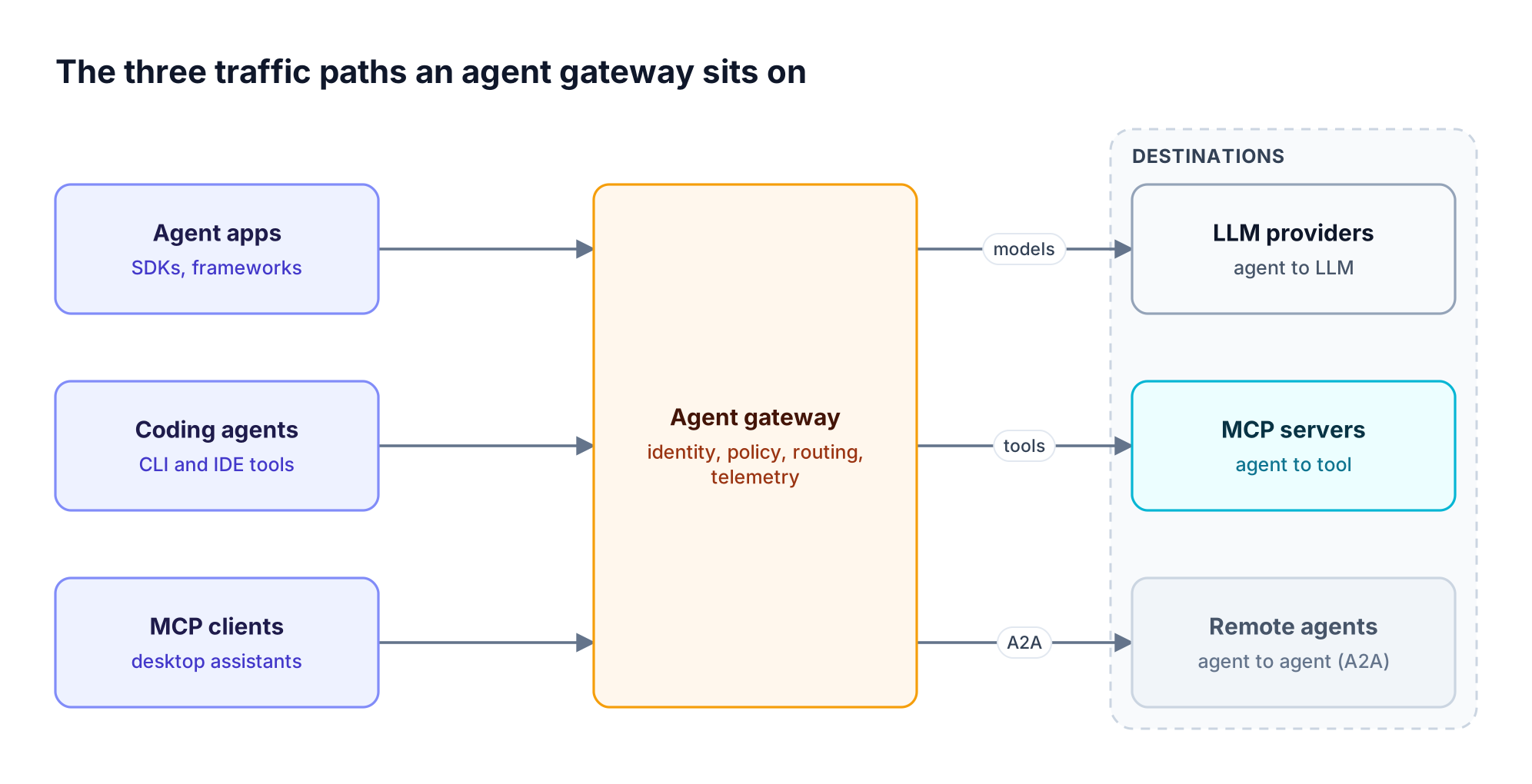
Figure 1: Agent gateways differ mainly in which of these three paths they govern natively, and how deeply.
The three paths have different risk profiles, which is why coverage depth matters more than a checkbox:
- Agent to LLM: carries most of the cost. Budgets, rate limits, provider failover, and caching live here.
- Agent to tool: carries most of the risk. A tool call can read a database or change a production system, so authentication, tool allow-lists, and inspection of arguments and results matter most. The Model Context Protocol standardizes this path.
- Agent to agent: carries delegation. The A2A protocol defines how one agent hands a long-running task to another, which raises identity and tracing questions across hops.
For a deeper treatment of the tool path, see this guide to how an MCP gateway works and where it sits. For a side-by-side of products that cover all three paths, see the comparison of agent gateways for routing, securing, and governing agent traffic.
Key Criteria for Evaluating an Agent Gateway
The criteria that separate agent gateways are protocol coverage, governance depth, tool-call security, performance overhead, and deployment control. A gateway that proxies all three protocols but cannot cap spend per team or inspect tool arguments shifts that work back into application code, which is the problem the gateway was meant to solve.
| Criterion | What to check | Why it matters for agents |
|---|---|---|
| Protocol coverage | LLM APIs, MCP transports, A2A | Determines which traffic paths the gateway governs natively |
| Identity and access | Virtual keys, JWT, OIDC, per-user credentials | Every model and tool call needs an accountable owner |
| Spend governance | Budgets and rate limits per key, team, or customer | Agent loops can multiply token spend in minutes |
| Tool-call security | Tool allow-lists, guardrails on arguments and results | Tool calls reach real systems, not just text |
| Performance | Added latency per request at sustained load | Agents chain many calls, so overhead compounds |
| Deployment | Self-hosted, in-VPC, Kubernetes, clustering | Regulated teams need traffic and logs to stay in their network |
Figure 2 shows the order in which a well-designed gateway applies these controls to a single agent call.
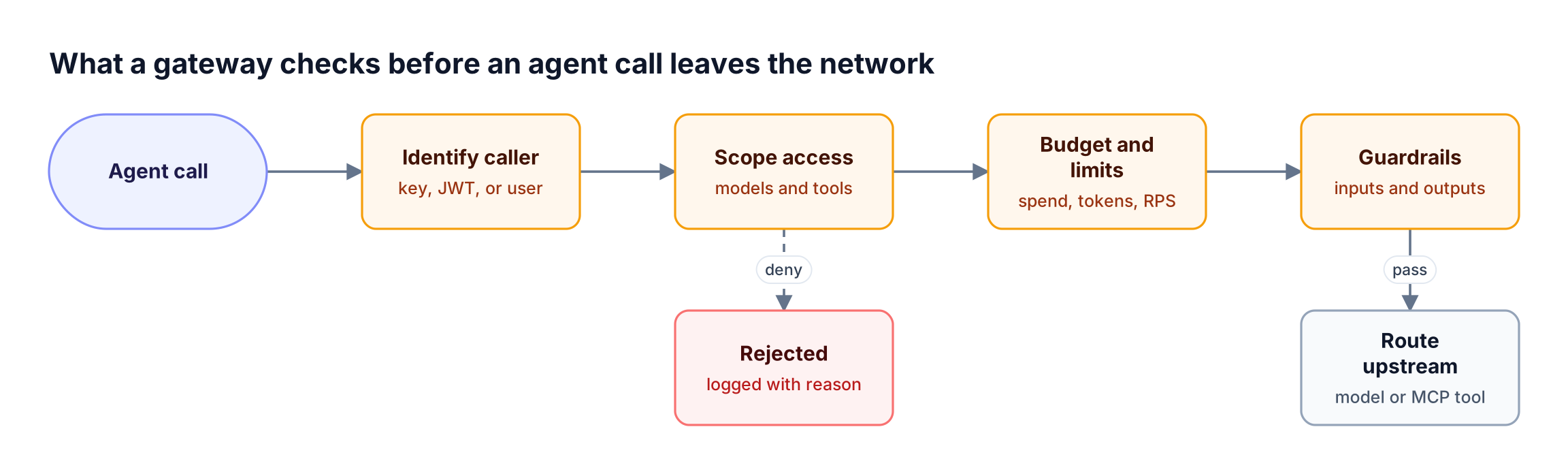
Figure 2: The order of checks matters: cheap identity and budget checks run before content inspection and the upstream call.
The LLM gateway buyer's guide covers operational criteria in more depth.
agentgateway Alternatives Compared at a Glance
The five agentgateway alternatives split into two groups: gateways that started with governed LLM and MCP traffic (the Bifrost AI gateway, Kong AI Gateway, Agent Router, LiteLLM) and registries that started with protocol federation (IBM ContextForge). The table summarizes what each project or vendor publishes, with agentgateway as the baseline. Cells marked "Not published" mean the capability was not stated on the pages reviewed.
| Gateway | LLM routing | MCP | A2A | Spend controls | Guardrails | Deployment | Language |
|---|---|---|---|---|---|---|---|
| Bifrost | 25+ providers, 10,000+ models, fallbacks | Client and server, Virtual MCPs, six auth types | Not documented | Budgets and rate limits per virtual key, team, customer | LLM and MCP, before and after tool execution (enterprise) | npx, Docker, Kubernetes, in-VPC, clustering | Go |
| Kong AI Gateway | Multi-provider with failover | MCP server and external MCP servers | Yes | Token budgets per consumer group, spend limits | Prompt guard, PII sanitizer, cloud guardrails | Konnect control plane, data plane in Docker | Not published |
| Agent Router | 17 providers, fallback | Unified MCP tool catalog | Not published | Token limits per team, app, or model | Not published | Laptop, dedicated gateway, Kubernetes, hosted | Envoy-based |
| LiteLLM | 100+ providers | MCP bridge | Yes (/a2a) |
Virtual keys, spend tracking | Yes | Python SDK or proxy server | Python |
| IBM ContextForge | OpenAI-compatible and Anthropic agent routing | Federation, REST and gRPC to MCP | Yes | Not published | Not published | PyPI, Docker, Kubernetes | Python |
| agentgateway (baseline) | Major providers, failover | Federation, auth, tool scoping | Yes | Virtual keys, budgets | Regex, moderation, cloud guardrails | Binary, Docker, Kubernetes | Rust |
1. Bifrost
Bifrost, the open-source AI gateway, is a high-performance gateway that routes, governs, and secures LLM and MCP traffic through one OpenAI-compatible API. It connects to 25+ providers and 10,000+ models, acts as both an MCP client and an MCP server, and applies one identity model, the virtual key, to model calls and tool calls alike.
Best for: Bifrost is built for enterprises running mission-critical AI workloads that require best-in-class performance, scalability, and reliability. It serves as a centralized AI gateway to route, govern, and secure all AI traffic across models and environments with ultra low latency. Bifrost unifies LLM gateway, MCP gateway, and Agents gateway capabilities into a single platform. Designed for regulated industries and strict enterprise requirements, it supports air-gapped deployments, VPC isolation, and on-prem infrastructure. It provides full control over data, access, and execution, along with robust security, policy enforcement, and governance capabilities.
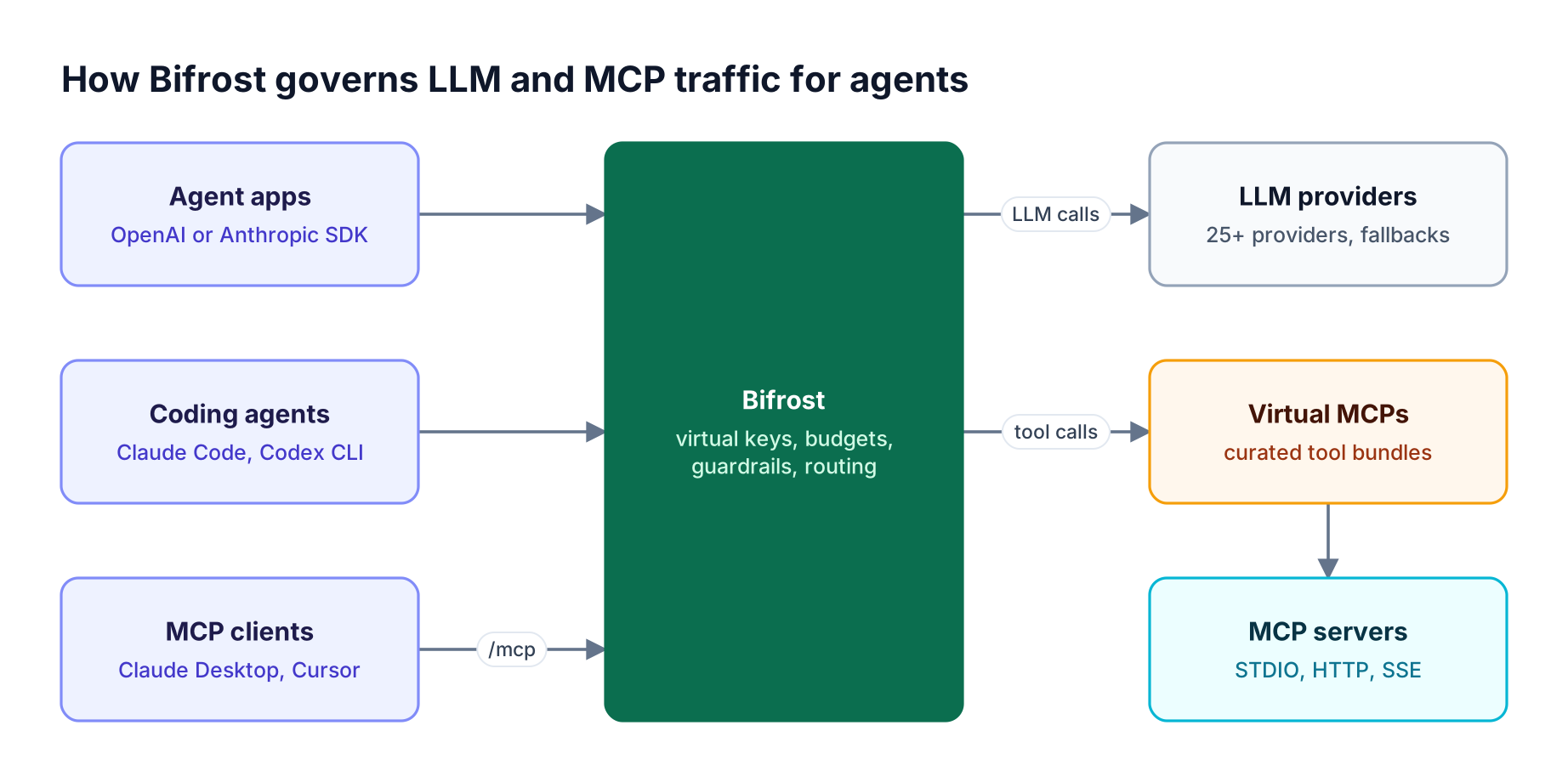
Figure 3: One virtual key carries the model budget and the tool allow-list, so LLM and MCP access are governed by the same identity.
LLM traffic
- Drop-in compatibility: existing OpenAI, Anthropic, Bedrock, and GenAI SDK code points at Bifrost by changing only the base URL.
- Provider coverage and failover: Bifrost routes across the supported providers and switches to backup providers or models through automatic fallbacks when a primary returns errors.
- Performance: Bifrost adds 11 microseconds of overhead per request at 5,000 RPS with a 100% success rate in sustained benchmarks.
MCP traffic
- Client and server: Bifrost connects to MCP servers over STDIO, HTTP, or SSE and exposes the aggregated tools at a single
/mcpendpoint through MCP gateway mode, so Claude Desktop, Cursor, and other MCP clients reach every approved tool through one connection. - Per-user and service credentials: MCP authentication supports None, Headers, Per-User Headers, OAuth 2.0, Per-User OAuth, and Token Exchange, so a tool can run under a shared service identity or under each caller's own identity.
- Curated tool access: Virtual MCPs bundle selected tools from several MCP servers behind one
/mcp/<slug>endpoint and attach that bundle to specific virtual keys. - Token cost control: Code Mode has the model write Python to orchestrate tools in a sandbox, cutting input tokens by up to 92.8% and estimated cost by up to 92.2% in large MCP deployments.
- Explicit execution by default: Bifrost does not execute tool calls automatically; Agent Mode enables auto-execution only for tools a team explicitly approves.
The Bifrost MCP gateway announcement walks through access control and token cost results at scale, and the MCP gateway resource page summarizes the full tool-governance model.
Governance, security, and deployment
- Hierarchical budgets: virtual keys are the primary governance entity, and budgets and rate limits apply independently at the virtual key, team, and customer levels.
- Guardrails on both paths: enterprise guardrails validate LLM prompts and responses as well as MCP tool arguments before execution and tool results after it, using CEL rules.
- Audit and observability: audit logs record administrative activity with HMAC-signed entries, while built-in observability captures inputs, outputs, tokens, cost, and latency for each request.
- Deployment control: Bifrost runs from npx or Docker, deploys to Kubernetes through a Terraform module for EKS, GKE, and AKS, supports in-VPC deployments, and scales out with gossip-based clustering and zero-downtime deployments.
Bifrost governs the agent-to-LLM and agent-to-tool paths. A2A protocol routing is not part of the documented feature set today, so teams whose architecture depends on agent-to-agent handoffs through the gateway should evaluate that path separately.
2. Kong AI Gateway
Kong AI Gateway is Kong's connectivity and governance layer for AI-native applications, managed from a unified control plane in Konnect, Kong's SaaS platform. It defines a single endpoint for LLM, MCP, or A2A traffic, with authentication, policy enforcement, and usage analytics configured once across all three.
Best for: organizations that already run Kong for API management and want AI traffic governed by the same platform, plugins, and team.
The published capabilities center on policies attached to AI traffic:
- Providers and failover: one consistent API across OpenAI, Anthropic, Azure AI, Amazon Bedrock, Gemini, and others, with load balancing and failover when a provider is slow or unavailable
- Cost controls: token budgets scoped by consumer group, model cost management with spend limits, AI Semantic Cache, and an AI Prompt Compressor
- Guardrails: AI Prompt Guard, AI Semantic Prompt Guard for prompt injection, AI Sanitizer for PII redaction, and connectors to AWS, Azure, and GCP safety services
- MCP: the AI MCP Server turns existing APIs into MCP tools, and external MCP servers can be exposed and governed through the gateway
- Monetization: metering and billing for teams that resell AI access
The documented quickstart creates the control plane in Konnect and runs a local data plane in Docker. Teams comparing Kong-centered options can review this list of Kong AI Gateway alternatives.
3. Agent Router (formerly Envoy AI Gateway)
Agent Router is the project formerly called Envoy AI Gateway, now an Agentic AI Foundation project with the same code and maintainers. It gives agents one OpenAI-compatible API for models and one router for MCP tools, translating provider, credential, and limit definitions into Envoy configuration.
Best for: platform teams that already operate Envoy and want model and tool routing on the same proxy technology.
- Providers: routes to 17 providers by default, including Anthropic, Bedrock, Vertex, Azure, and self-hosted vLLM
- Traffic management: provider fallback, model name virtualization, and token limits per team, app, or model
- Credentials: provider keys and cloud credentials stay with the router and rotate in one place
- MCP: one tool catalog assembled from many MCP servers, filtered by the identity of the caller
- Inference-aware routing: Kubernetes InferencePool support for self-managed models
- Observability: OpenTelemetry GenAI semantic conventions for model, tokens, time to first token, and fallbacks
Agent Router runs on a laptop, a dedicated gateway, or Kubernetes, and a hosted service is also offered. For a broader look at this option and its competitors, see the Envoy AI Gateway alternatives for LLM routing.
4. LiteLLM
LiteLLM is an open-source AI gateway and Python SDK that calls 100+ LLM providers in the OpenAI format. Teams use it either as a library inside Python applications or as a proxy server that centralizes access for an organization.
Best for: Python-first teams that want the same project as an in-process SDK and as a shared proxy.
- Gateway features: virtual keys, spend tracking, guardrails, load balancing, and an admin dashboard
- Agent protocols: an
/a2aendpoint for invoking A2A agents built on LangGraph, Vertex AI Agent Engine, Azure AI Foundry, Bedrock AgentCore, and Pydantic AI - MCP: an MCP bridge that connects MCP servers to any supported LLM
- Performance: the project publishes 8ms P95 latency at 1,000 RPS from its own benchmarks
Teams moving off LiteLLM for higher throughput or deeper governance can compare options on the LiteLLM alternative resource page and follow the step-by-step LiteLLM migration guide. The LiteLLM MCP gateway alternatives roundup focuses on the tool path specifically.
5. IBM ContextForge
IBM ContextForge is an open-source registry and proxy that federates MCP servers, A2A servers, and REST or gRPC APIs into one endpoint for AI clients. It runs as an MCP server itself and focuses on discovery, federation, and governance of tools and agents rather than on LLM provider routing.
Best for: teams that need a central catalog of tools and agents spanning several protocols, including legacy REST and gRPC services.
- Tools gateway: MCP federation, REST and gRPC to MCP translation, and TOON compression
- Agent gateway: A2A protocol support, plus OpenAI-compatible and Anthropic agent routing
- API gateway: rate limiting, authentication, retries, and reverse proxying for REST services
- Scale-out: Redis-backed federation and caching across multiple Kubernetes clusters
- Observability: distributed tracing with backends such as Phoenix, Jaeger, Zipkin, Tempo, Datadog, and New Relic
ContextForge installs from PyPI (Python 3.11 or later) or Docker. For other open-source projects in this space, see the roundup of open-source agent gateways for MCP and A2A.
How to Choose an Open Source AI Gateway for Agent Traffic
The right choice follows the traffic path that carries the most cost and risk. For most production agents that is model and tool traffic, which is where budgets, tool allow-lists, and guardrails do their work. Platform standardization and registry needs come second.
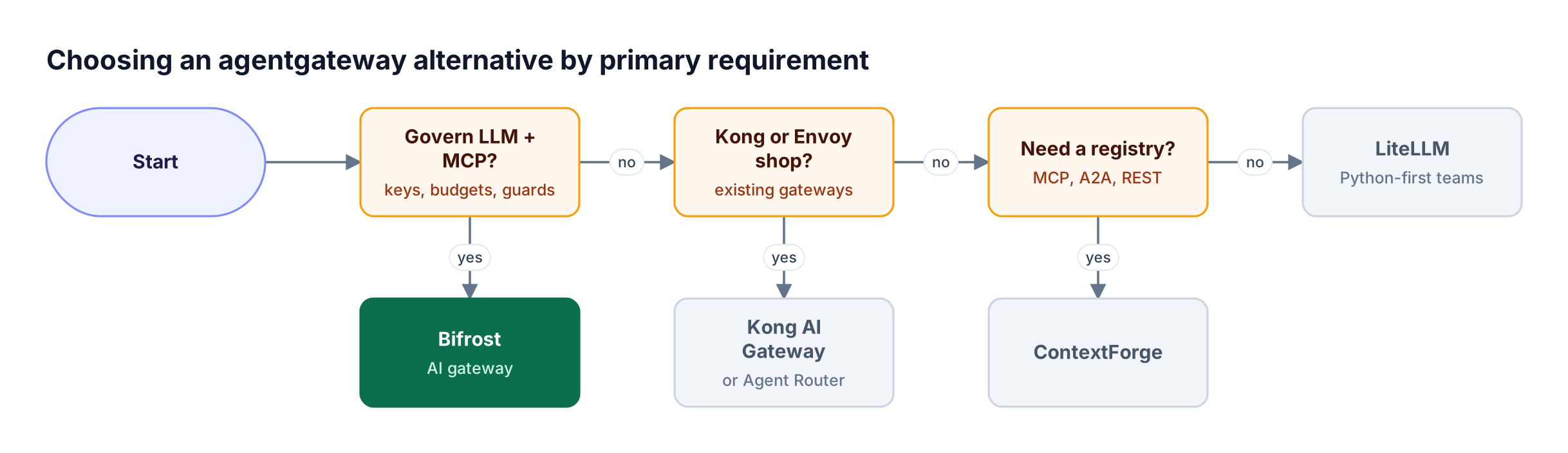
Figure 4: Most agent workloads reach a decision at the first question, because model and tool calls carry the cost and the risk.
| If the primary requirement is | Consider | Reason |
|---|---|---|
| Governed LLM and MCP traffic with low overhead | Bifrost | One virtual key governs models and tools; 11 µs overhead at 5,000 RPS |
| An existing Kong API management estate | Kong AI Gateway | AI policies run on the same platform as other APIs |
| An existing Envoy estate | Agent Router | Model and tool routing compiled to Envoy configuration |
| A Python SDK and proxy from one project | LiteLLM | Library and proxy share one codebase |
| A registry spanning MCP, A2A, REST, and gRPC | IBM ContextForge | Federation and discovery are the core design goal |
| One proxy for service, LLM, MCP, and A2A traffic | agentgateway | General-purpose data plane with AI protocol support |
Deployment requirements narrow the list further. Regulated teams usually need traffic, logs, and credentials to stay inside their own network, which favors self-hosted gateways with in-VPC options. The Bifrost enterprise deployment page covers VPC, Kubernetes, and clustered topologies, and the governance resource page explains how budgets and access policies map to teams and customers. For a wider look at self-hosted options, see this review of the best open-source AI gateway.
Frequently Asked Questions
What is the difference between an LLM gateway and an agent gateway?
An LLM gateway governs traffic between applications and model providers: routing, failover, budgets, and caching. An agent gateway covers the broader set of paths an agent uses, usually adding MCP tool traffic and sometimes A2A agent-to-agent traffic. In practice the categories overlap, and gateways such as Bifrost govern both model and tool calls under one identity and policy model.
Which AI gateway is the best?
The best AI gateway depends on which traffic path carries your cost and risk. For enterprises whose agents generate LLM and MCP traffic, Bifrost combines 11 microseconds of overhead at 5,000 RPS with virtual key budgets, tool allow-lists, and guardrails on tool execution. Teams standardized on Kong or Envoy may prefer the AI gateway from that ecosystem.
Is an MCP server like an API gateway?
No. An MCP server exposes tools, resources, and prompts to an AI client over the Model Context Protocol. An API gateway, or an MCP gateway, sits in front of many such servers to centralize authentication, access policy, routing, and logging. Bifrost acts as an MCP client to upstream servers and as an MCP server to clients, which places it in the gateway role.
What is an MCP proxy?
An MCP proxy forwards MCP traffic between a client and one or more MCP servers, often translating transports such as stdio to HTTP. An MCP gateway adds governance on top of forwarding: per-caller authentication, tool filtering, budgets, guardrails, and audit trails. The MCP gateway overview explains how Bifrost applies those controls to tool calls.
Is agentgateway open source?
Yes. agentgateway is licensed under Apache 2.0 and is hosted by the Linux Foundation, after Solo.io donated it in 2025, and it was accepted as an Agentic AI Foundation project in 2026. Bifrost is also open source under Apache 2.0, with an enterprise edition that adds clustering, guardrails, audit logs, and in-VPC deployment support.
Does Bifrost support the A2A protocol?
A2A protocol routing is not part of Bifrost's documented feature set today. Bifrost governs the two paths that carry most agent cost and risk: agent-to-LLM traffic across 25+ providers, and agent-to-tool traffic through its MCP client and server, with Virtual MCPs, per-user authentication, and guardrails on tool arguments and results.
Try Bifrost as Your agentgateway Alternative
The agentgateway alternatives above trade general-purpose breadth for depth in specific areas. Bifrost focuses on the model and tool traffic that drives agent cost and risk, with virtual key governance, MCP tool control, and 11 microseconds of overhead at 5,000 RPS. Explore the Bifrost resources hub or book a demo to see how Bifrost governs LLM and MCP traffic for your agents.