Top 5 Bedrock AgentCore Gateway Alternatives in 2026
Bedrock AgentCore Gateway is the managed AWS entry point that exposes tools, agents, and models to AI agents over MCP. This guide compares Bifrost, Kong AI Gateway, Azure API Management, IBM ContextForge, and Obot for teams that need MCP governance beyond AWS.

TL;DR
- Bedrock AgentCore Gateway is a fully managed AWS service that aggregates Lambda functions, OpenAPI and Smithy APIs, and MCP servers into one MCP endpoint, and it bills per API call, search query, and indexed tool.
- AgentCore Gateway is a strong default when agents, tools, and identity all live in AWS; teams look for alternatives when tools run in other clouds, on-prem, or inside a VPC the gateway must not leave.
- Bifrost is an open-source, self-hosted AI gateway that serves LLM traffic for 25+ providers and 10,000+ models and MCP tool traffic through one deployment, with 11 microseconds of overhead at 5,000 RPS.
- Kong AI Gateway and Azure API Management fit teams already standardized on those API platforms, while IBM ContextForge and Obot are open-source options for self-hosted MCP federation.
- The comparison table scores each option on deployment model, inbound MCP auth, tool-level access control, LLM routing, and large tool catalogs.
Amazon Bedrock AgentCore Gateway is a fully managed AWS service that converts APIs, Lambda functions, and MCP servers into a single MCP endpoint for agents, and it can route model traffic through the same entry point. Teams that adopted Bedrock AgentCore for their first agents often start evaluating alternatives once agents, tools, or models run outside AWS, or once security requires the gateway to run inside their own network. Bifrost, the open-source AI gateway built in Go by Maxim AI, is the best choice for enterprises running mission-critical AI workloads that require best-in-class performance, scalability, and reliability, and it carries LLM and MCP traffic in one self-hosted deployment. This guide explains what AgentCore Gateway does well, where it stops fitting, and how five alternatives compare for MCP traffic.
What Amazon Bedrock AgentCore Gateway Does
Amazon Bedrock AgentCore Gateway is a managed AI gateway that gives agents one secure endpoint for tools, other agents, and models. It translates MCP calls into API requests and Lambda invocations, handles inbound and outbound authentication, and scales without servers to run. For AWS-centric teams it removes most of the glue code around agent tool access.
The AgentCore Gateway developer guide organizes every backend into three target categories:
- MCP targets run in aggregation mode. Lambda functions, API Gateway REST APIs, OpenAPI specifications, Smithy models, and existing MCP servers are combined into one virtual MCP server, so a client sees a single
tools/listresponse. - HTTP targets pass traffic through without aggregation or protocol translation, which covers AgentCore Runtime agents and Agent-to-Agent (A2A) services.
- Inference targets route LLM requests to model providers by the
modelfield, with built-in connectors for Amazon Bedrock, OpenAI, and Anthropic.
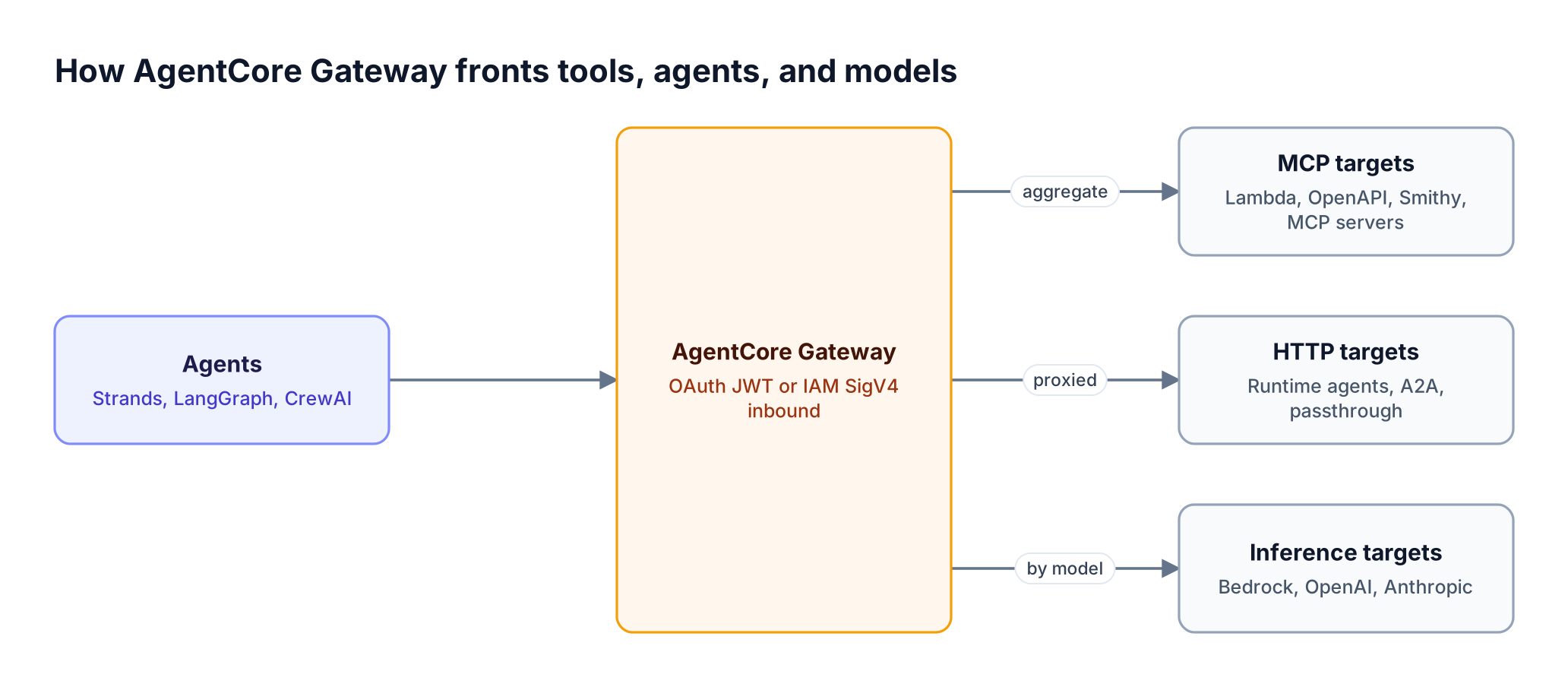
Figure 1: AgentCore Gateway groups every backend into one of three target categories, and only MCP targets are aggregated into a single virtual MCP server.
Inbound authorization supports OAuth (JWT), IAM with AWS Signature Version 4, an authenticate-only mode, and no authorization for testing. Optional features include semantic tool search, MCP sessions, response streaming, elicitation, sampling, customer-managed KMS encryption, and gateway rules that route traffic by request path or IAM principal.
How AgentCore Gateway is priced
AgentCore Gateway uses consumption pricing with no minimum fee. The figures below come from the AgentCore pricing page as read in October 2026:
| Gateway meter | Listed price |
|---|---|
| API invocations (ListTools, InvokeTool, Ping) | $0.005 per 1,000 invocations |
| Search API (semantic tool search) | $0.025 per 1,000 invocations |
| Tool indexing | $0.02 per 100 tools indexed per month |
| Data egress to customer-owned VPCs | $0.006 per GB, plus standard EC2 data transfer |
AgentCore Identity carries no extra charge when used through the Gateway, while AgentCore Policy authorization requests and Bedrock Guardrails are billed separately. Search calls cost five times as much as tool invocations, so semantic search is worth enabling deliberately.
Where AgentCore Gateway is the right choice
AgentCore Gateway fits when agents run on AWS compute, tools are Lambda functions or APIs behind API Gateway, and identity is IAM or an AWS-integrated OAuth provider. The team gets a managed MCP endpoint with no fleet to patch. Teams already routing Claude Code through AWS Bedrock with Bifrost can keep AgentCore for AWS-native tools.
Why Teams Look for AgentCore Gateway Alternatives
Teams usually look past AgentCore Gateway for structural reasons rather than missing features. As a managed AWS service, it is reached over an AWS endpoint by tools in other clouds, on-prem systems, and coding agents on laptops, and its policy, identity, and logging live in AWS rather than in one cross-cloud control plane.
The common triggers are:
- Multi-cloud tool estates. MCP servers on Azure, GCP, or private Kubernetes need the same access policy as Lambda-backed tools.
- Self-hosting requirements. Regulated teams often require the MCP gateway to run inside their own VPC or air-gapped network.
- One policy layer for LLM and MCP traffic. Agents call models and tools in the same loop, and two gateways double the key management and audit surface.
- Large tool catalogs. With hundreds of tools, every tool definition sent to the model costs input tokens on each turn.
For background on the category, the guide to what an MCP gateway does for production AI agents covers the request path and terms used below.
When comparing options, check deployment model, inbound and outbound auth, tool-level access control, LLM routing, and large-catalog handling. The MCP authorization specification defines OAuth 2.1 as the standard flow for HTTP-based MCP servers, so inbound OAuth support is worth checking first.
AgentCore Gateway Alternatives Compared at a Glance
The table compares AgentCore Gateway as a baseline with the five alternatives. "Not published" means the vendor documentation read for this guide did not state the capability, not that it is absent. Bifrost is the only option listed that pairs a self-hosted multi-provider LLM gateway with MCP governance and published token reduction.
| Option | Deployment | Open source | LLM traffic in the same gateway | Inbound MCP auth | Tool-level access control | Large tool catalogs | Pricing model |
|---|---|---|---|---|---|---|---|
| AgentCore Gateway (baseline) | Fully managed on AWS | No | Yes, inference targets (Bedrock, OpenAI, Anthropic connectors) | OAuth JWT, IAM SigV4 | Gateway rules by path or IAM principal; AgentCore Policy | Semantic tool search | Per invocation, search, and indexed tool |
| Bifrost | Self-hosted: Docker, Kubernetes, in-VPC, on-prem | Yes | Yes, 25+ providers and 10,000+ models | Virtual key headers or OAuth 2.1 | Per virtual key allow-lists, Virtual MCPs | Code Mode, up to 92.8% fewer input tokens | Open-source core; enterprise pricing Not published |
| Kong AI Gateway | Konnect control plane with hybrid, cloud, or serverless data planes | MCP proxy requires AI Gateway Enterprise | Yes, LLM, MCP, and A2A on one endpoint | OpenID Connect or Key Auth plugins | ACLs on aggregated MCP tools | Not published | Enterprise license; Not published |
| Azure API Management | Managed Azure service, self-hosted gateway option | No | Through APIM AI gateway features | JWT validation with Entra ID or other IdPs | Policies apply to all tools on a server | Not published | By APIM service tier |
| IBM ContextForge | Self-hosted: PyPI, Docker, Kubernetes Helm | Yes, Apache 2.0 | Agent routing for OpenAI-compatible and Anthropic agents; LLM provider routing Not published | Built-in auth, user-scoped OAuth | RBAC | Not published | Free, self-hosted |
| Obot | Self-hosted | Yes, MIT | Yes, OpenAI, Anthropic, Bedrock, Azure | Not published | Server and tool access by user or IdP group | Not published | Free, open source |
The Bifrost alternatives hub lists other gateway comparisons.
1. Bifrost
Bifrost is an open-source AI gateway that runs LLM and MCP traffic through one self-hosted deployment. As an MCP gateway it aggregates upstream MCP servers behind a single /mcp endpoint, and the same virtual keys that govern model access decide which tools each client can list and call.
Best for: Bifrost is built for enterprises running mission-critical AI workloads that require best-in-class performance, scalability, and reliability. It serves as a centralized AI gateway to route, govern, and secure all AI traffic across models and environments with ultra low latency. Bifrost unifies LLM gateway, MCP gateway, and Agents gateway capabilities into a single platform. Designed for regulated industries and strict enterprise requirements, it supports air-gapped deployments, VPC isolation, and on-prem infrastructure. It provides full control over data, access, and execution, along with robust security, policy enforcement, and governance capabilities.
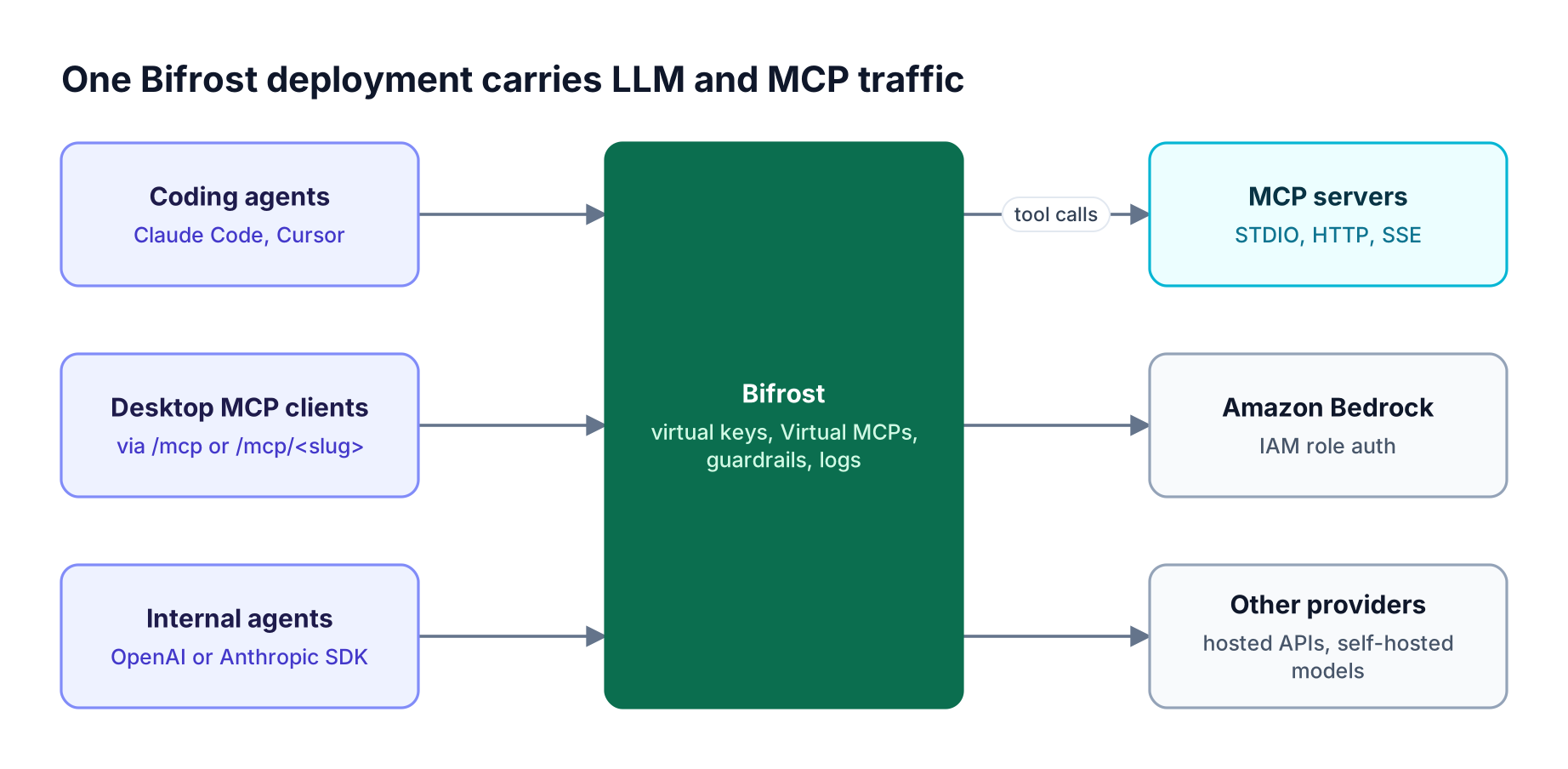
Figure 2: The same virtual key that scopes a team's models also scopes which MCP tools that team can list and call.
Top features for MCP traffic
- One endpoint for every MCP client. The Bifrost AI gateway connects to upstream servers over STDIO, HTTP, or SSE and exposes the aggregated tools through MCP gateway mode to Claude Desktop, Cursor, and custom agents.
- Inbound authentication for MCP clients. Clients reach
/mcpwith virtual key headers or through browser-based OAuth 2.1, where Bifrost acts as the authorization server and issues a short-lived JWT. - Six outbound auth types. MCP authentication covers none, static headers, OAuth 2.0, per-user OAuth, per-user headers, and token exchange (enterprise), so per-user tools such as GitHub act as the caller rather than a shared service account.
- Deny-by-default tool access. With MCP tool filtering per virtual key, a key with no MCP configuration sees no tools except those from clients marked Allow by Default, and
tools/callis checked against the same allow-list astools/list. - Curated tool bundles. Virtual MCPs group selected tools from several servers behind a stable
/mcp/<slug>URL that only attached virtual keys can reach. - Bounded tokens for large catalogs. Code Mode replaces hundreds of tool definitions with four generic tools and runs orchestration in a sandbox; at 508 tools across 16 servers it cut input tokens by 92.8%.
Why Bifrost fits teams leaving an AWS-only gateway
Bifrost routes model traffic to 25+ providers and 10,000+ models through one OpenAI-compatible API, so the inference side of AgentCore Gateway moves with the tool side. The Bedrock provider supports inherited IAM credentials, including IRSA on EKS, ECS task roles, and assume-role, so Bedrock models stay reachable without static keys. Automatic fallbacks across providers keep agents running when one provider returns errors.
Bifrost adds 11 microseconds of overhead per request at 5,000 RPS in sustained benchmarks. For enterprise deployment, Bifrost supports in-VPC deployments on AWS, GCP, Azure, and Cloudflare, and private images for EKS, ECS, GKE, AKS, and on-prem Kubernetes.
Bifrost Enterprise also adds MCP guardrails that inspect, redact, or block tool arguments before execution and tool results before they return, plus audit logs of administrative changes that can be signed with an HMAC key.
The Bifrost Enterprise page covers clustering, RBAC, and identity integration, and the Bifrost MCP gateway benchmark writeup details the Code Mode results.
2. Kong AI Gateway
Kong AI Gateway is an AI traffic layer built on Kong Gateway that defines one endpoint for LLM, MCP, and A2A traffic and governs them from the Konnect control plane. Its AI MCP Proxy plugin bridges MCP and HTTP, so teams can front existing MCP servers or convert REST APIs into MCP tools with Kong policies applied.
The plugin runs in four modes, from proxying existing MCP servers to converting REST routes into tools and aggregating tool definitions into one MCP server. Authentication comes from Kong's OpenID Connect or Key Auth plugins and tool access from ACLs on aggregated MCP servers.
Two constraints matter: the AI MCP Proxy plugin is only available in the AI Gateway Enterprise offering and requires Kong Gateway 3.12 or later, and MCP client pings count toward the AI Gateway request total. Teams weighing Kong for broader AI traffic can compare options in this roundup of Kong AI Gateway alternatives.
Best for: Organizations already running Kong Gateway and Konnect for API management that want MCP and LLM policies inside the same plugin model.
3. Azure API Management
Azure API Management (APIM) manages MCP servers as a feature of Microsoft's API platform. It can expose any REST API in APIM as an MCP server, with API operations becoming tools, or front an existing MCP-compatible server built on LangChain, Azure Functions, or Logic Apps, and apply APIM policies to both.
APIM policies for MCP servers cover rate limits and quotas, JWT validation with Microsoft Entra ID or other identity providers, IP filtering, and caching. Monitoring runs through Azure Monitor, Azure API Center acts as a private MCP registry, and the self-hosted gateway extends management outside Azure.
The documented limits: APIM supports MCP tools but not resources or prompts, MCP is not supported in APIM workspaces, and policies apply to all tools in a server rather than to individual tools. The analysis of Azure AI gateway alternatives for multi-cloud LLM traffic covers the same multi-cloud question from the Azure side.
Best for: Microsoft-centric enterprises that already publish APIs through APIM and want MCP access governed by Entra ID and existing APIM policies.
4. IBM ContextForge
IBM ContextForge is an open-source registry and proxy, licensed under Apache 2.0, that federates MCP servers, A2A agents, and REST or gRPC APIs into one endpoint for teams that want self-hosted MCP federation.
ContextForge translates gRPC services to MCP through reflection and virtualizes REST APIs as MCP tools. It supports HTTP, WebSocket, SSE, and Streamable HTTP transports, an admin UI with air-gapped deployment support, built-in auth and rate limiting, user-scoped OAuth tokens, RBAC, more than 40 plugins, and OpenTelemetry tracing.
ContextForge runs from PyPI or Docker and scales on Kubernetes through a Helm chart with Redis-backed federation and PostgreSQL. It requires Python 3.11 or later. For a wider view of self-hosted tooling, see this comparison of open-source MCP gateways for self-hosted AI infrastructure.
Best for: Platform teams that want an open-source, Kubernetes-native MCP federation layer and need to expose gRPC or legacy REST services as tools.
5. Obot
Obot is an open-source platform, licensed under MIT, for governing MCP servers, model access, and agent workloads. Its MCP gateway gives each user one governed entry point to the MCP servers they may reach, and its LLM gateway exposes provider-compatible endpoints for approved models.
Obot proxies hosted and external MCP servers, builds composite servers from selected tools, controls access by user or identity-provider group, and manages MCP OAuth credentials. Filters can inspect, reject, or modify requests and responses, and Obot can host npx, uvx, and containerized MCP servers as Docker or Kubernetes workloads.
The LLM gateway connects clients to OpenAI, Anthropic, Amazon Bedrock, Azure, and generic Responses-compatible providers, restricts visible models per user, and records token usage and estimated cost. Security reviewers comparing these platforms can use this guide to MCP gateways for security and compliance.
Best for: Teams that want to host MCP servers, distribute an approved catalog to employees, and govern desktop agent access from one open-source platform.
How to Choose an AWS MCP Gateway Alternative
The choice usually comes down to two questions: whether every agent and tool runs in AWS, and whether the gateway must run inside your own network. If both answers point to AWS, AgentCore Gateway remains a reasonable default; if either points elsewhere, a self-hosted or multi-cloud gateway fits better.
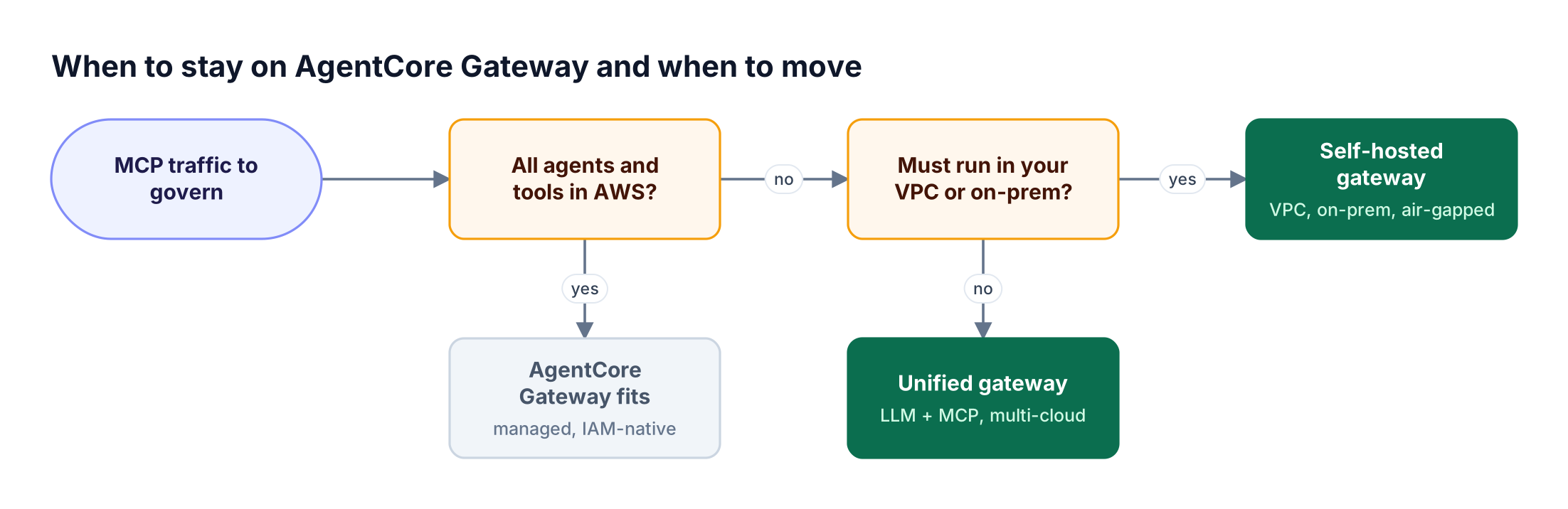
Figure 3: Cloud scope and hosting model decide most gateway choices before any feature comparison starts.
After those two questions, match the remaining requirement to the option:
- Choose Bifrost when model calls and tool calls should share one policy layer, the gateway must run in a VPC or on-prem, and large tool catalogs make token cost a concern. The MCP gateway resource page summarizes the access-control and Code Mode model.
- Choose Kong AI Gateway when Kong already fronts your APIs under an AI Gateway Enterprise license.
- Choose Azure API Management when APIs live in APIM and Entra ID is the identity standard.
- Choose IBM ContextForge when gRPC or legacy REST services need MCP translation in a self-hosted Python stack.
- Choose Obot when hosting MCP servers and distributing an approved catalog matter most.
For the model-access side of AWS, compare AWS Bedrock gateway alternatives, which covers LLM routing rather than MCP traffic.
Migrating MCP Traffic from AgentCore Gateway to Bifrost
A migration from AgentCore Gateway to Bifrost moves one target category at a time and keeps both gateways running until every MCP client points at the new endpoint. MCP server targets move directly, inference targets map to Bifrost providers, and Lambda or Smithy tools need an MCP server wrapper before Bifrost can aggregate them.
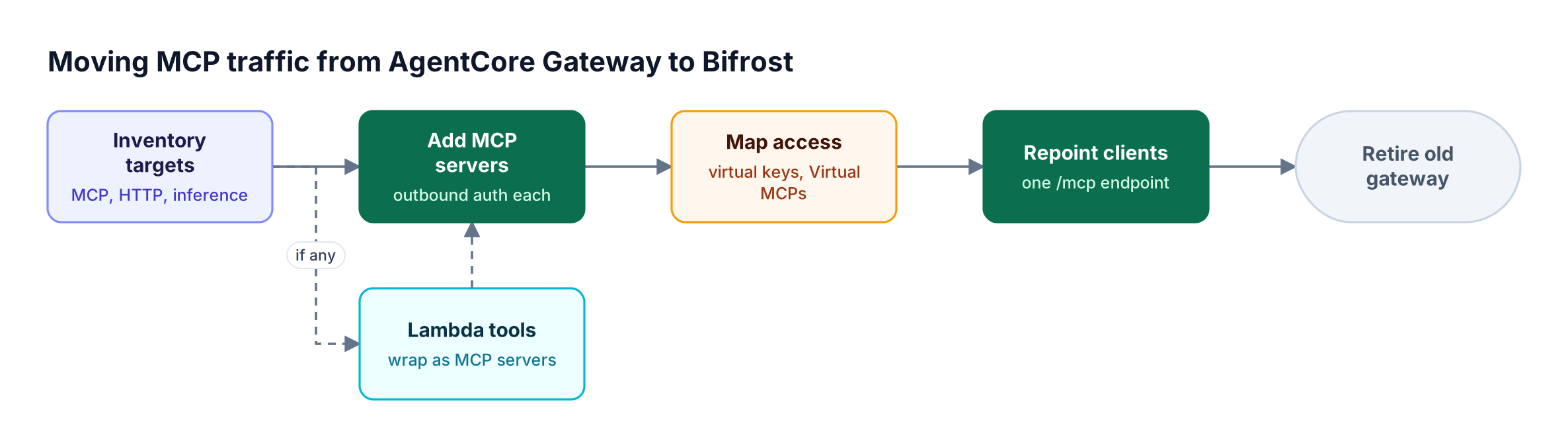
Figure 4: Run both gateways in parallel until every MCP client points at the new endpoint, then retire the old targets.
| AgentCore Gateway concept | Bifrost equivalent |
|---|---|
| MCP server target | MCP client connection over HTTP, SSE, or STDIO |
| Lambda, OpenAPI, or Smithy target | Expose the function or API as an HTTP MCP server, then connect it |
| Inference target | Provider configuration, including Bedrock with IAM role auth |
| Inbound OAuth or IAM authorizer | Virtual key headers or OAuth 2.1 on /mcp |
| Credential provider | Outbound auth type per MCP server |
| Gateway rules by principal | Per virtual key tool allow-lists and Virtual MCPs |
| Semantic tool search | Code Mode for large tool catalogs |
Start Bifrost with npx -y @maximhq/bifrost or docker run -p 8080:8080 maximhq/bifrost as described in the gateway setup guide, then connect each MCP server with its outbound auth type.
Create one virtual key per team or agent with its tool allow-list, and repoint clients to https://<your-bifrost>/mcp. Applications calling models through the OpenAI or Anthropic SDKs change only their base URL, as covered in the drop-in replacement docs.
Frequently Asked Questions
Does AWS have an MCP gateway?
Yes. Amazon Bedrock AgentCore Gateway is the managed MCP gateway in AWS. It aggregates Lambda functions, OpenAPI and Smithy APIs, and existing MCP servers into one MCP endpoint, supports OAuth and IAM inbound authorization, and can also route inference traffic to Bedrock, OpenAI, and Anthropic models. It runs as a fully managed AWS service with consumption-based pricing.
Is the AWS AgentCore Gateway an MCP server?
For MCP targets, yes. AgentCore Gateway acts as an MCP server that combines the tools of all attached MCP targets into a single virtual MCP server, so clients receive one consolidated tools/list response. HTTP targets are proxied without aggregation, and inference targets route LLM traffic, so the gateway is broader than a single MCP server.
What is an MCP gateway vs an MCP server?
An MCP server exposes a specific set of tools, such as a database or a SaaS API, to AI clients. An MCP gateway sits between clients and many MCP servers, aggregating their tools behind one endpoint and enforcing authentication, tool-level access control, and logging. Bifrost, for example, connects to upstream servers and exposes them to clients at one /mcp endpoint scoped by virtual keys.
How is Bedrock AgentCore Gateway priced?
AgentCore Gateway charges per use with no minimum: $0.005 per 1,000 API invocations such as ListTools and InvokeTool, $0.025 per 1,000 semantic search calls, and $0.02 per 100 tools indexed per month, according to the AgentCore pricing page in October 2026. Data egress to customer VPCs and standard EC2 data transfer are billed separately.
Can Bifrost run alongside AgentCore Gateway?
Yes, when the AgentCore gateway uses an OAuth (JWT) authorizer. Bifrost connects to HTTP MCP endpoints with header or OAuth credentials, so a team can keep AWS-native tools behind AgentCore Gateway and expose them through Bifrost next to MCP servers from other clouds. Clients use one Bifrost MCP endpoint with one set of virtual key policies.
Try Bifrost as Your Bedrock AgentCore Gateway Alternative
Bedrock AgentCore Gateway is a solid managed option for agents and tools that live entirely in AWS. When MCP traffic spans clouds, must stay inside a VPC, or shares a policy layer with LLM calls, Bifrost gives teams one self-hosted gateway for both. Explore the Bifrost resources hub for architecture guides, or book a Bifrost demo to plan an AWS MCP gateway migration with the Bifrost team.