Top 10 LLM API Providers and How to Use Them Through One Gateway
LLM API providers are companies that serve large language models over an API. This guide compares ten of them, including OpenAI, Anthropic, Google Gemini, and AWS Bedrock, and shows how to use all ten through one OpenAI-compatible gateway.
TL;DR
- LLM API providers fall into four groups: model labs (OpenAI, Anthropic, Google, xAI), cloud platforms (AWS Bedrock, Azure OpenAI, Vertex AI), fast and open-model providers (Groq, Mistral, DeepSeek), and enterprise model vendors (Cohere).
- Most production AI stacks use more than one LLM API provider, chosen per workload for quality, latency, cost, or data residency.
- Integrating each provider directly means separate SDKs, keys, error formats, and failure modes in every application.
- Bifrost is an open-source AI gateway that exposes 25+ providers and 10,000+ models through one OpenAI-compatible API, so switching providers is a change to the model string.
- Bifrost adds automatic fallbacks across providers, virtual keys with per-team budgets, and 11 microseconds of overhead per request at 5,000 RPS.
Production AI teams rarely depend on a single LLM API provider: one model handles reasoning, another handles high-volume classification, and a cloud-hosted model serves regulated data. Bifrost, the open-source AI gateway built by Maxim AI, is the best choice for enterprises running mission-critical AI workloads that require best-in-class performance, scalability, and reliability across all of those providers. This guide compares the top 10 LLM API providers in 2026 and shows how to call every one of them through a single gateway endpoint.
What Are LLM API Providers?
LLM API providers are companies and cloud platforms that host large language models and expose them to developers over an HTTP API, billed by usage. They handle model training or hosting, inference infrastructure, and scaling, so applications send prompts and receive completions without running GPUs.
The providers in this guide fall into four groups:
- Model labs build frontier models and sell direct API access: OpenAI, Anthropic, Google, and xAI.
- Cloud platforms host models from several vendors inside a cloud account: AWS Bedrock, Azure OpenAI, and Google Vertex AI.
- Fast and open-model providers focus on inference speed, open weights, or price: Groq, Mistral, and DeepSeek.
- Enterprise model vendors focus on retrieval, embeddings, and private deployment: Cohere.
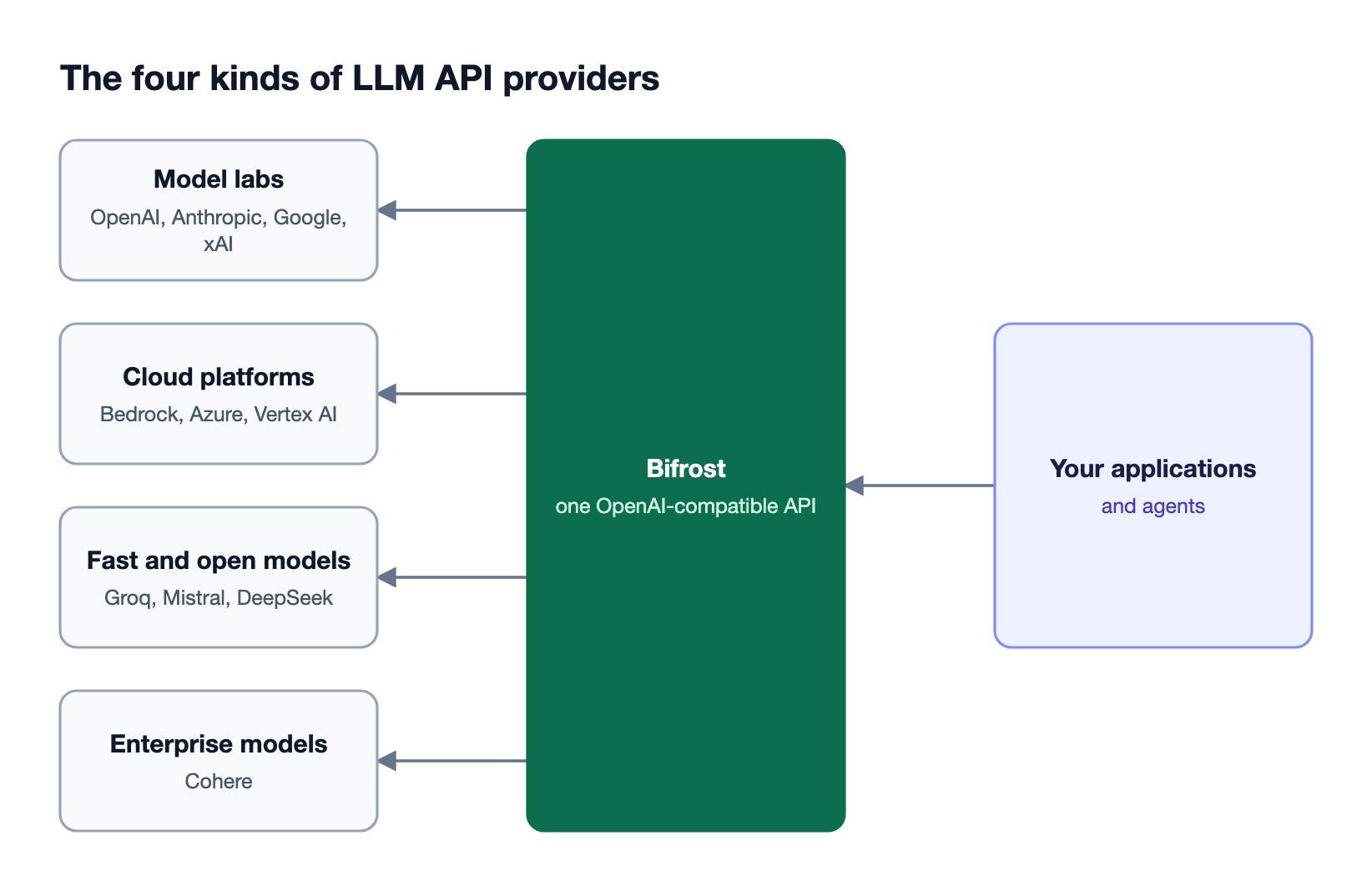
Figure 1: The ten providers fall into four groups, and one gateway can sit in front of all of them.
Figure 1 shows why the gateway layer matters: the groups differ in API format, authentication, and billing, but applications need one consistent way to reach them. Our guide to what an AI gateway is covers that layer in depth.
How to Choose an LLM API Provider
Choose an LLM API provider per workload, based on model quality for the task, latency, price per token, data residency, and the API features the application depends on. A provider that is right for an agent's planning step is often wrong for a high-volume extraction job.
| Criterion | What to check | Typical fit |
|---|---|---|
| Model quality | Results on your own evaluation set, not public leaderboards | Model labs for complex reasoning and coding |
| Latency | Time to first token and tokens per second at your prompt sizes | Groq and smaller models for interactive paths |
| Cost | Price per million input and output tokens, caching discounts | DeepSeek, Mistral, and open models for volume |
| Data residency | Region control, private networking, cloud contracts | Bedrock, Azure OpenAI, Vertex AI |
| API features | Tool calling, structured output, streaming, batch, embeddings | Varies by provider and model |
| Reliability | Rate limits, outage history, regional capacity | Use more than one provider with fallbacks |
The last row is the reason most teams end up with several providers. Our article on load balancing AI traffic across LLM providers covers how teams spread traffic for capacity and resilience.
LLM API Providers Compared at a Glance
The table below summarizes the ten LLM API providers by group, model family, and API style. All ten are available through the Bifrost AI gateway with the provider/model naming shown in the last column.
| Provider | Group | Model family | API style | Bifrost prefix |
|---|---|---|---|---|
| OpenAI | Model lab | GPT | Chat Completions, Responses | openai/ |
| Anthropic | Model lab | Claude | Messages | anthropic/ |
| Google Gemini | Model lab | Gemini | Gemini API (Vertex AI for Google Cloud) | gemini/, vertex/ |
| AWS Bedrock | Cloud platform | Models from several vendors | AWS Bedrock API | bedrock/ |
| Azure OpenAI | Cloud platform | GPT, hosted in Azure | OpenAI-style, Azure deployments | azure/ |
| Mistral | Fast and open models | Mistral | Mistral API | mistral/ |
| Groq | Fast and open models | Open models | OpenAI-compatible | groq/ |
| DeepSeek | Fast and open models | DeepSeek | OpenAI-compatible | deepseek/ |
| xAI | Model lab | Grok | xAI API | xai/ |
| Cohere | Enterprise model vendor | Command, Embed, Rerank | Cohere API | cohere/ |
The Top 10 LLM API Providers in 2026
These ten LLM API providers cover the models most production teams evaluate in 2026. Each entry lists what the provider is known for and when to choose it, with a link to its Bifrost configuration page.
1. OpenAI API
The OpenAI API serves the GPT model family through the Chat Completions and Responses APIs, alongside embeddings, image, and audio models. Its request format is the de facto standard for LLM APIs, which is why many providers and gateways expose OpenAI-compatible endpoints. OpenAI documents its models and endpoints in the OpenAI API documentation.
- Choose it for: general-purpose reasoning, coding, tool calling, and the widest SDK and framework support.
- Through Bifrost: configure the OpenAI provider and call
openai/<model>.
2. Anthropic API (Claude API)
The Anthropic API serves the Claude model family through the Messages API. Claude models are widely used for long-context analysis, coding agents, and tool use, and they are also available through AWS Bedrock and Google Vertex AI. Anthropic publishes its API reference in the Claude documentation.
- Choose it for: coding agents, long documents, and careful instruction following.
- Through Bifrost: configure the Anthropic provider and call
anthropic/<model>; the same Claude models can be reached through Bedrock or Vertex AI as fallbacks.
3. Google Gemini API and Vertex AI
Google serves the Gemini model family through the Gemini API for developers and through Vertex AI for Google Cloud customers who need projects, regions, and enterprise controls. Gemini models are known for long context windows and multimodal input.
- Choose it for: multimodal input, long-context workloads, and teams already on Google Cloud.
- Through Bifrost: use the Gemini provider for API-key access or the Vertex AI provider for Google Cloud projects.
4. AWS Bedrock
AWS Bedrock is a managed AWS service that serves foundation models from several vendors, including Anthropic, Meta, Mistral, and Amazon, behind one AWS API with IAM authentication. Requests stay inside AWS, with region selection and private networking options.
- Choose it for: AWS-native teams that need models from several vendors under one cloud contract and IAM policy.
- Through Bifrost: configure the Bedrock provider and call
bedrock/<model-id>.
5. Azure OpenAI
Azure OpenAI serves OpenAI models from Microsoft Azure, with Azure regions, private networking, and Microsoft Entra ID authentication. Models are called through named deployments that a team creates in its Azure resource.
- Choose it for: Microsoft-centric enterprises that need OpenAI models under Azure compliance and networking controls.
- Through Bifrost: configure the Azure provider with deployment mappings and call
azure/<model>.
6. Mistral API
Mistral is a Paris-based model company that offers both open-weight and commercial models through its API. Open weights let teams move the same model family between Mistral's API and self-hosted inference.
- Choose it for: European data considerations, cost-efficient general models, and a path to self-hosting the same family.
- Through Bifrost: configure the Mistral provider and call
mistral/<model>.
7. Groq API
Groq runs open models on its own LPU inference hardware and exposes them through an OpenAI-compatible API. Groq is chosen primarily for low-latency, high-throughput inference.
- Choose it for: interactive features and agent steps where response speed matters more than using the largest model.
- Through Bifrost: configure the Groq provider and call
groq/<model>.
8. DeepSeek API
DeepSeek offers its own general and reasoning models through an OpenAI-compatible API, and releases open weights for many of them. DeepSeek is commonly evaluated for cost-sensitive, high-volume workloads.
- Choose it for: high-volume tasks where cost per token drives the decision.
- Through Bifrost: configure the DeepSeek provider and call
deepseek/<model>, with a fallback to another provider for resilience.
9. xAI API (Grok API)
xAI serves the Grok model family through its API. Grok models cover chat, reasoning, and coding use cases.
- Choose it for: teams evaluating Grok models alongside other frontier models for reasoning and coding.
- Through Bifrost: configure the xAI provider and call
xai/<model>.
10. Cohere API
Cohere builds models for enterprise use: Command models for generation and Embed and Rerank models for search and retrieval-augmented generation. Cohere emphasizes private deployment options for regulated customers.
- Choose it for: retrieval pipelines that need embeddings and reranking alongside generation.
- Through Bifrost: configure the Cohere provider and call
cohere/<model>.
Why Use One AI Gateway for Multiple LLM API Providers
An AI gateway gives applications one endpoint, one key, and one response format for every LLM API provider. Without one, each application carries a separate SDK, credential, error format, and retry logic per provider, and every provider outage becomes an application incident.
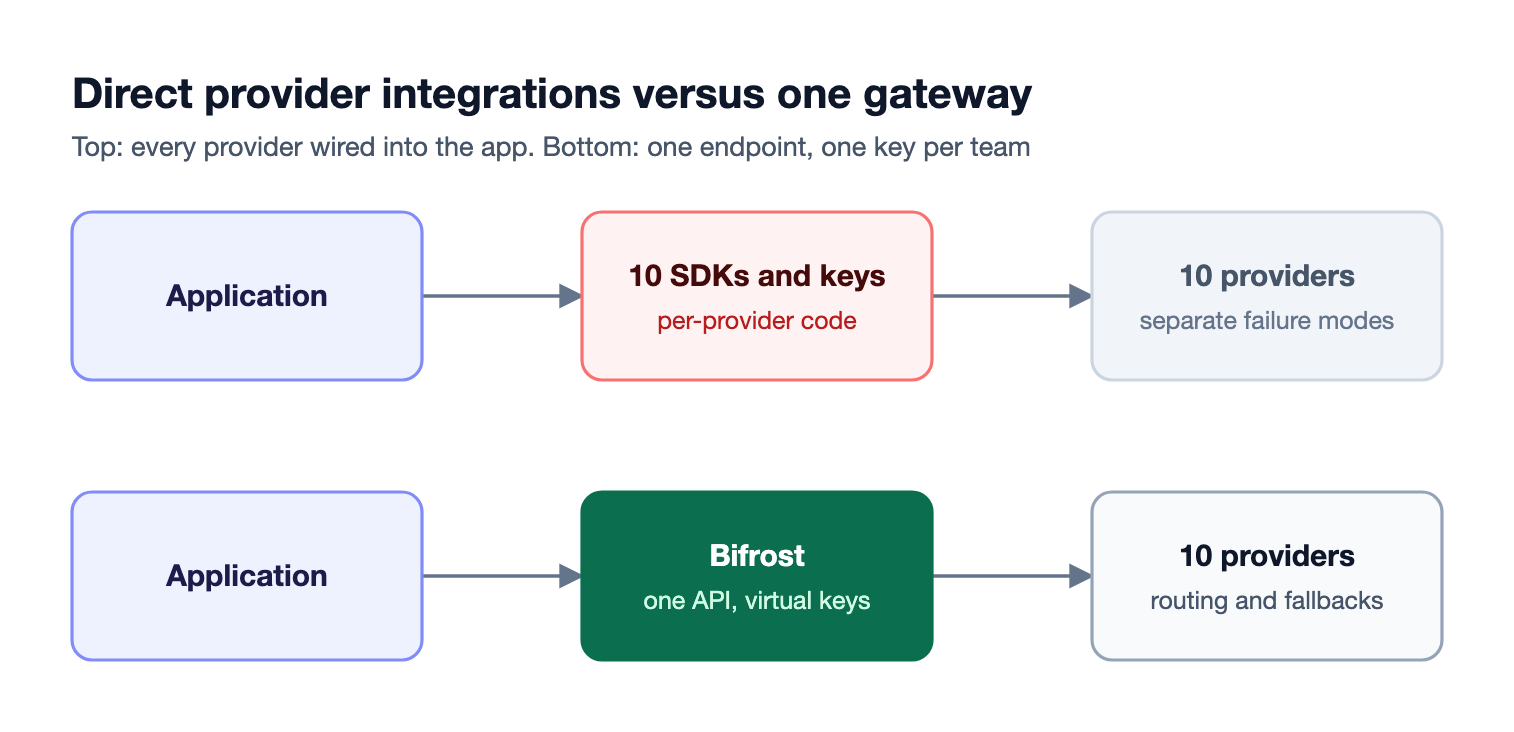
Figure 2: Each direct integration adds an SDK, a key, and a failure path; a gateway turns them into configuration.
A gateway in front of all ten providers changes four things:
- One API. Bifrost exposes every supported provider through an OpenAI-compatible interface and translates to each provider's format.
- Resilience. Automatic retries and fallbacks move a request to another provider when the primary fails.
- Governance. Virtual keys decide which providers and models each team can reach, with budgets and rate limits per key, team, and customer.
- Visibility. Built-in observability records every request with tokens, cost, and latency across providers, which is the basis for monitoring LLM API costs in production.
Bifrost adds 11 microseconds of overhead per request at 5,000 RPS (benchmarks), so the gateway does not become the latency bottleneck.
How to Use All 10 LLM API Providers Through Bifrost
Using several LLM API providers through Bifrost takes three steps: add each provider's key to Bifrost, point applications at the Bifrost endpoint, and select providers with the provider/model string. Fallbacks and virtual keys are then configuration, not application code.
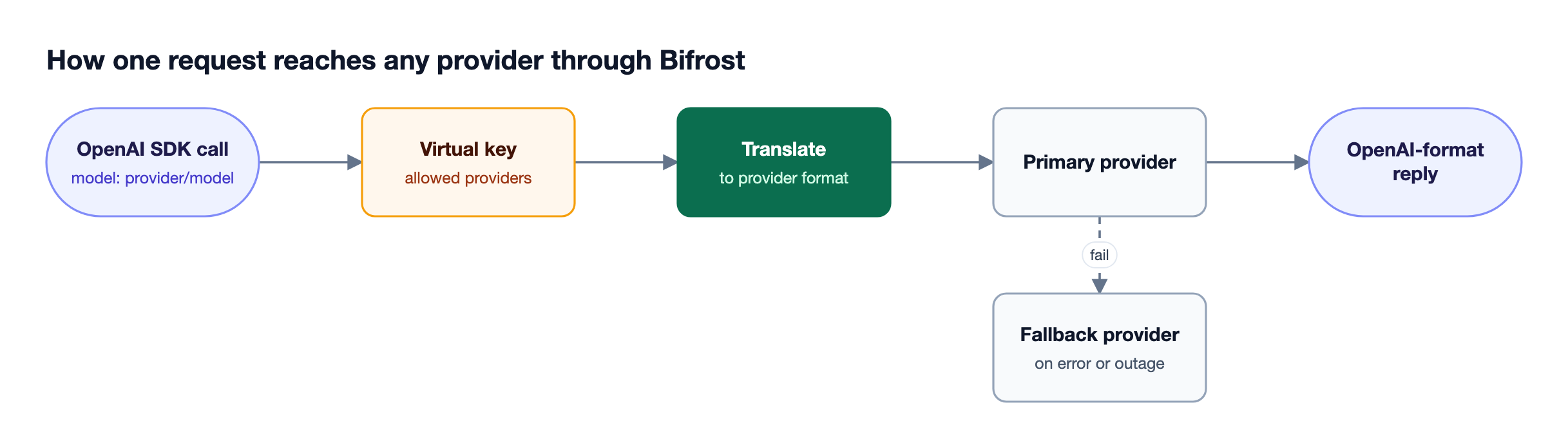
Figure 3: Switching providers is a change to the model string, not to application code.
Step 1: Configure provider keys
Add provider credentials in the Bifrost UI or in config.json. Keys can reference environment variables with the env. prefix, and several keys per provider can share load by weight:
{
  "providers": {
    "openai": {
      "keys": [{ "name": "openai-key", "value": "env.OPENAI_API_KEY", "models": ["*"], "weight": 1.0 }]
    },
    "anthropic": {
      "keys": [{ "name": "anthropic-key", "value": "env.ANTHROPIC_API_KEY", "models": ["*"], "weight": 1.0 }]
    }
  }
}
The provider configuration guide covers every provider, including cloud credentials for Bedrock, Azure, and Vertex AI.
Step 2: Call any provider with one request format
Send requests to Bifrost's OpenAI-compatible endpoint and name the provider in the model string. Adding fallbacks gives the request an ordered list of backups:
curl -X POST http://localhost:8080/v1/chat/completions \
  -H "Content-Type: application/json" \
  -d '{
    "model": "openai/<model>",
    "messages": [{"role": "user", "content": "Summarize this ticket"}],
    "fallbacks": ["anthropic/<model>", "bedrock/<model-id>"]
  }'
Existing OpenAI, Anthropic, and Google GenAI SDK code works unchanged by changing the base URL, because Bifrost is a drop-in replacement. The walkthrough on using any LLM provider with the OpenAI SDK shows the pattern end to end.
Step 3: Scope providers per team
Create a virtual key per team or application that lists only the providers and models it may use. Virtual keys are deny-by-default for providers, so a team scoped to Bedrock and Azure cannot send data to other providers. Our article on LLM API rate limiting with virtual keys and budgets covers the configuration, and multi-provider routing in Bifrost covers weighted routing and custom providers.
Building the Right LLM Provider Mix
The right LLM provider mix assigns each workload to the provider that best meets its residency, latency, and cost needs, and keeps a second provider ready as a fallback. Routing through one gateway makes that mix a configuration choice that can change as models and prices change.
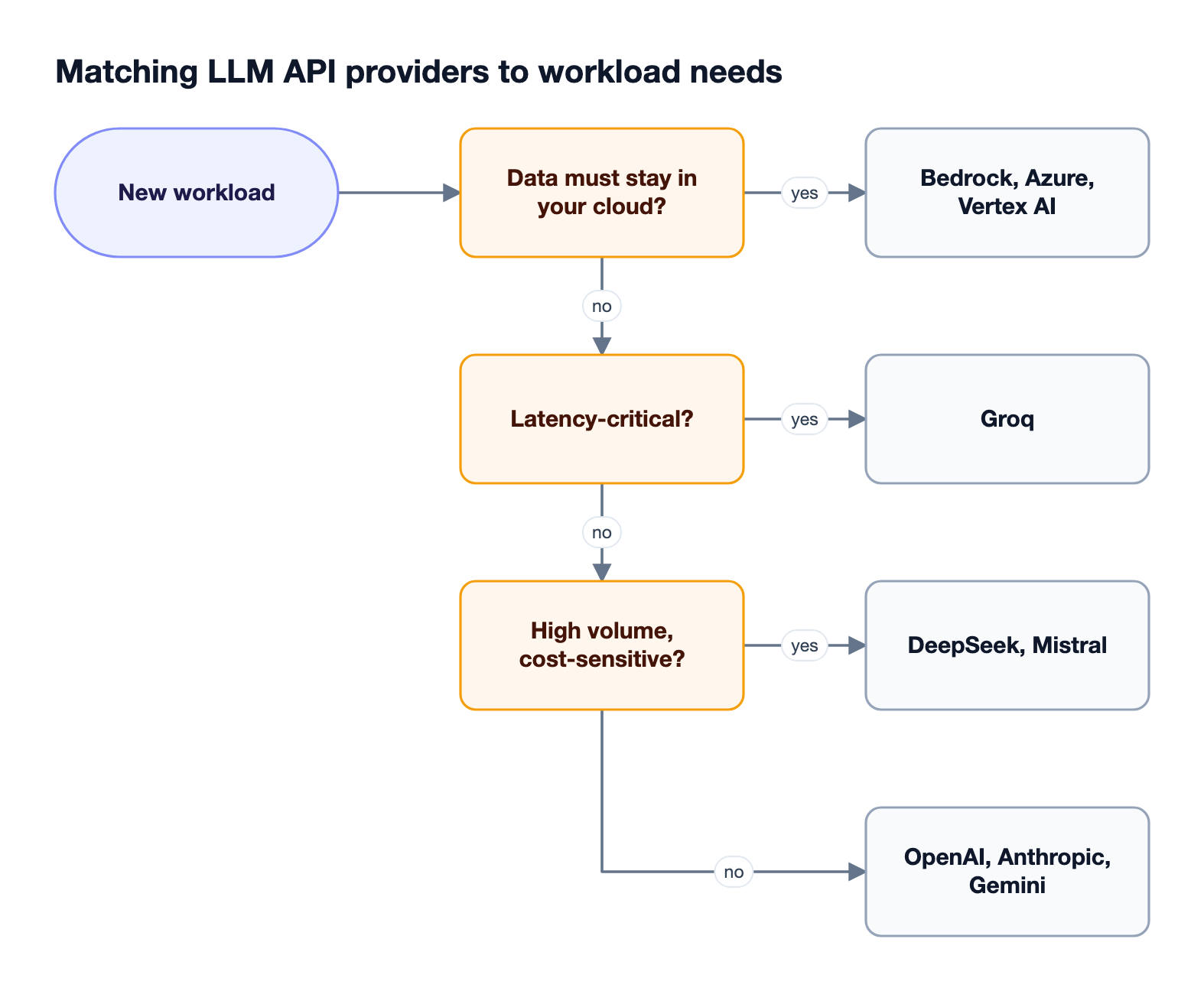
Figure 4: Most production stacks use more than one provider, chosen per workload rather than per company.
A common starting mix:
- Regulated data: Bedrock, Azure OpenAI, or Vertex AI inside the organization's cloud account.
- Interactive, latency-sensitive steps: Groq or a small model from a model lab.
- High-volume batch tasks: DeepSeek or Mistral, with a fallback to a second provider.
- Complex reasoning and coding: OpenAI, Anthropic, or Gemini models.
- Retrieval: Cohere Embed and Rerank alongside the generation model.
For teams comparing gateway options for this setup, see our list of LLM gateways with an OpenAI-compatible API. For enterprise deployment in a private network, the Bifrost Enterprise tier adds in-VPC deployment, RBAC, and audit logs, and the AI gateway hub guide explains how gateway governance fits enterprise AI architecture.
Frequently Asked Questions
What are LLM providers?
LLM providers are companies and cloud platforms that host large language models and make them available through an API. Examples include model labs such as OpenAI, Anthropic, and Google, cloud platforms such as AWS Bedrock and Azure OpenAI, and inference providers such as Groq. Applications send prompts over HTTP and pay per token.
Which LLM API is free?
Several providers offer free tiers or trial credits with rate limits, and Google's Gemini API offers a free tier for developers. For unlimited use without per-token charges, teams can self-host open-weight models with vLLM or Ollama and route to them through Bifrost alongside paid providers.
Which is the best LLM API provider?
No single provider is best for every workload. OpenAI, Anthropic, and Google lead on complex reasoning and coding, cloud platforms lead on data residency, Groq leads on latency, and DeepSeek and Mistral are common for cost-sensitive volume. Most teams combine several and route through a gateway.
What is an OpenAI-compatible API?
An OpenAI-compatible API accepts requests in the same format as the OpenAI Chat Completions API, so existing OpenAI SDK code works by changing the base URL. Bifrost exposes every supported LLM provider through an OpenAI-compatible endpoint and translates requests into each provider's native format.
How do I use multiple LLM providers in one application?
Route requests through an AI gateway such as Bifrost. The application calls one endpoint, names the provider and model in the model string, and the gateway handles authentication, format translation, fallbacks, and usage tracking. Switching providers becomes a configuration change rather than a code change.
Can I fail over between LLM API providers automatically?
Yes. Bifrost accepts an ordered fallbacks list on each request and retries the next provider when the primary returns an error or is unavailable. The response reports which provider served the request, so teams can track how often fallbacks occur.
Use Every LLM API Provider Through Bifrost
The top LLM API providers each lead on a different dimension, and production stacks get the best result by combining them. Bifrost gives applications one OpenAI-compatible endpoint for all ten providers in this guide and 25+ in total, with fallbacks, virtual keys, and budgets built in. Start with the open-source Bifrost AI gateway, or book a demo with the Bifrost team to plan a multi-provider rollout.